
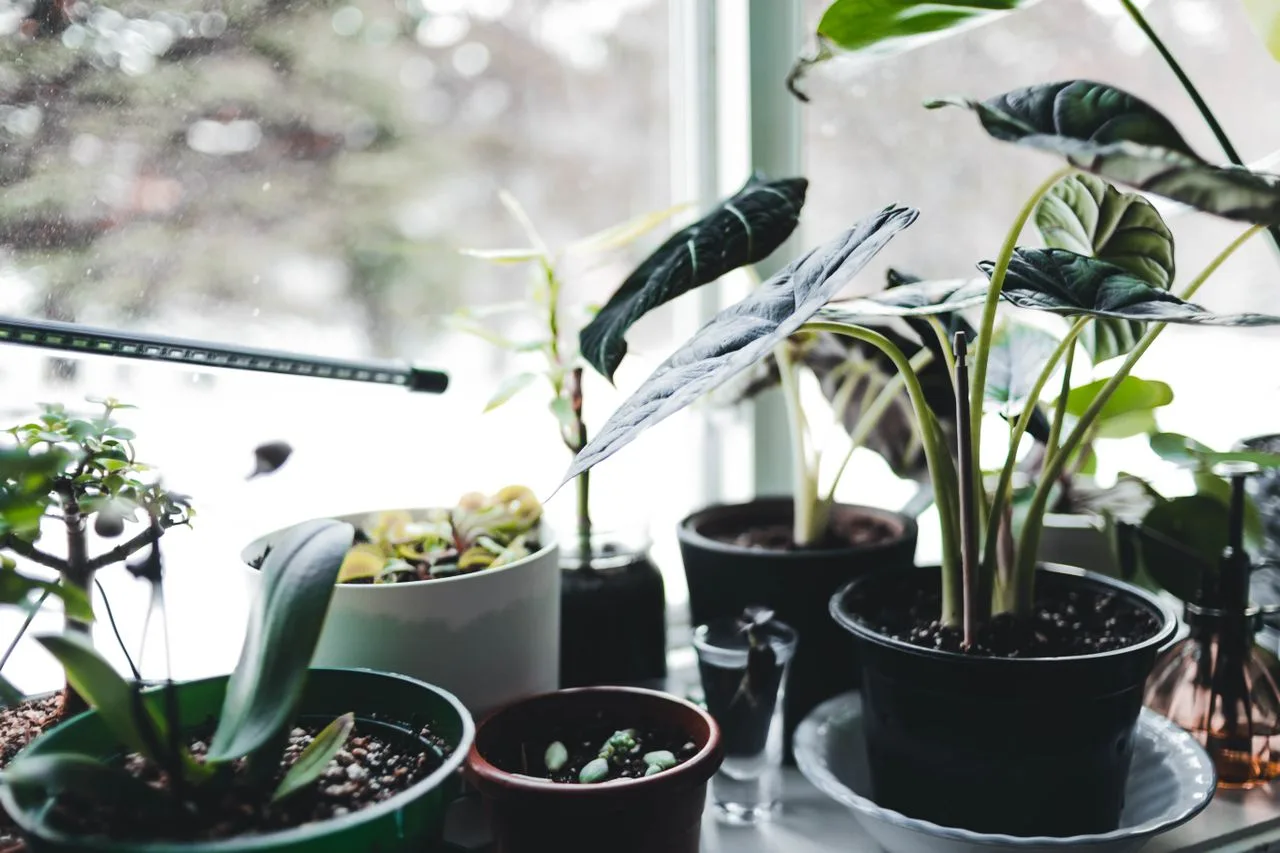
During winter, houseplants do not necessarily need more care. More often, they need less interference.
This is the season when many of our usual habits begin to work against them. We keep watering as if it were August, add fertilizer because a plant looks “tired,” and leave it in the same place even though the light has changed completely. Then we wonder why the leaves are turning yellow.
The main change is not simply the temperature outside. For indoor plants, shorter days, limited light, heating, dry air, and much slower drying soil usually matter more.
If your plants have just been brought in from the patio, begin with how to bring patio plants indoors for winter.
For help choosing suitable species for your home, see the general guide to houseplants by light level.
During winter, plants often do better when we observe them more closely but interfere a little less.
Light is the most important factor in winter
During summer, a plant placed three or six feet from a window may receive enough light. In December, however, the same location may become far too dark.
This is easy to underestimate because the room may still look bright to us. For a plant, though, the difference between a spot directly beside the window and one at the back of the room can be enormous.
“Is the plant receiving enough light where it is?”
Plants that need brighter conditions can be moved temporarily closer to the window. This is especially important for the following:
Succulents and many flowering plants also need the brightest suitable position available during the darker months.
Other species adapt more easily to limited winter light:
This does not mean these plants prefer darkness. They simply tolerate lower light better than many other species.
For rooms with limited natural light, see houseplants for low light.
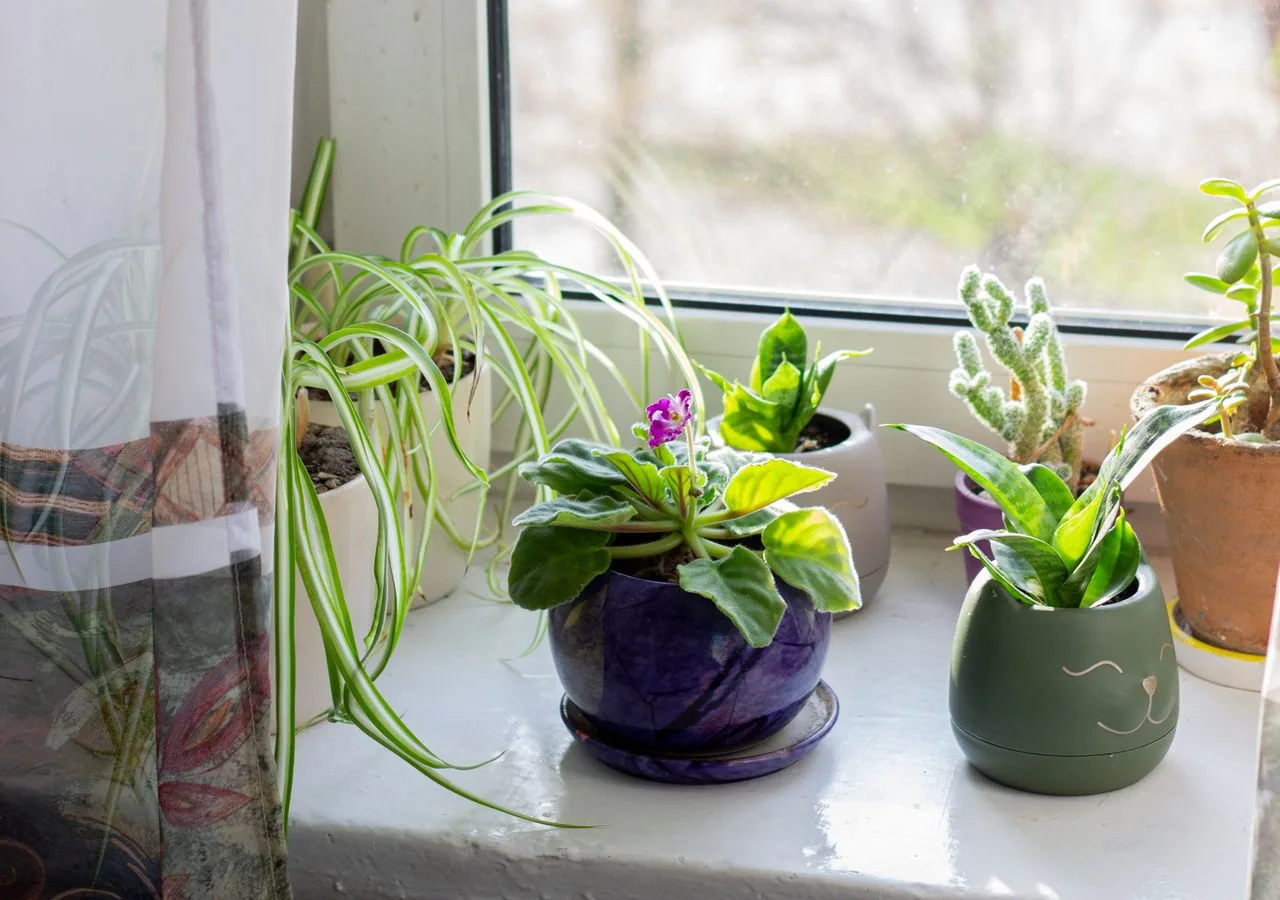
Do not water on a fixed schedule
One of the easiest ways to create problems is to continue using the summer watering routine.
“I water every Sunday” sounds organized, but the plant does not know which day of the week it is.
With less light and slower growth, the potting mix often dries much more slowly. Therefore, check the soil first instead of watering automatically.
- Check the soil with your finger.
- Lift the pot. A dry pot is usually lighter.
- Observe the leaves and stems.
- Check deeper in the potting mix, not only at the surface.
Some species benefit from having the top layer dry between waterings, while others should not remain completely dry for long periods.
For that reason, there is no universal winter watering formula.
The most common mistake: too much water and too little light
This combination is responsible for many winter problems.
The plant receives less light and grows more slowly, yet the roots remain in constantly wet soil.
As a result, you may notice:
- yellowing leaves;
- soft stems;
- an unpleasant smell from the potting mix;
- root rot;
- fungus gnats.
Take particular care when watering plants that store moisture in their leaves, stems, or rhizomes:
For these plants, a few extra dry days are usually less harmful than constantly wet soil.
Do not leave water inside the cachepot
A decorative cachepot has one disadvantage: it is easy to forget that water has collected inside it.
After watering, allow the excess water to drain. Then check whether any has remained at the bottom of the outer container.
This small habit can prevent a surprising number of rotten roots.
A radiator does not create a tropical climate
In winter, we often think, “This is a tropical plant, so it needs warmth.”
That is true, but there is a difference between a warm room and leaves sitting a few inches from a radiator.
Hot, dry air can dry the leaf edges and stress more sensitive plants:
Place sensitive plants in a bright location, but not directly above a radiator or beneath a constant stream of air from a heating or cooling unit.
How important is humidity?
Not every houseplant needs the conditions of a tropical greenhouse.
However, a heated room can create problems for species that naturally prefer more humid air.
The most common signs include dry brown tips, curling leaves, crispy edges, and poor development of new growth.
This post may contain affiliate links. As an Amazon Associate, I earn from qualifying purchases.

Steadier humidity for a larger houseplant collection
Calatheas, ferns, peace lilies, and orchids can struggle when indoor heating makes the air unusually dry. For a larger collection of humidity-loving plants, a room humidifier is generally more useful than repeatedly misting the leaves.
The LEVOIT Classic 300S has a 6-liter tank, automatic humidity settings, and app controls. I would use it to maintain steadier humidity in the room rather than trying to create greenhouse conditions or placing it directly beside the foliage.
You can also group several plants together or use a pebble tray with water, provided the bottom of the pot does not sit directly in the water.
I would not turn misting into a magical ritual for every plant. For some species, it makes almost no meaningful difference to the humidity. In addition, wet leaves combined with poor air circulation may create other problems.
Protect plants from cold windows
The opposite extreme is the window itself.
During the day, it may be the best place for the plant. On a cold night, however, leaves touching the glass can experience much colder conditions than the rest of the room.
Check plants placed:
- behind heavy curtains;
- on cold stone windowsills;
- near patio doors;
- in areas with constant drafts.
There is no need to move everything to the center of the room. Instead, look for a balance between enough light and protection from temperature extremes.
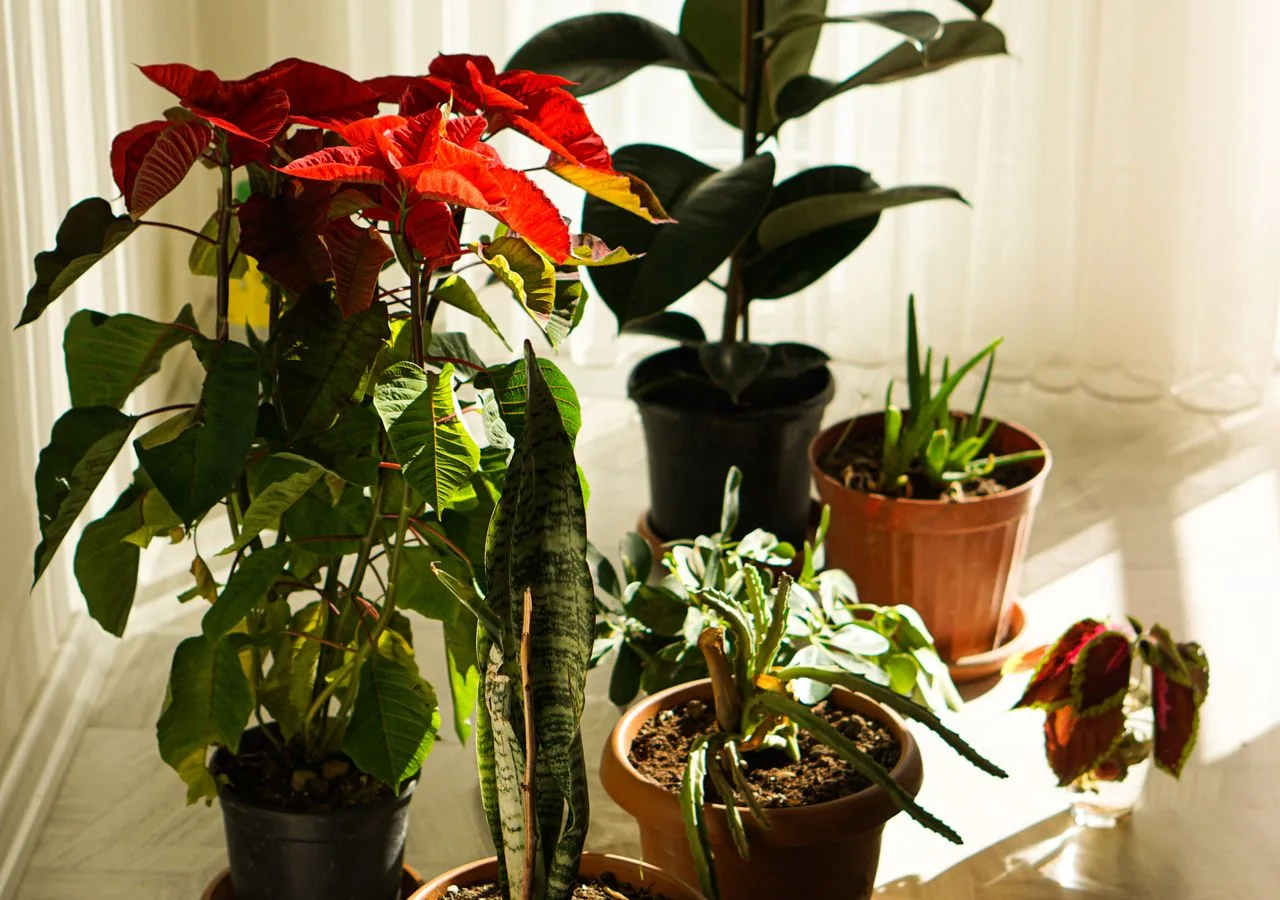
Should you fertilize houseplants in winter?
For many houseplants, feeding should be reduced or temporarily stopped when growth slows.
However, there is an important “it depends.”
A plant in a very bright location that continues to grow actively does not have the same needs as one kept in a cool, dim room.
Watch the growth rather than relying only on the calendar.
Most importantly, do not fertilize a plant simply because it looks unhealthy. The cause may be insufficient light, excessive watering, pests, dry air, cold, or damaged roots.
Fertilizer will not solve any of those problems.
Is repotting necessary in winter?
Usually, there is no reason to repot a healthy plant simply because it has been a long time since the last repotting.
If there is an urgent problem—root rot, broken-down potting mix, a serious pest infestation, or a damaged pot—there is no reason to wait.
Routine repotting, however, can usually wait until the plant is growing more actively.
Clean the leaves
This is one of the simplest care tasks that becomes more useful during the darker months.
Dust on large leaves is not especially helpful when light is already limited.
Monstera, rubber plant, philodendron, and other large-leaved plants can be cleaned carefully with a soft, damp cloth.
This is also a good opportunity to inspect the undersides of the leaves for pests.
Check regularly for spider mites
Warm, dry indoor air can encourage spider mites, while an early infestation is easy to miss.
Look for:
- tiny pale speckles;
- fading leaves;
- very fine webbing;
- gradual deterioration of the foliage.
Inspect calatheas, ivy, ferns, and other plants that react badly to dry air with particular care.
Separate any suspicious plant from the rest of the collection first.
Fungus gnats are a warning sign, not only a nuisance
Small black flies around the pots are a common problem.
They usually develop more easily in constantly damp, organic potting mix.
“Why is this potting mix staying wet for so long?”
Sometimes the solution begins with adjusting the watering routine, improving drainage, and removing standing water from the cachepot.
Not every plant rests during winter
We cannot simply say, “It is winter, so every plant is dormant.”
A Christmas cactus, for example, blooms during the cooler months. Cyclamen also follows a different seasonal rhythm from typical tropical foliage plants.
Always check the needs of the individual species instead of applying one routine to the entire collection.
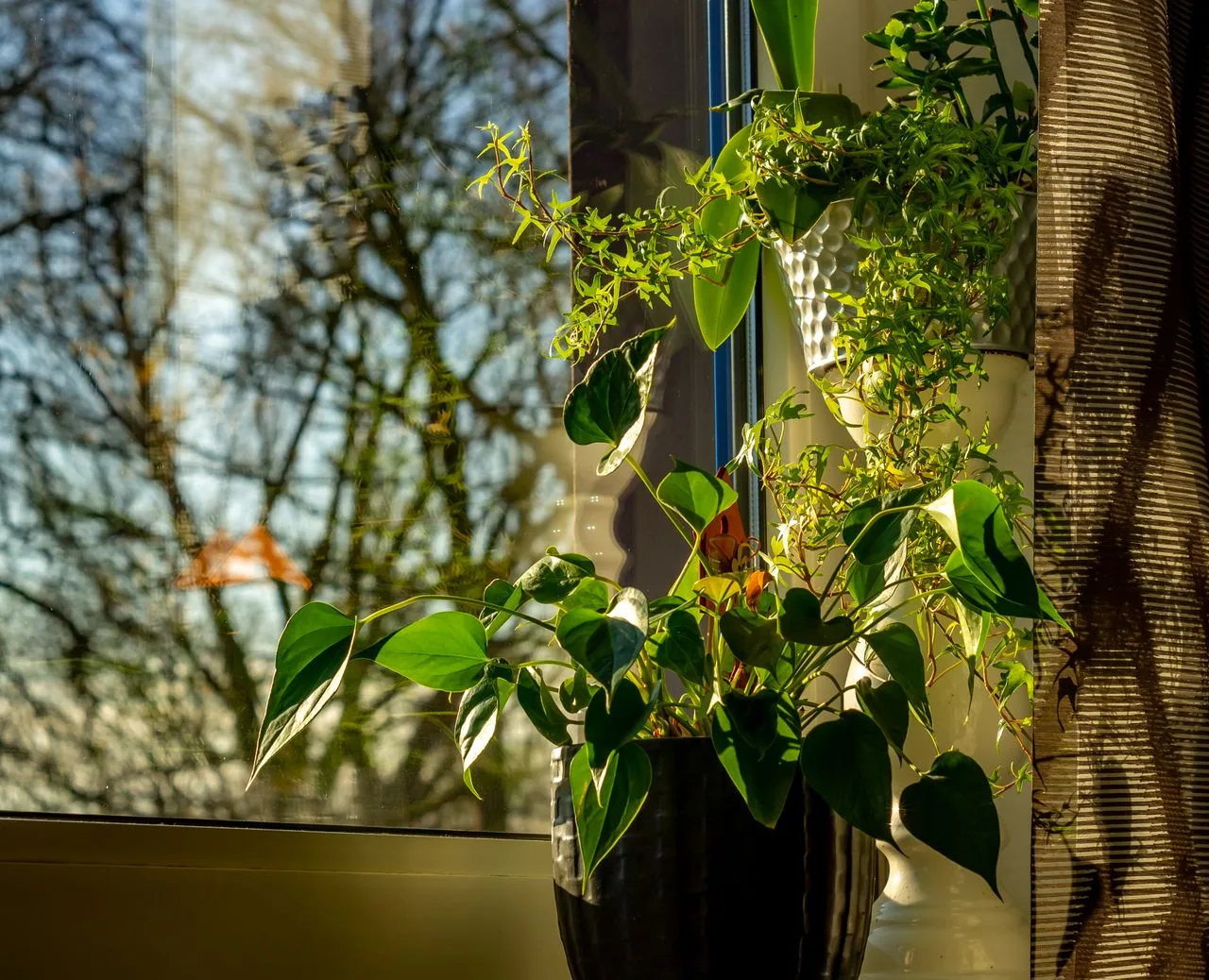
If a plant begins to lose leaves
The first reaction is usually panic. The second is water.
That is not always a helpful combination.
Check the following in order:
- Is the plant receiving enough light?
- Does the potting mix remain wet for a long time?
- Is there a draft, cold window, or radiator nearby?
- Are there signs of pests?
- Was the plant moved recently?
- Is there an unpleasant smell or are the stems soft, suggesting a root problem?
For some plants, minor leaf drop after a change in conditions is part of the adjustment process.
If yellowing continues for weeks or the plant loses many leaves, investigate the cause more carefully.
Should you buy a grow light?
Not for every home.
First, make the most of the available natural light. Move the plants closer to a window, open heavy curtains, and decide which species are genuinely struggling.
A grow light may be useful for:
- a very dark home;
- a large collection of light-loving plants;
- seedlings;
- herbs grown actively indoors;
- plants placed far from windows.
For a larger collection, a plant stand with integrated full-spectrum grow lights can be more practical than several separate lamps. The Barrina CX83 combines six tiers with dedicated light panels and timer settings, so smaller plants can be grouped vertically without competing for the narrow space directly beside the window.
However, I would not buy a grow light simply because I had one snake plant in the living room.
My winter houseplant routine
- I move light-loving plants closer to the window.
- I water after checking the soil, not according to a fixed schedule.
- I do not leave water inside cachepots.
- I move sensitive plants away from radiators and drafts.
- I reduce fertilizing according to the plant’s growth.
- I clean the leaves and check for pests.
- I do not try to solve every change by adding more water.
During winter, plants often do best when their conditions remain stable and the care is attentive but not excessive.
The next step
For a little edible greenery on a bright kitchen windowsill, continue to how to grow herbs indoors.