
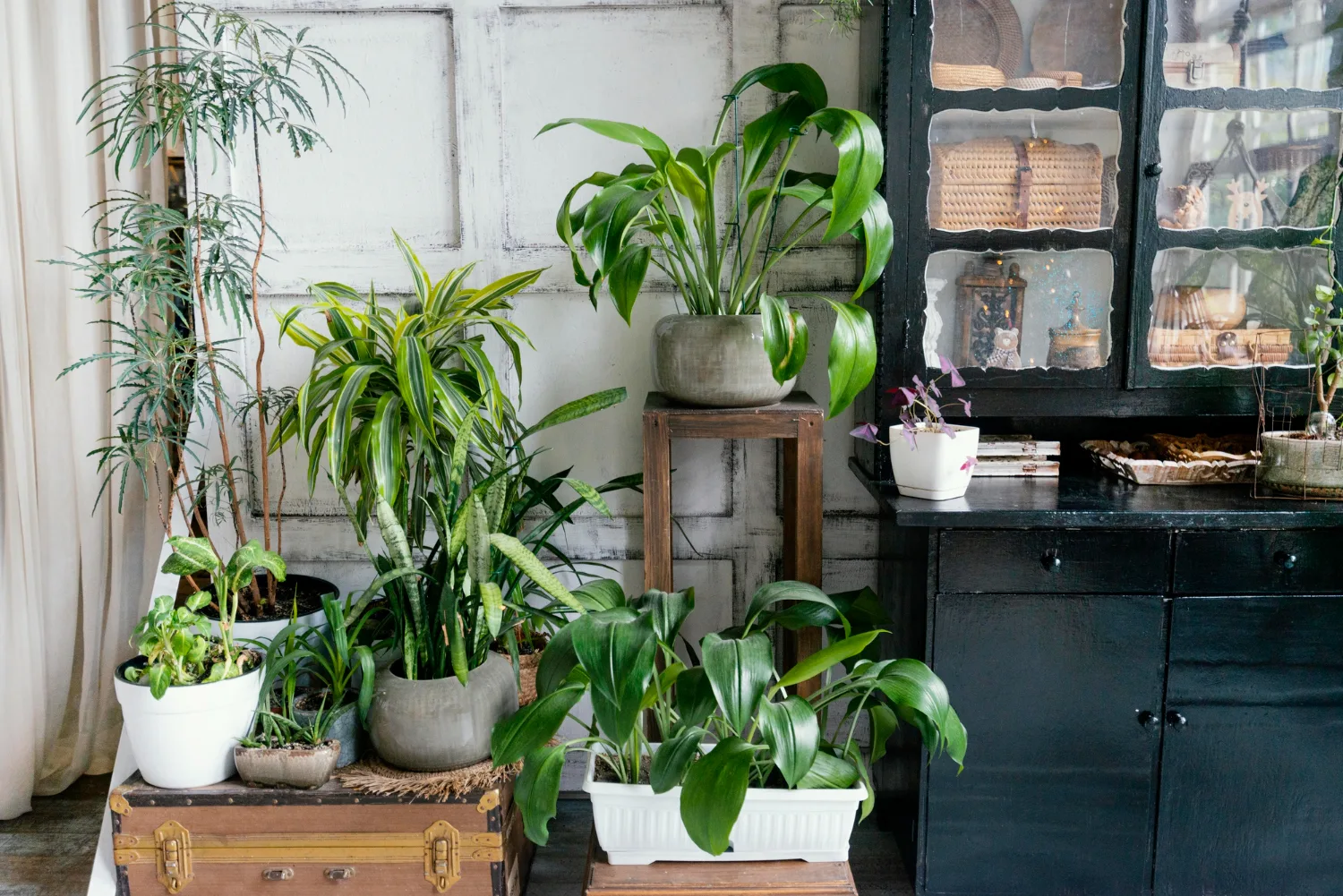
Houseplants are often chosen for their looks. We see beautiful leaves, an interesting shape, or a perfectly styled photograph and decide that this is exactly the plant our home needs. Then we put it wherever there happens to be room. Unfortunately, plants do not live on our good intentions. They live on light, water, temperature, and air around the roots.
That is why this guide begins with the location rather than the plant name. A north-facing window, bright living room, dry heated bedroom, dim kitchen, and windowsill above a radiator all provide very different conditions. Once you understand the limitations of the space, choosing a suitable plant becomes much easier.
The aim is to choose a houseplant with a realistic chance of doing well in your home. Not one that looks beautiful in the store for a week, but one that can remain healthy and reasonably content afterward.
Use this guide to compare houseplants by light level, watering needs, and normal household conditions. Once you identify a suitable group, follow the links to the detailed care profile for each plant.
The most important question is not which plant is currently fashionable. It is where the plant will stand and how much light it will actually receive.
Start with the light
A north-facing window, a dim hallway, and a bright living room are not interchangeable. The same plant may grow beautifully in one home and struggle in another.
Before buying, look at the location carefully. Does it receive direct sunlight? How many hours is the room reasonably bright? Is there a heavy curtain? How far from the window will the pot stand? Does the location become cold during winter?
Heating, air conditioning, cold windows, and large differences between rooms add another layer. An “easy” plant is not immortal. It is simply more forgiving and less likely to collapse after one small mistake.
For lower light
- ZZ plant - very easy, with infrequent watering after the soil has dried well.
- Snake plant - very easy, prefers a dry routine, and dislikes frequent watering.
- Aspidistra - exceptionally durable and suitable for lower light.
- Aglaonema - adaptable, but dislikes cold, wet soil.
- Dracaena - generally easy with moderate to infrequent watering.
For medium light
- Pothos - easy and best watered after the upper potting mix has dried.
- Heartleaf philodendron - easy, with moderate moisture and an airy mix.
- Spider plant - forgiving, provided the roots are not kept constantly wet.
- Peace lily - fairly easy but more particular about consistent moisture.
- Boston fern - lush and beautiful, but needs steadier moisture and humidity.
- Calathea - attractive but less forgiving about water quality and dry air.
For a very bright room
- Monstera - prefers bright indirect light, moderate watering, and support.
- Rubber plant - needs a bright location and soil that does not stay wet.
- Hoya - appreciates bright light and a calmer watering routine.
- Phalaenopsis orchid - needs light, air around the roots, and complete drainage.
- Christmas cactus - likes bright indirect light and moderate moisture.
For a sunny window
- Aloe vera - an easy choice for strong light and infrequent watering.
- Many succulents - suitable only when the location is genuinely bright.
- Indoor herbs - most perform best at a sunny window or under supplemental lighting.
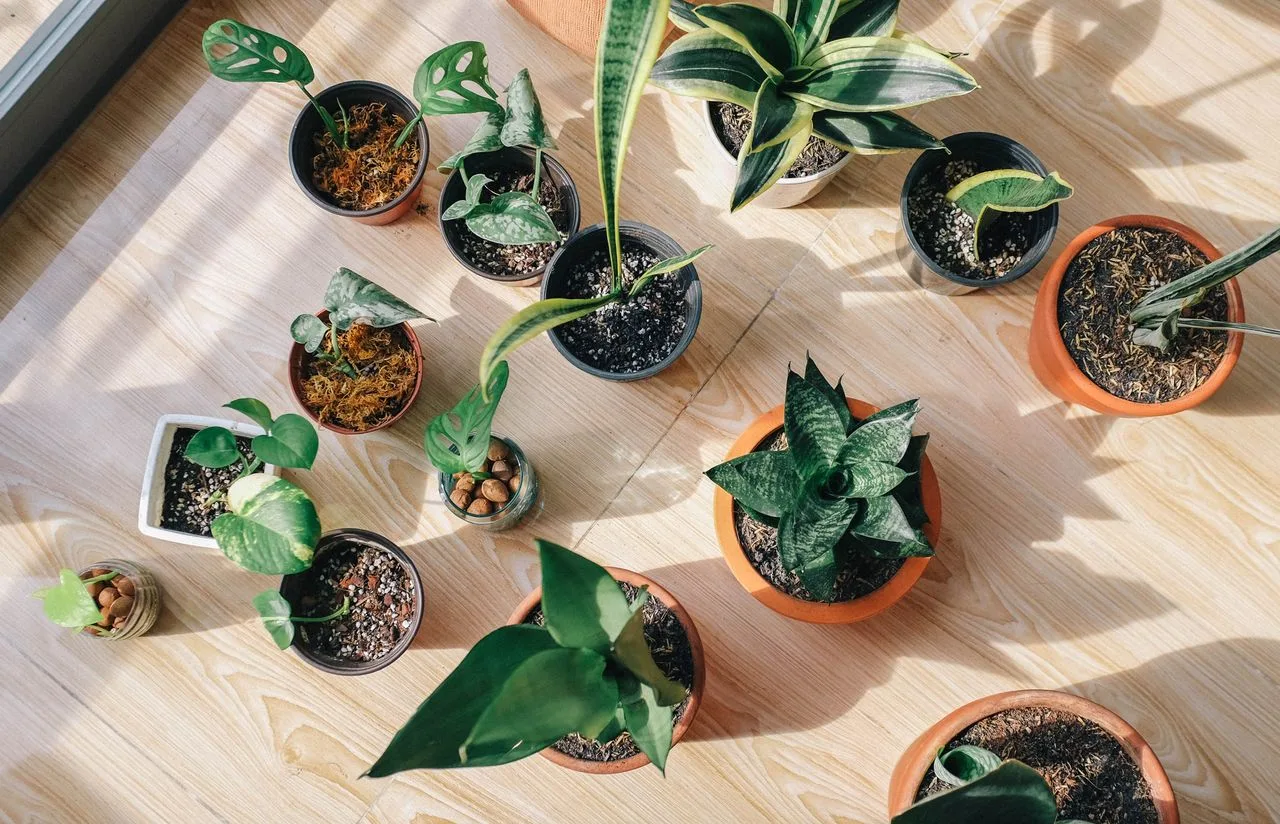
Houseplant comparison table
| Plant | Light | Watering | Difficulty |
|---|---|---|---|
| ZZ plant | Low to bright indirect light | Infrequent, after the soil dries well | Very easy |
| Snake plant | Low to bright indirect light | Infrequent, after complete drying | Very easy |
| Pothos | Medium to bright indirect light | After the upper layer dries | Easy |
| Heartleaf philodendron | Medium indirect light | Moderate, without waterlogging | Easy |
| Spider plant | Medium to bright indirect light | Moderate, without constantly wet soil | Easy |
| Peace lily | Medium to bright indirect light | Fairly consistent moisture | Easy to moderate |
| Monstera | Bright indirect light | Moderate, after partial drying | Moderate |
| Dracaena | Medium to bright indirect light | Moderate to infrequent | Easy |
| Rubber plant | Bright indirect light | Moderate, without standing water | Moderate |
| Aspidistra | Low to medium indirect light | Moderate to infrequent | Very easy |
| Aglaonema | Low to medium indirect light | Moderate, without cold wet soil | Easy to moderate |
| Boston fern | Medium to bright indirect light | Regular, with fairly even moisture | Moderate |
| Christmas cactus | Bright indirect light | Moderate; not treated like a desert cactus | Easy to moderate |
| Hoya | Bright indirect light | Moderate to infrequent | Easy to moderate |
| Phalaenopsis orchid | Bright indirect light | When the roots become silvery | Moderate |
| Aloe vera | Very bright light | Infrequent, after thorough drying | Easy |
| Calathea | Medium indirect light | Consistent moisture with softer water | More demanding |
Plants for lower light
For a location with limited natural light, the most realistic starting points are ZZ plant, snake plant, aspidistra, aglaonema, and some dracaenas. They will not grow rapidly in a dim room, but they have a better chance of remaining presentable than plants that genuinely need a bright window.
The mistake is expecting growth comparable to a south-facing window. In lower light, plants grow more slowly and use water more slowly. The potting mix therefore needs more time to dry.
Plants for a brighter room
A bright room offers more possibilities: monstera, rubber plant, hoya, pothos, heartleaf philodendron, Phalaenopsis orchid, and Christmas cactus. These plants can produce stronger growth, larger leaves, or flowers when their light requirements are met.
More light does not automatically mean intense midday sun. Many houseplants prefer bright but indirect light rather than harsh summer sunlight passing through glass.
This post may contain affiliate links. As an Amazon Associate, I earn from qualifying purchases.
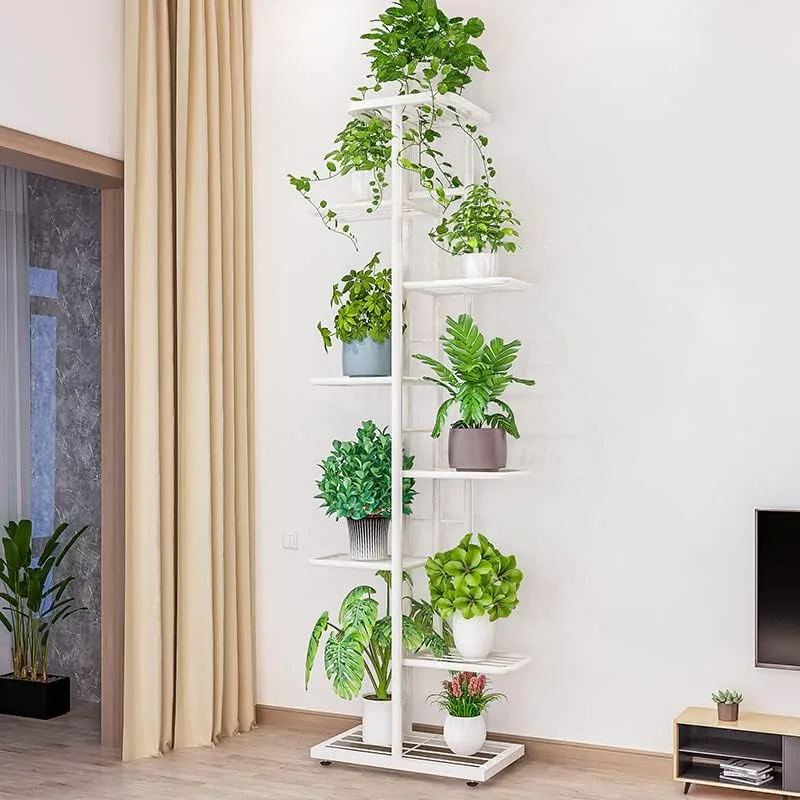
A narrow plant stand for several individual pots
Once a houseplant collection begins to spread across windowsills, tables, and any remaining piece of furniture, vertical storage becomes more useful than another wide shelf. A tall, narrow stand can hold several plants without taking up much floor space.
This metal model has eight separate levels, which makes it easier to give each pot its own space. Place plants that need brighter light on the upper or window-facing tiers and use the lower positions for species that tolerate slightly less light. The stand organizes the collection, but it does not make every level equally bright.
Plants for a warm, dry room
In a dry heated room, I would not begin with calathea or Boston fern unless humidity is also part of the plan. Snake plant, ZZ plant, aloe vera, hoya, rubber plant, and some dracaenas are more forgiving.
Peace lily and heartleaf philodendron can adapt, but neither will appreciate standing directly beside a radiator or under constant airflow from an air conditioner.
When you forget to water
Choose plants that tolerate a pause: ZZ plant, snake plant, aloe vera, aspidistra, and hoya. Avoid a Boston fern, calathea, or a moisture-loving plant in a tiny pot that dries within two days.
This is not a failure of character. It is simply a poor match between a person’s habits and a plant’s needs.
When you water too often
Here the best recommendation is not another plant but a brake. Choose pots with drainage holes, check the potting mix before watering, and do not leave water standing in a saucer or decorative outer pot.
ZZ plant and snake plant will not reward frequent watering. They may tolerate it for a while, but eventually their roots and rhizomes begin to rot.
How to make the choice easier
- Choose the location before buying the plant.
- Decide whether the spot is bright, dim, dry, warm, or cold.
- Do not buy a humidity-loving plant for a radiator-side position unless you plan to address the dry air.
- Do not buy a light-loving plant for a dark shelf.
- Start with more forgiving plants before adding demanding ones.
- Use containers with effective drainage rather than relying on watering restraint alone.
When several plants need repotting, a gardening set with repotting mat can keep the basic tools together and contain loose soil while you work indoors. You do not need a separate tool for every plant, but a small trowel, hand rake, pruners, and a washable work surface are useful across the whole collection.
Explore the individual plant guides
Once you identify the group most suited to your home, open the individual plant profile. Each guide covers light, watering, potting mix, repotting, propagation, common problems, and the conditions the plant realistically needs indoors.