
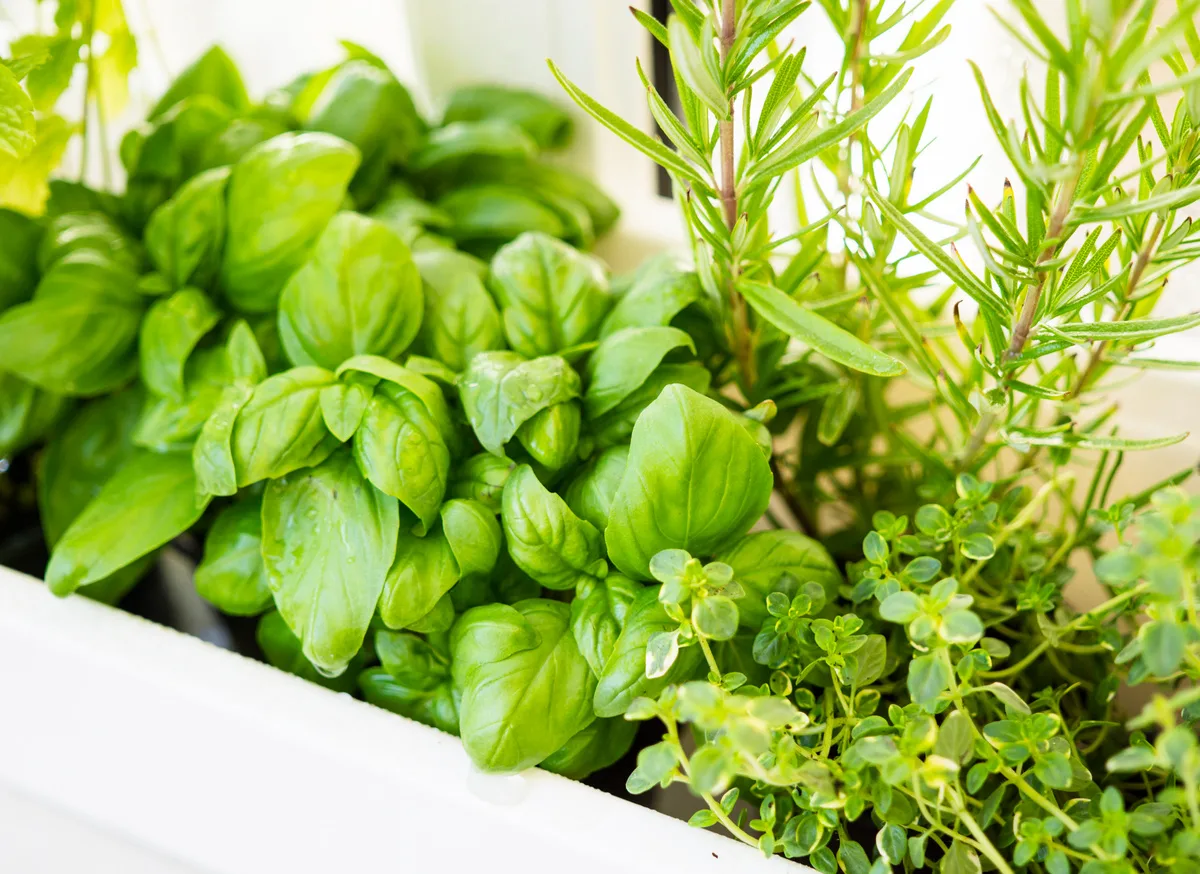
The idea of keeping pots of fresh herbs on the kitchen windowsill sounds almost too good to be true. Snip a little basil for pasta, pick some parsley for a salad, and keep mint ready for tea.
In practice, this is entirely possible, but there is one important detail: not all herbs grow equally well in an apartment, and not all of them can be kept successfully year-round on any available windowsill.
Once again, light is the most important factor. Before buying ten small pots and arranging them beautifully beside the coffee maker, it is worth deciding which plants can realistically live there.
If you are still unsure how much light the space receives, start with our general guide to houseplants by light level.
With herbs, light comes first, the pot comes second, and only then comes our good intention to have fresh basil in February.
Which herbs are best for growing indoors?
To begin, I would choose a few herbs that I actually use in the kitchen.
For moderately moist soil
- parsley;
- chives;
- mint.
For brighter light and good drainage
- basil;
- rosemary;
- thyme;
- oregano.
For a quick harvest
- cilantro;
- leaf lettuce;
- microgreens.
For a separate pot
- mint;
- rosemary;
- basil.
Their needs are not the same. Mint and parsley tolerate slightly lower light and prefer more moisture, while rosemary, thyme, and oregano need plenty of light and better-draining soil.
That is why one long shared planter is not always the best solution for every herb.
Parsley
Parsley is one of the more sensible choices for a kitchen windowsill.
It can grow in sun or light partial shade and does not require soil as dry as thyme or rosemary prefer.
It can be grown from seed, but germination is not especially fast. If you want fresh leaves right away, starting with a young plant is more practical.
During active growth, keep the soil moderately moist but never waterlogged.
Harvest the outer leaves instead of repeatedly removing only the young growth from the center.
Chives
Chives are excellent for small spaces.
They do not take up much room, grow in a relatively compact clump, and can be cut regularly.
When harvesting, leave a short section above the base rather than pulling out the leaves. This allows the plant to continue producing new growth.
Mint
Mint is easy until it decides the entire pot belongs to it.
That is one reason I would grow it separately. It spreads vigorously and is not a good neighbor for slower-growing plants.
Keep the soil lightly moist and trim the growing tips regularly to encourage more compact growth.
Practical note: mint does better in its own pot. This keeps it from crowding neighboring plants and allows you to manage its moisture separately.
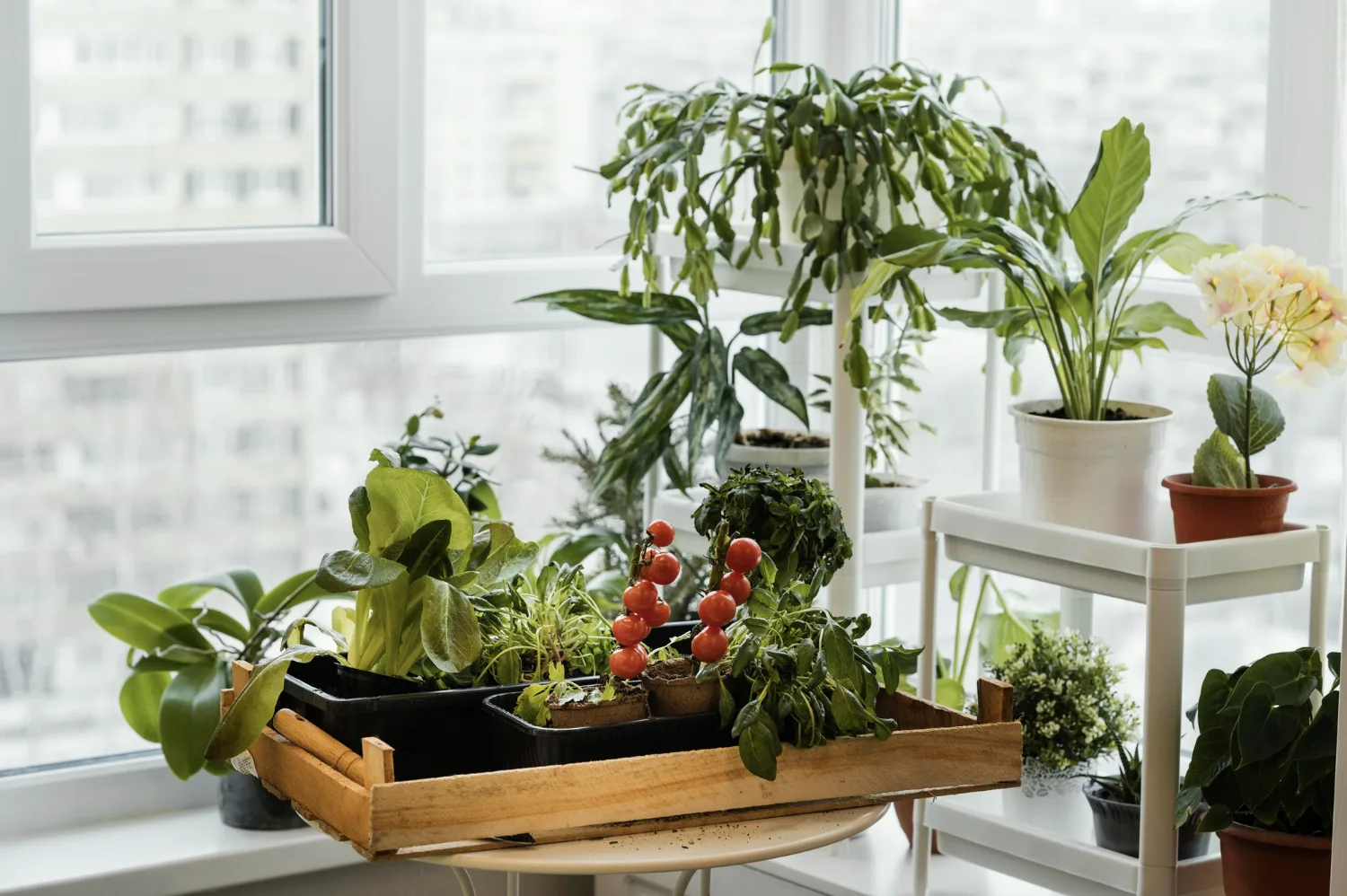
Basil
Basil is where things become a little more demanding.
It likes warmth and plenty of light. On a bright kitchen windowsill, it can grow beautifully, but in a darker spot it quickly becomes leggy, loses its fullness, and gradually gives up.
Pinch the growing tips regularly. This encourages branching and delays flowering.
I would not keep basil pressed against cold window glass. Do not drown it either. It prefers regular watering, but not constantly wet potting mix.
Cilantro
Cilantro is useful when you want a relatively quick harvest, but it is not a plant I would expect to remain attractive in the same pot all year.
It grows quickly and readily moves into flowering and seed production.
It is more practical to sow small batches in succession instead of relying on one plant for a continuous harvest.
This gives you a steady supply of younger plants rather than one exhausted pot.
Rosemary
Rosemary is not an especially easy plant for a dark kitchen.
It needs plenty of light and very well-draining soil. Indoors, the biggest problem is often the combination of low light, warm temperatures, and too much water.
Do not keep the soil constantly wet.
Do not be surprised if rosemary performs better in a bright, slightly cooler room than on a hot kitchen counter.
Thyme
Thyme is small, fragrant, and relatively easy to fit into a pot, but it also loves sun.
It prefers well-draining potting mix and does not tolerate constantly wet roots.
I would not plant it in the same container as mint. One prefers more moisture, while the other needs considerably drier conditions.
This is a good example of why “all the herbs in one beautiful planter” sometimes works better as a photograph than as a gardening decision.
Oregano
Oregano has needs similar to thyme.
It prefers bright light, good drainage, and soil that does not remain constantly damp.
It can be grown in a pot and is well suited to a sunny window. Once the plant becomes fuller, regularly trimming the tips encourages compact growth.
Can you simply buy supermarket herb pots?
Yes, but with one qualification.
Pots of basil, parsley, and other herbs sold in supermarkets are often planted very densely and grown under controlled conditions.
They are excellent for immediate use in the kitchen. If you want to turn them into longer-lasting plants, it may help to divide them carefully and repot them into suitable containers.
I would not expect every supermarket herb pot to become a permanent miniature garden automatically.
What kind of pots should you use?
The most important thing is that the pot has a drainage hole.
A decorative cachepot may look attractive, but there should be a functional growing pot inside it so excess water can drain freely.
I would not use an enormous pot for a small plant. A large volume of potting mix retains more water and dries more slowly, which can be a problem for many herbs.
One planter or several pots?
For a kitchen herb garden, I would prefer several separate pots.
This makes it possible to group plants according to their needs.
Moisture-loving herbs
Mint, parsley, and chives prefer soil that does not remain dry for long periods.
Drier-growing herbs
Rosemary, thyme, and oregano need more light and faster drainage.
Warmth-loving herbs
Basil prefers a warm, bright position and relatively regular watering.
For succession sowing
Cilantro and microgreens are more practical when sown in small batches.
This is also more practical when one plant becomes unhealthy or simply reaches the end of its season.
What kind of soil should you use?
For most herbs, a good-quality all-purpose potting mix is a reasonable starting point.
For rosemary, thyme, and oregano, I would improve the drainage by adding perlite, pumice, or another coarse material.
Heavy soil that remains wet for a long time is far from ideal for these herbs.
Mint and parsley may do better in a mix that retains slightly more moisture.
So even here, the universal solution is not entirely universal.
How often should you water herbs indoors?
The answer is predictably inconvenient: when the plant needs it.
Not every Tuesday. Not because the pot looks dry from across the room.
Check the potting mix.
Small pots can dry quickly, especially on a sunny windowsill. In lower light, the same pot may remain damp for much longer.
The soil should remain moderately moist according to the needs of the particular herb, but never constantly waterlogged.
Do indoor herbs need fertilizer?
If the herbs are actively growing and you harvest from them regularly, moderate feeding during the growing season may be useful.
More fertilizer does not automatically mean more flavor.
I would not fertilize a plant that is sitting in low light and barely growing.
Light first, fertilizer second.
How to harvest herbs so they keep growing
With leafy herbs, regular harvesting can actually help.
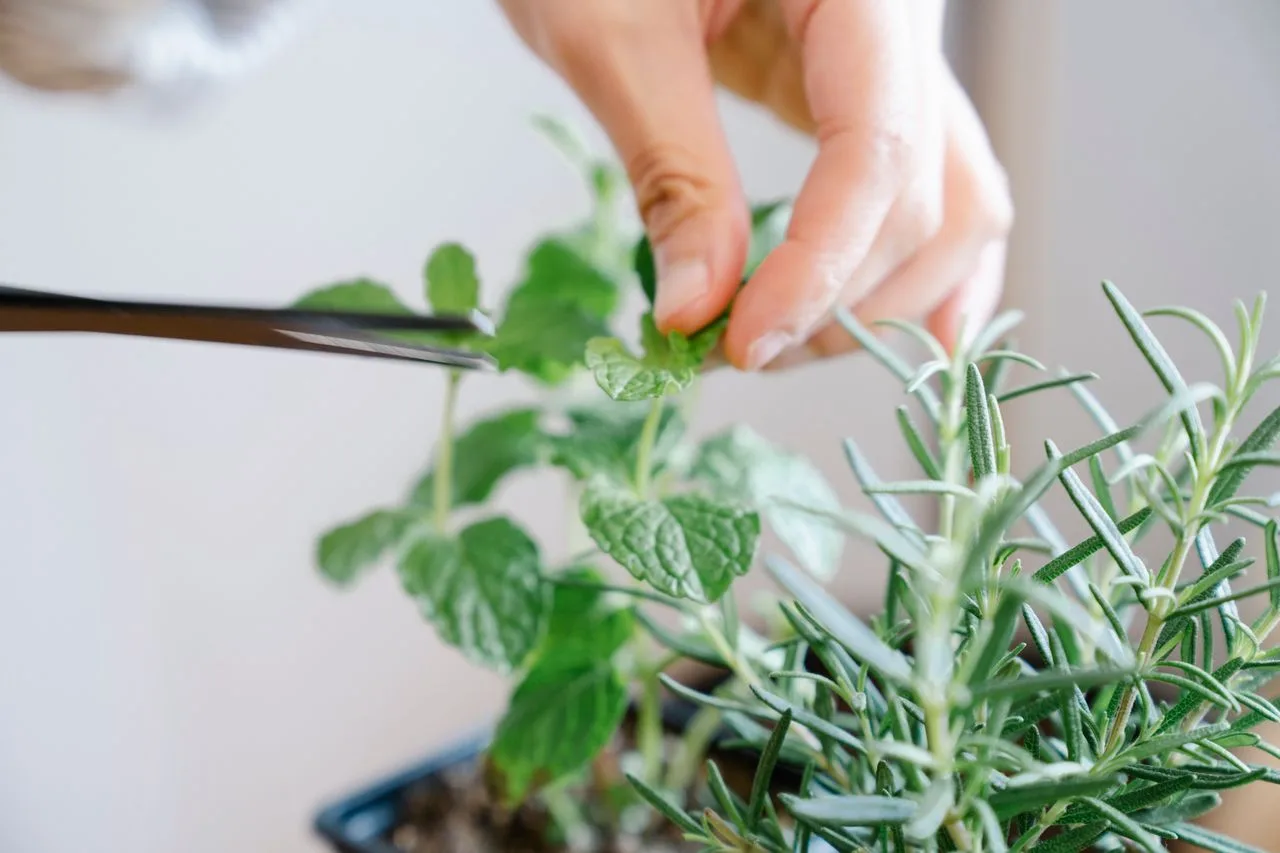
Do not wait until the plant becomes enormous and then cut it almost to the soil. It is better to harvest smaller amounts more often. For basil, mint, parsley, chives, and other fine stems, a set of Modern Sprout herb snips provides narrow blades for reaching into dense growth without crushing the surrounding leaves. Keep one pair for edible plants and clean the blades after use.
- Pinch the growing tips of basil.
- Cut young mint tips.
- Cut chive leaves while leaving the base intact.
- Harvest the older outer leaves of parsley.
- Trim the young tips of thyme and oregano.
What to do during the darker months
This is when expectations need to become realistic.
Shorter days mean slower growth. Parsley, mint, and chives may still provide some harvest on a very bright windowsill.
Basil can be grown indoors, but it needs warmth and plenty of light.
Rosemary and thyme also need strong light, although they do not necessarily need tropical temperatures.
In a very dark apartment, a grow light may be more practical than watching basil become longer, thinner, and paler by the week.
For general seasonal adjustments, see our guide to winter care for houseplants.
Are indoor smart gardens worth it?
They can be practical for someone who genuinely wants to grow fresh herbs throughout the year but does not have a suitable bright window.
Systems with LED lighting and a water reservoir reduce two of the main problems: insufficient light and inconsistent watering.
They are not essential. In an apartment with limited natural light, however, they may be more practical than replacing a row of struggling herb pots every few weeks.
This post may contain affiliate links. As an Amazon Associate, I earn from qualifying purchases.
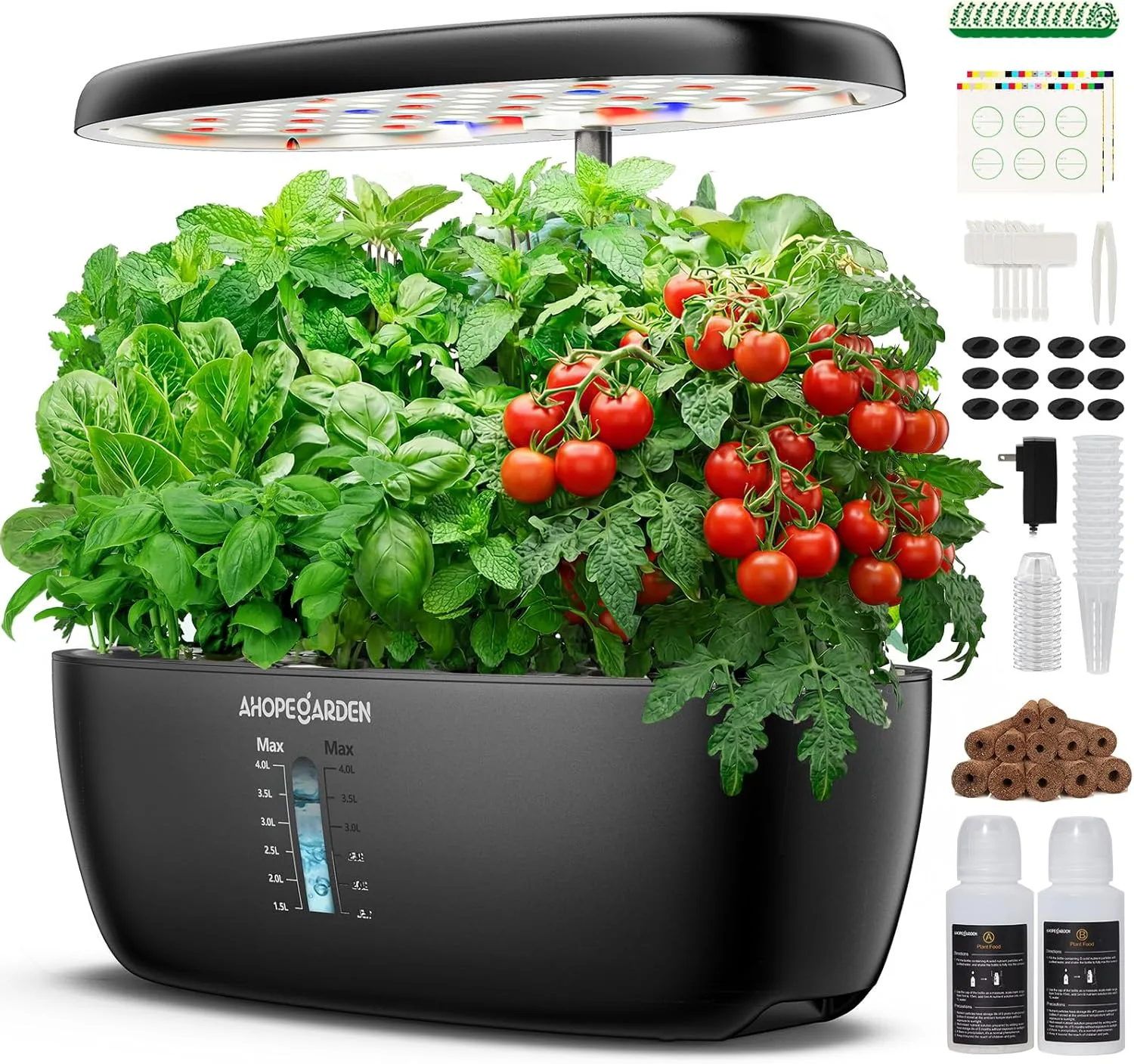
A countertop garden for homes without a bright herb window
When natural light is the main limitation, a compact hydroponic system can solve more than one problem at once. It provides its own light, keeps the roots supplied with water, and gives several small herbs a defined growing space instead of scattering pots across the kitchen.
This Ahopegarden system has room for up to twelve growing pods, an adjustable LED light, and a water reservoir with circulation. It is best suited to herbs, lettuce, and other relatively compact plants rather than large, long-lived crops.
It does not make every herb effortless. Basil will still need regular harvesting, mint should be kept under control, and different plants may grow at different speeds. But for a kitchen without a reliably bright windowsill, it offers more consistent conditions than ordinary pots placed in insufficient light.
The simplest indoor herb garden
If I were starting from scratch, I would not buy ten plants.
I would begin with:
- parsley;
- chives;
- mint.
I would place them in the brightest suitable window available.
Then I would add basil if the spot were warm and bright enough.
I would add rosemary, thyme, and oregano only if I had a genuinely sunny position.
This is less impressive than a photograph of twenty pots. But two months later, there is a much better chance that you will still have something to add to the salad.
The next step
If the plants in your home are beginning to outnumber the available windowsills, continue with how to arrange houseplants by light and space.