
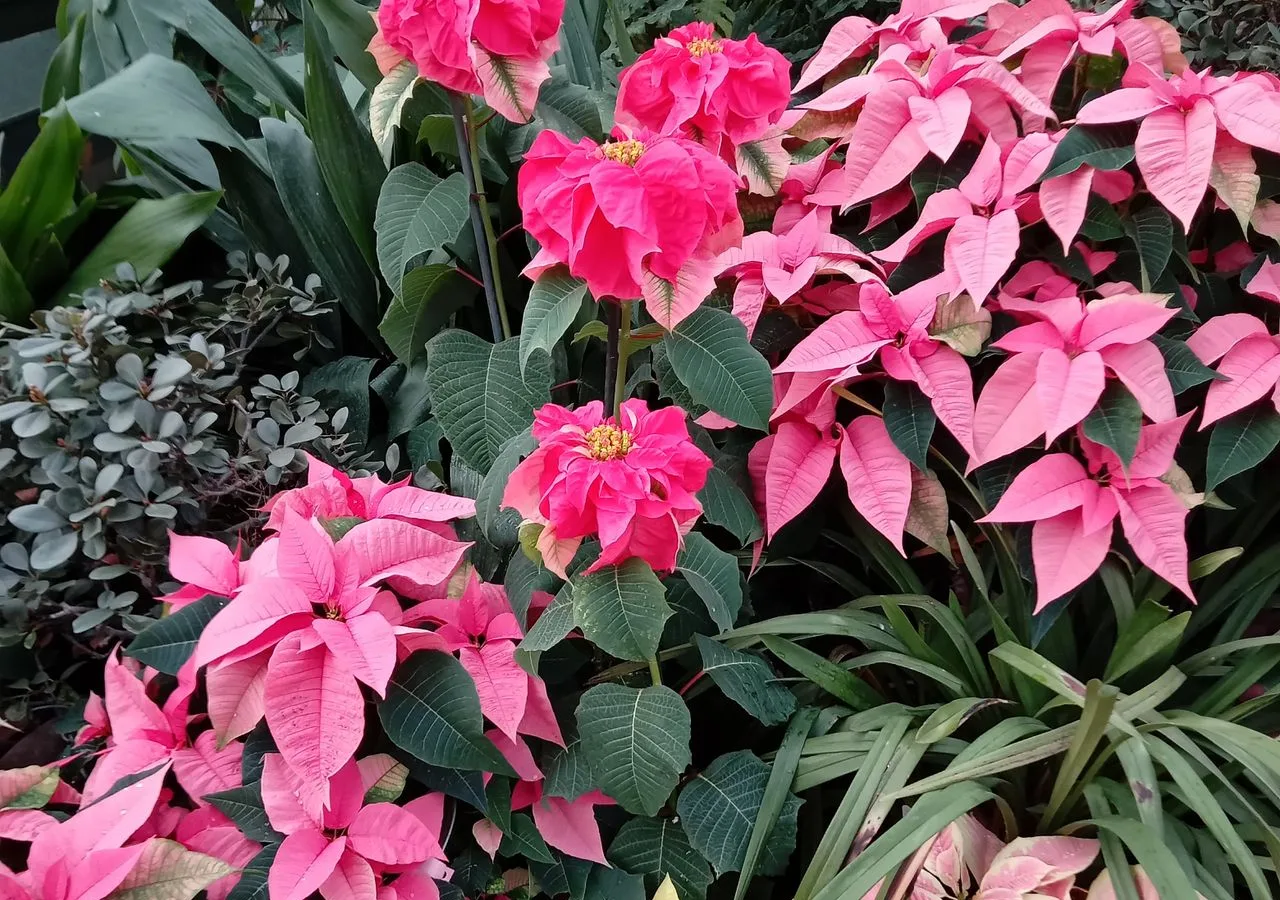
At Christmas, stores suddenly fill with plants we barely notice during the rest of the year.
A poinsettia beside the checkout. An amaryllis in a box. A cyclamen in a basket with a ribbon. A Christmas cactus that has chosen exactly this moment to show us why it has that name.
Because they look like seasonal decorations, we often treat them exactly that way. We place them in the prettiest spot, which is usually far from the window, close to a radiator, or on the table beside the fireplace. Then we water them “just in case.”
After the holidays, they begin to look unhappy, and we decide that these plants are simply disposable.
Not all of them are.
Some can live for years indoors, as long as we understand their seasonal rhythm. Most importantly, the four plants in this article have almost nothing in common when it comes to care.
For general conditions during the darker months, also see winter care for houseplants.
Christmas is what these plants have in common for us. For the plants themselves, light, temperature, water, and seasonal rhythm are entirely different.
Poinsettias do not enjoy the trip from the store to the car
Poinsettia, or Euphorbia pulcherrima, is one of the plants we most often buy in December.
The red parts we think of as flowers are actually colored bracts. The true flowers are the small structures in the center.
The biggest problem often begins before the plant even reaches your home. Poinsettias are sensitive to cold, drafts, and sudden temperature changes.
A plant that has been standing beside a cold entrance or carried to the car without protection in freezing weather may begin dropping leaves a few days later.
When buying: avoid poinsettias displayed outdoors or directly beside a constantly opening door. Ask for the plant to be wrapped well for transport.
Where to place a poinsettia
Once it reaches your home, place it in a bright position with filtered light.
Do not place it:
- directly beside a radiator;
- next to an air conditioner;
- on a cold windowsill where the leaves touch the glass;
- beside a frequently opened exterior door;
- in a dark corner simply because it looks good with the Christmas decorations.
A stable temperature matters more than finding the most festive table.
How to water a poinsettia
Water when the top layer of soil begins to dry.
Do not allow the potting mix to remain completely dry for long, but do not keep it constantly wet either.
If the plant is wrapped in decorative foil or placed inside a cachepot, check after watering to make sure the water can drain.
Beautiful foil can very easily become a small reservoir around the roots.
Can you keep a poinsettia after Christmas?
Yes.
After the holidays, a poinsettia can continue growing as a green houseplant. To make the bracts turn color again for the following Christmas, it needs a more specific routine with long periods of uninterrupted darkness in the fall.
It can be done, but it requires consistency.
If the bracts do not turn color again, that does not mean the plant has died. It will simply remain green.
Amaryllis is a gift that changes before your eyes
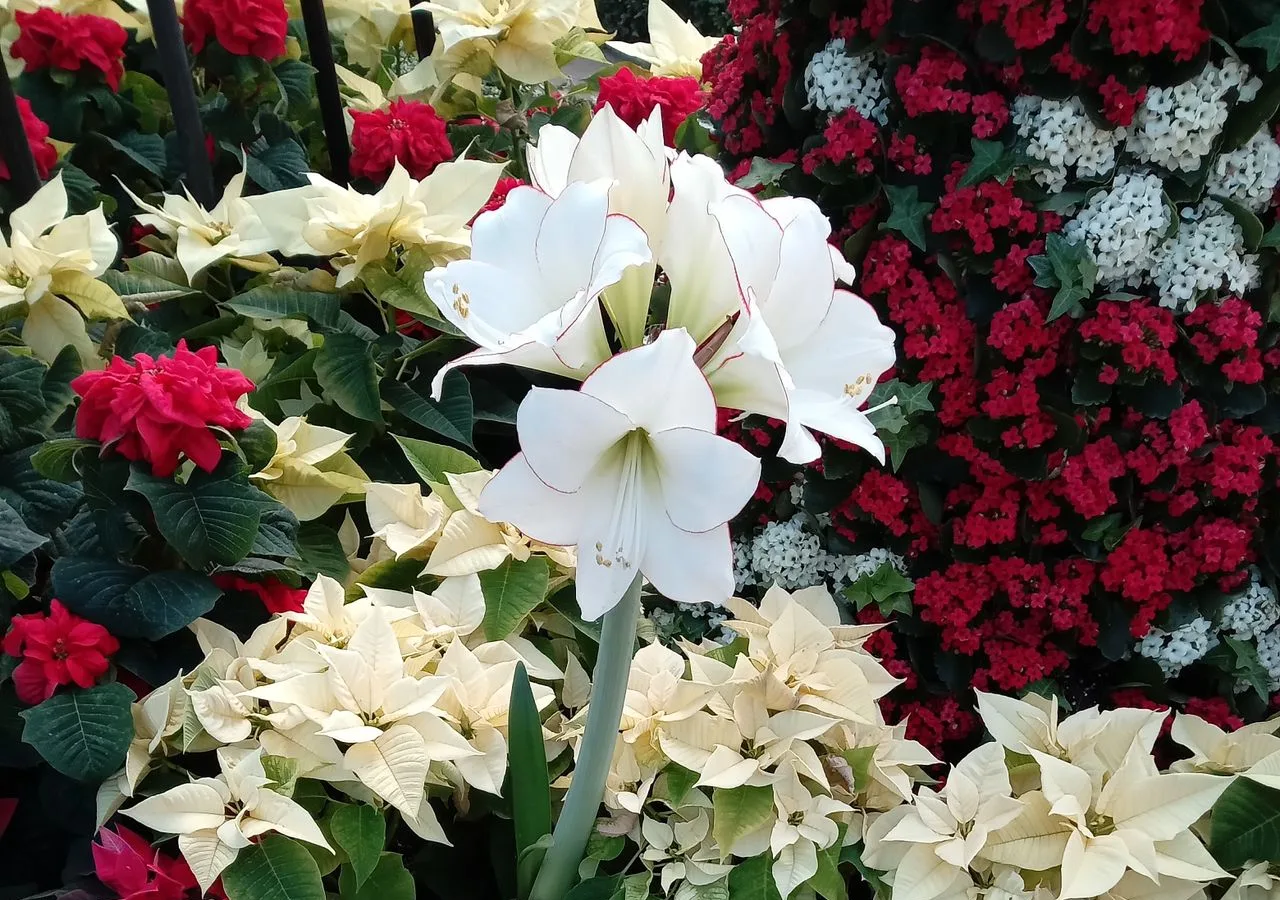
Amaryllis is often sold as a large bulb in a pot or decorative box.
It makes an especially good gift because part of the pleasure is watching a thick flower stalk emerge from the bulb and the large flowers gradually open.
Place the pot in a bright position and rotate it occasionally because the flower stalk will lean toward the window.
If the stem becomes tall and heavy, it may need discreet support. More broadly, these four Christmas plants respond very differently to warm rooms, cold windows, and dry indoor air. A TempPro TP65 wireless thermometer and hygrometer makes it easier to compare the temperature and humidity near a bright windowsill with the rest of the room, which is especially useful for cool-loving cyclamen and poinsettias placed near doors or cold glass.
How to water amaryllis
Water sparingly at first.
The bulb should not sit in constantly wet soil. Once growth becomes active, its need for water gradually increases, but good drainage remains important.
Water the soil rather than pouring water directly into the center of the bulb.
When planting, the upper part of the bulb usually remains above the soil. Do not bury it completely like a potato.
What to do with amaryllis after flowering
After the flowers fade, cut off the flower stalk but leave the leaves.
The leaves are what allow the bulb to rebuild its energy reserves for the next bloom.
Keep the plant in bright light, water moderately, and feed it during active growth.
Later, the amaryllis may enter a dormant period. This does not mean you have lost it. It is part of its natural cycle.
Cyclamen prefers cool conditions, not heat
Cyclamen looks wonderful in winter because that is when it flowers. A heavily heated living room, however, is not always the best place for it.
It prefers a bright, cooler room.
In a room that is too warm, the flowers may fade more quickly, the leaves may turn yellow, and the plant may look as though we have done something terrible, when in fact it is simply too hot.
A suitable place may be:
- a bright, cooler windowsill;
- an unheated but protected room;
- a cool bedroom;
- a bright hallway with a suitable temperature.
How to water cyclamen
Cyclamen prefers even moisture but not wet soil.
Water carefully around the edge of the pot or from below, allowing the plant to absorb water briefly before pouring away any excess.
Do not keep the center of the plant constantly wet.
Remove faded flowers and yellowing leaves from the base rather than simply cutting off the tips.
Cyclamen after flowering
Once flowering ends, the leaves may gradually begin to yellow and the plant may enter dormancy.
This does not necessarily mean the cyclamen has died.
Reduce watering gradually and allow the tuber to rest. When new growth appears later, watering can be resumed carefully.
Cyclamen has a seasonal rhythm. Trying to keep it in constant active growth may be worse than allowing it to rest.
A Christmas cactus is not a desert cactus
The Christmas cactus, or Schlumbergera, is one of the best long-term Christmas houseplants.
It can live for many years and, in good conditions, bloom again every winter.
Despite its name, it should not be treated like a desert cactus. It comes from humid forest environments and prefers softer light and more even moisture than typical desert species.
Place it in bright, filtered light.
Water when the upper part of the potting mix begins to dry, without keeping the plant constantly wet.
For complete care instructions, see How to Grow a Christmas Cactus Indoors.
Why does a Christmas cactus drop its buds?
A Christmas cactus may react to sudden changes in conditions, especially when it already has buds.
Possible causes of bud drop include:
- sudden relocation;
- a change in temperature;
- drafts;
- allowing the plant to dry out;
- overly wet soil;
- constantly turning or moving the pot.
Once you have found a suitable place, leave the plant there and allow it to finish flowering in peace.
How to make a Christmas cactus bloom again
Flowering is connected to seasonal changes in temperature and the length of the night.
During the fall, cooler conditions and long, uninterrupted periods of darkness help the plant form buds.
This does not mean you need to place it in a closet every day. It simply means avoiding bright light late into the evening and an overly warm room.
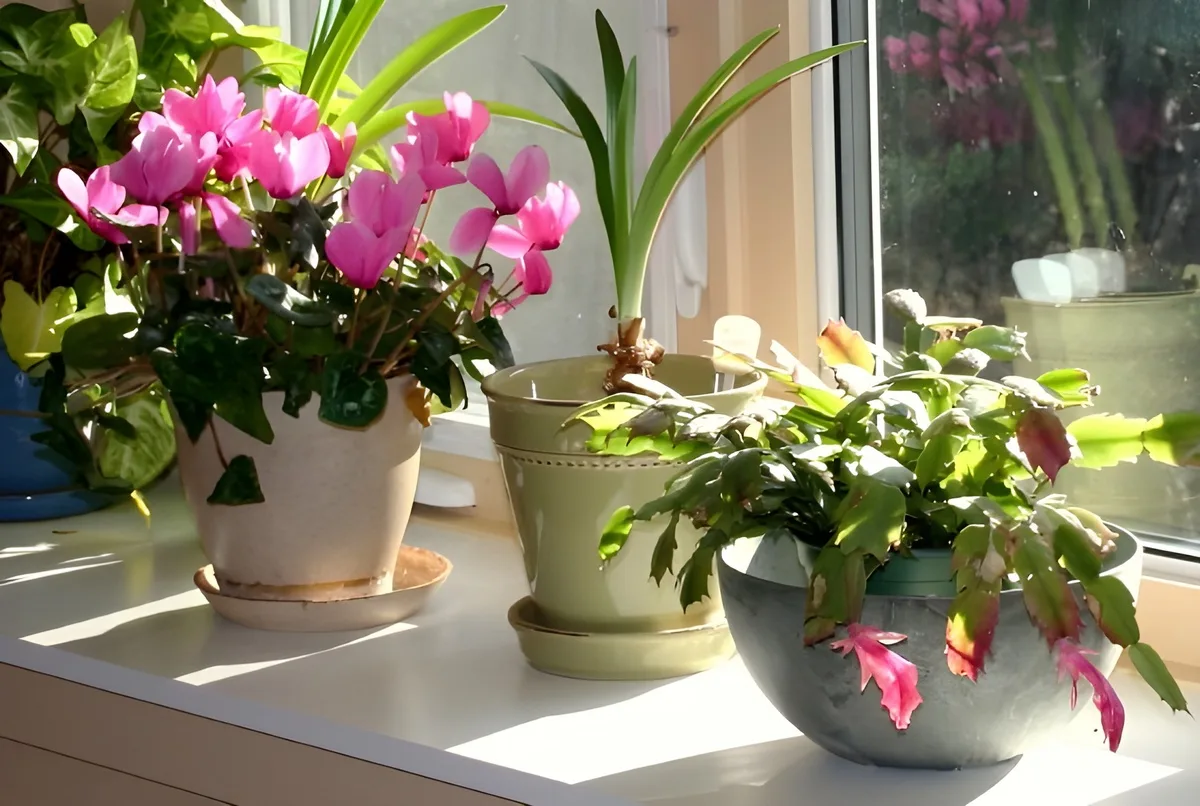
Four plants, four different routines
Poinsettia
A bright, warm, stable position without drafts, cold transport, or standing water.
Amaryllis
Bright light, moderate watering, and enough time for the leaves to rebuild the bulb after flowering.
Cyclamen
A bright, cool position, careful watering, and respect for its dormant period.
Christmas cactus
Bright indirect light, moderate moisture, and a seasonal change in temperature.
That is exactly why I would not place all four plants together simply because they are “Christmas plants.”
Christmas is what they have in common for us. Not for the plants.
Which one makes the easiest gift?
For someone without much experience, I would choose a Christmas cactus.
It is long-lived and, in good conditions, can bloom again every year.
Amaryllis is also a wonderful choice because the growth itself is part of the gift.
Poinsettia is excellent for strong seasonal color, but it is more sensitive to cold and mistakes during transport.
I would give cyclamen to someone who has a bright, cooler room.
For more ideas, see gifts for plant lovers.
What to look for when buying
I would not choose only the largest plant or the one with the most open flowers.
Check that:
- the leaves look healthy;
- there are no visible pests;
- the soil does not smell stale;
- the plant is not wilted;
- flowering plants also have unopened buds;
- the pot is not standing permanently in water;
- the plant is not exposed to a cold draft.
With poinsettias, I would avoid plants that have been displayed outdoors or directly beside a cold entrance.
What about the decorative foil?
It is pretty.
But once the plant reaches your home, check how the water drains.
If the inner pot has drainage holes but the foil or cachepot traps all the water underneath, the roots can become waterlogged very easily.
Always check for standing water after watering.
This post may contain affiliate links. As an Amazon Associate, I earn from qualifying purchases.
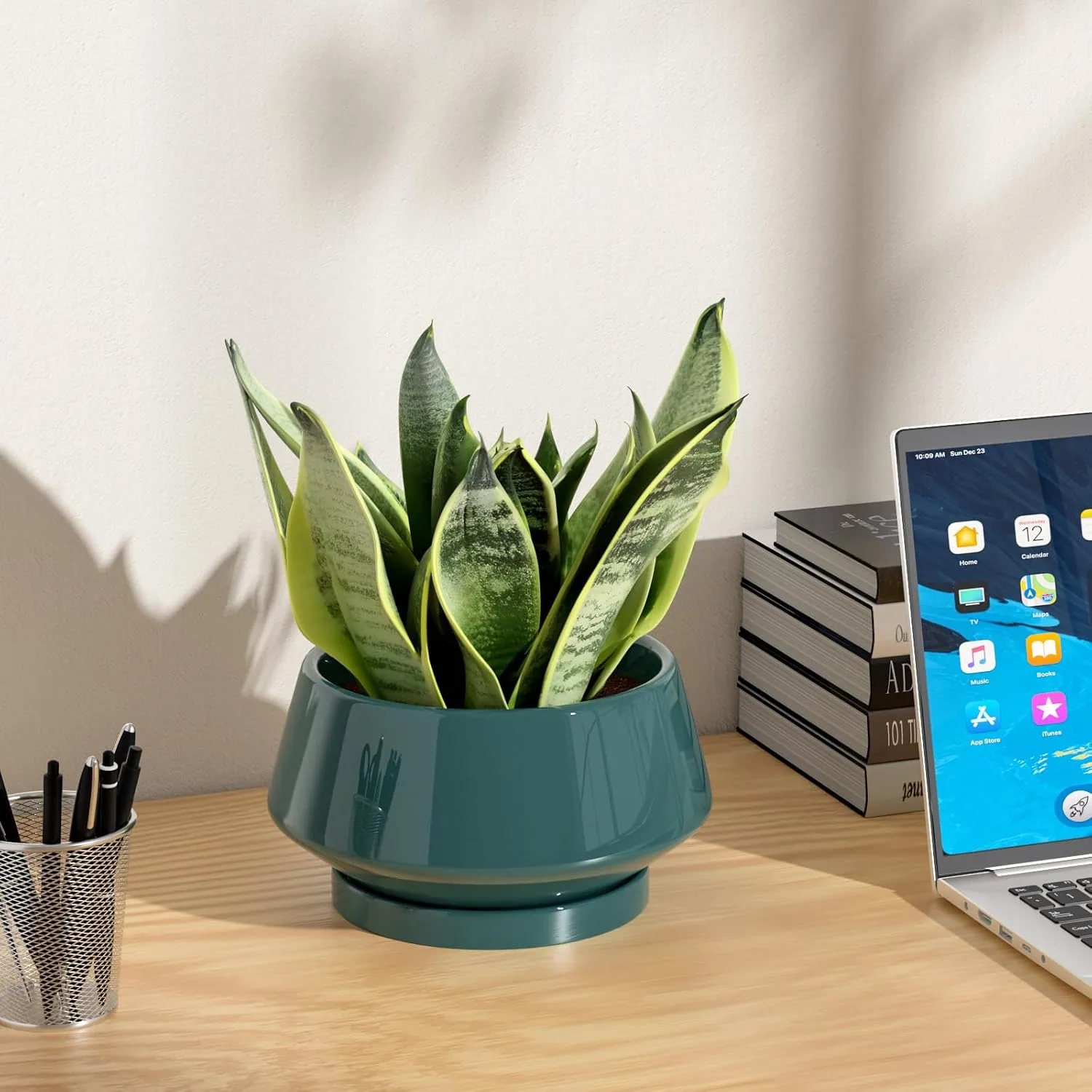
A substantial ceramic planter with real drainage
A decorative container is useful only when it works with the plant rather than trapping water around the roots. For a larger poinsettia, amaryllis, or another seasonal plant that genuinely needs a new container, a ceramic planter with a drainage hole and matching saucer is more practical than sealed holiday foil.
This ten-inch ceramic planter includes a drainage hole and saucer, providing room for a more established plant while allowing excess water to escape. The size makes it better suited to a larger specimen than to a small cyclamen or young Christmas cactus.
Do not repot a flowering plant automatically just because the container is attractive. Use the planter when the current pot is genuinely unsuitable, and keep the root ball at an appropriate size rather than surrounding it with an excessive volume of wet soil.
Should you fertilize during the holidays?
Usually, I would not rush to do it.
A flowering plant bought from a store has already been grown to reach its decorative stage.
Correct light, temperature, and watering are more important.
Feeding makes more sense later, when the plant begins active growth again and genuinely needs additional nutrients.
Not all Christmas plants are disposable
This may be the most useful point in the entire article.
- A Christmas cactus can live for many years.
- Amaryllis can bloom again.
- Cyclamen has a dormant period.
- Poinsettia can be kept and grown, although encouraging it to color again requires more effort.
After New Year, everything does not have to end in the trash.
First, check the plant’s natural life cycle.
My four choices
For a beginner
Christmas cactus.
For someone who enjoys watching plants grow
Amaryllis.
For a bright, cool home
Cyclamen.
For a strong festive effect
Poinsettia.
And someone who already has many plants will probably appreciate a gift they genuinely have room for.
That rule works well beyond Christmas.