
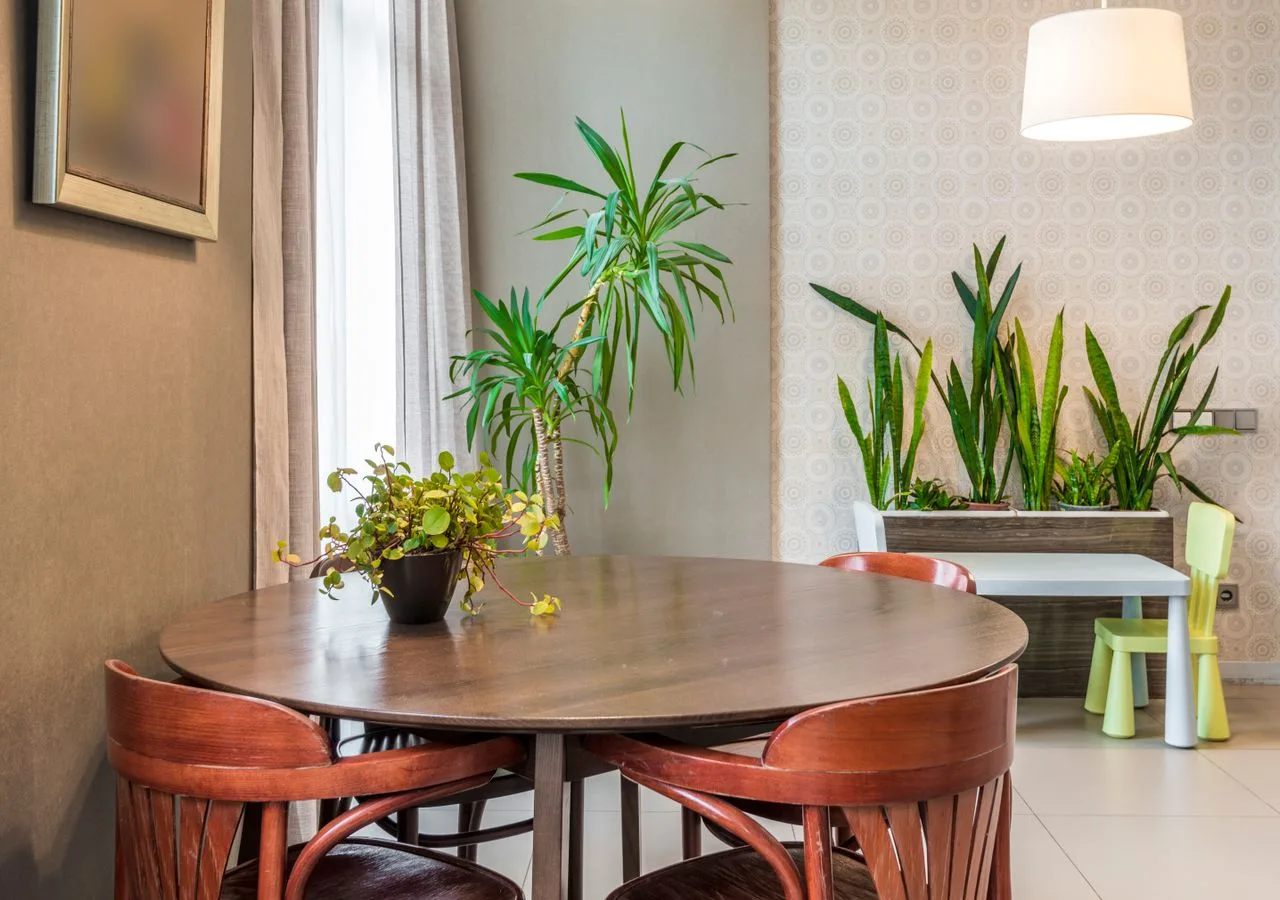
“Winter garden” sounds a little more formal than it needs to. You do not need a glassed-in porch, a greenhouse, or a dedicated room filled with palm trees.
Sometimes a winter garden is simply the brightest corner of the home, where the plants are arranged in a way that makes sense for both them and us.
A beautiful composition is wonderful, but if the light-loving plant goes in the back, the fern sits above the radiator, and the succulent ends up in the darkest corner, the arrangement may look good for about two weeks. After that, reality begins.
That is why I would arrange the plants according to their conditions first and the interior design second.
If you are still choosing plants for the space, begin with the general guide to houseplants by light level.
Light first, then the plants’ needs, then the available space, and only after that the design.
Start with the light, not the furniture
When deciding where to create a green corner, the most important question is simple: where is there actually enough natural light?
Not where there happens to be an empty corner. Not where a shelving unit would look good. And not where Pinterest has decided the monstera should live.
Light is the main resource. During the darker months, it matters even more because the days are shorter and the sun is weaker.
The brightest places are usually directly beside a window, and the amount of light drops quickly as you move farther into the room.
Before arranging anything, check:
- which windows receive the most light;
- whether there is direct sun;
- whether heavy curtains block the light;
- whether trees or nearby buildings shade the window;
- how far the plants will be from the glass;
- whether the area is close to a radiator or draft.
A south-facing window is not the same as a north-facing one
Window orientation matters.
A south- or southeast-facing window usually provides stronger light and is better suited to plants that need brighter conditions.
Plants that may do well there include:
An east-facing window often provides gentler light, and many houseplants grow well there.
With a north-facing window, the selection requires more care. Plants that usually cope better include:
- ZZ plant;
- snake plant;
- aspidistra;
- aglaonema;
- pothos;
- some philodendrons.
This does not mean these plants enjoy darkness. They simply tolerate lower light better than many other species.
For more examples, see houseplants for low light.
Create three light zones
This is one of the most practical ways to arrange a larger plant collection.
Zone 1: directly beside the window
Place the plants with the highest light requirements here.
- aloe and succulents;
- hoya;
- some ficus plants;
- citrus plants;
- herbs;
- flowering plants.
Zone 2: slightly farther into the room
This area can suit plants that prefer bright, indirect light.
- monstera;
- philodendron;
- peace lily;
- dracaena;
- pothos.
Zone 3: the lower-light area
The choice becomes more limited here.
- ZZ plant;
- snake plant;
- aspidistra;
- aglaonema.
Outside the light zones
A windowless cabinet, dark hallway, or deep shelf is not suitable without additional lighting.
Do not place tall plants in front of short ones
It sounds obvious, but it happens all the time.
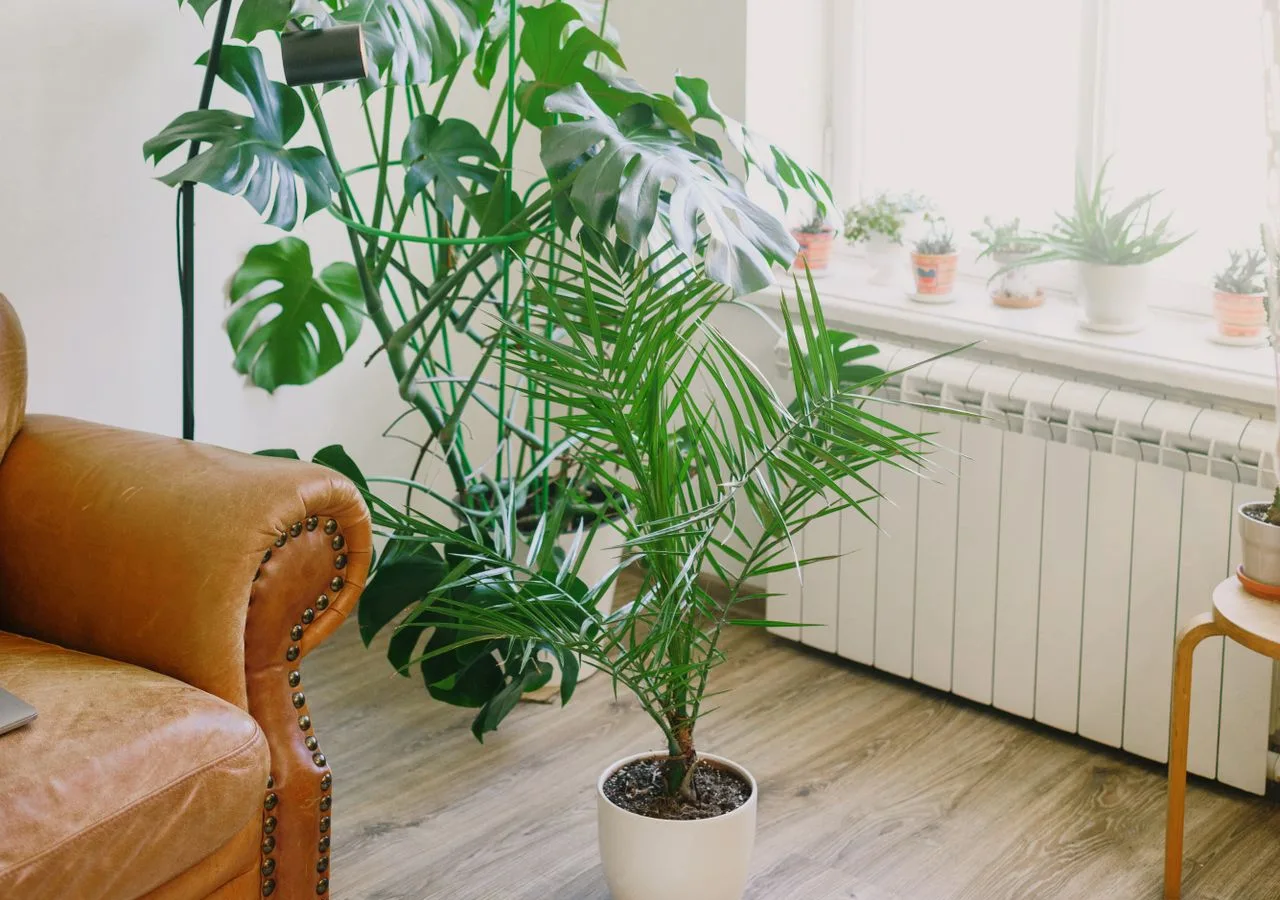
A large monstera can easily block the light from several smaller plants behind it.
For that reason, I would use a simple rule when grouping plants: tall ones in the back, short ones in the front.
This is not only about appearance. It also allows more of the foliage to receive light.
You can use:
- a low table;
- a bench;
- a shelving unit;
- plant stands;
- pots and cachepots at different heights.
I would not turn the green corner into a wall of stands. The plants should remain easy to water, clean, and inspect.
Grouping plants can be useful
Plants often look better in groups than scattered one by one throughout every room.
There is also a practical reason. When plants are placed close together, the air around the leaves may become slightly more humid.
This can be especially useful for plants such as:
- calathea;
- maranta;
- ferns;
- peace lily.
However, I would not group everything together without thinking. Succulents and plants that prefer drier conditions can form a separate group.
Group plants according to watering needs
This principle is less obvious, but it can make everyday care much easier.
When plants with similar needs are placed together, watering becomes simpler and more consistent.
Drier group
- snake plant;
- ZZ plant;
- aloe;
- hoya.
Moderate watering
- monstera;
- philodendron;
- dracaena;
- pothos.
Moisture-loving group
- calathea;
- Boston fern;
- peace lily.
Separate bright-light group
- succulents;
- aloe;
- herbs;
- flowering plants.
This reduces the chance of watering every plant in exactly the same way simply because they happen to share one shelf.
Do not overcrowd the window
As the collection grows, the natural impulse is to place the pots as close together as possible.
However, the leaves still need space.
Overcrowding:
- reduces the available light;
- limits air circulation;
- makes pest inspections more difficult;
- complicates watering;
- turns every small move into a logistical operation.
Leave some space between the plants. A green corner is not a storage area.
Do not use the radiator as a plant stand
This is especially important during the cooler months.
Sometimes the radiator sits directly below the brightest window, which creates an awkward choice. The plant needs light, but it does not need a constant stream of hot, dry air.
More sensitive plants include:
- ferns;
- calatheas;
- marantas;
- peace lilies.
If necessary, use a stand that keeps the plants farther from the radiator instead of placing them directly above it.
For general seasonal care, see winter care for houseplants.
Watch out for cold window glass
The opposite problem is a window that becomes too cold.
A plant may be in a perfectly bright position, but if its leaves touch the glass on a cold night, the tissue can be damaged.
Take extra care with pots placed:
- on very cold stone windowsills;
- beside balcony doors;
- in drafty areas;
- behind heavy curtains that separate the plants from the warmer room air.
Shelving is useful, but not every shelf receives the same light
A large plant shelf can look wonderful.
The problem is that the top shelf may receive plenty of light while the bottom shelf gets almost none.
Check how the light actually falls across the shelving unit.
Plants that need more light can go on the upper levels. On the lower shelves, I would place more tolerant species or add supplemental lighting.
Practical test: look at the shelf at different times of day. One level may be bright in the morning and completely shaded by the afternoon.
This post may contain affiliate links. As an Amazon Associate, I earn from qualifying purchases.
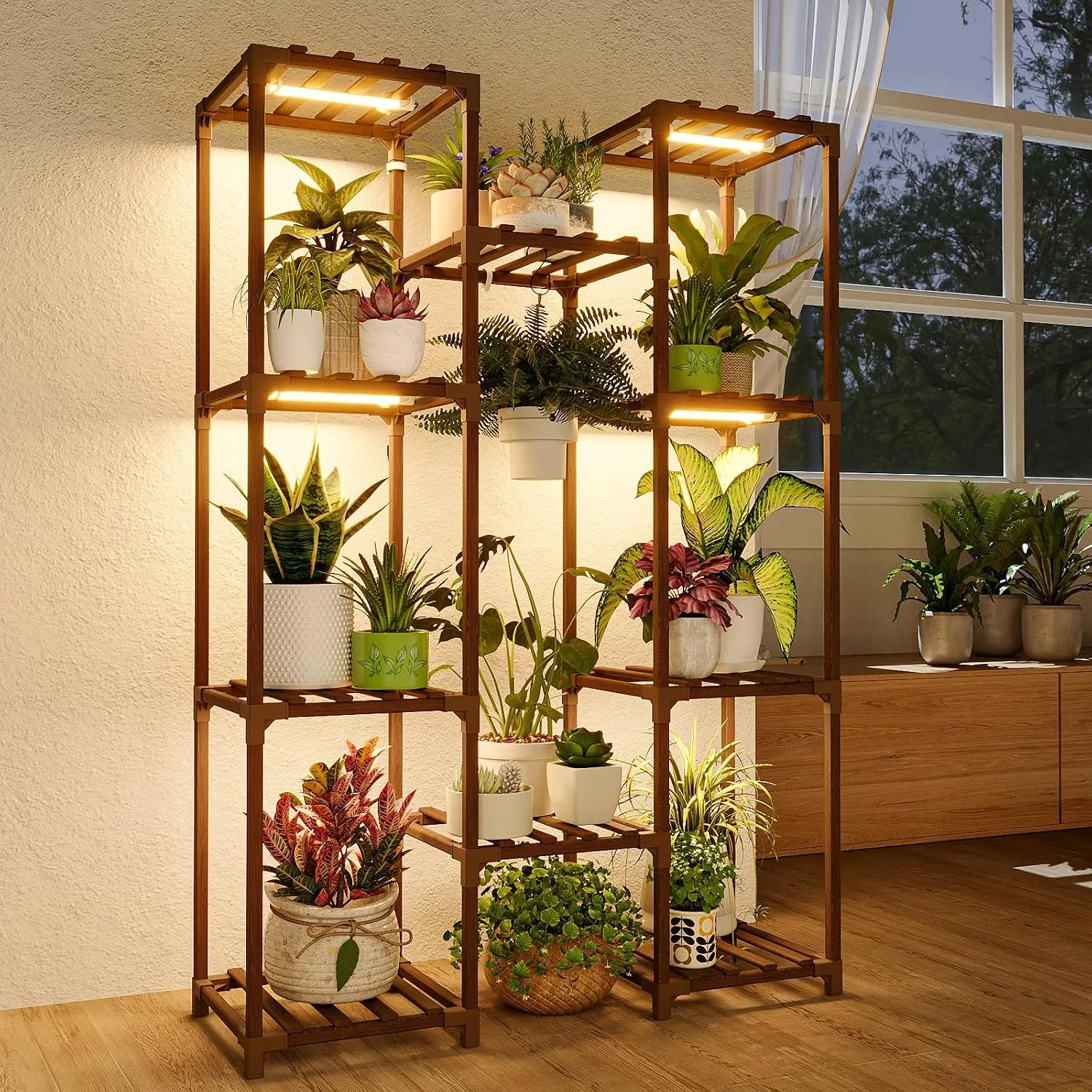
A plant stand that adds both height and usable light
For a larger collection, a stand with integrated grow lights can be more practical than crowding every pot onto one windowsill. It creates several usable levels while giving the lower shelves their own light instead of leaving them permanently shaded.
This Bamworld plant stand is designed for multiple pots and includes supplemental grow lighting. I would use it for small and medium houseplants, keeping taller specimens beside it rather than trying to force every plant onto the same structure.
Trailing plants can free up a surprising amount of space
Pothos, philodendron, hoya, and other trailing or climbing plants are useful in small rooms.
You can place them:
- on top of a tall cabinet;
- on a wall-mounted shelf;
- in a hanging pot;
- on an upper shelf.
However, the location still needs suitable light. A hanging pot three yards from the window does not become brighter simply because it looks attractive.
Large plants need their own space
A monstera, rubber plant, or large dracaena can visually carry the entire green corner.
There is no need to surround it with another twenty pots.
One large plant with a few smaller ones often looks better than a space filled to its absolute limit.
Leave enough room for the leaves to develop instead of constantly pressing against furniture, walls, and neighboring plants.
For a large rubber plant, monstera, citrus tree, or another heavy pot, a set of heavy-duty rolling plant caddies with locking wheels can make seasonal rearranging much easier. The two caddies can be used for larger pots that need to be moved closer to better light, pulled forward for cleaning, or shifted away from cold window glass without repeatedly lifting the entire container.
Do not move plants constantly
While arranging a space, it is easy to move one pot from room to room until it looks right.
It is more sensible to assess the conditions first.
Once you find a suitable location, allow the plant time to adapt. Ficus plants, in particular, can react badly to frequent changes.
One fallen leaf does not necessarily mean the pot should be moved again that same day.
Rotate the plants
Plants beside a window often begin growing toward the light.
Rotating the pot from time to time helps the plant develop more evenly.
You do not need to do this every day. An occasional turn is enough, especially if the plant is leaning strongly toward the window.
For plants that react sensitively to changes in orientation, make the adjustment gradually.
When does a grow light make sense?
If the only practical place for the green corner is far from a window, supplemental lighting may be worthwhile.
It can also be useful for:
- kitchen herbs;
- succulents;
- seedlings;
- light-loving plants during the darker months;
- deeper shelves on a plant stand.
The light should not be only a decorative bulb. It needs to provide enough usable light at an appropriate distance from the leaves.
A saucer beneath the pot matters more than it seems
A green corner in the living room is lovely until you discover a water ring on the wooden cabinet.
Use:
- saucers;
- plastic nursery pots inside cachepots;
- waterproof trays;
- cachepots that can actually hold the drained water.
After watering, check whether water has collected underneath. In a group of many pots, one leaking container can easily go unnoticed.
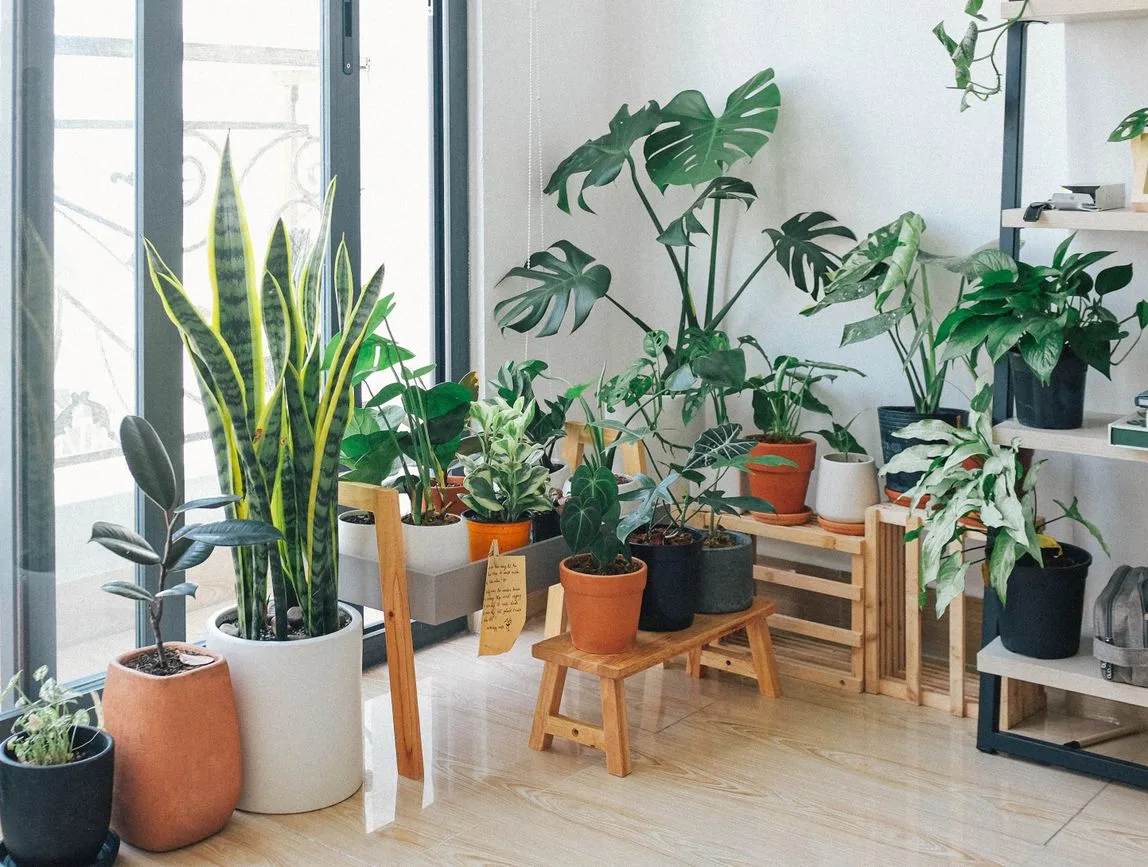
Pot colors can bring different plants together
I would not buy every pot from the same collection. That can quickly begin to look like a store display.
Still, some visual connection can be useful.
For example:
- similar neutral colors;
- two or three repeated materials;
- matching saucers;
- several pots in the same green or terracotta tone.
The plants already provide plenty of variety. Every pot does not need to compete for attention as well.
How I would arrange a small green corner
With one bright window and about three feet of free space, I would begin with:
- one taller plant in the back;
- two or three medium plants at different heights;
- one trailing plant;
- several small pots in the front.
For example:
monstera + philodendron + aglaonema + pothos + a small snake plant.
And I would stop there.
The greatest risk with houseplants is not empty space. It is usually the moment when we decide there is room for “just one more pot.”
If you have many plants
In that case, I would divide them into several green areas instead of creating one enormous indoor jungle.
Bright window
Succulents, hoya, herbs, and other light-loving plants.
Living room
Monstera, philodendrons, ficus plants, and larger foliage plants.
More humid area
Calatheas, ferns, peace lilies, and other plants that dislike dry air.
Kitchen
Herbs and small edible plants in a location with enough light.
For growing herbs at home, see how to grow herbs indoors.
A winter garden does not have to exist only in winter
If the plants are arranged well according to their light, space, and care needs, there is no reason to dismantle everything in spring.
During the warmer months, simply move the plants that receive too much direct sun, take some of them outside onto the patio, and adjust the watering routine.
A well-arranged green corner can work throughout the year.
My rule for arranging plants
- Light first.
- Then the plants’ needs.
- Next, the available space.
- And only after that, the design.
A beautiful plant in the right place almost always looks good.
A beautifully arranged plant in the wrong place soon begins to look unhappy.
The next step
For ideas that can genuinely help someone with a large plant collection, continue to gifts for flower and plant lovers.