
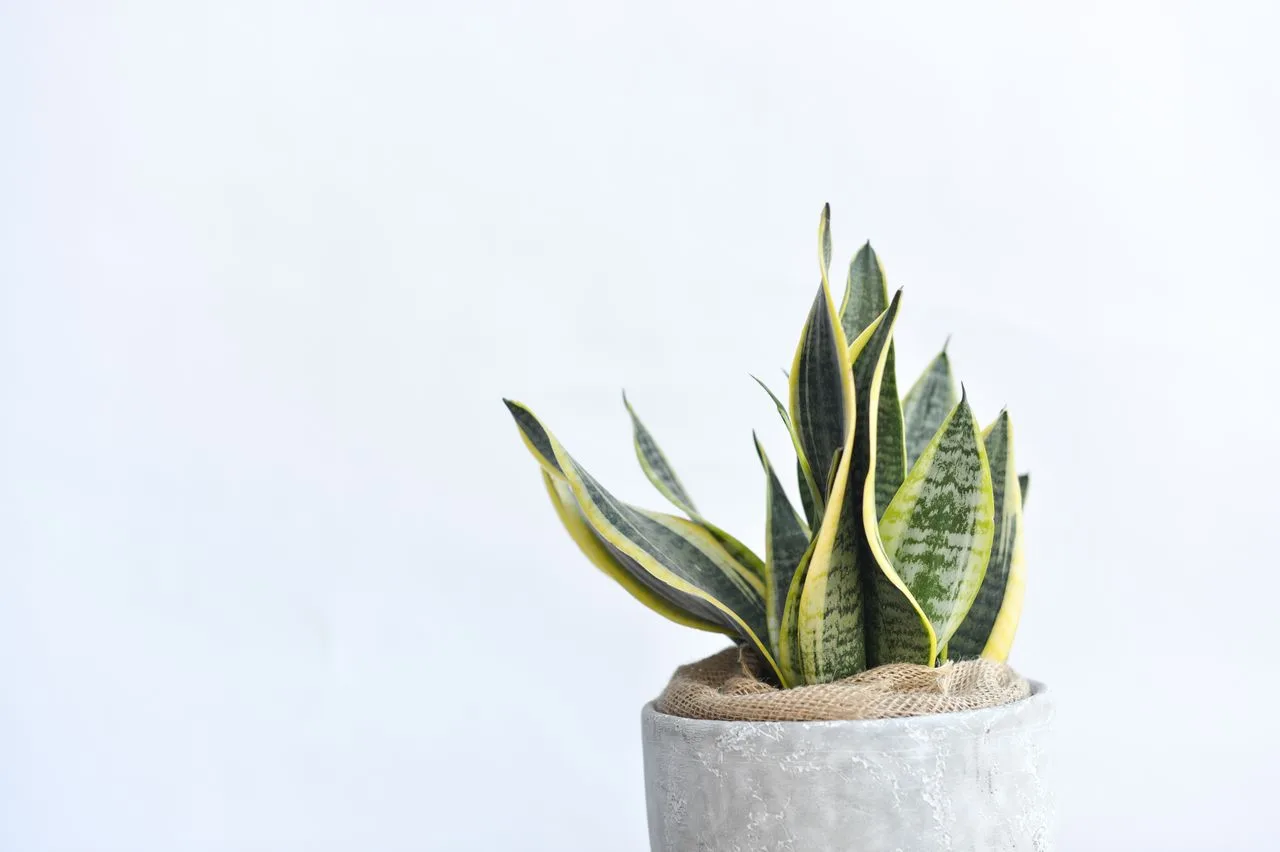
Snake plant is one of those houseplants that can tolerate a fair amount of neglect and still look respectable. That makes it an excellent choice for busy people, offices, and places where nobody wants to think about watering every few days.
Its greatest enemy is not dry air or even lower light. It is too much water. The thick leaves and fleshy rhizomes store moisture, so with a snake plant, adding a little extra “just in case” is usually a bad idea.
This article is part of our guide to houseplants by light level.
Snake plant tolerates a great deal, but wet roots are not among the things it forgives easily.
Snake plant at a glance
| Botanical name | Dracaena trifasciata |
|---|---|
| Light | Low to bright indirect light |
| Watering | Infrequent, after the potting mix has dried completely |
| Humidity | Average household humidity; tolerates dry air |
| Difficulty | Very easy |
| Best location | Bedroom, office, living room, or narrow bright corner |
| Toxicity | Toxic if ingested by people or pets |
Where to place a snake plant
Snake plant has a reputation as a plant for dark rooms, and it does tolerate lower light better than many other houseplants. That does not mean a dark corner is its ideal location.
In brighter indirect light, it grows faster, produces stronger leaves, and variegated varieties retain clearer markings. In a very dark position, growth may slow almost to a stop.
It can stand near an east- or west-facing window. Near a south-facing window, protect it from very strong midday sun, particularly if the plant has not been gradually accustomed to brighter conditions.
During warm weather it can also spend time on a protected balcony or patio, provided it is not moved suddenly from dim indoor light into intense sun.
How to water a snake plant
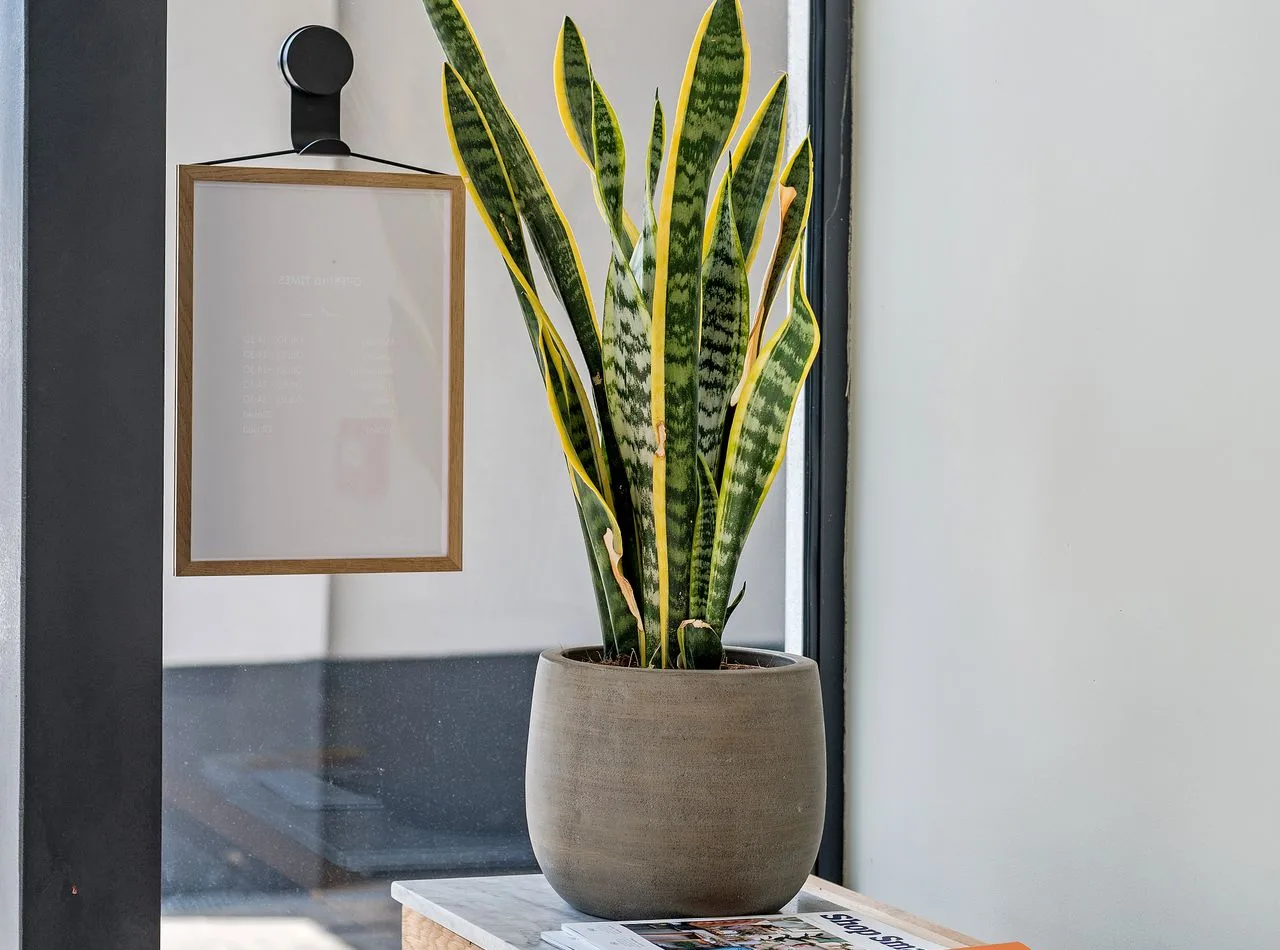
Allow the potting mix to dry completely before watering again. Snake plants store moisture in their leaves and rhizomes, so they cope much better with a short dry spell than with continuously damp soil.
Do not follow a fixed calendar. In a warm, bright location the pot will dry faster, while in lower light and cooler conditions moisture can remain in the soil for much longer.
When you do water, soak the potting mix thoroughly and allow the excess to drain. Then wait until the soil is dry well below the surface before watering again.
Practical note: when you are wondering whether your snake plant already needs water, the answer is often “not yet.”
Soil and pot
Snake plant needs a very well-draining potting mix. A succulent or cactus mix is a good starting point, especially when it contains coarse materials that keep air around the roots and rhizomes.
A coarse inorganic succulent mix can be useful when ordinary potting soil stays wet for too long. It helps create a looser structure without relying on a heavy, moisture-retentive substrate.
The container must have a drainage hole. With this plant, a decorative outer pot with no drainage becomes particularly risky when water is allowed to collect at the bottom.
Humidity and temperature
Dry indoor air is not a problem for snake plant. It does not need high humidity, regular misting, or a humidifier.
Ordinary household temperatures are generally suitable. The more important precaution is not leaving the plant somewhere very cold while the potting mix is wet, because that combination is particularly hard on the roots.
Dust can be wiped from the leaves occasionally with a damp cloth. That is more useful than repeatedly spraying the foliage.
This post may contain affiliate links. As an Amazon Associate, I earn from qualifying purchases.
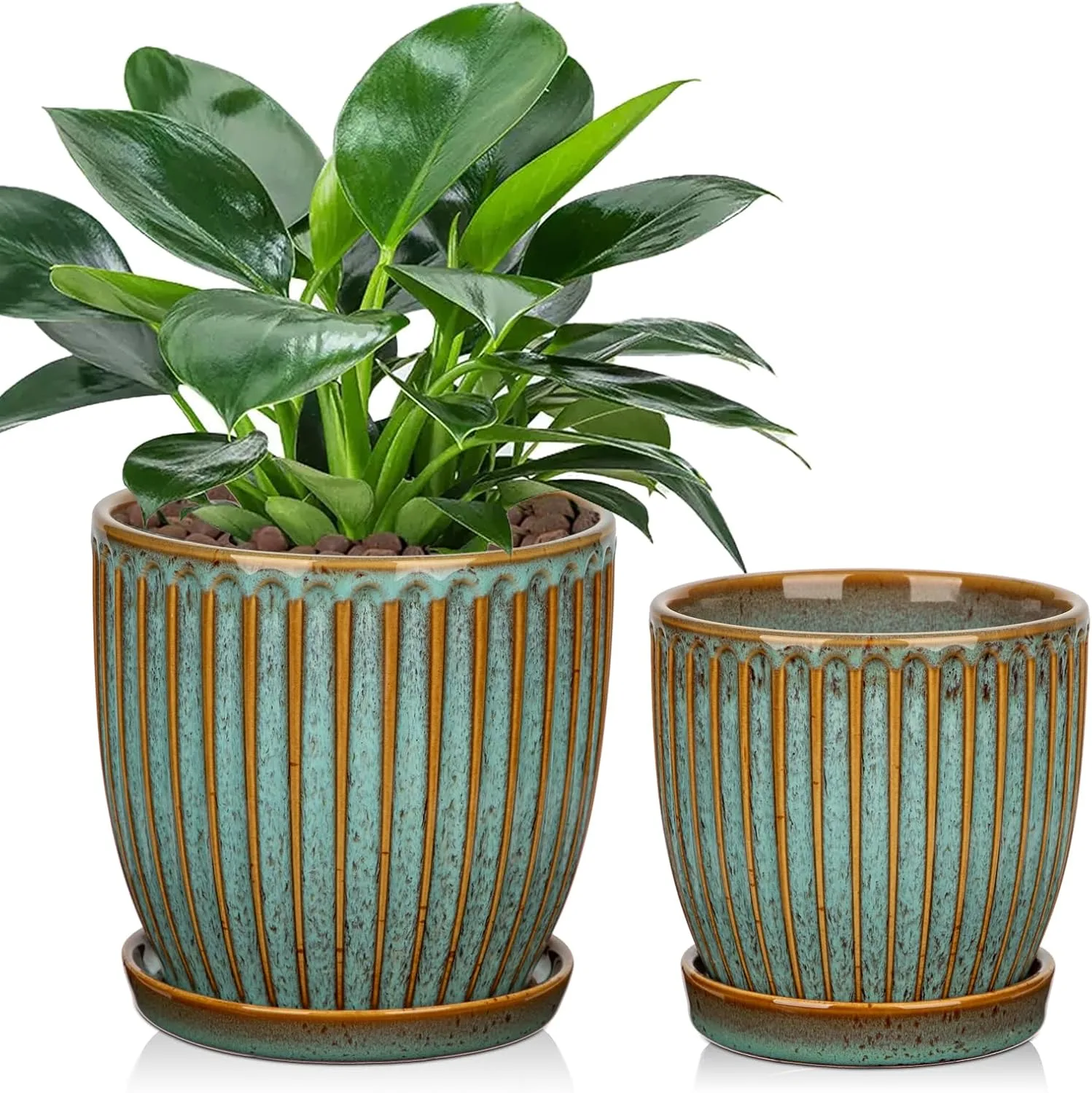
A stable pot that still lets excess water escape
A mature snake plant can become surprisingly top-heavy once several tall leaf fans develop in the same container. A substantial ceramic pot gives the plant a stable base and suits its upright shape without needing a bulky plant stand.
The important detail is drainage. I would use this type of planter only when the snake plant has genuinely outgrown its current pot, and I would still avoid choosing a container much larger than the existing root system.
Fertilizing and repotting
Snake plant is not a heavy feeder. While it is actively growing, it can be fertilized occasionally with a diluted fertilizer for foliage plants or succulents.
If growth is slow, adding more fertilizer is not the answer. Lower light cannot be corrected by feeding.
Repot when the rhizomes have filled the container or begun to distort it. The new pot should be only slightly wider than the old one and stable enough to support the tall leaves.
Common problems
Leaves are becoming soft
This often points to overly wet soil and root or rhizome problems. Check the potting mix and the base of the leaves before watering again.
Leaves are turning yellow
Overwatering is the most common cause. Leaves that are both yellow and soft are a particularly strong reason to inspect the roots.
Leaves are leaning
Insufficient light, heavy new growth, or damage near the base can all contribute. Move the plant somewhere brighter and check whether the rhizomes are firm and healthy.
Growth is extremely slow
Snake plant is never in much of a hurry, but in very low light growth may almost stop. More indirect light usually helps.
How to propagate snake plant
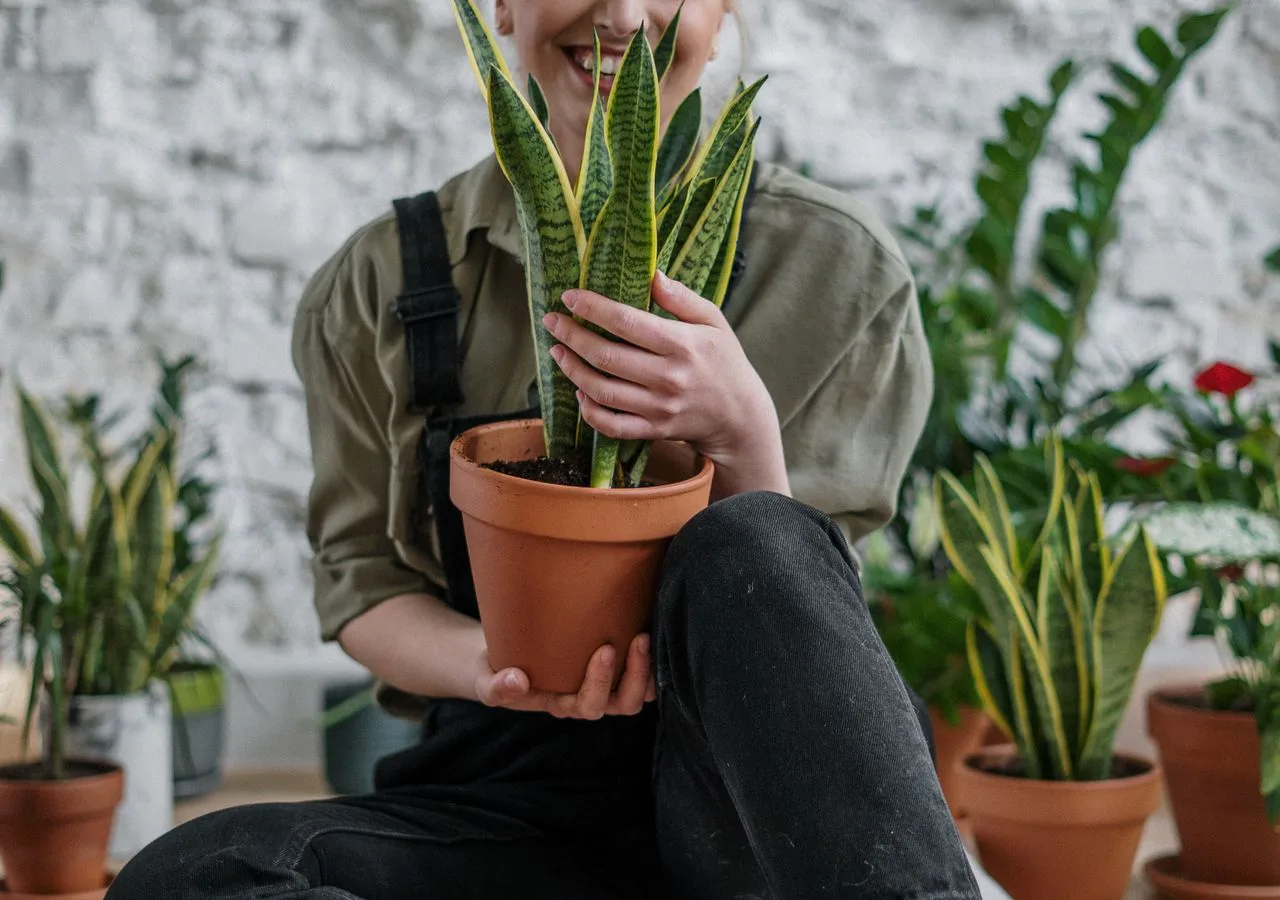
The easiest way to propagate snake plant is by dividing the rhizomes. During repotting, a side rosette can be separated carefully with part of its root system and planted in its own container.
Snake plant can also be propagated from leaf cuttings. A healthy leaf is cut into sections, allowed to dry slightly, and then placed in a suitable potting mix.
There is one important detail with variegated cultivars: leaf cuttings may not preserve the original leaf markings. If you want the new plant to match the parent, division is the safer method.
Who is snake plant best for?
Snake plant is one of the best choices for beginners and for people who regularly forget to water. Its tall vertical form works especially well in a living room, bedroom, office, or narrow corner.
It is also suitable for homes with dry air because it does not require high humidity or special environmental adjustments.
It is less suitable for someone who enjoys watering every plant constantly. With snake plant, doing less is usually a better strategy than being excessively attentive.