
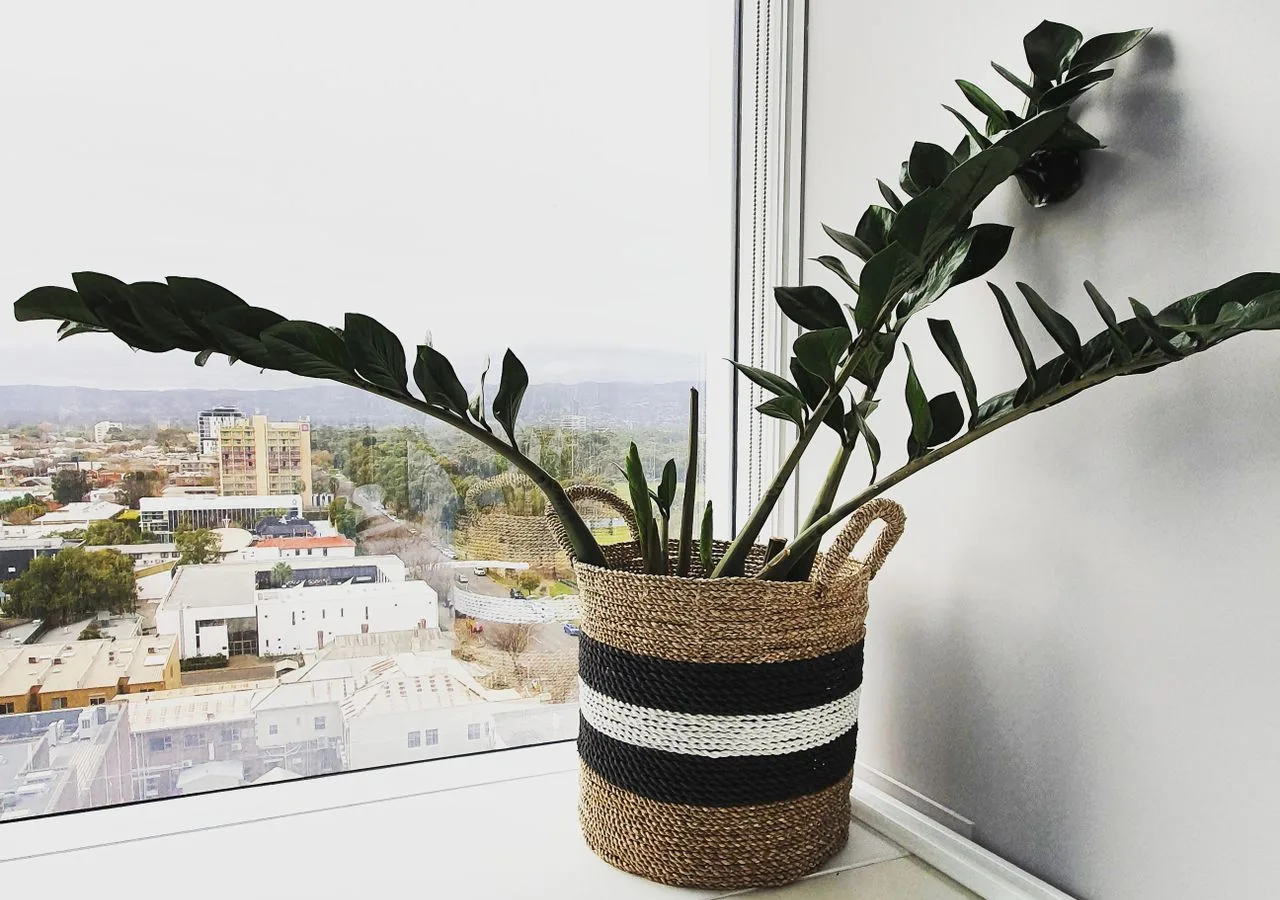
ZZ plant has earned its reputation as a houseplant that is difficult to defeat. It tolerates missed waterings, dry indoor air, and less-than-perfect placement without immediately taking offense.
That does not mean it is indifferent to its surroundings. In brighter indirect light, it grows better and produces new shoots more regularly. The most common mistake is something else entirely: watering it as though it prefers constantly moist soil.
This article is part of our guide to houseplants by light level.
ZZ plant is better suited to people who forget to water than to people who water out of guilt.
ZZ plant at a glance
| Botanical name | Zamioculcas zamiifolia |
|---|---|
| Light | Low to bright indirect light |
| Watering | Infrequent, after the potting mix has dried well |
| Humidity | Average household humidity |
| Difficulty | Very easy |
| Best location | Living room, office, or entryway with natural light |
| Toxicity | Toxic if ingested |
Where to place a ZZ plant
ZZ plant tolerates lower light and is often used in offices and darker parts of the home. But tolerating a location is not the same as preferring it.
In bright indirect light, the plant grows more quickly, the stems remain more compact, and new shoots appear more regularly. In a very dark corner it may survive for a long time, but growth can slow almost to a stop.
A spot near an east- or west-facing window usually works well, as does a position farther inside a bright room. Avoid exposing a plant that has been growing in dim conditions to intense midday sun without a gradual adjustment period.
If the only available place is noticeably too dark, an adjustable floor grow light can provide supplemental light without taking up another shelf. I would use it to improve a reasonably bright room, not as an excuse to keep the plant in a windowless corner.
How to water a ZZ plant
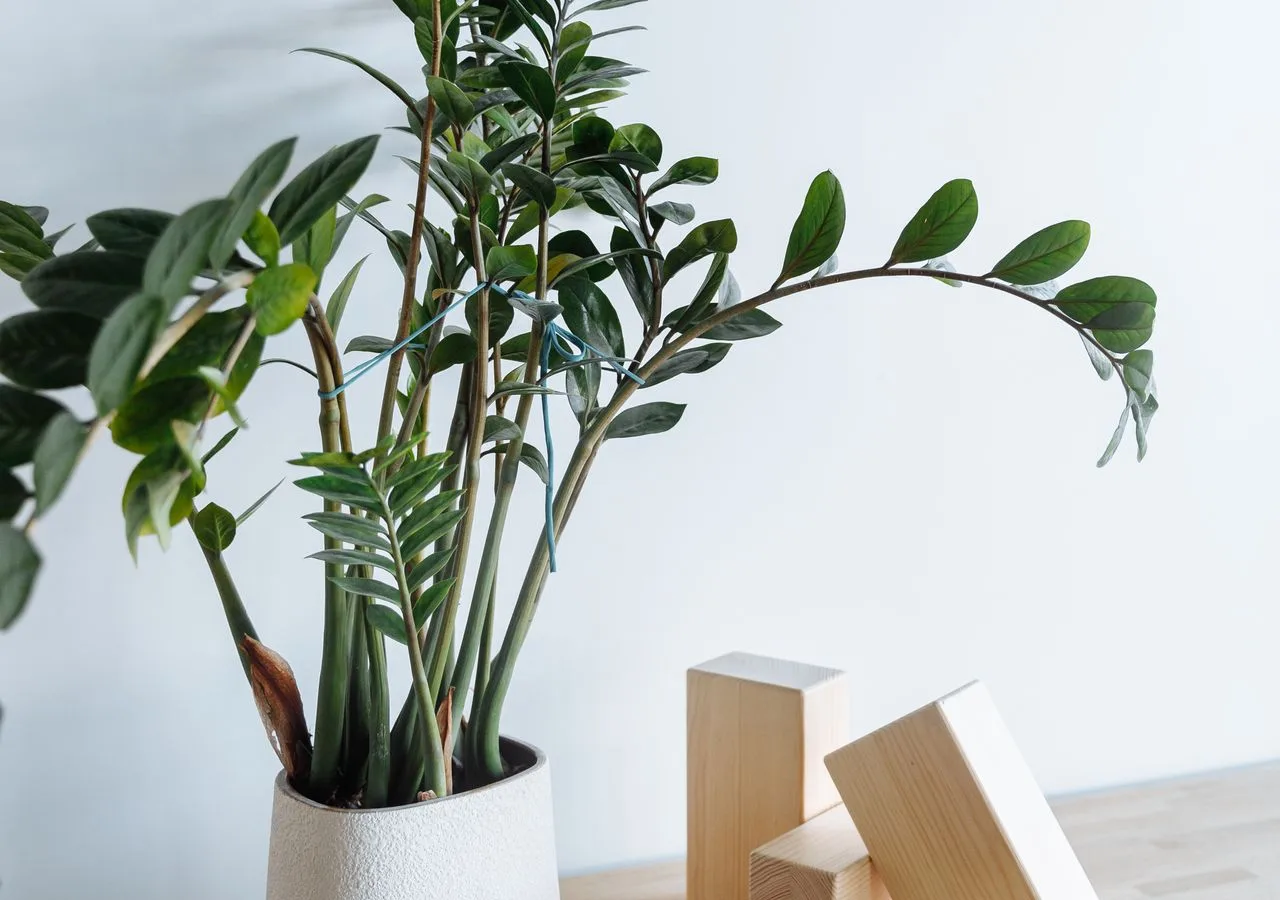
ZZ plant stores water in its thick underground rhizomes and fleshy leaf stalks. The potting mix therefore needs time to dry well before the next watering.
Do not follow a fixed schedule. Check the potting mix below the surface and pay attention to the weight of the container. If it still feels heavy and the mix remains damp, wait.
When watering, soak the potting mix thoroughly and allow the excess water to drain completely. Never leave the container standing in water inside a decorative outer pot.
Practical note: missing a watering is rarely a disaster for a ZZ plant. Watering “just in case” is far more dangerous.
Soil and pot
A light, well-draining potting mix is the safest choice. You can use an indoor potting mix amended with perlite, pumice, or another coarse material that prevents the mixture from becoming dense around the rhizomes.
The container must have drainage holes. ZZ plant does not tolerate water remaining around the underground rhizomes for long periods.
Do not rush to move it into a much larger container. The rhizomes gradually fill the pot and may even distort a flexible nursery pot slightly, but a large volume of unused damp soil increases the risk of rot.
Humidity and temperature
Normal household humidity is entirely sufficient. ZZ plant does not need a humidifier, and there is no reason to mist the foliage regularly.
Dust can be wiped from the glossy leaves occasionally with a damp cloth. That is more useful than spraying them.
Ordinary indoor temperatures are suitable. The more important precaution is avoiding the combination of a cold location and wet potting mix, because the rhizomes rot much more readily under those conditions.
This post may contain affiliate links. As an Amazon Associate, I earn from qualifying purchases.
A raised planter that suits its upright shape
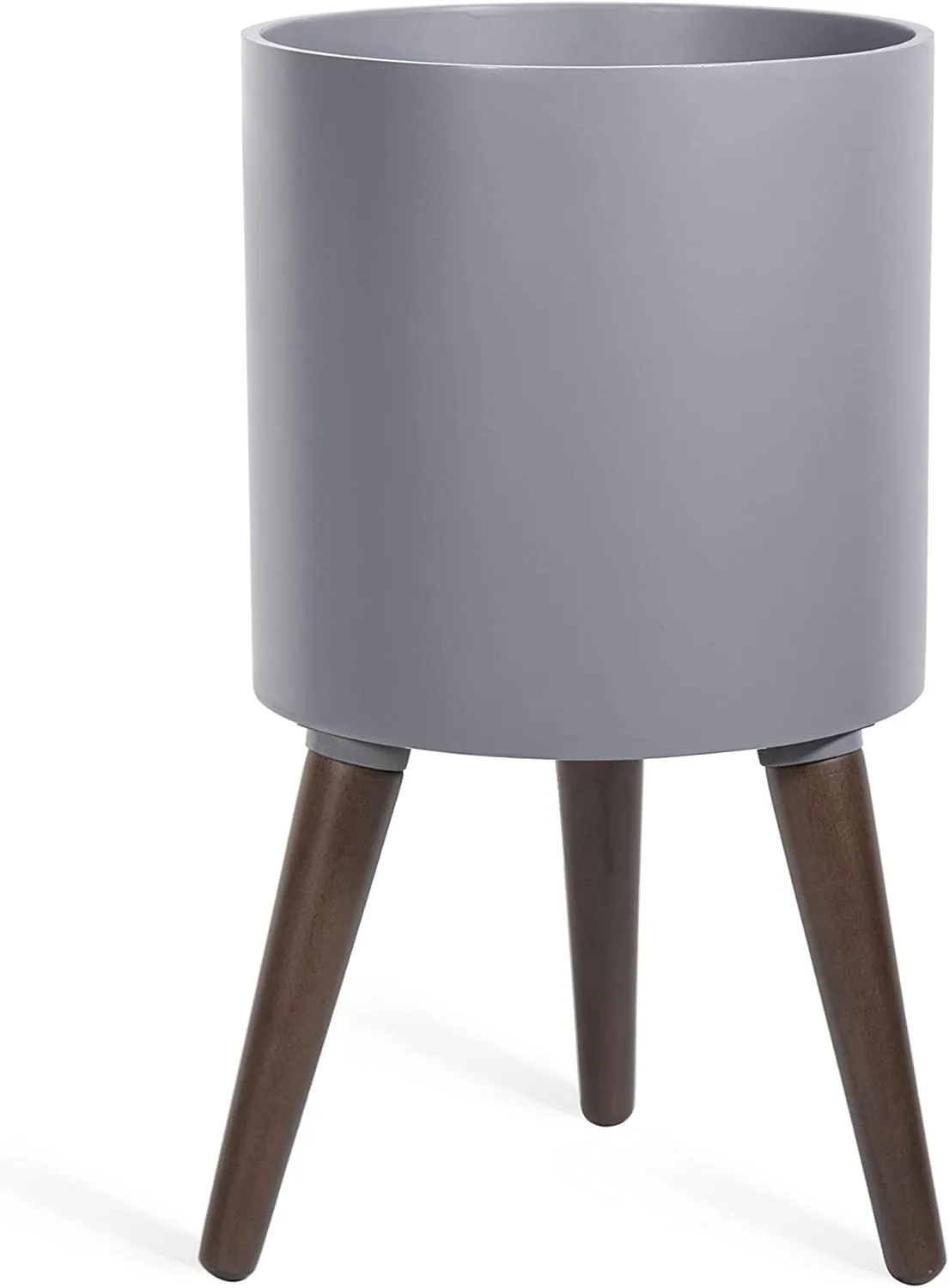
ZZ plant has a clean, vertical form that often looks better slightly raised from the floor. A planter with its own stand gives the stems more visual space and prevents a medium-sized plant from disappearing beside larger furniture.
This 10-inch model includes a drainage hole, removable plug, and a water-catching cup. I would use it only when the rhizomes have genuinely filled the current container, keeping the drainage open rather than allowing water to remain around the roots.
Fertilizing and repotting
ZZ plant grows relatively slowly and does not need much fertilizer. While it is producing new shoots, it can be fed occasionally with a diluted fertilizer for foliage houseplants.
If growth remains slow, increasing the amount of fertilizer is not the answer. Better light is usually far more useful than heavier feeding.
Repot when the rhizomes have filled the container or when the pot has become obviously tight. The new container should be only slightly larger and stable enough to support the mature plant.
Handle the rhizomes carefully during repotting. Firm, pale rhizomes are healthy, while soft, dark, or unpleasant-smelling sections should be removed with a clean tool before the plant is returned to fresh potting mix.
Common problems
Leaves are turning yellow
The most common cause is potting mix that remains too wet. If entire stems are yellowing, inspect the soil and the condition of the rhizomes.
Stems are becoming soft
This may indicate rot. Remove the plant from its pot and check for soft, dark rhizomes and damaged roots.
No new growth
ZZ plant naturally grows slowly, but in very low light it may almost stop. A brighter position often makes the biggest difference.
Stems are leaning
One-sided light or a generally dark location may be responsible. Rotate the pot periodically and provide more indirect light.
How to propagate ZZ plant
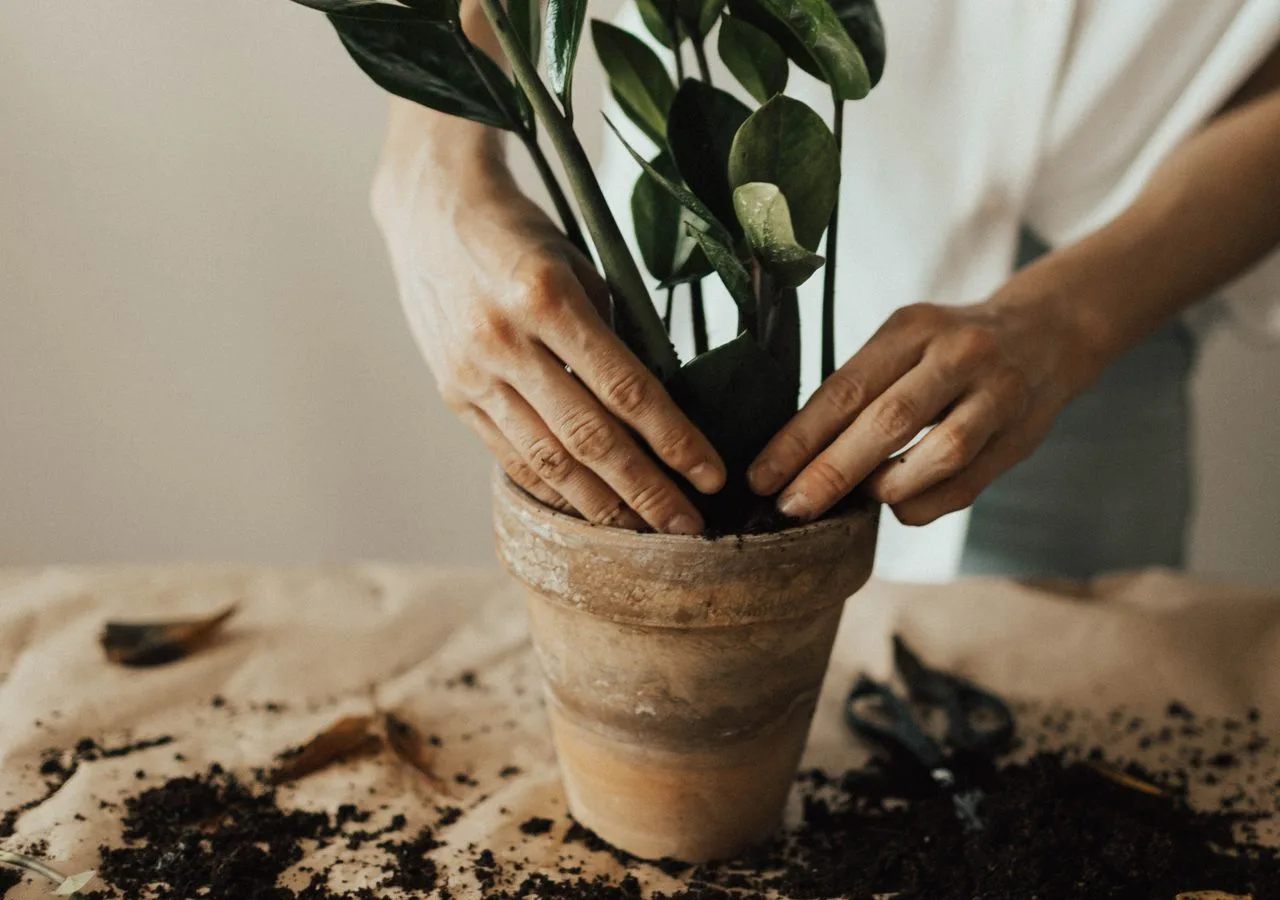
The fastest way to propagate ZZ plant is by dividing it during repotting. Each separated section should have a healthy rhizome, roots, and at least one well-developed shoot.
It can also be propagated from individual leaflets or part of a leaf stalk, but the process is slow. The cutting must first form a small rhizome before it can produce a new shoot.
Patience is part of the method. With leaf cuttings, several months may pass before anything resembling a new plant appears above the potting mix.
Who is ZZ plant best for?
ZZ plant is an excellent choice for beginners, busy people, and places where nobody wants a houseplant with constant demands.
It looks good in a living room, office, naturally lit entryway, or a cleaner, more minimal interior. The thick glossy foliage remains orderly even when the plant becomes fairly large.
It is best suited to someone who can walk past the pot without deciding every time that it must surely need water.