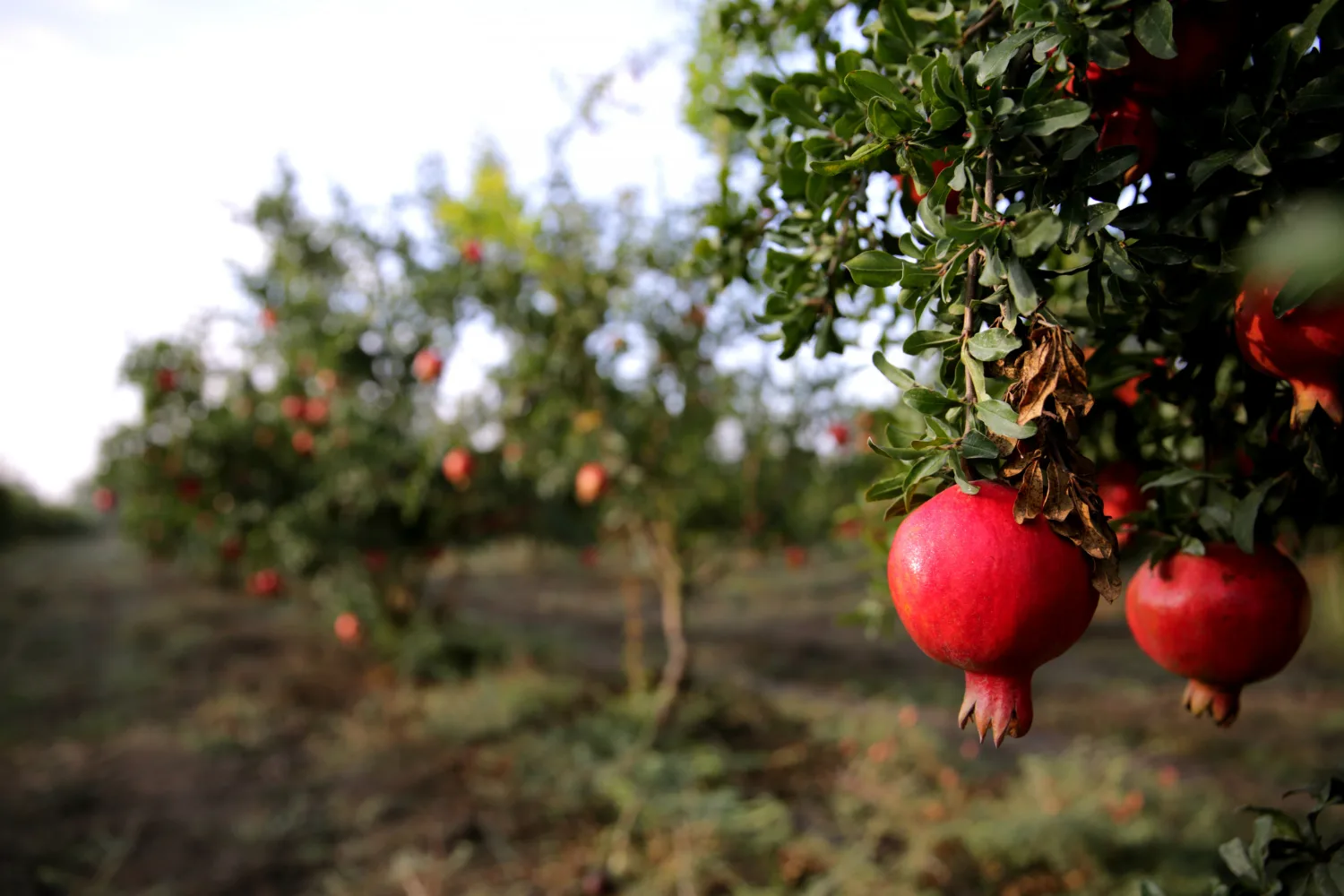
A fruit garden is one of those parts of the yard where decisions made in the first year are felt much later. Where we plant a tree, which variety and rootstock we choose, whether there is enough room for the future canopy, and whether a suitable pollinator is nearby all matter more than simply finding space for one more sapling.
A well-planned orchard does not necessarily need many trees. What matters more is choosing trees that suit the site, the climate, and the amount of care we can realistically give them.
Apples, pears, plums, cherries, peaches, apricots, quinces, figs and many other fruit trees can be grown successfully in home gardens. But there is no universal list that works everywhere. A variety may perform beautifully in one region and struggle with winter cold or late spring frost only a few hundred miles away.
So before buying the first trees, it is worth looking at the yard as a future orchard rather than simply as empty space that needs to be filled.
Before You Buy the First Fruit Tree
Most fruit trees need plenty of light. A practical rule is to give them at least 6-8 hours of direct sunlight during the growing season. Sunlight matters not only for ripening fruit, but also for developing flower buds and helping the canopy dry properly after rain.
Cold-air movement is equally important. Cold air settles into lower areas, which means small depressions in the landscape can become frost pockets where spring frost damage is more severe. This matters particularly for early-flowering trees such as apricots and peaches.
Also check how quickly water drains from the site. Fruit trees need moisture, but very few tolerate soil that remains waterlogged for long periods. After heavy rain, water should not remain around the future planting site for days.
- Does the area receive enough sunlight for most of the day?
- Does water collect there after heavy rain?
- Is it in a low spot where cold air tends to settle?
- Will there be enough room for the canopy in 5-10 years?
- Will you be able to reach the tree comfortably for watering, pruning, spraying and harvesting?
- Are there tall trees or buildings nearby that may gradually shade it?
Soil matters too. Most fruit crops prefer well-drained soil with a good amount of organic matter and a pH ranging roughly from slightly acidic to neutral. If you are planning a larger orchard, a soil test before planting is far more useful than trying to correct problems later with fertilizer.
Species, Variety, Rootstock and Pollination - Four Different Decisions
When we buy an “apple tree” or a “cherry tree,” we are actually making several decisions at the same time.
The species determines the tree's basic growing requirements. The variety determines many of the fruit's qualities - flavor, size, color, ripening time, storage potential and, to some extent, susceptibility to particular problems.
The rootstock disappears from sight after planting, but it has a major influence on the eventual size and vigor of the tree. With apples, for example, some rootstocks produce compact trees while others can turn the same variety into a considerably larger tree.
Less vigorous rootstocks can be convenient in smaller gardens and make harvesting easier, but they often require more reliable irrigation, regular care and sometimes permanent support. Trees on vigorous rootstocks take up more space and may begin producing later, but they generally develop a more extensive root system.
So if the label gives only the variety name, ask which rootstock it has been grafted onto.
The fourth consideration is pollination. Some varieties are self-fertile, while others produce a much better crop when a compatible variety is growing nearby and flowering at roughly the same time.
This is particularly important with apples, pears and cherries. A suitable tree in a neighboring yard may sometimes provide enough pollen, but when planning a new orchard it is better not to leave pollination entirely to chance.
- What is the exact variety?
- Which rootstock is it grafted onto?
- How large will the tree become on that rootstock?
- Is the variety self-fertile?
- If not, which varieties are suitable pollinators?
- Is it suitable for the climate where you live?
Choosing Fruit Trees for a Home Orchard
The best home orchard is not the one with the greatest number of species. It is the one that actually gives you fruit you want to eat.
Apples and pears offer an enormous choice of varieties and ripening periods. Plums are relatively adaptable to different conditions. Peaches begin producing fairly early but need regular pruning and attention to peach leaf curl. Apricots can be wonderful in the right location, but their early flowering makes them vulnerable in areas where late frosts are common.
Sweet cherries deserve more room, particularly when grafted onto vigorous rootstocks. Figs are excellent for warm and protected gardens, although young plants may suffer winter damage in colder areas.
| Fruit tree | Best suited to | What to keep in mind |
|---|---|---|
| Apple | Temperate and cooler regions | Huge choice of varieties and rootstocks. Many varieties need a compatible pollinator. |
| Pear | Sunny, well-aerated sites | Variety and rootstock are important for both tree size and performance. |
| Peach | Warmer, sunny areas | Produces relatively early but needs annual pruning and monitoring for peach leaf curl. |
| Apricot | Warm, well-aerated sites | Early flowering makes it vulnerable to late spring frost. |
| Sweet cherry | Gardens with more space | Final size depends heavily on the rootstock. Check pollination requirements too. |
| Plum | A wide range of growing conditions | Many varieties are relatively adaptable, but the choice should still suit your local climate. |
| Fig | Warm, protected locations | Needs sun and room for a broad canopy. Cold weather can damage young plants. |
You do not need one of everything. If your family eats plenty of peaches but no one particularly likes quince, there is little reason to turn the orchard into a botanical collection.
It also makes sense to spread the harvest across the season. You might combine an early cherry, summer peaches, fall apples and an apple variety that stores well. Instead of having an overwhelming amount of fruit for two weeks, you get useful harvests over a much longer period.
This post contains affiliate links. As an Amazon Associate, I earn from qualifying purchases at no extra cost to you.
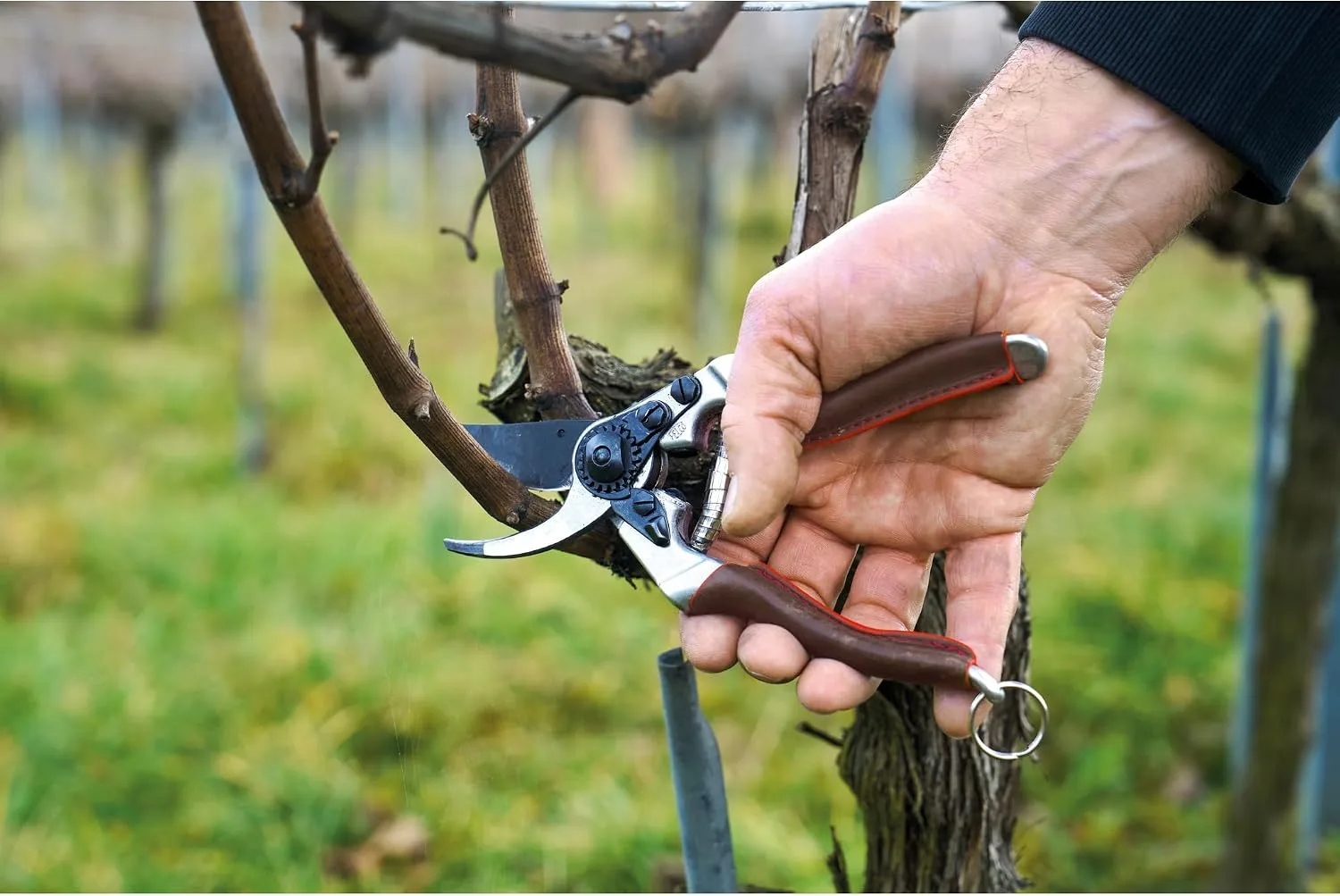
A good pair of bypass pruners becomes useful surprisingly early in the life of an orchard. Young shoots, smaller branches and regular shaping are much easier when the tool makes a clean cut instead of crushing the wood.
The FELCO 8 ELITE is suited to everyday hand pruning. I would still keep it for branches within a comfortable cutting range and move to loppers or a pruning saw when the wood becomes too thick.
How to Choose a Healthy Fruit Tree
A beautiful photograph on the label is not enough. Look carefully at the actual plant before buying it.
With bare-root fruit trees, the roots should feel fresh and flexible rather than dry and brittle. Check the trunk for major wounds, cracking or obvious mechanical damage.
The graft union should be clearly visible and properly healed. Ideally, the label should identify not only the variety but also the rootstock whenever that information is available.
- Choose a tree with clear variety identification and a reliable source.
- Do not automatically choose the tallest sapling - a healthy root system matters more.
- Avoid plants with obviously dried-out roots.
- Check the graft union.
- Ask how large the tree is expected to become on its particular rootstock.
- Confirm whether the variety needs a pollination partner.
If you cannot plant the tree immediately after buying it, the main priority is preventing the roots from being exposed to sun and drying wind. Bare roots can lose moisture surprisingly quickly, and several hours of drying may cause more damage than it first appears.
Planting Fruit Trees and Choosing the Right Spacing
Bare-root fruit trees are normally planted while dormant - either in fall after leaf drop or in early spring before active bud growth begins. Which season is better depends on the climate, soil and particular species.
Fall planting often works well in areas with milder winters because the soil is still relatively warm and the roots have time to settle gradually. In very cold areas, heavy waterlogged soils or with more sensitive plants, early spring planting may be the safer choice.
We cover the process in more detail in our guide to planting fruit trees.
- Make the planting hole wide enough for the roots to spread without bending.
- Remove badly damaged or severely dried sections of root.
- Do not place concentrated mineral fertilizer or fresh manure directly against the roots.
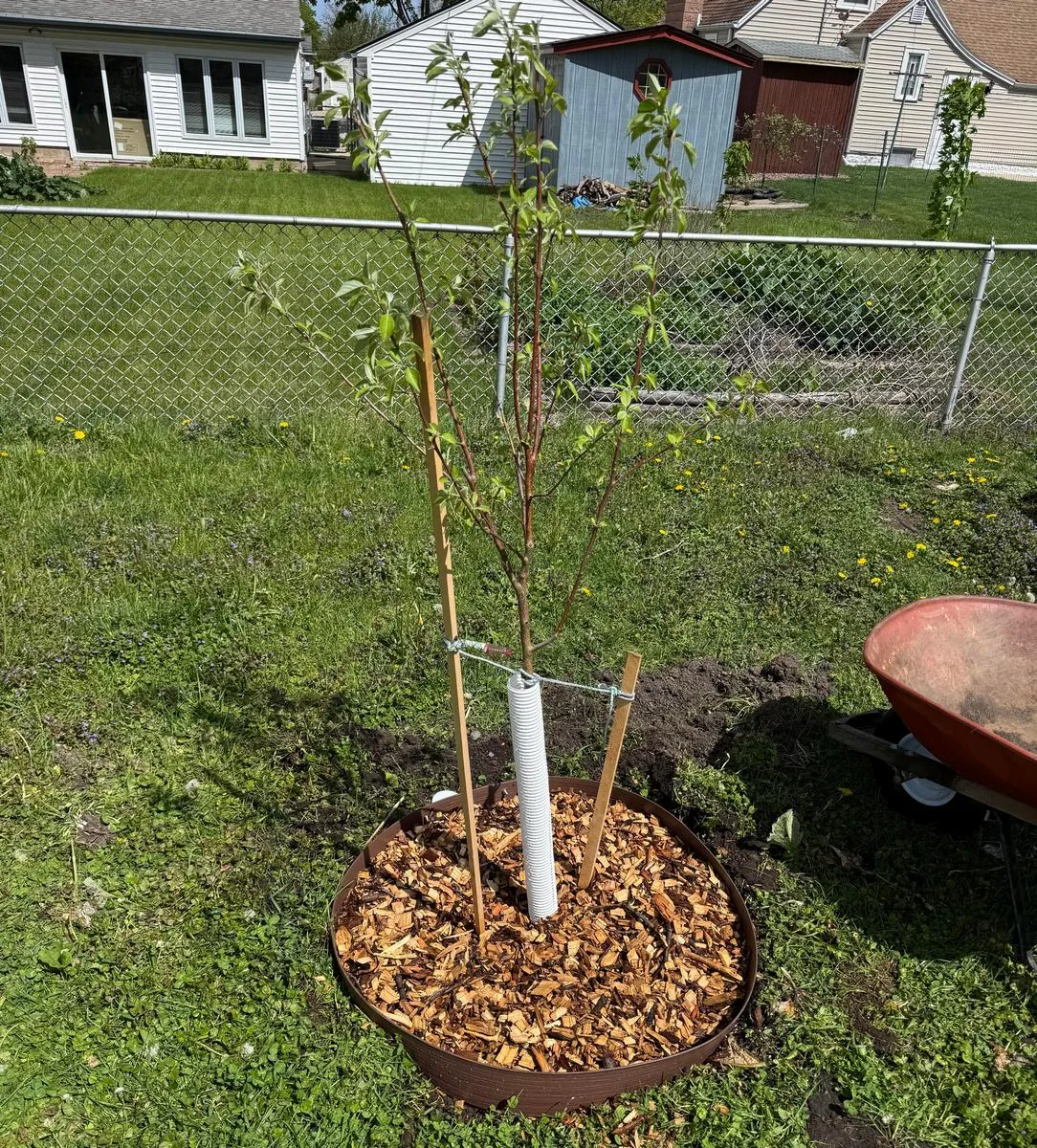
- After the soil has settled, the graft union should remain above ground level.
- Firm the soil gently so large air pockets are not left around the roots.
- Water thoroughly after planting.
- Add a stake or support when the rootstock or location requires it.
- Mulch around the tree but leave a small clear area immediately around the trunk.
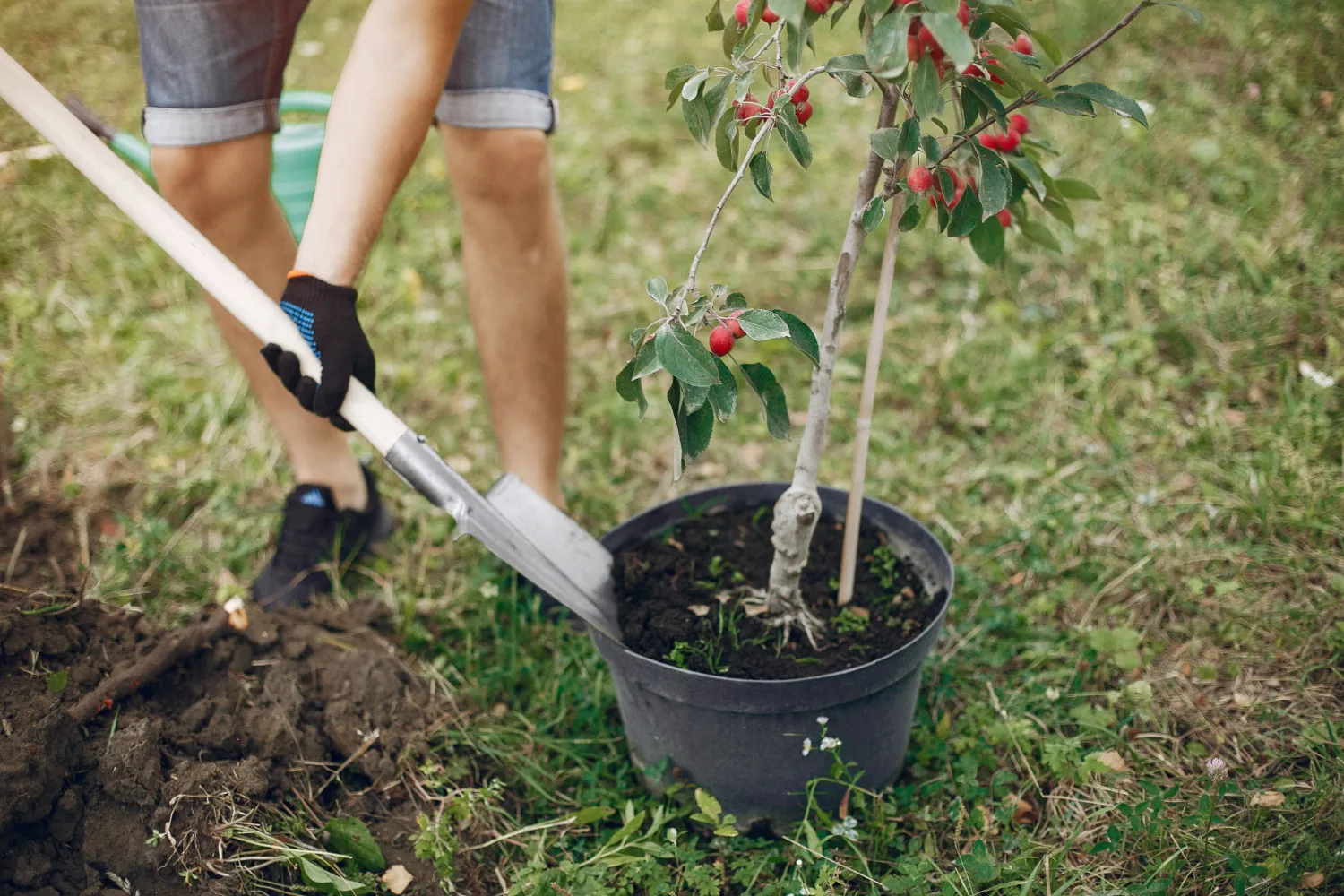
The distance between fruit trees is not determined by species alone. Two apple trees of exactly the same variety, for example, can reach very different sizes depending on the rootstock.
| Fruit tree | Approximate spacing in a home orchard |
|---|---|
| Apple | About 10-16 ft (3-5 m), although compact rootstocks may allow closer spacing. |
| Pear | About 13-16 ft (4-5 m) for stronger-growing trees; less on suitable dwarfing rootstocks. |
| Peach | About 13-16 ft (4-5 m). |
| Apricot | About 16-20 ft (5-6 m). |
| Sweet cherry | About 16-20 ft (5-6 m), or more on vigorous rootstocks. |
| Plum | About 13-16 ft (4-5 m), depending on variety and rootstock. |
| Fig | About 13-16 ft (4-5 m), with enough room for the canopy to spread. |
These figures are only a general guide. Before planting, check the recommended spacing for the specific variety and rootstock combination.
One of the most common mistakes is looking at the large gaps between newly planted trees and deciding there is room to squeeze in another one. A few years later, that “empty” space belongs to two expanding canopies.
The First Three Years Matter More Than the First Harvest
After planting, the main goal is not to make the tree produce as quickly as possible. It is to help it establish a strong root system and develop a sound framework.
A young tree has a much smaller root system than an established one, which makes drought particularly risky during the first few summers. Deep, less frequent watering is generally more useful than wetting only the top few inches of soil every day.
There is no universal amount of water that works for every tree. Sandy soil dries quickly, heavy clay holds moisture for much longer, and the needs of a tree during a cool spring are obviously different from its needs during a hot midsummer spell.
Especially with a tree that has only recently established, there is little benefit in keeping every single first fruit. In the long term, developing strong roots and a good branch structure matters more.
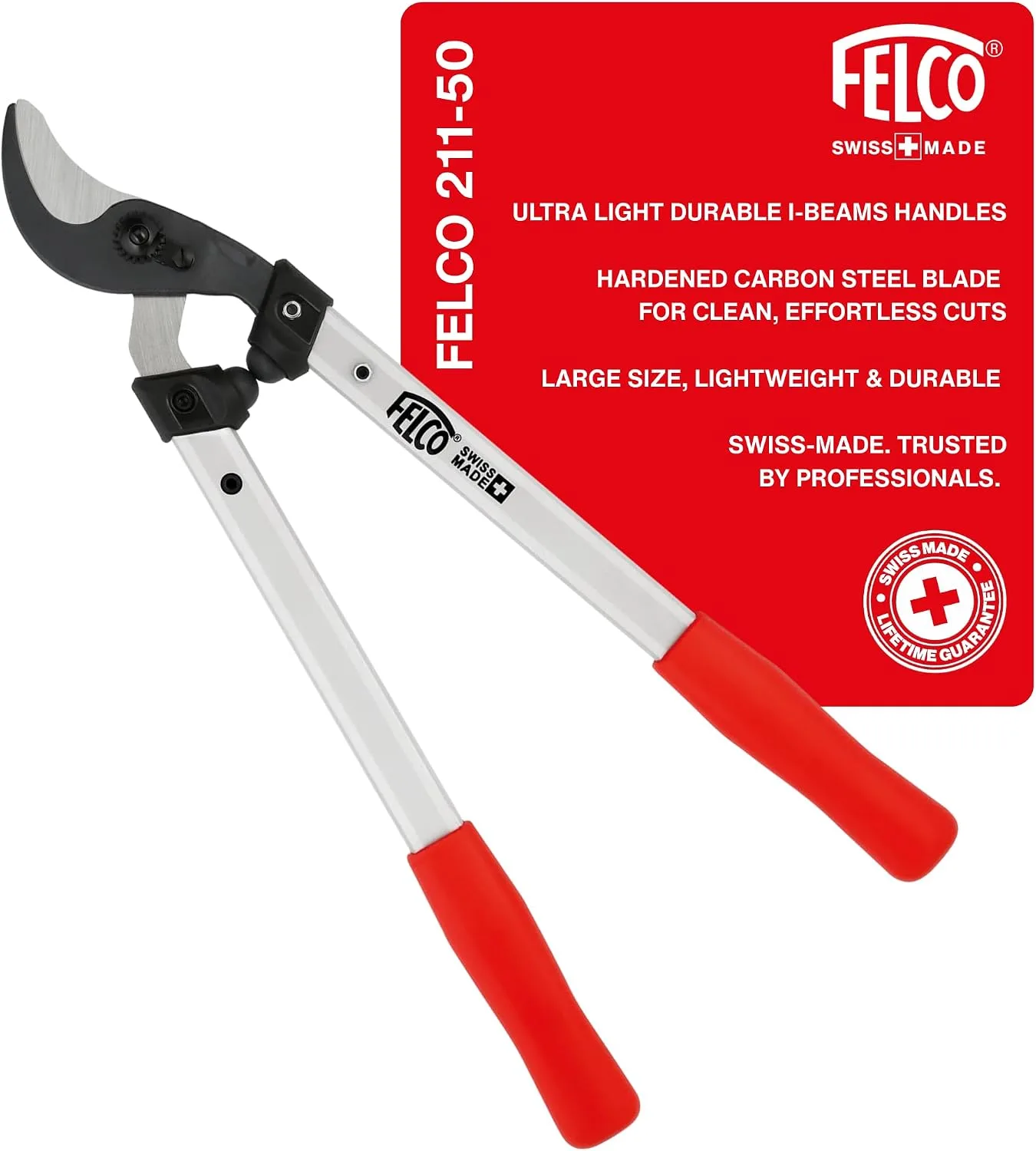
As fruit trees mature, some branches quickly move beyond the comfortable range of ordinary hand pruners. Long-handled loppers give better leverage and make these cuts easier to control.
The FELCO F211-50 is useful for heavier pruning and thicker woody growth. For branches that are clearly beyond the lopper's practical range, I would move to a pruning saw rather than forcing the tool.
Pruning, Feeding and Keeping Fruit Trees Healthy
Pruning during the first few years determines the future framework of the tree. The purpose is not simply to reduce the number of branches, but to create a canopy where light can penetrate and the main branches are positioned securely.
Different fruit species respond differently to pruning, so the same technique should not be applied mechanically to apples, peaches and cherries. We look at this in more detail in our article on fruit tree pruning for beginners.
The same principle applies to fertilizer - more does not automatically mean better. Excess nitrogen can produce a great deal of long, soft vegetative growth without necessarily improving fruit production.
Compost and well-rotted organic matter can help improve soil structure, but in an established orchard it makes more sense to base feeding on soil conditions, tree growth and the needs of the particular species.
Weak growth does not automatically mean the tree needs fertilizer. Drought, waterlogging, damaged roots, poor planting or disease may all be responsible. Likewise, excessively vigorous growth can be a sign that the tree is receiving more nitrogen than it needs.
Disease prevention begins with the way the orchard itself is managed. Sunlight, good air circulation, sensible pruning and the removal of badly infected or mummified fruit can reduce the pressure from several common diseases.
Typical problems include apple and pear scab, peach leaf curl, shot hole disease, brown rot, aphids and various fruit-feeding insects. That does not mean every spot on a leaf should be sprayed “just in case.” The problem should first be identified, and only then should an appropriate treatment and timing be chosen.
For seasonal planning, you can also use our fruit tree spraying calendar.
Mistakes That Often Become Obvious Years Later
The most frustrating orchard mistakes are often the ones that do not look like mistakes at all when the trees are young.
Trees planted too closely together can look perfectly fine during their first two years. The wrong rootstock may not become obvious until a tree grows much larger than expected. Poor pollination may only become apparent when a tree flowers beautifully every spring but produces almost no fruit.
- planting in the most convenient space rather than the most suitable site;
- leaving too little distance between trees;
- buying a variety without asking about its rootstock;
- failing to provide a compatible pollinator;
- planting the tree too deeply;
- allowing water to remain around the roots;
- overfeeding with nitrogen;
- watering shallowly every day instead of watering deeply;
- neglecting formative pruning while the tree is young;
- allowing a young tree to carry more fruit than it can comfortably support.
Many of these problems can be avoided before the first planting hole is even dug.
Thinking About the Orchard in the Long Term
Fruit trees take time, which is exactly why the planning at the beginning matters.
During the first year, most of the work is simply watering and checking that the tree has established. Then attention shifts to the canopy, pruning and plant health. Several years later, completely different questions become important - whether the fruit is easy to harvest, whether neighboring trees shade one another, whether you actually like the variety, and whether you planted far more fruit than the household can use.
That is why I would rather start with fewer trees and choose them well. Varieties we genuinely want to eat. Appropriate rootstocks. Enough room for mature canopies. Compatible pollination. And reliable access to water during those difficult first summers.