
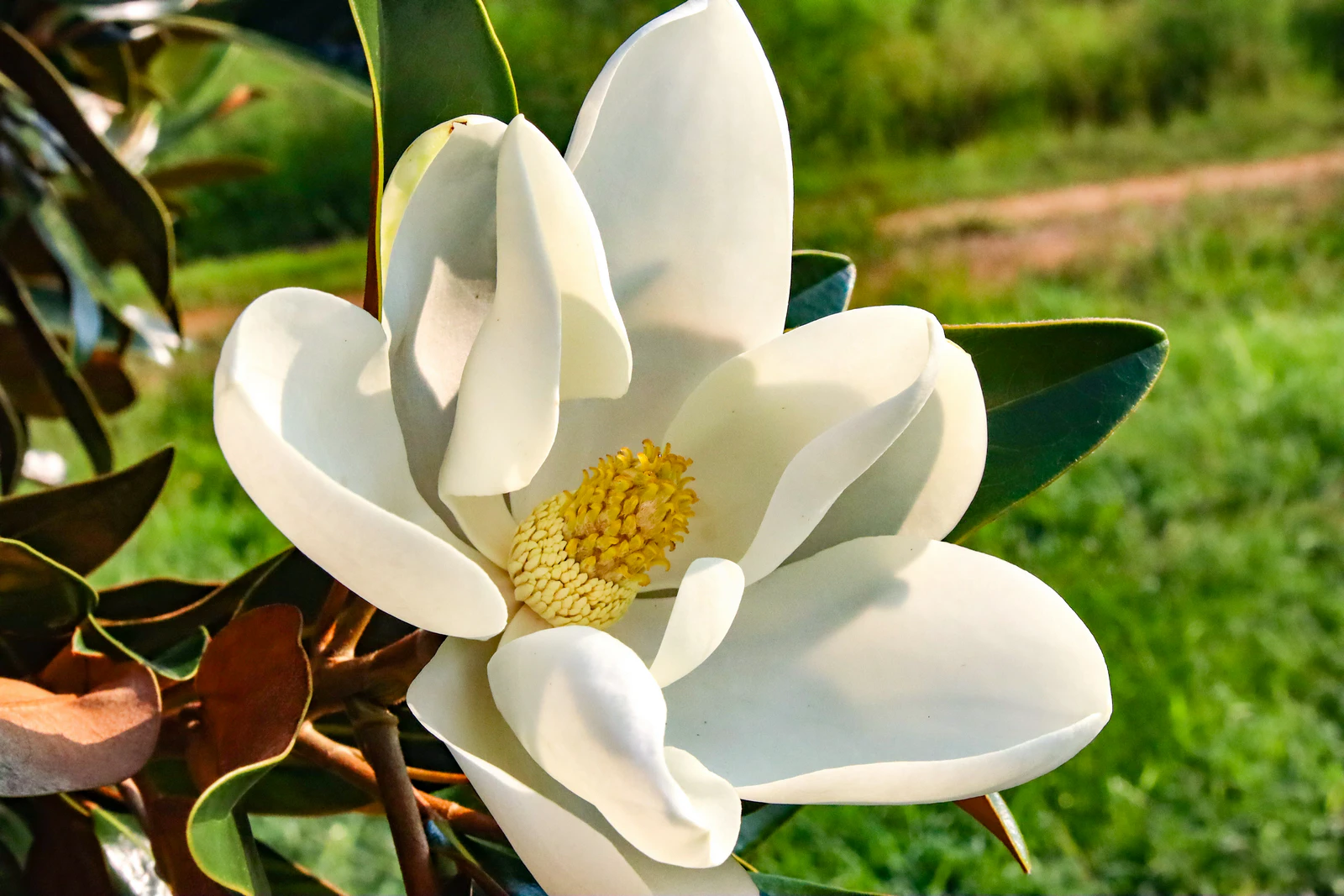
Magnolia is one of the most impressive ornamental trees for the garden. It is not a plant that simply completes the composition. When it blooms, magnolia becomes an event — large, visible, spring-like and almost impossible to ignore.
In the “Designer Accents in the Garden” series, magnolia has a different role from Japanese maple, rhododendron or ornamental grasses. It is not as quiet and delicate as acer, it is not a background plant like evergreen shrubs, and it is not movement like grasses. Magnolia is a scene. It creates a moment around which the garden wakes up.
That is why choosing one should be done carefully. Magnolia can be magnificent in a small or medium-sized garden, but it needs enough space, a protected position and soil where its roots can develop calmly. This is not a tree that likes being moved, cut back hard or squeezed between other plants.
What Is Magnolia?
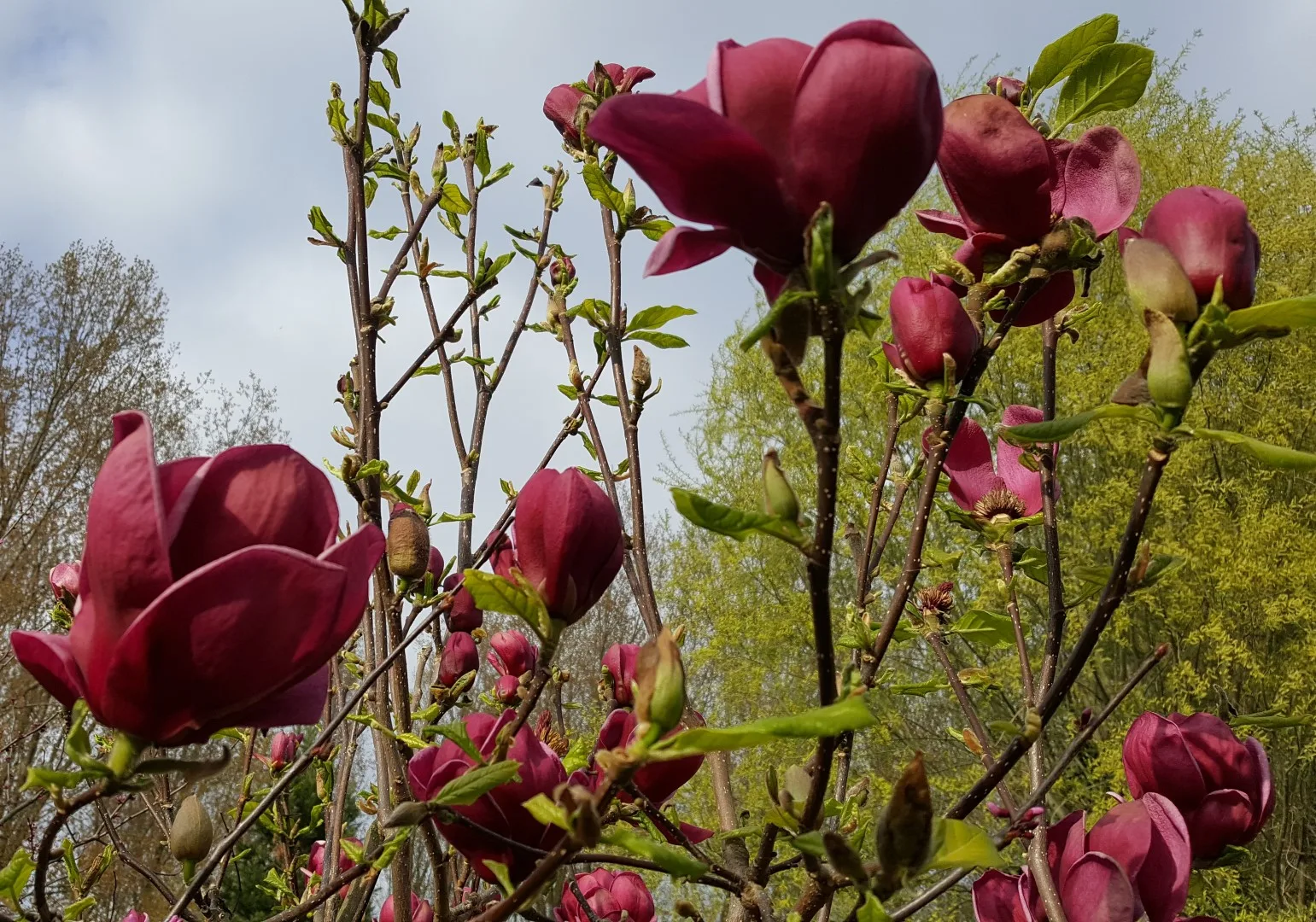
Magnolias are ornamental trees and shrubs known for their large flowers, which often appear in early spring before the leaves. The flowers can be white, pink, purple, cream, yellow or even dark burgundy, depending on the species and variety.
The best-known garden magnolias are the deciduous spring-flowering species and cultivars. They create such a strong effect precisely because they bloom on almost bare branches. Evergreen magnolias, such as Magnolia grandiflora, have a different character — large glossy leaves and a more southern, almost Mediterranean presence.
Magnolia is not a background plant. It is a plant for the first spring line — the one everyone notices.
Where to Plant Magnolia
Magnolia likes a bright, protected position. It grows best in sun or light partial shade, but away from cold winds and sudden spring drafts. This is especially important for early-flowering varieties, whose buds can be damaged by late frosts.
A good place is a sheltered corner of the garden, near a lawn, in front of a dark green wall of shrubs, close to an entrance area or as a single accent in a wider border. If you have a small garden, choose a compact variety rather than a magnolia that will become too large for the space after a few years.
It is not a good idea to plant magnolia tightly against a wall, under eaves, in a narrow corner or next to a path where it will constantly need cutting back. It needs space to show its natural shape.

The Most Popular Magnolia Types for the Garden
One of the most important steps is choosing a magnolia according to the size of the garden. In the nursery, young plants may look compact and innocent, but some varieties grow into large trees.
Magnolia soulangeana, known as saucer magnolia, is one of the most widespread. It has large cup-shaped flowers in white, pink or purple-pink. It is very impressive, but over time it can become quite wide.
Magnolia stellata, or star magnolia, is more compact and suitable for smaller gardens. The flowers are white or pale pink, with narrow petals that look lighter and star-shaped.
Magnolia liliflora and its cultivars are often more shrub-like and have darker flowers. They are a good choice when we want a lower but strongly flowering accent.
Magnolia grandiflora is an evergreen magnolia with large glossy leaves and white fragrant flowers. It has a different presence and is suitable for warmer, protected locations and larger spaces.
| Magnolia Type | What It Looks Like | Where It Works Best |
|---|---|---|
| Magnolia soulangeana | Large cup-shaped flowers, strong spring effect | Medium and larger gardens, as a main accent |
| Magnolia stellata | More compact, star-shaped white or pink flowers | Small gardens, entrance areas, more delicate compositions |
| Magnolia liliflora | Shrub-like form, often darker flowers | Small and medium gardens, colorful spring accent |
| Magnolia grandiflora | Evergreen, large glossy leaves, white fragrant flowers | Protected and warmer locations, larger gardens |
What Soil Does Magnolia Need?
Magnolias prefer fertile, loose, organic-rich and well-drained soil. They feel best in neutral to slightly acidic soil that holds moisture but does not become waterlogged.
Many magnolias do not like strongly chalky soils. If the pH is unsuitable, yellowing leaves and weak growth may appear. If the soil is heavy and clayey, it is a good idea to improve it with compost and organic matter, but without creating a small “pot” of good soil in the middle of impermeable clay.
Practical tip: magnolia has a sensitive root system and does not like digging around the trunk. It is better to mulch and keep the soil alive than to disturb it constantly.
Planting and Watering
The best time to plant magnolia is in autumn or early spring, when the weather is milder and the plant has time to adapt. The position should be chosen carefully, because magnolias do not like being transplanted once they are established.
When planting, the root collar should not be buried deeply. The soil is firmed gently, watered well and mulched. Mulch helps retain moisture and protects the shallow roots from overheating and drying out.
During the first two or three years, regular watering is very important. Once well rooted, magnolia becomes more resilient, but young plants should not be left to dry out for long periods, especially in hot summers.
This post contains affiliate links. As an Amazon Associate, I earn from qualifying purchases at no extra cost to you.
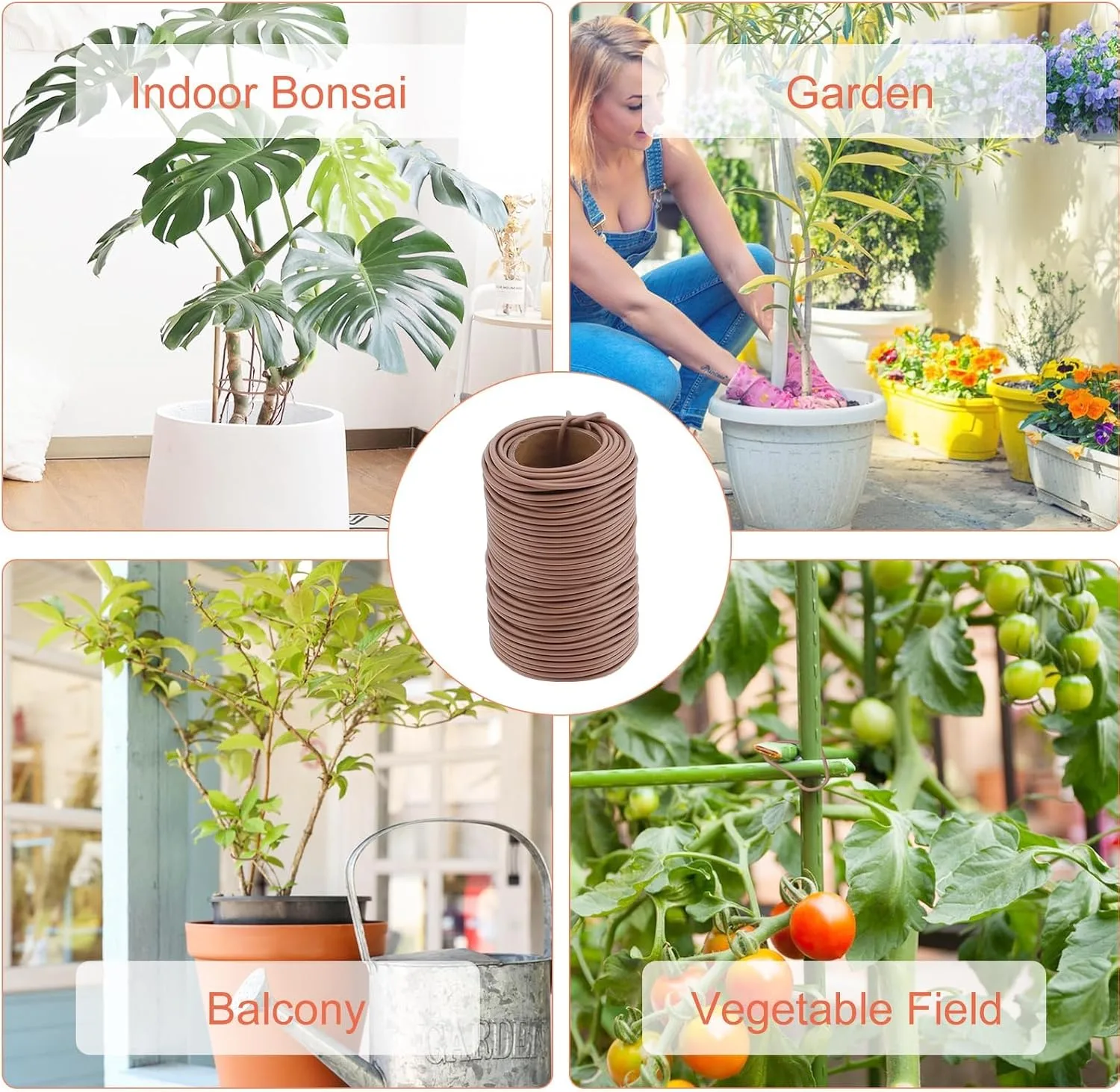
A newly planted magnolia may need temporary support while its root system establishes, especially in an exposed or windy position. Because magnolias have relatively sensitive bark and do not like unnecessary stress, the tie between the trunk and stake should be soft rather than rigid.
This reusable garden tie can be adjusted as the young tree grows. The support should still be checked regularly so it does not become tight around the trunk, and it should be removed once the magnolia is stable enough to stand without it.
Why Magnolia May Not Bloom
Lack of flowering can have several causes. Sometimes the plant is simply young and has not yet reached the age for abundant blooming. In other cases, the problem may be an unsuitable position, too much shade, frost-damaged buds, drought or incorrect pruning.
Early-flowering magnolias are especially sensitive to late spring frosts. The tree may be healthy, but the flowers can be damaged just before they open. This is disappointing, but it does not necessarily mean the plant is diseased.
Another common problem is pruning at the wrong time. If branches with already formed flower buds are cut, the next bloom may be weaker.
Pruning Magnolia
Magnolia does not like heavy pruning. This is one of those plants where it is better to choose the right place and variety from the beginning, instead of later trying to “fit” it into the space with pruning shears.
Usually, only dry, broken, diseased or crossing branches are removed. If shaping is needed, it should be moderate and gradual. Heavy pruning is not a good idea, because magnolias heal more slowly and may lose their natural form.
With deciduous magnolias, light pruning can be done after flowering, when the flowers have already been enjoyed and the most beautiful part of the season will not be removed. Evergreen magnolias are handled more carefully and usually need only sanitary cleaning.
What to Combine Magnolia With
Magnolia looks best when there is not too much competition around it. It needs air and visibility. Good partners include low evergreen shrubs, hostas, ferns, ornamental grasses, rhododendrons, azaleas, hydrangeas and low ground-cover plants.
It looks especially good against a dark background — for example a hedge, conifers or evergreen shrubs. This makes the light flowers stand out even more. If the magnolia has pink or purple flowers, it can be combined with calmer greenery so the composition does not become too busy.
In a small garden, magnolia can be the only large spring accent. In a larger garden, it can be used as part of a seasonal composition with Japanese maple, rhododendrons and ornamental grasses — spring flowering, summer greenery, autumn color and winter structure.
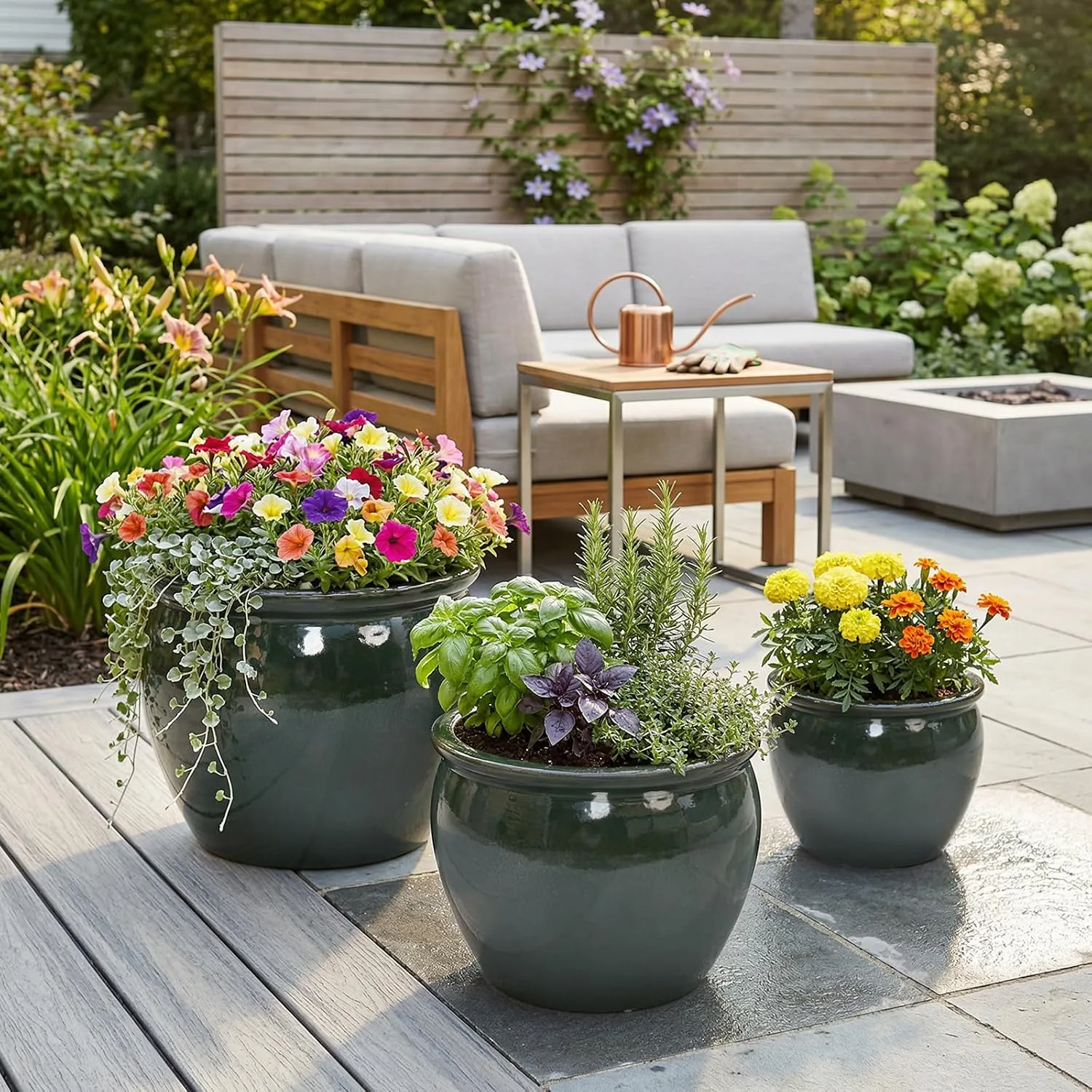
Magnolia has relatively shallow, sensitive roots, so I prefer not to keep digging around an established tree simply to add another layer of seasonal planting.
A small group of containers can bring hostas, ferns or other low companion plants close to the composition without disturbing the root zone. These blue-green glazed pots work especially well with foliage plants and the soft colors usually associated with magnolia.
Is Magnolia Worth Growing?
Yes, if you have the right place and enough space.
Magnolia is not a plant for every corner of the garden. But when planted in a suitable place, it can become one of the strongest spring accents in the garden.
It does not simply bloom. It creates a moment — that short period at the beginning of the season when the garden looks as if it has decided to start the year beautifully.