
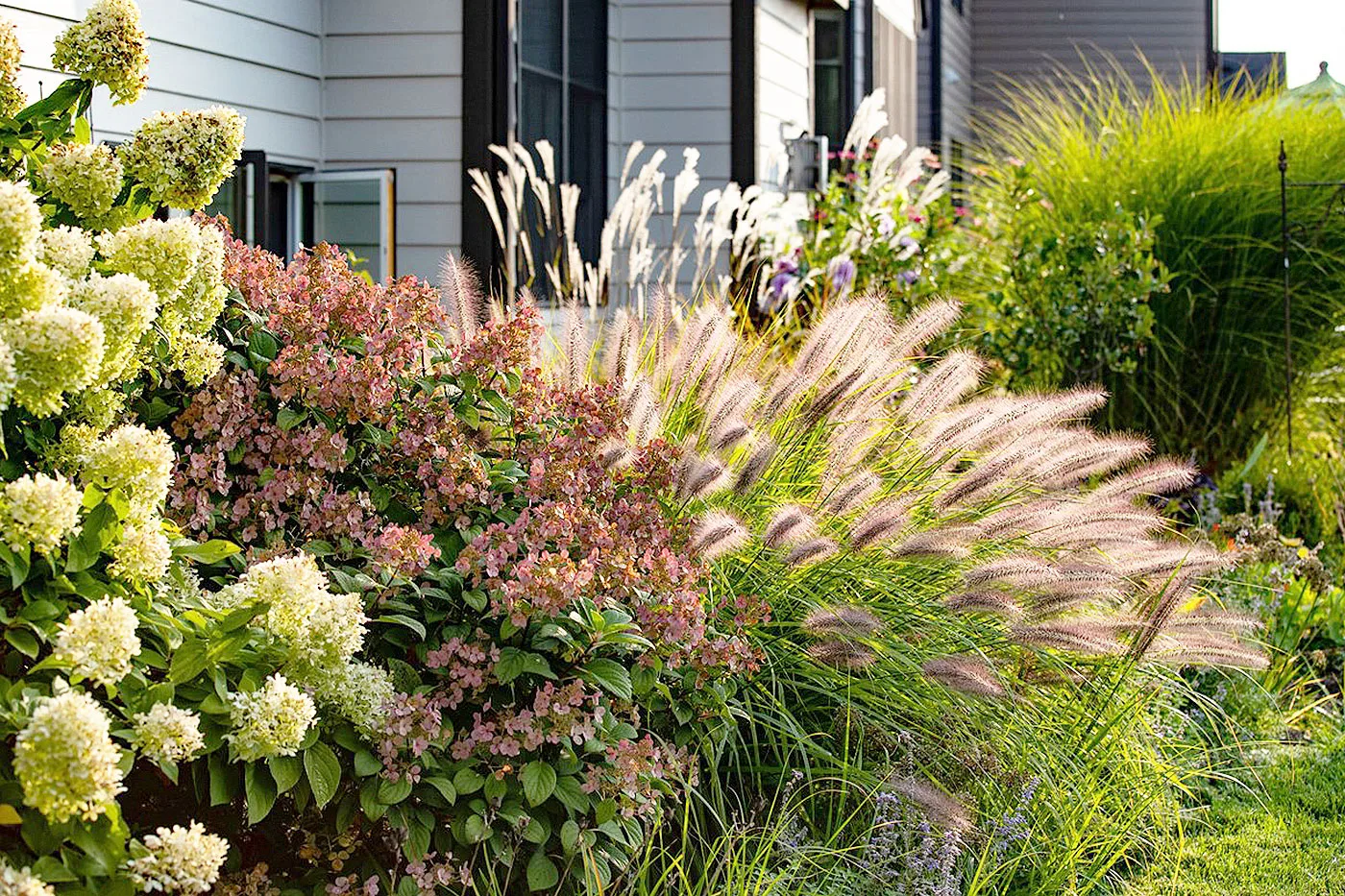
Ornamental grasses are among the most underestimated plants in the garden. They do not flower like roses, they do not create a strong spring spectacle like magnolia, and they are not as obvious an accent as a Japanese maple. But very often, they are exactly what makes a garden look finished, modern and alive.
In the “Designer Accents in the Garden” series, ornamental grasses have a very important role. They bring movement, softness, seasonality and a natural transition between more structured plants. If shrubs and trees are the architecture of the garden, grasses are the air between them.
Many people overlook them because they seem like “just grass”. But well-chosen ornamental grasses can change the whole feeling of a yard — especially in modern gardens, around terraces, along paths, near stone, water, wooden decking or in more naturalistic planting schemes.
Why Ornamental Grasses Are So Valuable
Ornamental grasses have one quality that few plants offer so well — movement. Even a light breeze changes them. The garden no longer looks static; it begins to breathe.
They are not beautiful only in summer. Many types have decorative flower heads late in the season, golden autumn color and an interesting silhouette in winter. This makes them especially useful in gardens that should not look empty after the main flowering season is over.
Ornamental grasses are like pauses in good music. We do not always notice them first, but without them the whole composition becomes heavy.
They soften strict lines, connect different plants and create a sense of naturalness. They work especially well when there are many evergreen shrubs, stone, concrete, wood or modern architectural elements.
Where to Use Ornamental Grasses
Ornamental grasses can be used almost anywhere, but they look best when they have a clear place in the composition. They should not be scattered randomly, because then the effect is lost.
They are suitable for:
- modern gardens with clean lines;
- around terraces and seating areas;
- along paths and steps;
- next to stone, gravel and wooden decking;
- in Japanese-style and naturalistic gardens;
- around water features;
- as a transition between shrubs and low-growing plants;
- in drought-tolerant planting schemes.
One of the most common mistakes is planting a single lonely grass in the middle of a border. Groups, repetition and rhythm look much better — for example, three identical clumps along a path, or a larger group behind low perennials.
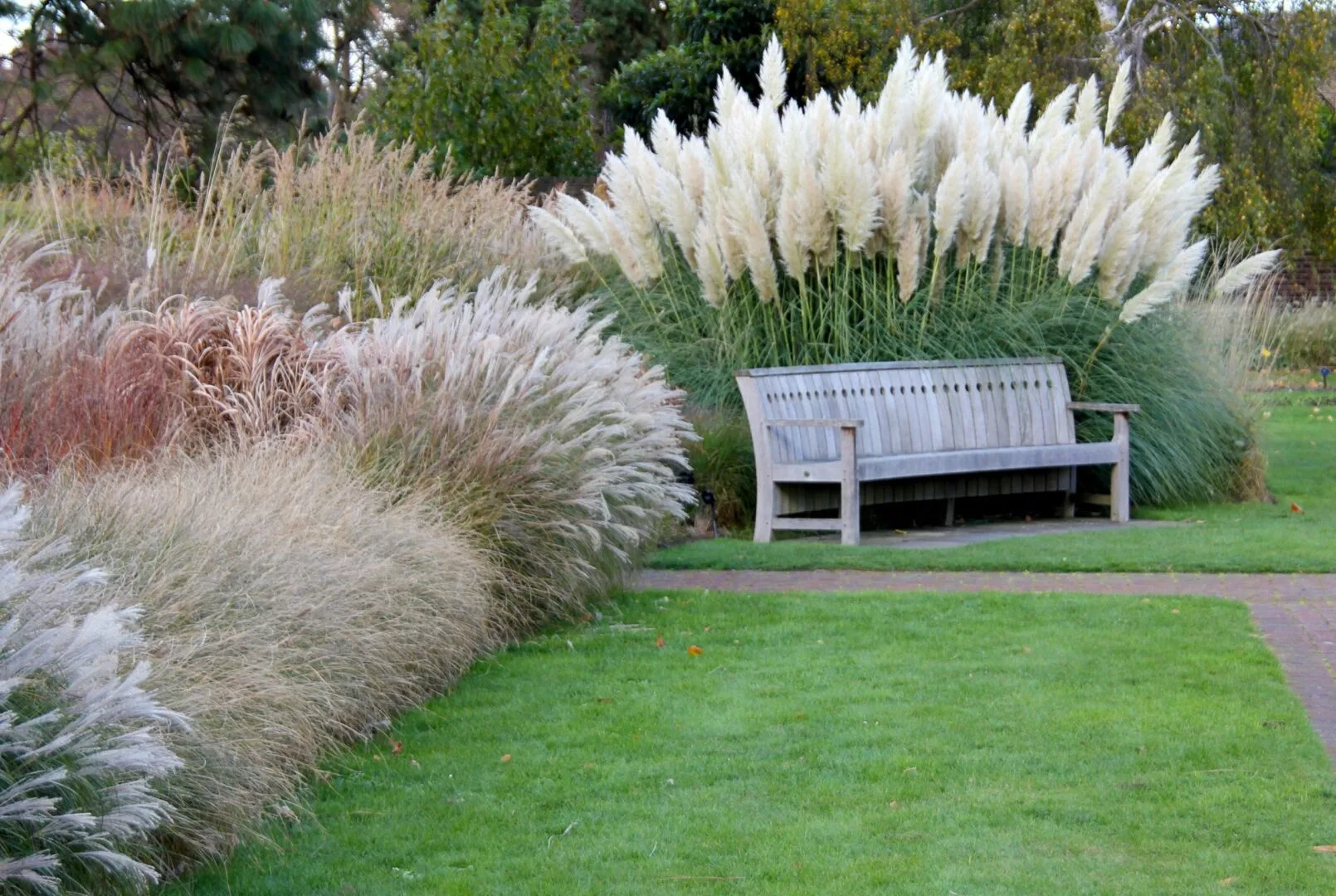
The Most Popular Ornamental Grasses for the Garden
There are many types of ornamental grasses, but for a home garden it is best to choose ones that are resilient, attractive for more than one season and do not require overly complicated maintenance.
Miscanthus is one of the most popular tall ornamental grasses. It is suitable as a background plant, for larger borders, along fences or as a soft screen. It has beautiful flower plumes and a strong autumn presence.
Pennisetum, also known as fountain grass, has a very soft silhouette and fluffy flower spikes. It looks beautiful near paths, terraces and in modern planting schemes. Some types are more sensitive to cold, so they should be chosen carefully according to the region.
Stipa is airy, light and very suitable for naturalistic, dry and sunny plantings. It moves beautifully in the wind and creates an almost steppe-like feeling.
Festuca is a low, compact grass, often with a blue-gray color. It is suitable for borders, rocky corners, rock gardens and dry places.
Carex is very useful for more shaded and moist corners. It has many varieties with different colors and textures and can be used as a soft filler between shrubs and perennials.
| Ornamental Grass | Height and Effect | Where It Works Best |
|---|---|---|
| Miscanthus | Medium to tall, with beautiful flower plumes | Background planting, larger borders, along fences, modern gardens |
| Pennisetum | Soft fountain-like shape, fluffy flower spikes | Near terraces, paths, stone and low plantings |
| Stipa | Airy, light and highly responsive to wind | Sunny and dry places, naturalistic plantings |
| Festuca | Low, compact, often blue-gray | Borders, rock gardens, stony and dry corners |
| Carex | Low to medium, soft and dense | Partial shade, moist places, under shrubs and trees |
Sun, Soil and Watering
Most ornamental grasses love sun. Miscanthus, pennisetum, stipa and festuca in particular look best in a bright place where they can develop a good shape and attractive flower heads. In too much shade, they often stretch, flop more easily and flower less.
There are also grasses that tolerate partial shade — some carex varieties, for example. They are suitable for more moist and shaded corners where classic sun-loving grasses will not look their best.
The soil should be well drained. Many ornamental grasses do not like constantly wet roots, especially in winter. In heavy soil, it is a good idea to improve the structure with compost and materials that make the soil looser.
Practical tip: not all ornamental grasses are drought-tolerant in their first year. After planting, they need regular watering until they root well. After that, many of them become much more independent.
This post contains affiliate links. As an Amazon Associate, I earn from qualifying purchases at no extra cost to you.
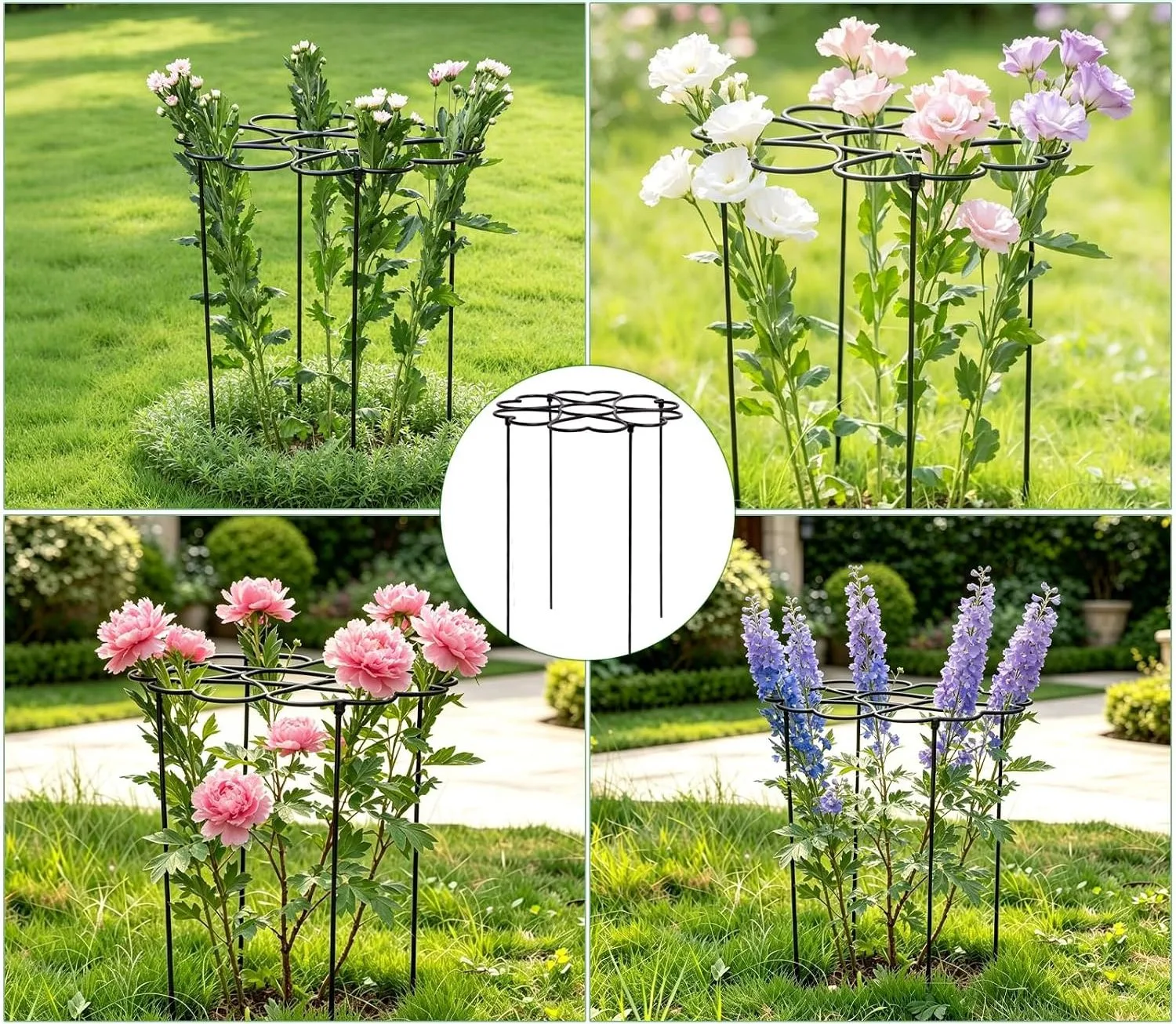
A healthy ornamental grass normally should not need to be held upright. If a sun-loving grass constantly collapses because it has been planted in deep shade or overly rich soil, correcting the growing conditions is more useful than simply supporting it.
But tall clumps near a path or in an exposed position can sometimes open outward after heavy rain or wind. A low metal support can help keep the outer stems from falling into the walkway while still allowing the grass to retain its natural movement.
How to Prune Ornamental Grasses
One of the most important care tasks is proper pruning. Most deciduous ornamental grasses are not cut back in autumn, but left standing through winter. Their dry stems and flower heads often look beautiful with frost, snow or low winter sun.
Pruning is usually done at the end of winter or in early spring, before new growth begins. The clump is cut back low, but not right down to the ground, to make space for the fresh leaves.
With evergreen or semi-evergreen grasses, such as some carex varieties, a full cutback is not always needed. More often, dry and damaged leaves are simply cleaned out to preserve the plant’s natural look.
The Most Common Mistakes
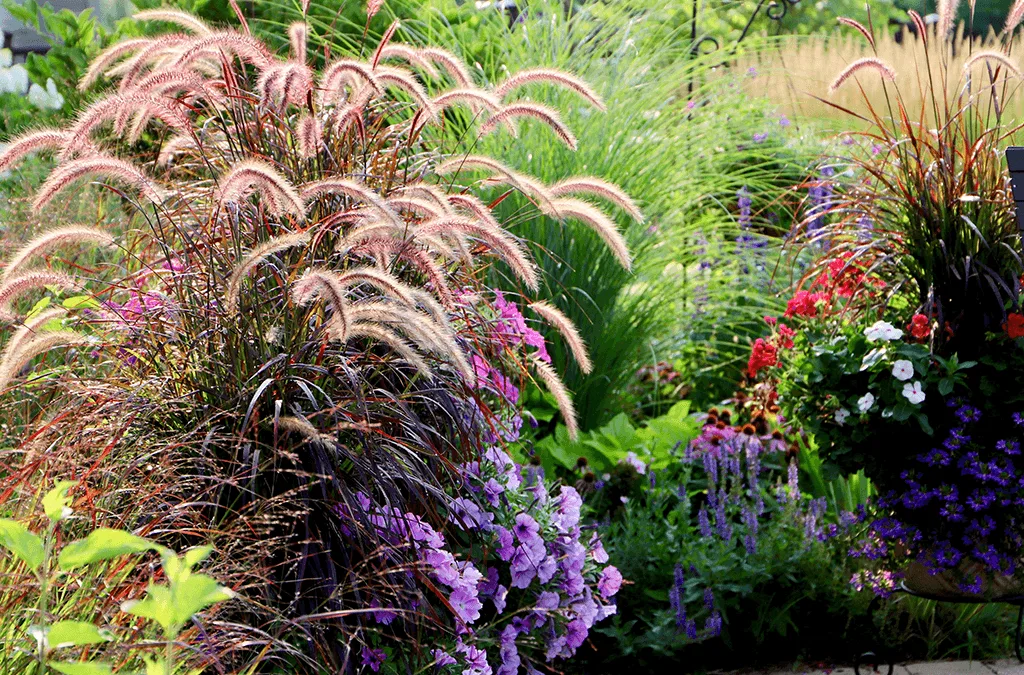
The first mistake is choosing the wrong type for the location. A sun-loving grass planted in shade will rarely look good. The same applies to a grass that prefers well-drained soil but is placed in a constantly wet area.
The second mistake is planting without thinking about the final size. Some grasses look small in a pot, but after two or three years they become large clumps and need space.
The third mistake is cutting them back too early in autumn. This removes the winter effect and sometimes even the plant’s natural protection. It is better to leave the dry stems until the end of winter, unless they look completely collapsed.
What to Combine Ornamental Grasses With
Ornamental grasses are among the best garden partners because they do not compete visually with other plants. They can soften strong shapes, connect different colors and give a natural frame to brighter accents.
Beautiful combinations can be created with Japanese maple, nandina, lavender, echinacea, rudbeckia, hydrangeas, ornamental plum, low conifers, salvia, stone and gravel. In more modern gardens, grasses look wonderful next to concrete, wood, metal and clean-lined paving.
If you want a more natural look, combine grasses with perennials and repeat them in several places. If you want a more structured effect, use one type of grass rhythmically — for example, along a path or as a soft border around a terrace.
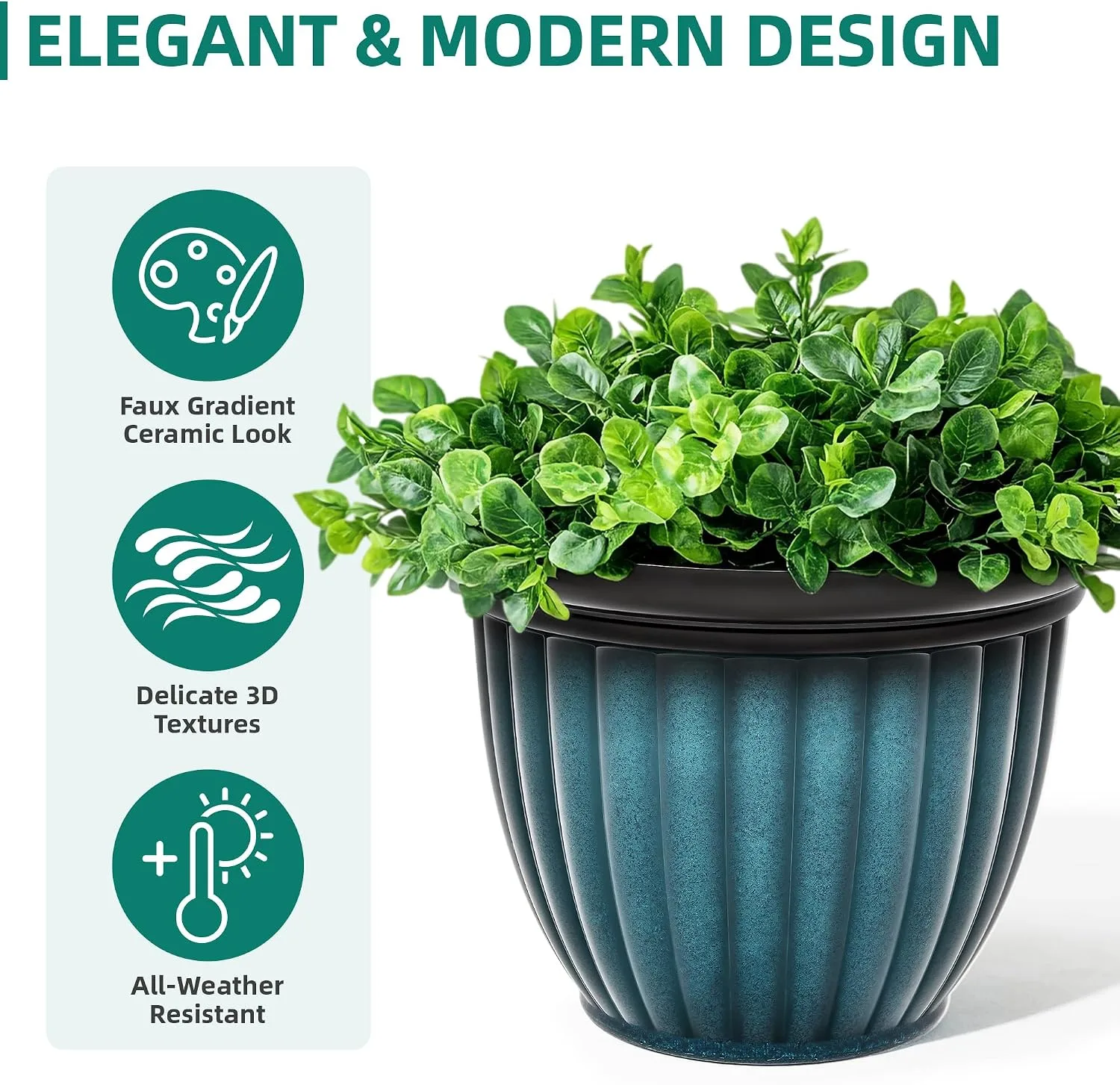
Compact grasses such as festuca, carex and smaller pennisetum cultivars can work very well in containers around a terrace or entrance. Their foliage provides movement without requiring a complicated seasonal planting scheme.
These 15-inch outdoor pots provide more soil volume than a small decorative container, which helps the root zone dry out less quickly. I would still match the pot to the mature size of the grass and keep the drainage holes clear, especially through winter.
Are Ornamental Grasses Suitable for a Small Garden?
Yes, as long as the right type is chosen. In a small garden, there is no need to use the tallest miscanthus varieties. Compact pennisetum, festuca, low carex varieties or smaller miscanthus cultivars are more suitable.
They can also look very good in pots, especially around terraces and entrance areas. The container should be large enough, and watering should be regular because plants in pots dry out faster.
Are Ornamental Grasses Worth It?
Yes, especially if you want the garden to look more natural, modern and complete.
Ornamental grasses are not just filler plants. They bring movement, seasonality, texture and softness. They help individual plants feel like part of one composition, instead of a random collection.
If trees and shrubs create the structure of the garden, ornamental grasses are often the detail that makes that structure feel alive.