
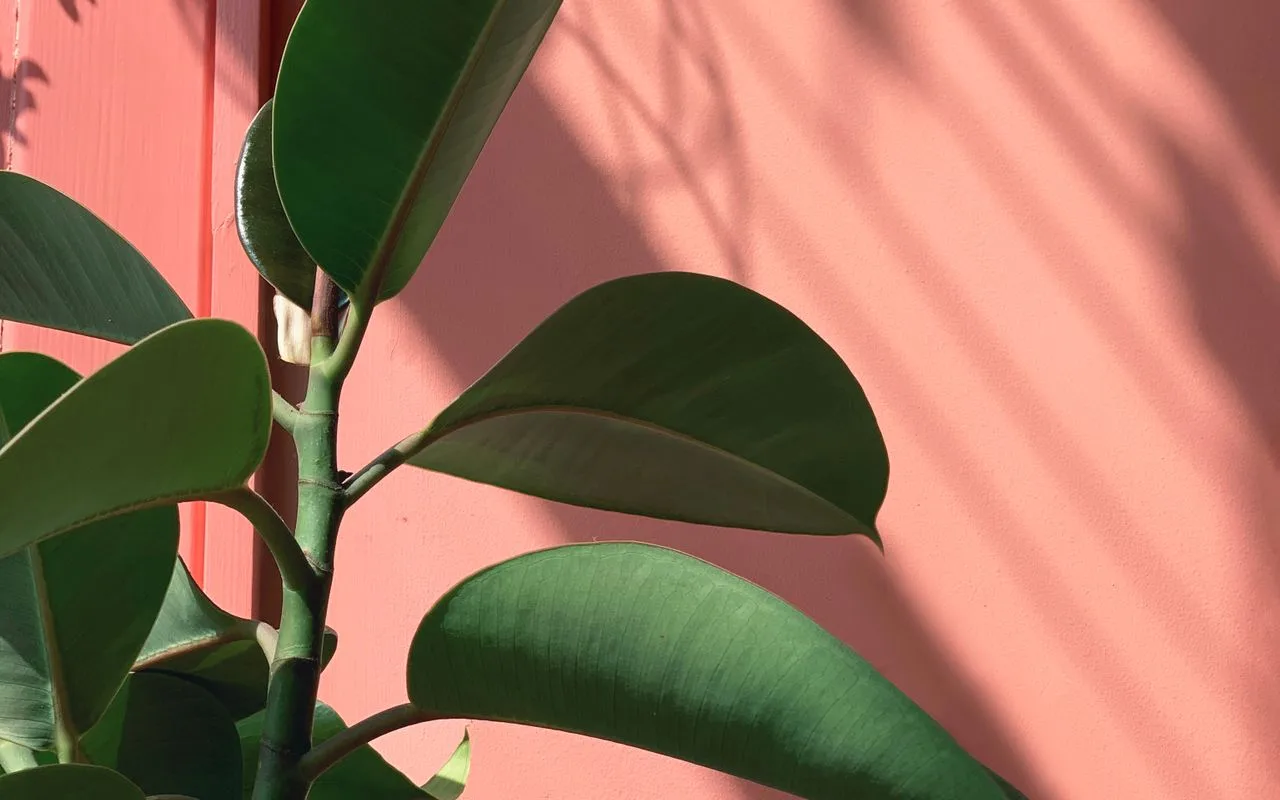
Ficus elastica, better known as the rubber plant, is one of those houseplants that looks strong, steady, and almost impossible to upset. Its large glossy leaves make a room feel greener immediately, but that does not mean the plant will tolerate everything forever.
Most problems come from poor placement, overwatering, sudden moves, or cold, wet soil. Rubber plants do not particularly enjoy being shuffled around the house, and they can react badly when conditions change abruptly.
This is realistic indoor care - a living room, a bright corner, central heating, air conditioning, changing light through the year, and someone who wants a beautiful plant without adding another daily chore.
This article is part of our guide to houseplants by light level.
With a rubber plant, good light, moderate watering, and a stable location matter most. It does not enjoy extremes - deep shade, constantly wet roots, or being moved around all the time.
Rubber plant at a glance
| Botanical name | Ficus elastica |
|---|---|
| Light | Bright indirect light |
| Watering | Moderate, without letting the roots sit in water |
| Humidity | Average to moderately higher household humidity |
| Difficulty | Moderate |
| Best location | Living room, bright corner, or another spot without harsh direct sun |
| Important | The milky sap can irritate skin. Keep the plant away from children and pets that chew on leaves. |
Where to place a rubber plant
Ficus elastica does best in bright indirect light. In practical terms, that means a bright spot near a window without intense midday sun falling directly on the leaves. Move it too far into the room and growth can slow, while new leaves may become smaller.
Variegated cultivars generally need more light to maintain their color. Green varieties are somewhat more tolerant, but they are still not plants for a truly dark corner with almost no daylight.
Be careful near cold windows, frequently opened doors, radiators, and heating vents. Rubber plants dislike sudden changes. Cold soil, very dry air, and a draft all in the same spot are rarely a good combination.
How to water a rubber plant
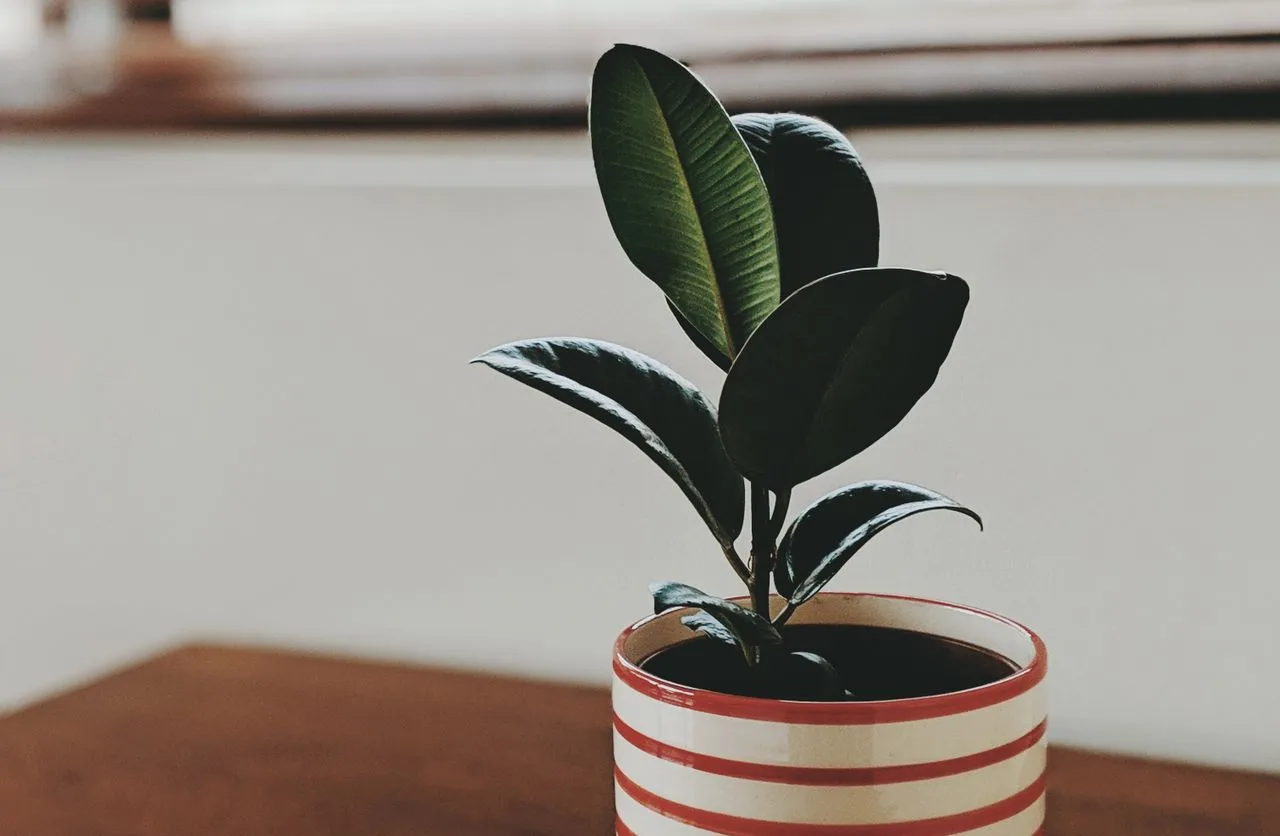
Water according to the soil rather than the calendar. A good time to water is when the upper layer of potting mix has dried. Rubber plants like moderate moisture, but they do not want their roots sitting in wet soil for long periods.
When light is stronger and the plant is actively growing, it may use water faster. In lower light, growth slows and the pot takes longer to dry. If the container still feels heavy and the soil is damp, wait.
Dropping or yellowing leaves often mean something in the routine has changed - too much water, a sudden move, a cold draft, or simply too little light.
Practical note: rubber plants do not appreciate being moved constantly. Find a good location and give the plant time to settle in.
Soil and pot
The safest setup is a container with a drainage hole and a light, airy potting mix. A decorative cachepot is fine, but it should not become a hidden reservoir. After watering, make sure excess water is not sitting in the saucer or outer pot.
A larger container is not always an upgrade. If the plant is still small, an oversized pot holds more wet soil around the roots. That becomes especially risky in lower light, when the potting mix dries more slowly.
Humidity and temperature
Ficus elastica is comfortable in average to moderately higher household humidity. There is no need to automatically buy a humidifier, but keeping the plant directly beside a radiator or air conditioner is rarely helpful.
Stable temperatures matter. Fresh air is useful, but a cold draft blowing across the leaves can stress the plant. The same applies to an air-conditioning vent aimed directly at the pot for hours.
This post may contain affiliate links. As an Amazon Associate, I earn from qualifying purchases.
Extra light when the room is not quite bright enough
Rubber plants can become large enough that finding a genuinely bright spot is not always simple. This matters even more with variegated varieties, which tend to lose color and grow more slowly when light is too weak.
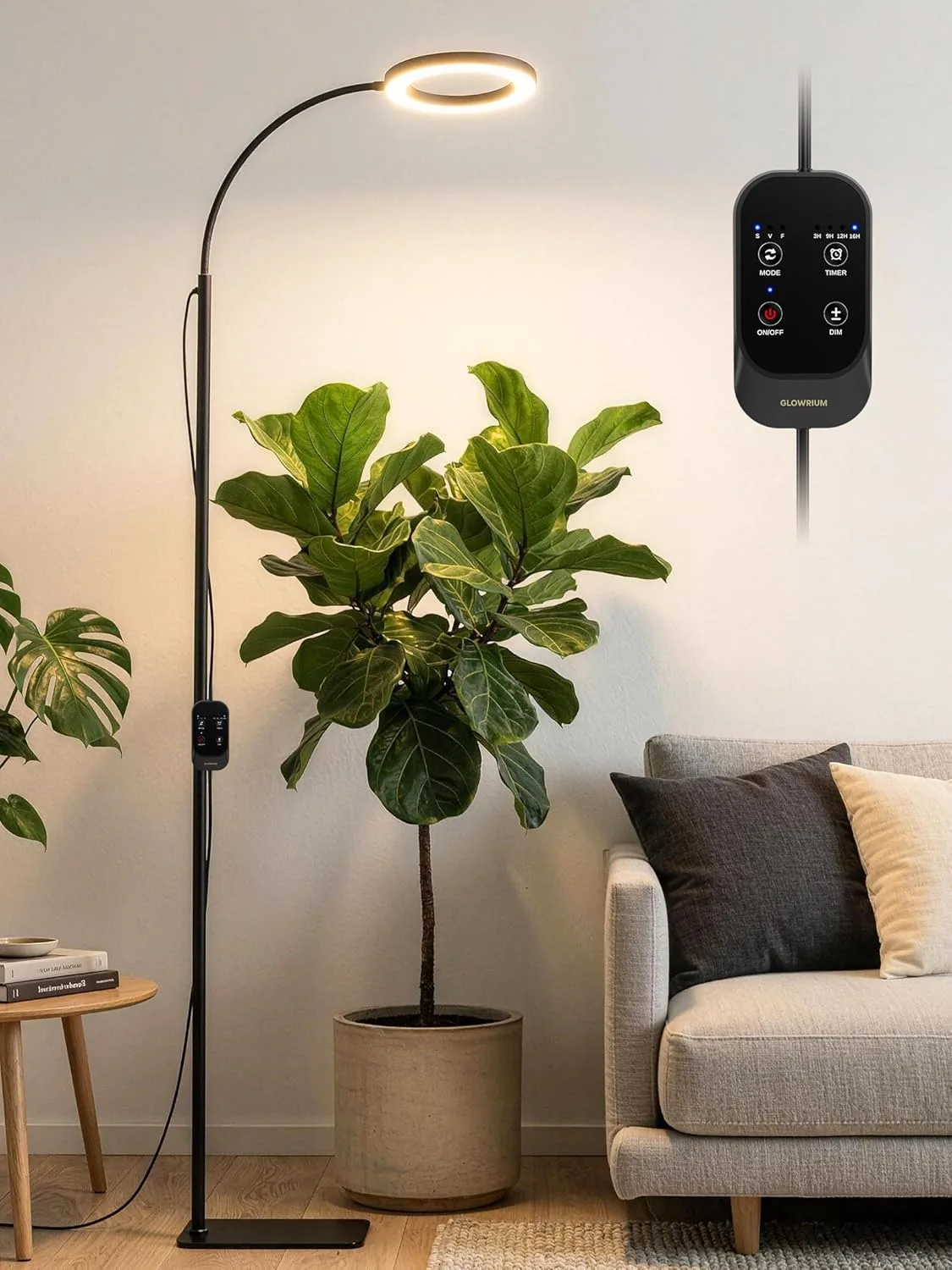
The GLOWRIUM 24W standing grow light is adjustable in height and designed for taller indoor plants. It includes a timer and several brightness levels, so it can provide supplemental light without taking over the entire room.
Fertilizing and repotting
During active growth, a rubber plant can be fertilized moderately, especially when it is producing healthy new leaves. Frequent feeding is unnecessary. More fertilizer does not automatically produce a healthier plant.
When light levels are lower and growth has slowed, there is usually little reason to fertilize heavily. Feeding does not replace adequate light and will not correct overwatering.
Repotting is easiest while the plant is entering active growth. Repot sooner only when there is obvious root rot, a genuinely unsuitable container, or a potting mix that is causing problems.
Common problems
Yellow leaves
Check the soil first. Yellowing often points to overwatering, cold wet soil, or a sudden change in growing conditions.
Leaf drop
Rubber plants can drop leaves after being moved, exposed to a draft or cold conditions, overwatered, or suddenly placed in different light.
Brown leaf tips
Possible causes include dry air, inconsistent watering, mineral buildup, and drafts.
Soft stems or roots
This is a warning sign of wet soil and poor drainage. Stop watering, check the roots if necessary, and allow the potting mix to dry appropriately.
How to propagate a rubber plant
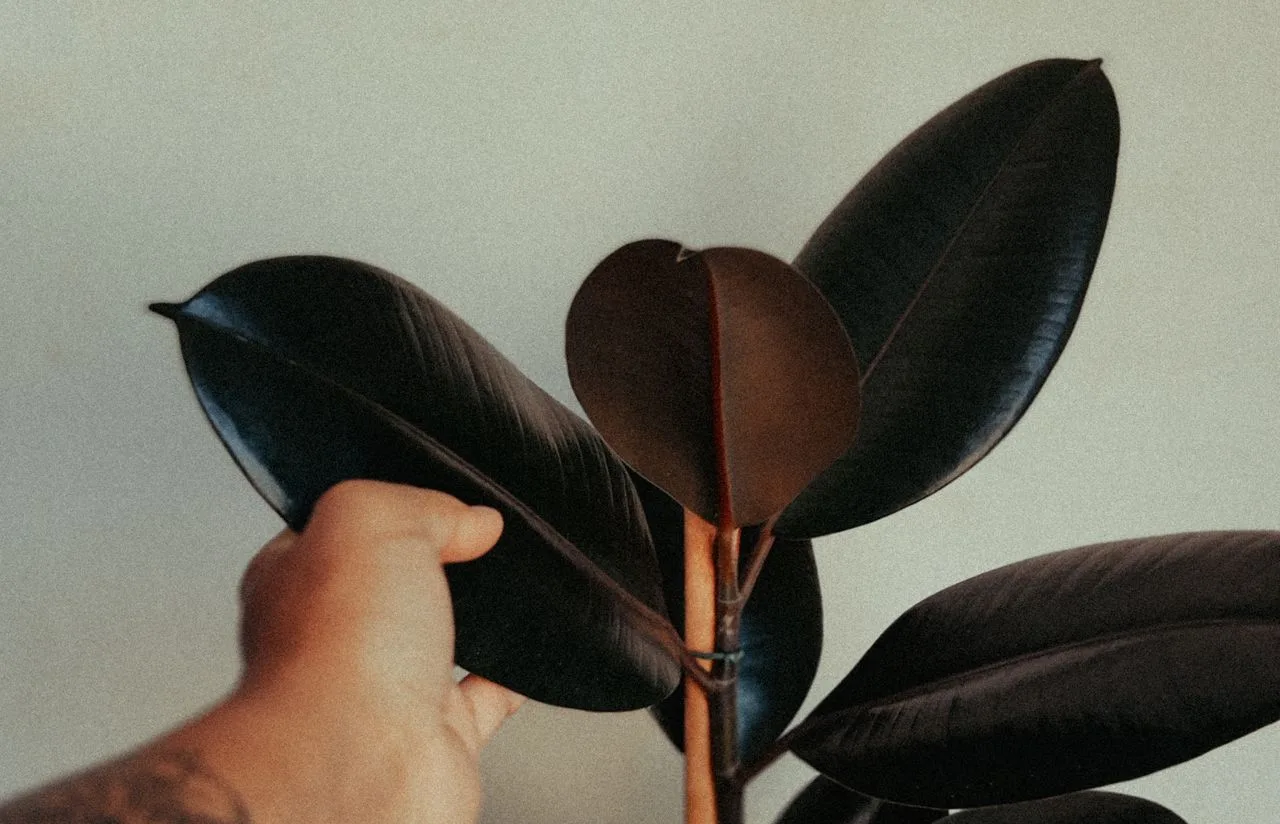
Ficus elastica can be propagated from top or stem cuttings. Use a healthy section of the plant with at least one node and leaf. The milky sap can irritate skin, so wearing lightweight gardening gloves is sensible when taking cuttings or pruning.
Cuttings can be rooted in water or directly in a light potting mix. Propagation is easiest while the plant is actively growing and has enough light to establish new roots.
I would not take cuttings from a weak rubber plant unless the goal is to save healthy sections. Stabilize the growing conditions first; prune later.
Who is a rubber plant best for?
Ficus elastica works well in a living room, bright office, or another reasonably spacious area where its large leaves can have some visual presence. It is a good choice for anyone who wants an architectural houseplant without an especially complicated care routine.
It is less suited to a truly dark corner or to someone who likes moving plants from place to place every few days. With a rubber plant, stable conditions, good light, and moderate watering matter much more than constant intervention.