
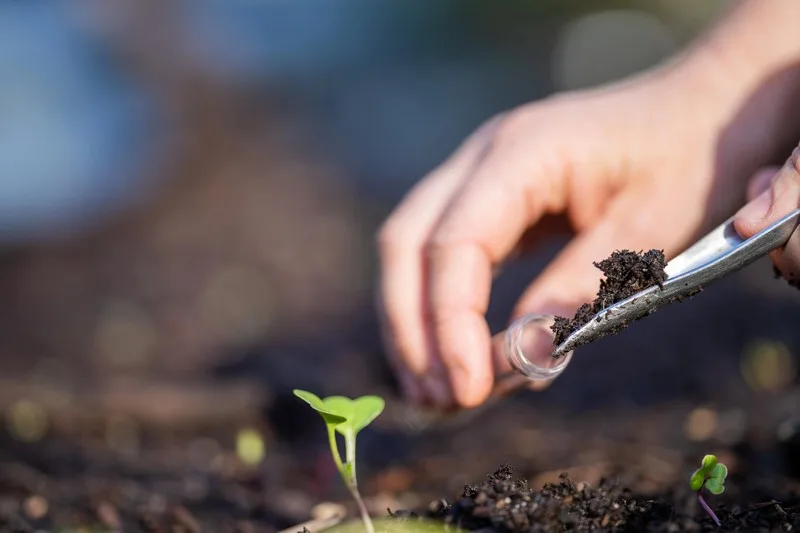
Before we think about fertilizing, watering or choosing plants, there is a much more basic question: what kind of soil do we actually have in the garden?
Soils behave very differently. One holds water for days, while another dries out almost immediately. One is loose and easy to work, while another becomes almost concrete-hard after a few hot days.
The good news is that you do not always need a laboratory test for an initial assessment. Observation and a few simple home tests can tell you a surprising amount.
Before trying to improve the soil, first understand how it actually behaves.
Why It Matters to Know Your Soil
Soil influences almost every decision we make in the garden: what we can plant, how often we need to water, whether roots can develop properly and how we should improve our beds.
When we do not understand the soil, we often try to compensate with more water or more fertilizer. Yet the real problem may simply be its structure.
Sandy, Clay or Well-Balanced Soil
In a real garden, soil is rarely made up of only sand or only clay. It is usually a combination of sand, silt and clay in different proportions.
The ratio of these particles determines much of the soil's physical behavior.
| Soil type | How it behaves | Main challenge |
|---|---|---|
| Sandy soil | Loose, drains quickly and generally warms relatively easily. | Dries out quickly and retains fewer nutrients. |
| Clay soil | Holds more water and can be heavy to work. | Can become compacted and remain waterlogged. |
| Well-balanced soil | Holds moisture while remaining reasonably loose and well aerated. | Still benefits from organic matter and good long-term care. |
Humus is not a separate soil texture in the same way that sand and clay are. Dark, crumbly soil often contains more organic matter. That is a soil quality, not a separate textural category.
The Simplest Test - Soil in Your Hand
Take a small amount of soil from about 4-6 in (10-15 cm) below the surface. If it is completely dry, moisten it slightly. It should be damp, but not muddy.
Squeeze it in your palm and then try to shape it gently between your fingers.
- If it falls apart almost immediately and you can clearly feel gritty particles, it probably contains more sand.
- If it feels sticky, is easy to shape and holds its form, it probably contains more clay.
- If it holds together but breaks apart fairly easily, the texture is likely more balanced.
This is not a laboratory method, but it is very useful for a first assessment.
The Jar Test - What Is in Your Soil?
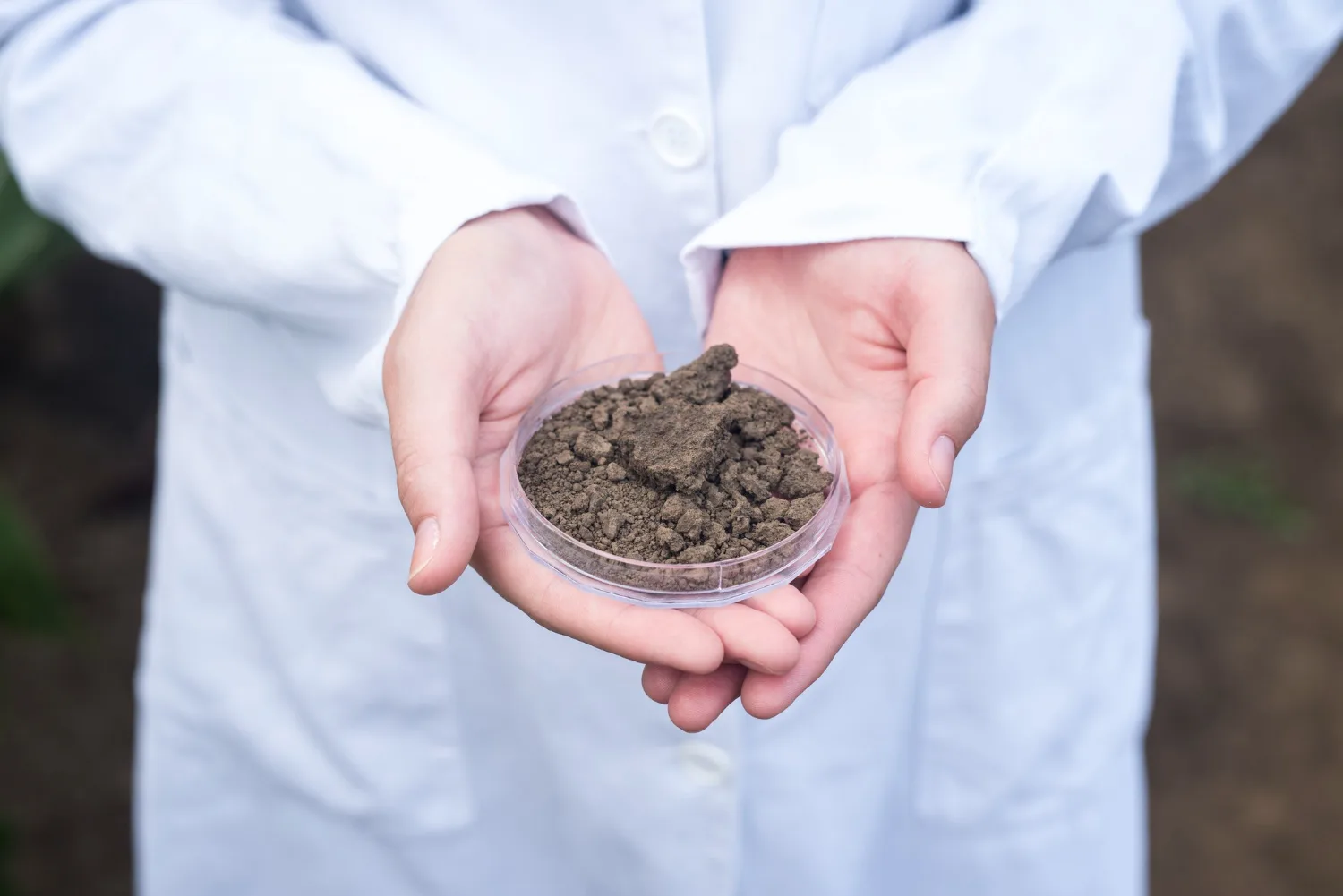
If you want a clearer idea of the proportions of soil particles, you can try a simple jar test.
Take soil from several spots within the same area of the garden, remove large stones and roots, and place the sample in a clear jar.
Add water, close the jar securely and shake it vigorously until the soil is fully dispersed.
Then leave the jar undisturbed. The particles will gradually settle according to their size.
The test does not provide the same precision as laboratory analysis, but it is an excellent way to compare different areas within the same yard.
What Color, Drainage and Surface Conditions Can Tell You
Texture is not the only clue. The way the soil behaves after rain or irrigation can sometimes tell you more than a quick test.
Color can also provide clues, but it should never be interpreted on its own.
- Dark soil is often associated with higher organic matter.
- Pale soil may be sandy or low in organic matter.
- Grayish colors deeper in the profile may be associated with prolonged waterlogging.
- Reddish and brown colors are often associated with iron compounds in the soil.
Dark color does not automatically guarantee fertile soil, just as heavy soil is not necessarily poor soil. Always consider several clues together.
When a Laboratory Soil Test Is Worth It
Home tests are excellent for understanding texture and general soil behavior, but they cannot reliably tell us everything.
When you need to make a more important long-term decision, laboratory testing is usually more useful than adding different fertilizers “just in case.”
- When moving into a new property with completely unfamiliar soil.
- Before establishing a fruit orchard.
- When plants repeatedly grow poorly.
- When you suspect a soil pH problem.
- When plants show recurring symptoms despite otherwise good care.
- Before making major corrections with lime, sulfur or large fertilizer applications.
Depending on the test, laboratory analysis can provide information about pH, organic matter and various plant nutrients.
This becomes particularly valuable when you want to correct the soil, rather than simply understand it.
What to Do Once You Know Your Soil
Identifying your soil type is not the final goal. The point is to use that information to make better gardening decisions.
| If your soil is... | Main approach |
|---|---|
| Sandy and quick to dry | Add compost and organic matter regularly, mulch the soil and work on improving moisture retention. |
| Heavy and clay-rich | Add organic matter, avoid working the soil when it is very wet, and improve its structure gradually. |
| Compacted | Reduce foot traffic, create permanent paths and keep the soil covered. |
| Well structured | Maintain what you have achieved with compost, mulch and gentle soil management. |
There is no need to turn every garden soil into some imaginary universal perfect mix.
It is usually more sensible to understand what you already have and gradually improve its weakest points.
Soil is not simply the place where we put plants. It is the environment where roots live, absorb water and take up nutrients.
That is why the first step is not more fertilizer, but a little observation: pick up a handful of soil, watch what happens after rain, try a jar test and get to know what is already beneath your feet.