
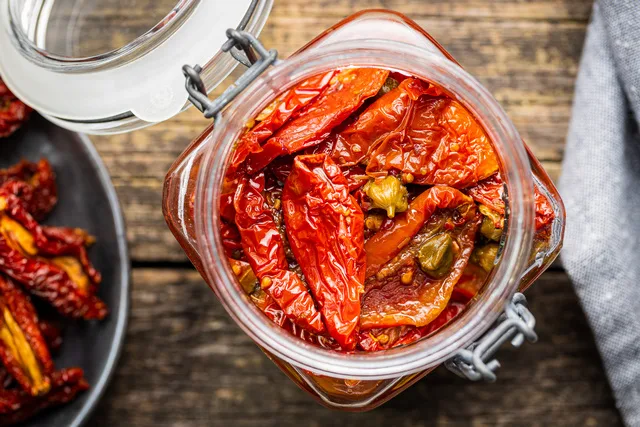
Homemade Dried Tomatoes: Italian, French, and Spanish Ideas
Dried tomatoes are one of those products that often cost so much in the shop that you start wondering whether someone dried them personally on a Tuscan hillside while singing to them softly. And yet, making them at home is not that complicated.
They need good tomatoes, patience, and a little respect for moisture. That is almost all. Well, that and not deciding that a jar full of tomatoes, oil, garlic, and fresh herbs can sit in the pantry like a decorative memory of summer. It cannot.
Why Dried Tomatoes Are Worth the Effort
In late summer, tomatoes suddenly seem to be everywhere. They are in the garden, at the market, in crates by the door, on the kitchen counter. We buy a few more, then a few more again, because they look beautiful. And then comes the question: what exactly are we going to do with all these tomatoes?
Drying is one of the nicest ways to give them a second life. The water evaporates, while the flavor becomes sweeter, deeper, and more concentrated. A few dried tomatoes can change pasta, salad, an omelet, cheese, focaccia, or even the simplest slice of bread with olive oil.
They are the kind of little jar you open in January and think: yes, this was worth it.
Which Tomatoes to Choose
Not every tomato is a good candidate for drying. Very watery tomatoes can be dried, of course, but they will make you wait longer and wonder whether you are still preserving food or simply watching a slow tomato drama.
Best Choices
- meaty tomatoes;
- cherry tomatoes;
- plum tomatoes;
- varieties with less water and more flesh.
More Difficult
- very watery tomatoes;
- large juicy tomatoes;
- tomatoes with many seeds and a lot of juice;
- unevenly ripened fruit.
Better Not
- bruised tomatoes;
- overripe and very soft tomatoes;
- fruit with spots or questionable areas;
- tomatoes that already look like they should become sauce.
Drying is not makeup for tired tomatoes. If the tomato has already entered a personal crisis, it is better to turn it into sauce.
Preparation Before Drying
Before placing the tomatoes in the oven or dehydrator, there are a few small things worth doing properly. They are not complicated, but they decide whether the tomatoes dry evenly or whether half of them are ready while the others are still wondering what is going on.
- Wash the tomatoes well.
- Dry them with a towel so you do not add extra moisture at the beginning.
- Cut cherry tomatoes in half, and larger tomatoes into slices or quarters.
- If the tomatoes are very juicy, remove part of the seeds and watery center.
- Arrange them on the tray or dehydrator racks without overlapping.
- Sprinkle with salt, a little sugar if needed, and dried herbs.
Salt intensifies the flavor and helps some of the moisture come out more easily. Sugar is not mandatory, but with more acidic tomatoes it can soften the taste a little. The goal is not a sweet tomato, but a more balanced flavor after drying.
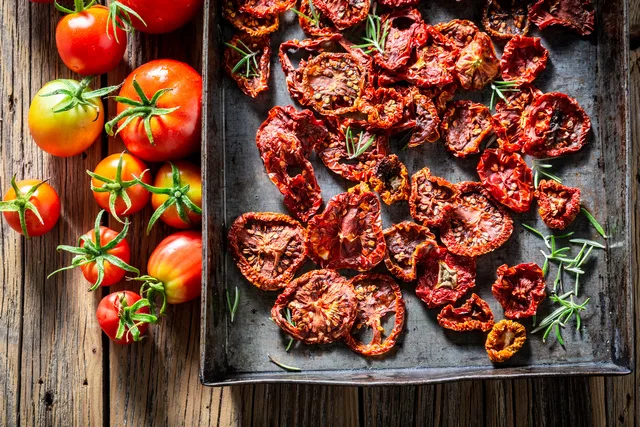
Methods for Drying Tomatoes
The method depends on the quantity, the time you have, your equipment, and how much control you want. Sun drying is beautiful. The oven is accessible. A dehydrator is the most predictable. None of them is magic. They all need some attention.
Drying in the Oven
A good option for a first attempt and small quantities. It is useful when you want to try dried tomatoes without buying another appliance.
Temperature: around 195–250°F / 90–120°C.
Time: approximately 3–10 hours, depending on the tomatoes, thickness, and oven.
Drying in a Dehydrator
The most predictable option, especially if you have a garden or want to dry more than one tray.
Temperature: around 130–150°F / 55–65°C.
Advantage: steady temperature, airflow, and a more even result.
Sun Drying
The most beautiful idea, and the most demanding in practice.
It needs dry weather, protection from dust and insects, bringing the trays inside at night, and very good hygiene. Romance is a lovely thing, but flies are not part of the recipe.
Air Fryer With Dehydrate Function
Useful for very small quantities if you already have one.
It is not the right tool for serious preserving, but it is a good way to test whether dried tomatoes are your kind of thing.
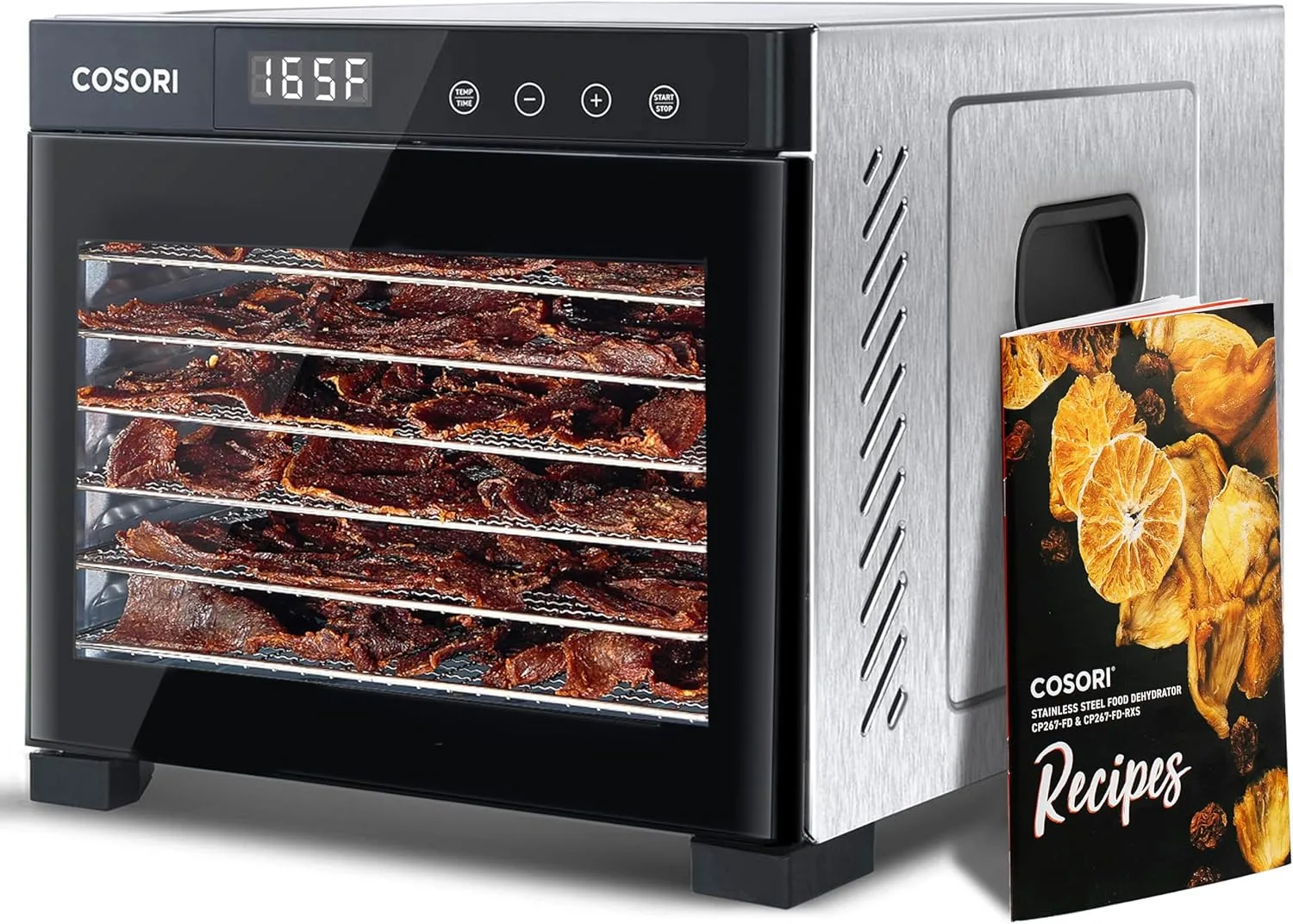
For dried tomatoes, I would choose a dehydrator with stainless steel trays
Tomatoes are sticky, juicy, and a little dramatic while drying, so a dehydrator with stainless steel trays is a practical upgrade. It gives steadier airflow than the oven and keeps the slices arranged neatly without taking over the kitchen for the whole day.
This kind of dehydrator makes sense if you want to dry tomatoes, herbs, peppers, mushrooms, or fruit more than once a season — not just make one experimental tray and then forget the appliance exists.
Italian Style: Pomodori Secchi
In the Italian version, dried tomatoes usually go where they naturally belong — on bruschetta, in pasta, in focaccia, in pesto, or next to good cheese. The flavor is intense, the herbs are dry and aromatic, and the olive oil usually comes after drying — when serving the tomatoes or when keeping them briefly in the refrigerator.
You can season them with salt, a pinch of sugar, dried oregano, dried basil, or a little chili. If you add garlic, especially fresh garlic, we are no longer talking about a jar that calmly sits on the shelf. We are talking about refrigeration and quick use.
If you make dried tomatoes often, a set of wide-mouth Mason jars is useful for storing the fully dried tomatoes in small, clean batches.
Italian Flavor Idea
- tomatoes;
- salt;
- a pinch of sugar;
- dried oregano;
- a little olive oil after drying;
- optional dried basil or chili.

French Style: Tomates Confites / Tomates Séchées
The French approach is softer and more aromatic. Here, the tomato does not always need to become completely dry and concentrated. Sometimes the idea is to keep it slightly juicy, almost confit-like, with thyme, olive oil, and a more delicate flavor.
This version is lovely with bread, salads, cheese, or as a small appetizer. Thyme suits it naturally, and black pepper works well too. Garlic is possible, but if it is fresh and there is olive oil involved, again we think refrigerator, not pantry shelf.
For short-term refrigerator storage in olive oil, small airtight glass jars are more practical than one large jar, because you open only what you will actually use.
French Flavor Idea
- tomatoes;
- olive oil;
- salt;
- black pepper;
- thyme;
- optional garlic for quick use.
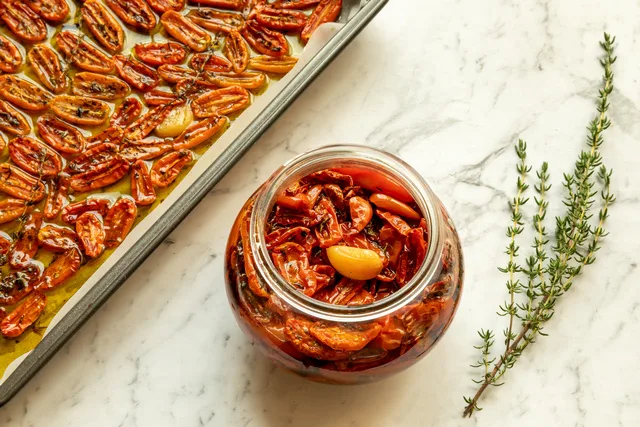
Spanish Style: Tomatoes, Olive Oil, Pepper, and Herbs
The Spanish version is more direct and earthy. Tomatoes work beautifully with olive oil, salt, a little sugar, black pepper, rosemary, or thyme. The flavor is stronger, slightly warmer, and very good with bread, cheese, eggs, meat, or small tapas plates.
This is the version that easily becomes part of dinner without much planning. You place a small bowl on the table and it disappears faster than expected. Which is usually a good sign.
Spanish Flavor Idea
- tomatoes;
- salt;
- a little sugar;
- black pepper;
- rosemary;
- olive oil;
- optional garlic for quick use.
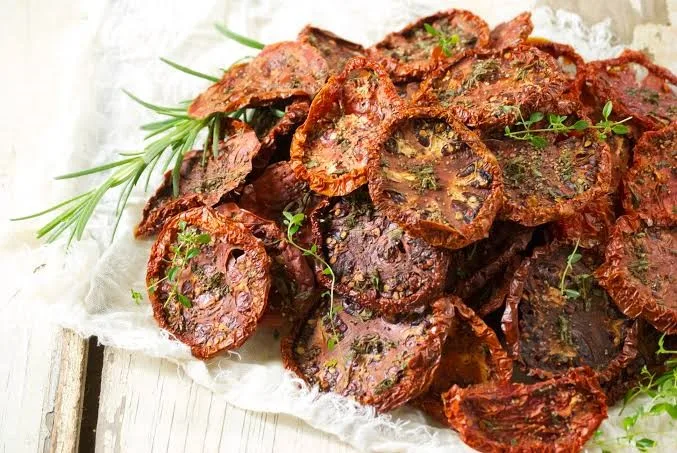
Common Mistakes
Dried tomatoes are not difficult, but they have a few ways of reminding us that rushing is not a preservation method.
The most important thing: if there is oil, fresh garlic, and fresh herbs, think refrigerator and quick use — not pantry shelf and forgetfulness.
For longer storage without oil, especially if you dry more than one batch, a vacuum sealer can help keep dried tomatoes better protected from air and moisture.
If you want to see how calm the whole process can look, here is an Italian making a small batch of dried tomatoes. Just a few tomatoes, patience, and good taste.
Mini Recipe: Homemade Dried Tomatoes
A small Mediterranean trick for pasta, bread, and cheese
Ingredients
- 2 lb / 1 kg meaty tomatoes or cherry tomatoes;
- salt;
- a pinch of sugar, optional;
- dried oregano or thyme;
- black pepper, optional;
- olive oil for serving or short-term storage.
Method
- Wash the tomatoes and dry them well. The less extra moisture there is at the beginning, the more evenly they will dry.
- Cut cherry tomatoes in half, and larger tomatoes into slices or quarters.
- If the tomatoes are very juicy, remove part of the seeds and watery center.
- Arrange them on a tray or dehydrator rack without overlapping. Air needs space to move.
- Sprinkle with salt, a pinch of sugar, and dried herbs. Do not overdo it — the point is to highlight the tomato, not hide it.
- Dry in the oven at a low temperature or in a dehydrator until the tomatoes are flexible, leathery, and have no visible moisture.
- Let them cool completely before storing.
- Store fully dried tomatoes in a jar, vacuum-sealed bag, or freezer. If you cover them with olive oil, keep them in the refrigerator and use them quickly.
When It Is Worth Making Them at Home
Dried tomatoes are worth making when you have ripe, flavorful tomatoes and do not want all of them to become sauce. This is a good way to preserve a more concentrated taste — not a huge winter project, but a small jar that can later change pasta, bread, salad, or a piece of cheese.
There is not much point in drying tomatoes that are not especially tasty when fresh. Drying does not create flavor from nothing. It concentrates what is already there. If the tomato is watery and without character, the result will be the same, only drier.
The nicest part is that you do not need to make a huge amount. Even one small tray is enough to feel the difference. Homemade dried tomatoes are not difficult — they simply do not like being rushed.
Related Articles From the Homemade Preserving Series
This post may contain affiliate links. As an Amazon Associate, I earn from qualifying purchases.
