
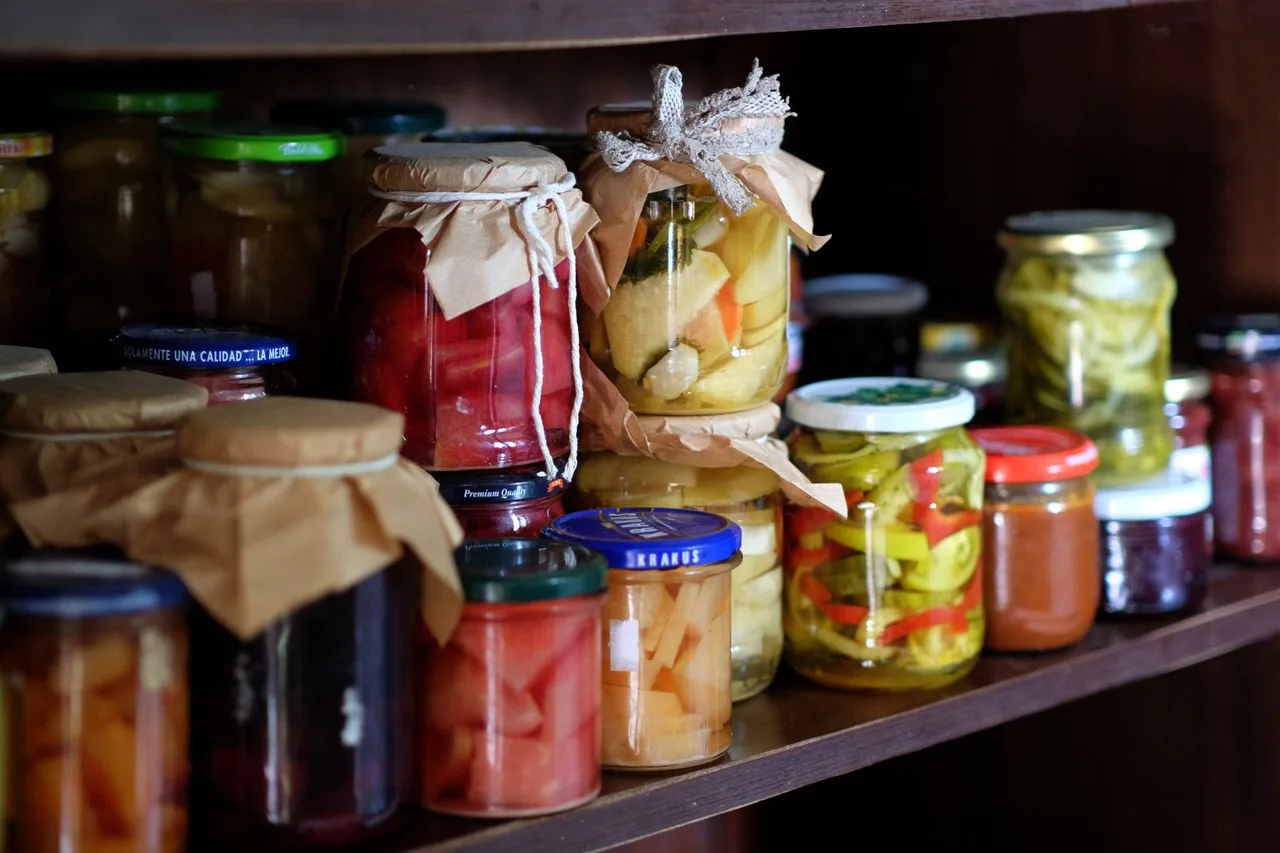
There is a moment at the end of summer when tomatoes are no longer simply abundant — they become a small emergency. Peaches soften too quickly. Peppers are waiting to be roasted. Figs are balanced somewhere between perfection and “tomorrow will be too late.”
That is when the old, slightly inherited ritual begins: jars, knives, pots, towels, lids, market crates, a little chaos, and the question: “Am I really going to do this?”
More and more often, my answer is: yes, but not as a punishment.
Homemade preserving today does not have to mean 60 jars of lutenitsa, a basement packed to the ceiling, and guilt if you buy jam from the store. It can be much lighter and more reasonable. Five jars of dried tomatoes. Three small batches of fig jam. One tray of roasted peppers in the freezer. One jar of fermented vegetables that hisses suspiciously on the counter and behaves like a living creature — which, in fact, it is.
Why Make Preserves at Home at All?
Let us start honestly: we can buy almost everything.
There are good artisan jams, decent dried tomatoes, nice pickled vegetables, and jars of lutenitsa with labels that look better than some family albums. Sometimes buying is the more reasonable choice. Especially if we do not have the time, space, mood, or the product requires a technique we do not really know.
But homemade preserves have another advantage: they are not just a product. They are a small miracle.
You know what went into them.
You can adjust the taste your own way.
You decide whether something should be more sour, spicier, less sweet, more Mediterranean, or completely traditional.
And most of all: you take part in the season instead of simply watching it pass through the market.
I do it for practical reasons too. I have a garden, and I have fruit and vegetables that do not wait for a convenient day in my calendar. If the tomatoes are ripe, they do not care whether I have a meeting, work, or a headache. My garden is beautiful, but not particularly diplomatic.
But there is something else. When I dry, slice, roast, boil, or line up jars, I can very clearly imagine my grandmother and my mother doing the same. In a sentimental way, it connects me to them, and somehow it feels important to continue it.
Back then, it looked like work. Now I see something else too — order, care, authenticity, taste, uniqueness. And yes, sometimes a little excess. Our grandmothers were not minimalists. If there were 40 pounds of peppers, then fate had clearly decided there would be lutenitsa.
What If You Live in an Apartment?
A garden is a wonderful privilege, but it is not an entry ticket to seasonal cooking.
You can live in an apartment and still make something beautiful. In fact, sometimes that is the more reasonable version — you buy the right fruit at the market, make a small batch, and do not have to fight with 12 crates, 4 basins, and family logistics.
Modern preserving can be urban. A small kitchen, a sharp knife, a few wide-mouth Mason jars, one large pot, an oven, or a dehydrator. You do not need a yard, a shed, or an inherited cauldron to feel the season.
Sometimes 6 well-made jars are more than 40 that nobody opens later, but everyone moves around respectfully.
Between Grandma’s Method and Modern Equipment
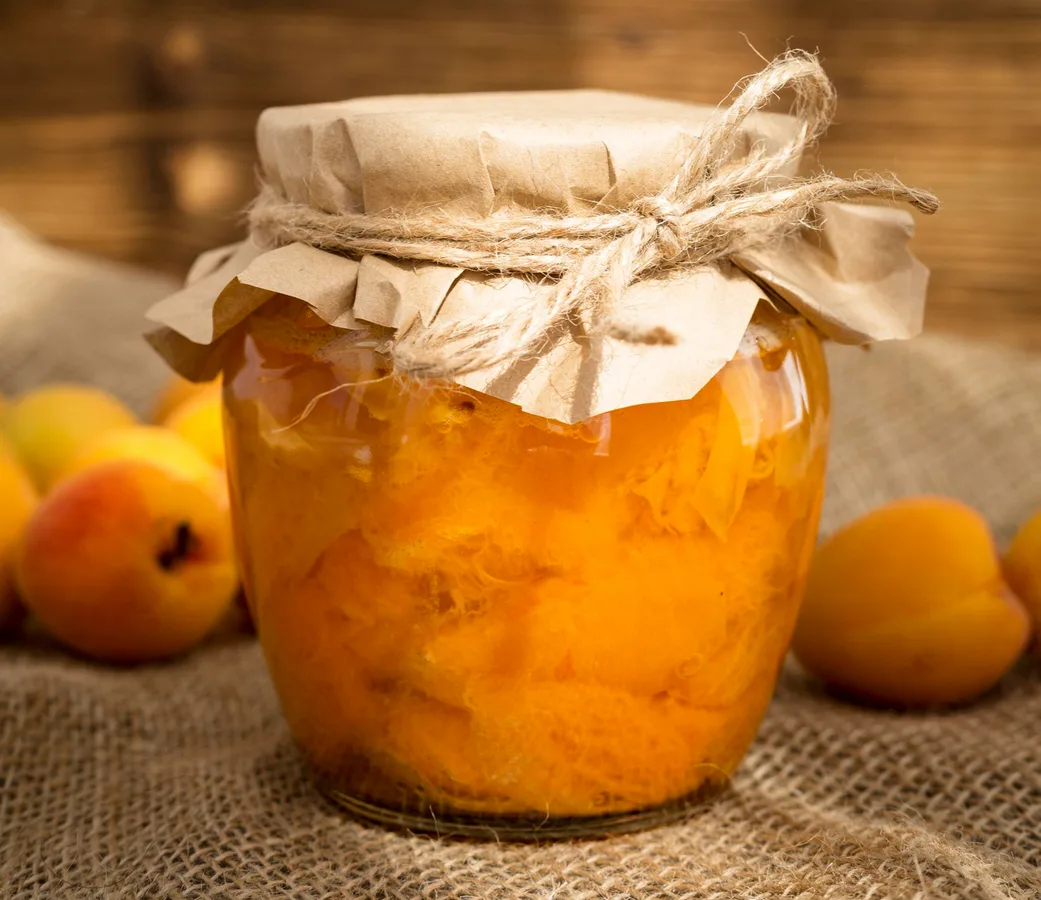
I love tradition, but I do not idealize it. Our grandmothers made what they had to make with what they had: sun, fire, salt, vinegar, sugar, jars, and patience. We have other options too — dehydrators, ovens with low-temperature settings, thermometers, vacuum sealers, good lids, freezers, and canning equipment.
This does not cancel old knowledge. It simply translates it into modern life.
If I do not have a yard for drying tomatoes, I can use a food dehydrator.
If I do not want to boil a huge pot, I can make a small batch.
If I want less sugar, I need to understand how pectin works — not simply remove the sugar and hope the jar develops character.
That is exactly what interests me: not repeating everything one-to-one, but understanding the purpose and making it work in our own way.
The Main Ways to Preserve the Taste of Summer
This article is the beginning of a small Biogardn series. Here I am gathering the main methods, and in separate articles we will go deeper — with tools, mistakes, recipes, and practical solutions.
1. Drying: When Flavor Becomes More Intense
Drying is one of the cleanest methods. You do not add much — you simply remove the water. And suddenly the tomato becomes sweeter, the plum deeper, the apple more aromatic, the herbs more concentrated.
You can dry food in the sun, in the oven, in a dehydrator, or in an air fryer with a dehydration function. Sun drying sounds wonderful until dust, flies, humidity, and doubts appear. The oven works, but it can easily move from “drying” to “baking.” A dehydrator is the most controlled option, especially if you plan to do this more than once for an Instagram photo.
If you want to dry tomatoes, fruit, or herbs regularly, a compact food dehydrator is usually easier to control than an oven.
2. Jars: The Eternal Classic
Jars look charming, but they are not just decoration for a farmhouse kitchen. They require precision.
Good lids, clean containers, proper processing, the right acidity, and a recipe that is not invented halfway through. I rely on old recipes, but I also like to bring in ideas from the places I have visited.
For water-bath canning, a practical starting point is a water bath canner kit and clean wide-mouth Mason jars. If you decide to preserve low-acid foods, you should study pressure canning separately; a model like the Presto 23-quart pressure canner is a common option for that type of work.
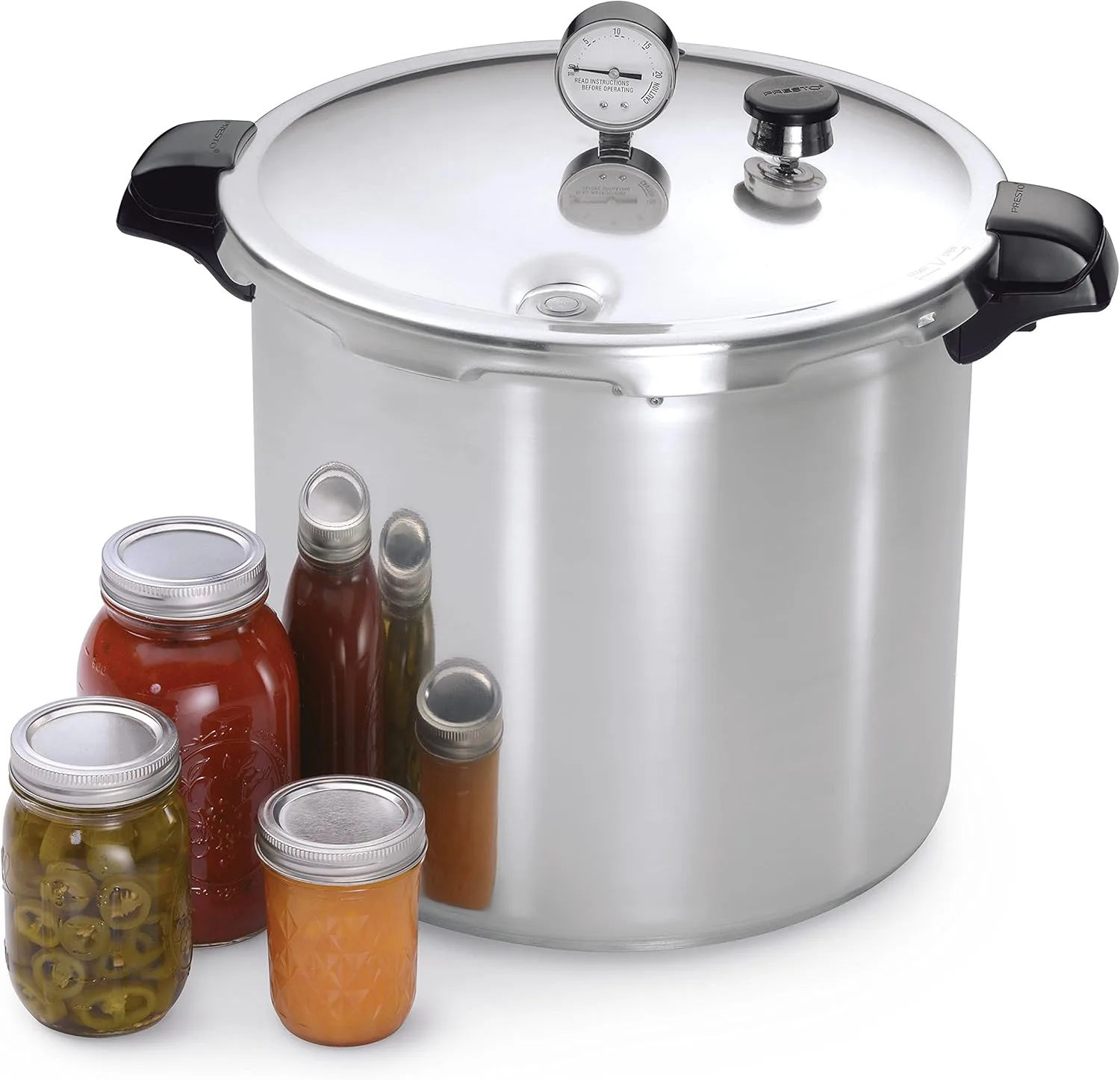
I recommend this for small-batch canning
A basic water-bath canning kit is useful if you want to make jams, tomato sauce, pickles, or other high-acid preserves without improvising with random pots and tools every time.
3. Pickling
Pickling is not only a big bucket of traditional pickles. It can be quick, fresh, and surprisingly elegant.
Pickled onions, zucchini, cucumbers, green tomatoes, roasted peppers, garlic, hot peppers. Vinegar does not have to hit you like a bad memory from a school cafeteria. It can be balanced with a little sweetness, salt, herbs, mustard, coriander, dill, and black pepper.
This method is for people who like crunch, acidity, and a flavor that wakes up the whole dish.
4. Fermentation: The Jar Works Instead of Us
Fermentation is a slightly different story. We do not simply add vinegar and close the jar. We let the process happen.
Salt, water, vegetables, temperature, and observation. Sauerkraut is the classic, but there are also fermented cucumbers, carrots, hot sauces, radishes, and mixed vegetables.
I like fermentation because it has character. It is not completely obedient. It wants attention. Sometimes it smells strange, sometimes it behaves dramatically, but when it works well, the flavor is alive and much more interesting than ordinary pickles.
For small-batch fermentation, a set like the Masontops Complete Mason Jar Fermentation Kit can be useful because it includes the basic pieces that help keep vegetables under brine and let gases escape.
5. Jams and Preserves: More Fruit, Less Sugar Nostalgia
Jam is an emotional jar.
Today we can think more freely: classic jam with sugar, preserves with less sugar, fruit sauces, jams with pectin, small batches with spices.
But it is important to understand what sugar does. It is not only sweetness. It helps with structure, preservation, shine, and mouthfeel. If we reduce it, we need to change the method, not simply hope the recipe does not notice.
Figs with rosemary, plums with cardamom, peaches with lemon zest, pears with black pepper — this is much more interesting to me than “jam in general.”
6. Freezing
The freezer does not have the charm of jars, but it works. And sometimes it is the best solution.
Roasted peppers, tomato sauce, herbs, fruit for baking, grated zucchini, pitted plums, raspberries, broths. Yes, the texture does not always remain the same, but the flavor is often preserved very well.
For an apartment, a small kitchen, or people without space for many jars, this is a completely normal, reasonable, and underrated method.
For sauces, roasted peppers, herbs, and fruit, a vacuum sealer can also help reduce freezer burn and keep portions tidier.
7. Sauces, Pastes, and Concentrates: A Small Jar, a Big Deal
These are my favorite little tricks, because they do not take up much space and they save dinner exactly when you have no plan.
You can make dried tomato pesto, roasted pepper paste, tomato concentrate, hot sauce, plum chutney, herb salt, or garlic paste.
Then you simply open a small jar, add it to pasta, meat, cheese, bread, soup, or salad, and suddenly it looks like you thought about dinner for a long time. In reality, you simply did the thinking back in August.
When It Is Better to Buy Instead of Making
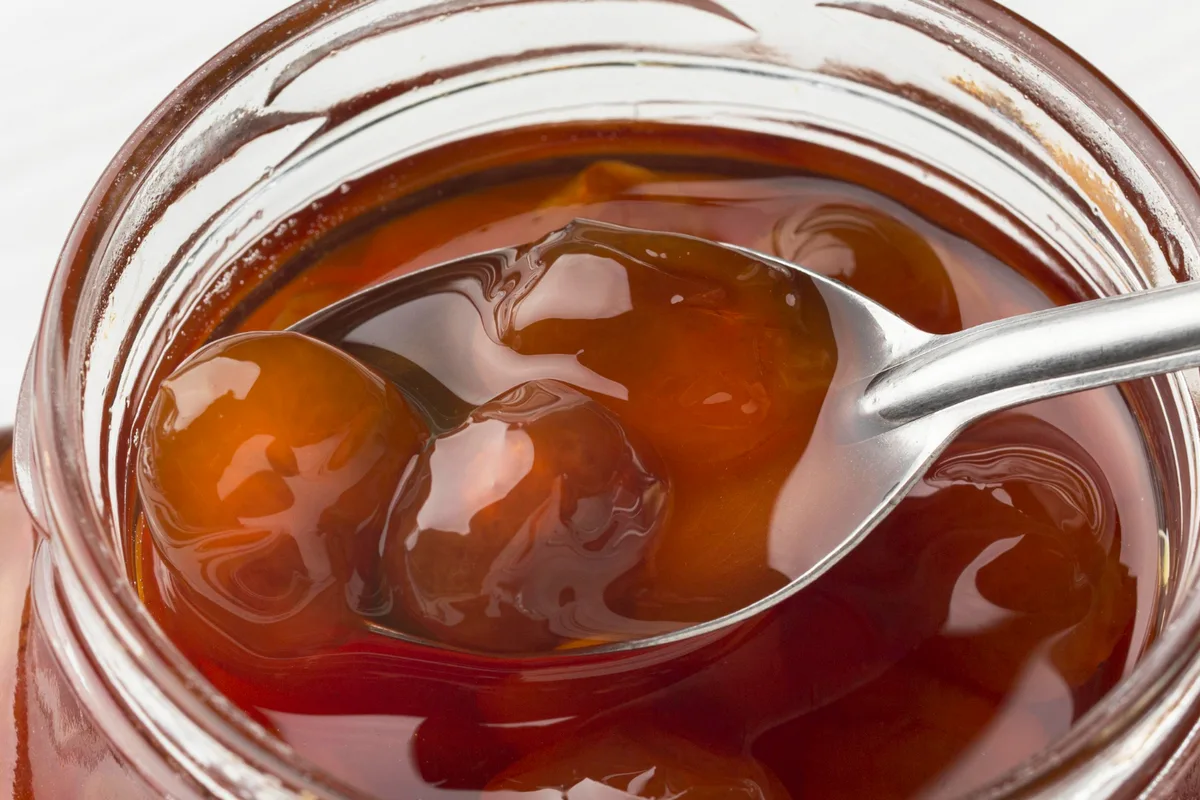
Not everything has to be homemade. That is also maturity.
I buy when the product is good, when I do not have time, when the producer makes it better, when the price of the raw ingredients is absurd, or when I know I am only doing it out of guilt.
Homemade makes sense when it brings flavor, joy, control, or memory. If it brings only exhaustion and irritation, it is better to buy a good jar and not pretend we are heroines from an agricultural epic.
Why This Is More Than Food for Me
After days in front of the computer, phone, photos, texts, and tasks, slicing tomatoes is almost meditative. I like the smell of roasted peppers, sticky fingers from figs, steam over the pot, and colors the camera loves. In the end, the jars look like a small exhibition of the season.
And I like the connection backward. I do not want to live like my grandmothers, but I also do not want to pretend everything starts with us. There are gestures worth keeping. For me, that is the meaning: not to produce preserves for survival, but to keep flavor, memory, and a little peace. To make something with our hands. To let summer have a continuation.
What Do You Make at the End of Summer?
Do you make homemade preserves — in large quantities or just a few jars?
Which recipe stayed with you from your mother, grandmother, neighbor, a market, a trip, or a chance meeting? Lutenitsa, jam, dried tomatoes, pickles, fermented vegetables, roasted peppers?
Tell me in the comments which recipe you think is worth preserving.
This post may contain affiliate links. As an Amazon Associate, I earn from qualifying purchases.