
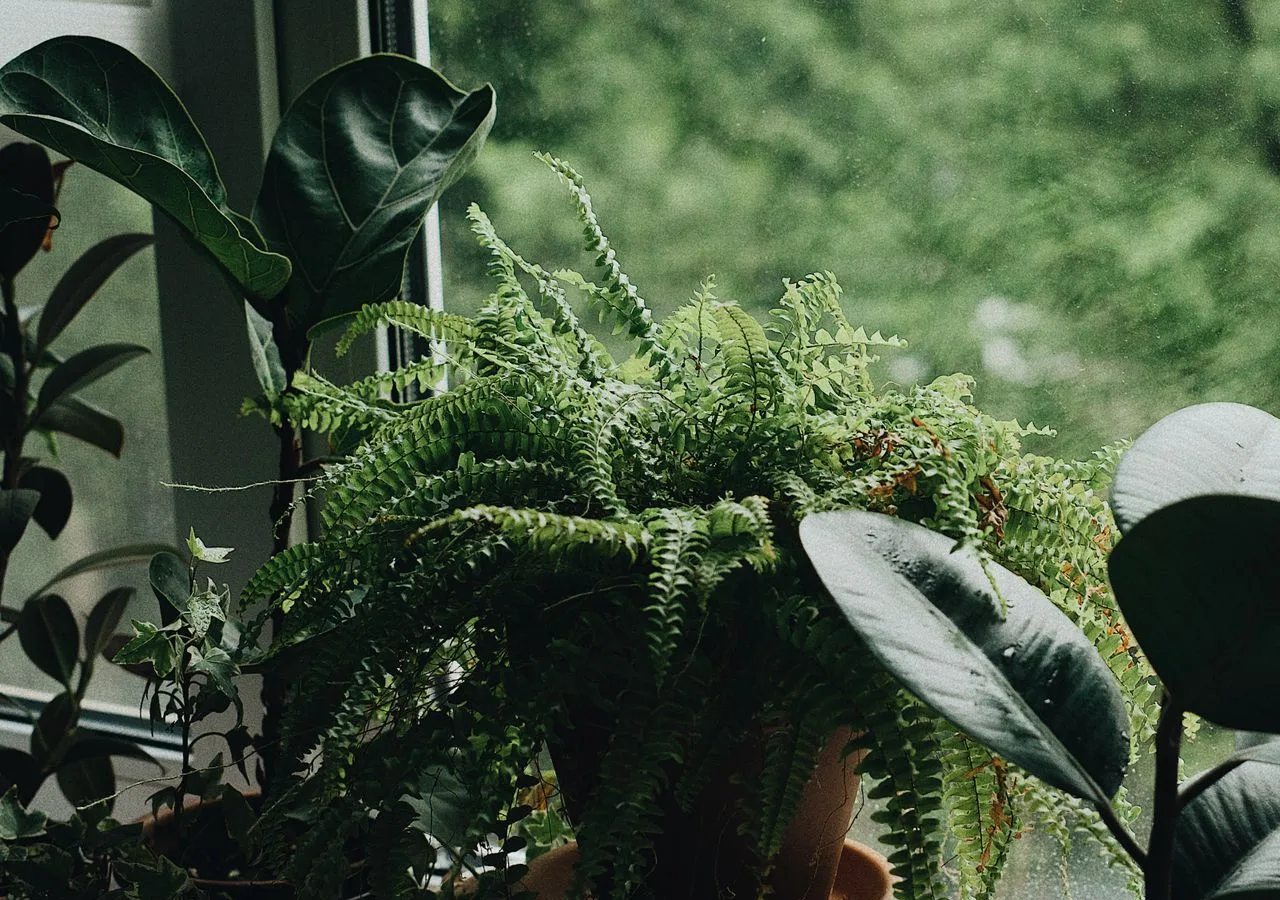
Boston fern is one of the classic indoor ferns, and it looks wonderful when it is dense, fresh, and properly green. Most problems do not happen because the plant is impossibly fussy. They happen because it dislikes two things that are very common indoors: drying out completely and very dry air.
It is not a plant for the darkest corner in the room, but it does not want harsh direct sun either. Give it enough indirect light, fairly even moisture, and a spot away from the radiator, and it can grow beautifully in a perfectly ordinary home.
This article is part of our guide to houseplants by light level.
With Boston fern, the main thing is not letting the potting mix dry out completely while also keeping the air around the plant from becoming excessively dry.
Boston fern at a glance
| Botanical name | Nephrolepis exaltata |
|---|---|
| Light | Medium to bright indirect light |
| Watering | Regular, keeping the potting mix evenly moist but not waterlogged |
| Humidity | Prefers higher humidity |
| Difficulty | Moderate |
| Best location | Bright bathroom with a window, living room, or sunroom |
| Toxicity | Generally considered non-toxic to people, cats, and dogs |
Where to place a Boston fern
Boston fern prefers medium to bright indirect light. An east- or north-facing window often works very well. Near a south-facing window, give it some distance from the glass or soften stronger sunlight with a sheer curtain.
Intense midday sun can scorch the delicate fronds, while a very dark location leads to thinner growth and a fern that gradually loses density.
A bright bathroom with a window can be an excellent location because humidity is usually somewhat higher there. A living room or sunroom works too, and during warm weather the fern can spend time on a protected balcony or patio without strong direct sun.
How to water a Boston fern
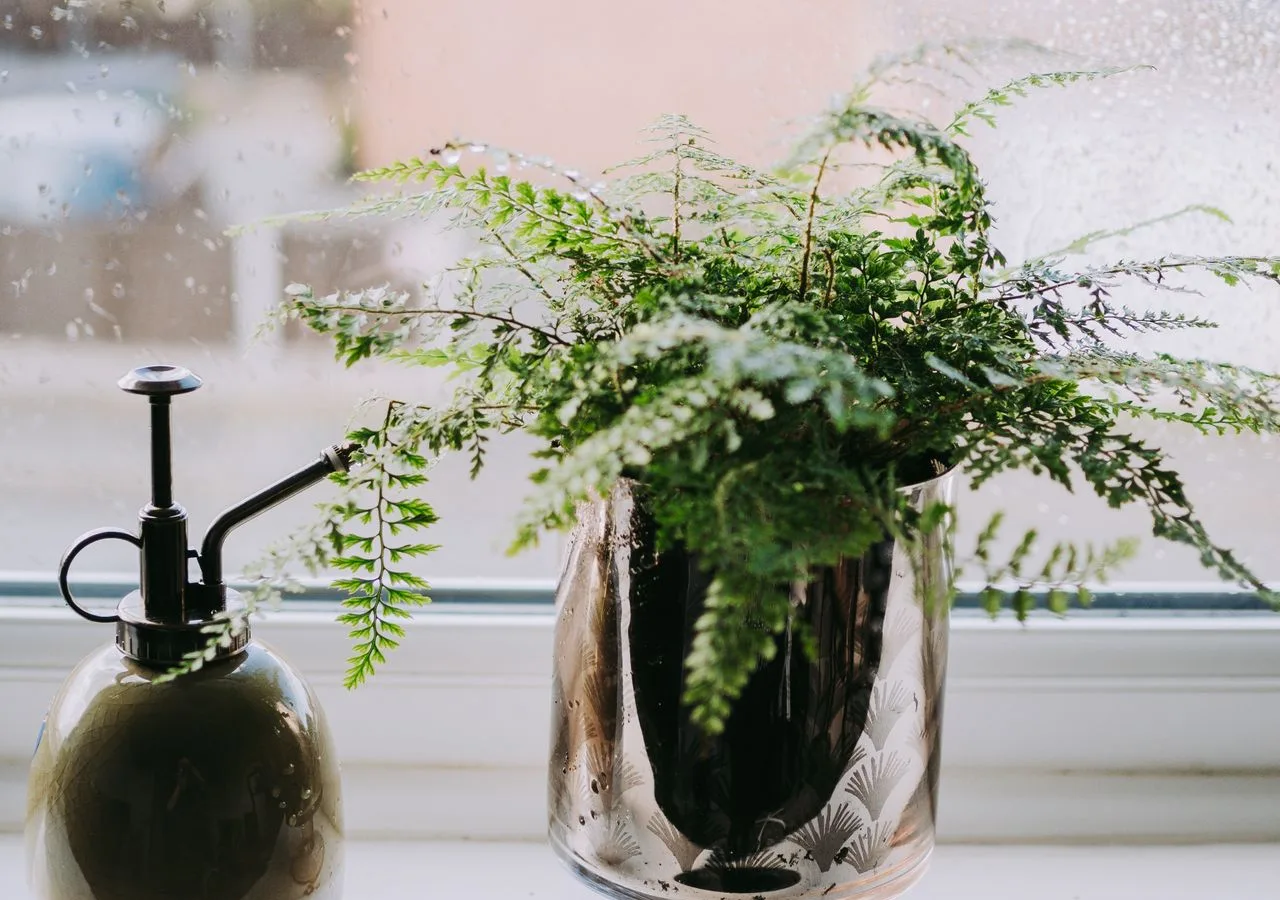
This is where Boston fern differs from many of the houseplants we have covered so far. The potting mix should remain lightly and fairly evenly moist rather than drying completely between waterings.
That does not mean permanently wet soil. If water remains trapped in the container, the roots begin to suffer and the fronds may start turning yellow.
Check the potting mix with your finger. When the upper layer begins to dry, it is usually time to water. In a warmer, brighter room that may happen more quickly; in lower light, the pot will dry more slowly.
Practical note: Boston fern is not difficult out of spite. It simply dislikes being dried to a crisp one week and drowned the next.
Soil and pot
A light potting mix that can retain some moisture without becoming compacted works well. A quality indoor potting mix amended with perlite is a sensible starting point.
The container should have drainage holes. You can keep a Boston fern inside a decorative cachepot, but always check after watering and make sure excess water has not collected at the bottom.
There is no need to move a modest fern straight into an enormous container. Too much unused potting mix holds extra water and can make moisture much harder to manage.
Humidity and temperature
Humidity is one of the more important parts of Boston fern care. When indoor air becomes very dry, the tips and edges of the fronds often turn brown and the whole plant gradually loses that fresh, lush appearance.
The simplest first step is keeping the fern away from radiators and constant airflow from an air conditioner. A bright bathroom, sunroom, or grouping with other houseplants can also provide a friendlier environment.
In a genuinely dry heated room, a room humidifier can be useful. Unlike occasional misting, it can raise humidity around the whole plant for a longer period instead of wetting the fronds for a few minutes.
Boston fern is comfortable at ordinary indoor temperatures but dislikes sudden chills and cold drafts.
This post may contain affiliate links. As an Amazon Associate, I earn from qualifying purchases.
A practical way to give several plants better light
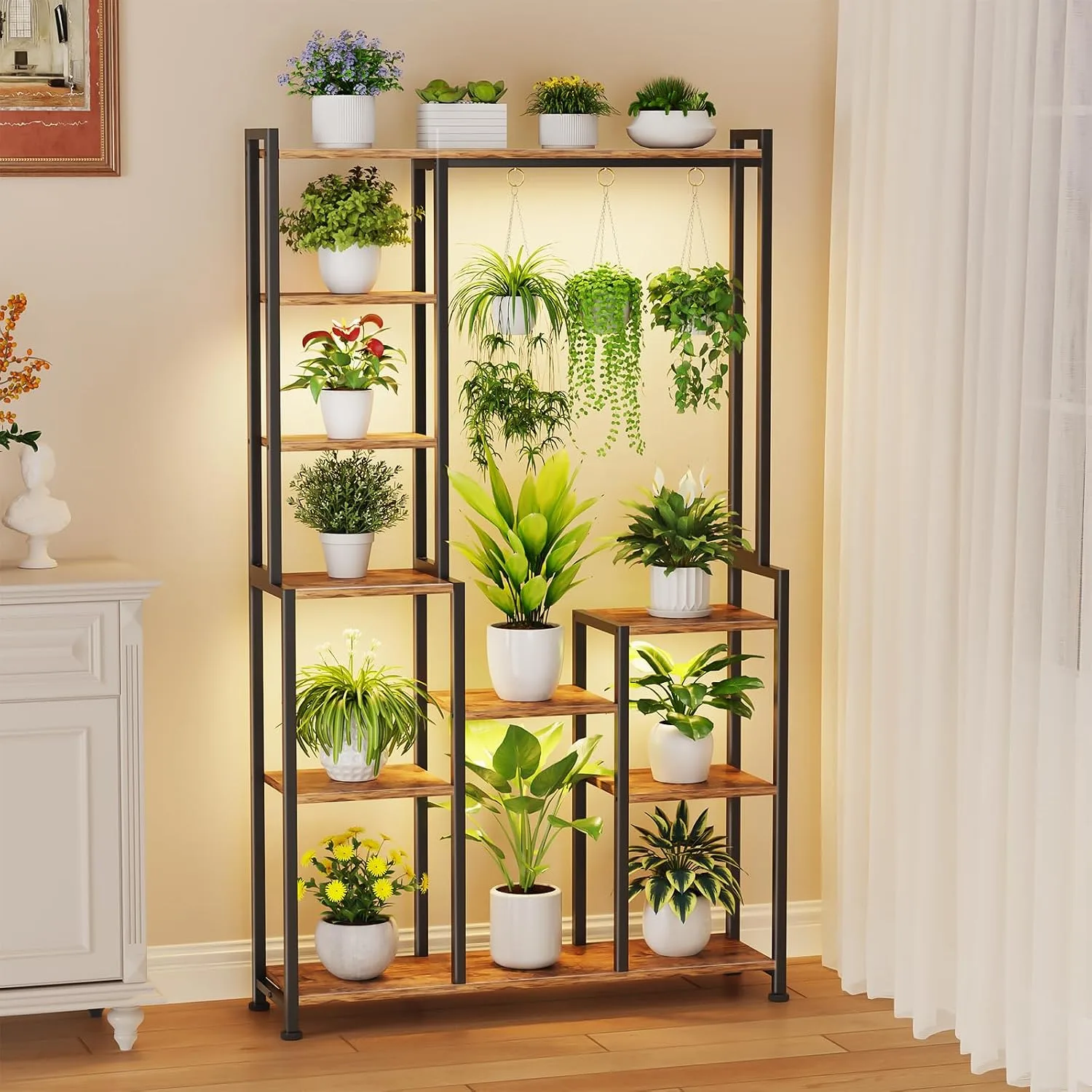
A Boston fern does not need intense sunlight, but it does need a reasonably bright position to stay dense and green. In a room with limited window space, a tiered plant stand can keep the fern and several smaller houseplants together without turning every windowsill into a crowded shelf.
This model also includes integrated grow lights and hanging hooks. I would place the Boston fern where its fronds have enough space to arch naturally, then use the other levels for smaller plants that need supplemental light.
Fertilizing and repotting
When the fern is actively producing new fronds, it can be fertilized moderately with a fertilizer for foliage houseplants. A weaker application is usually more sensible than heavy feeding.
If growth slows because light levels or temperatures are lower, feeding can be reduced as well. Fertilizer will not compensate for poor light, dry air, or an unsuitable watering routine.
Repot when the roots have genuinely filled the container or when the potting mix has become badly compacted. The beginning of an active growth period is generally the easiest time.
Common problems
Brown tips
Dry air, potting mix that has dried too much, or inconsistent watering are common causes. Check those conditions first.
Yellow fronds
The potting mix may be staying too wet. Check drainage and never leave the container standing in collected water.
Fronds are dropping
A sudden dry spell, very dry air, or a major change in growing conditions can all contribute.
Sparse growth
The fern may need more light. Move it somewhere brighter while keeping it out of strong direct sun.
Old, completely brown fronds do not recover. Once they are dry, you can remove them close to the base with a pair of small precision pruning scissors rather than pulling through the center of the plant and disturbing healthy new growth.
How to propagate Boston fern
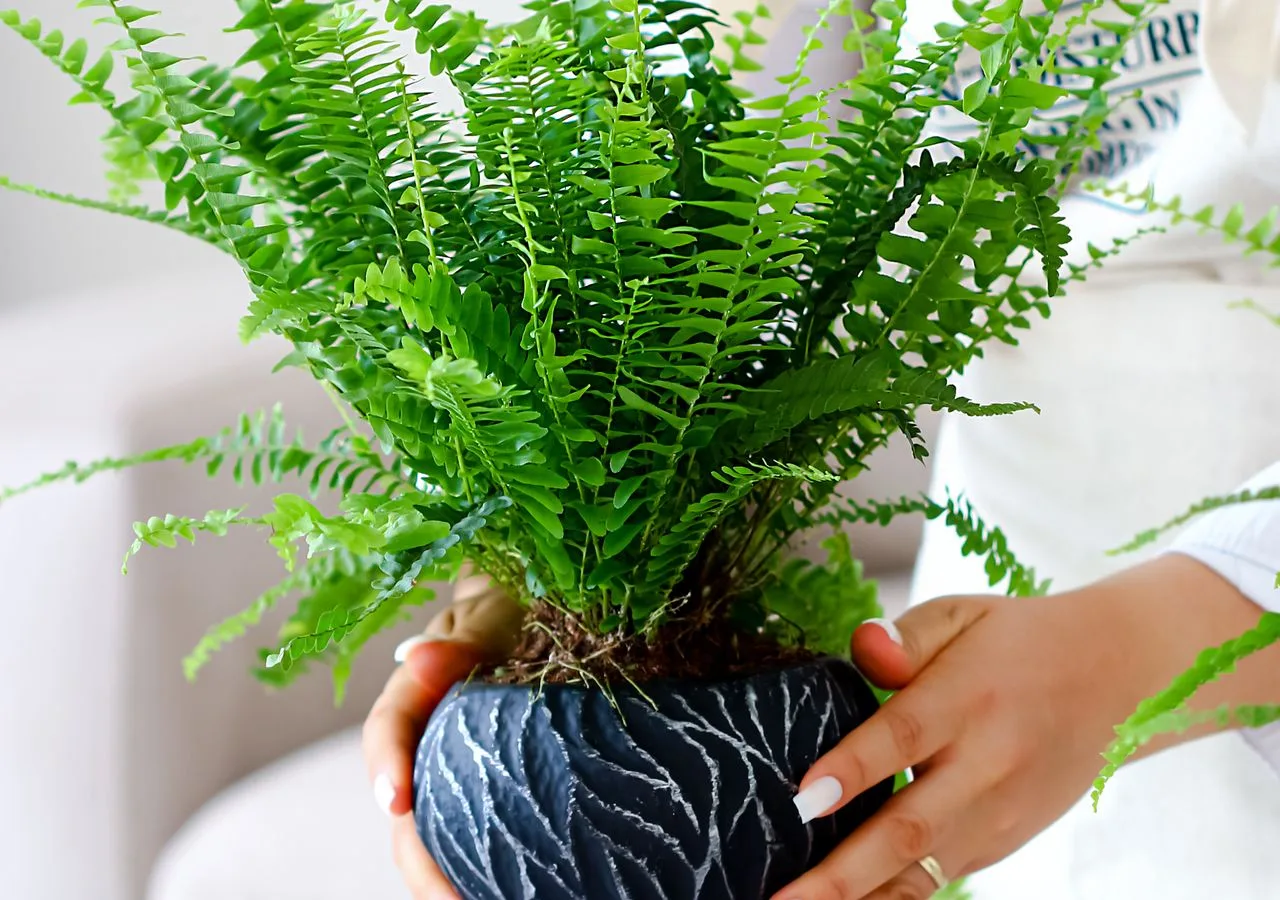
The easiest way to propagate Boston fern is by dividing a well-established plant. During repotting, the root mass can be carefully separated into several sections, each with healthy roots and fronds.
Some plants also produce thin runners that can form small new plants. Once these have developed their own roots, they can be separated and planted independently.
Propagation is easiest while the fern is actively growing and has enough energy to recover from being divided.
Who is Boston fern best for?
Boston fern is a good choice for someone who likes lush greenery and does not mind paying slightly more attention to moisture than they would with a snake plant or ZZ plant.
It looks especially good in a hanging planter, on a tall stand, or in a bright bathroom where the fronds have room to fall naturally.
It is not the best plant for an extremely dry home or for someone who regularly forgets to water for long stretches. With reasonably consistent care, though, it can become a dense, fresh fern that looks far more impressive than the modest plant you originally brought home.