
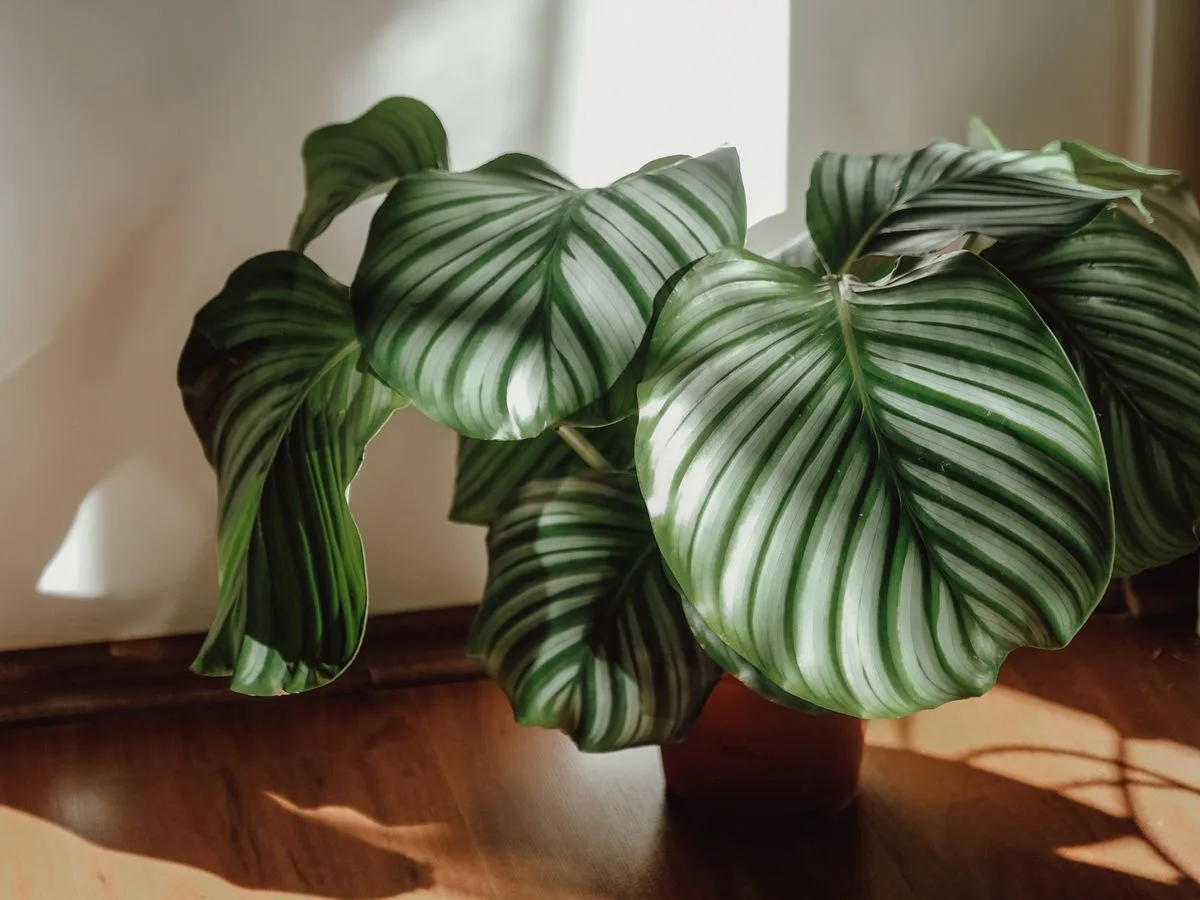
Calathea is one of the most beautiful houseplants, but it is also one of those plants that makes its opinions very clear. The leaves are the reason we want one in the first place, and those same leaves are usually the first to react to dry air, hard water, strong sun, or inconsistent watering.
It is not the ideal plant for a bone-dry corner beside a radiator, nor for someone who waters whenever they remember and expects no consequences. Calathea can look spectacular at home, but it asks for a little more attention to humidity, water quality, and placement.
This is realistic indoor care - a bright room without direct sun, central heating, air conditioning, changing light through the year, and someone who wants a beautiful plant without turning the living room into a greenhouse.
This article is part of our guide to houseplants by light level.
With calathea, gentle light, evenly moist soil, and higher humidity matter most. It dislikes extremes - both drying out completely and sitting in soggy soil.
Calathea at a glance
| Botanical name | Calathea / Goeppertia |
|---|---|
| Light | Medium indirect light |
| Watering | Moderate, preferably with soft water, without letting the soil dry completely |
| Humidity | High humidity |
| Difficulty | More demanding |
| Best location | A more humid room or a bright spot without direct sun |
| Important | Generally considered non-toxic, although it is still better not to let pets chew on the leaves constantly. |
Where to place a calathea
Calathea does best in medium indirect light. That means a bright room without direct sun falling onto the leaves. Strong sunlight can fade the patterns and cause dry, damaged patches.
It is not a plant for a truly dark corner, but it is not a plant for a hot sunny windowsill either. A spot with soft light, fairly stable temperatures, and no dramatic changes usually works much better.
Be careful near cold windows, frequently opened doors, radiators, and air-conditioning vents. Calathea dislikes drafts, dry air, and cold wet soil, and that combination usually shows up on the leaves very quickly.
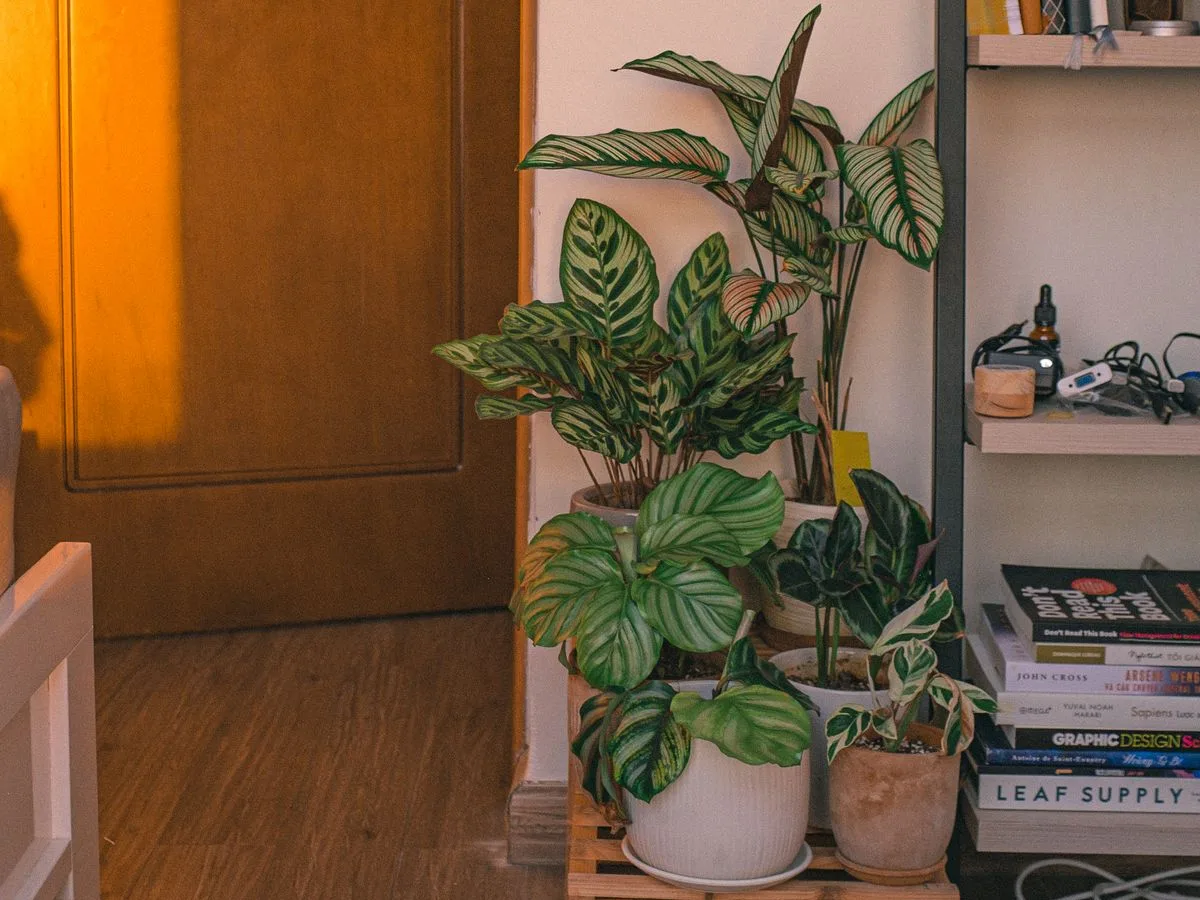
How to water calathea
Water according to the soil rather than the calendar. Calathea does not like drying out completely, but it does not want its roots sitting in saturated potting mix either. The goal is lightly and evenly moist soil, not a permanently wet pot.
Calatheas can also react more strongly to hard water than many easier houseplants. Brown leaf tips may come from dry air, but water quality can contribute as well. Filtered, rain, or other low-mineral water can be worth trying if your tap water is very hard.
If the pot still feels heavy and the soil is damp, wait. If the surface is dry but there is still moisture deeper in the pot, there is no need to rush. With calathea, balance is more useful than generosity.
Practical note: calathea is beautiful, but it would not be my first choice for a dry room beside a radiator. In that location, it will spend more time struggling than looking relaxed.
Soil and pot
Calathea needs a light potting mix that can hold some moisture without staying dense and waterlogged for days. A good indoor potting mix amended with perlite or another airy component is usually a sensible starting point.
The pot should have a drainage hole. A decorative cachepot is fine, but check after watering and empty any water that collects inside. Calathea does not forgive prolonged wet soil very well.
An oversized pot is not particularly helpful either. Too much unused potting mix holds extra moisture around a relatively small root system and increases the risk of root problems.
Humidity and temperature
Calathea genuinely appreciates higher humidity. That is one reason these plants often look flawless in greenhouses and slightly less convincing in dry heated homes.
Before buying anything, keep the plant away from radiators, air-conditioning vents, and strong drafts. Grouping plants together can help somewhat, but if the room is consistently very dry, a humidifier can make a noticeable difference.
A small digital humidity meter is useful here because it tells you what the room is actually doing instead of relying on guesses. The ThermoPro TP49 displays both humidity and temperature, which makes it easy to compare different spots in the room.
Stable temperatures matter too. Calathea does not enjoy sudden changes or cold air blowing directly across the foliage. A calm, slightly less photogenic location is often better than the perfect-looking corner with terrible conditions.
This post may contain affiliate links. As an Amazon Associate, I earn from qualifying purchases.

When the room really is too dry
Calathea is one of the few houseplants where indoor humidity can genuinely become a deciding factor. If brown edges keep appearing despite reasonable watering and the plant sits far from radiators and drafts, the room itself may simply be too dry.
The LEVOIT 3L cool-mist humidifier is a practical option for a room with several humidity-loving plants. It has a top-fill tank and adjustable mist output, so it can be used without turning the area around the plant into a tropical fog bank.
Fertilizing and repotting
During active growth, calathea can be fertilized moderately if it is producing healthy new leaves. There is no need to feed heavily. With sensitive plants, excess fertilizer can become one more source of stress.
When light levels are lower and growth has slowed significantly, there is usually little reason to keep fertilizing. Feeding does not replace light, humidity, or appropriate watering.
Repotting is easiest while the plant is entering active growth. Do not repot just for the sake of it. Move the plant only when the container is genuinely crowded, the potting mix has become badly compacted, or there is a root problem.
Common problems
Brown leaf tips
Common causes include dry air, hard water, inconsistent watering, or salt buildup in the potting mix.
Curled leaves
This can point to dry air, dry soil, excessive light, or a draft. Check both the location and the moisture in the potting mix.
Yellow leaves
These are often linked to overwatering, saturated soil, or a sudden change in growing conditions.
Faded patterns
The plant may be receiving too much direct light. Calathea likes brightness, but not harsh sun on the leaves.
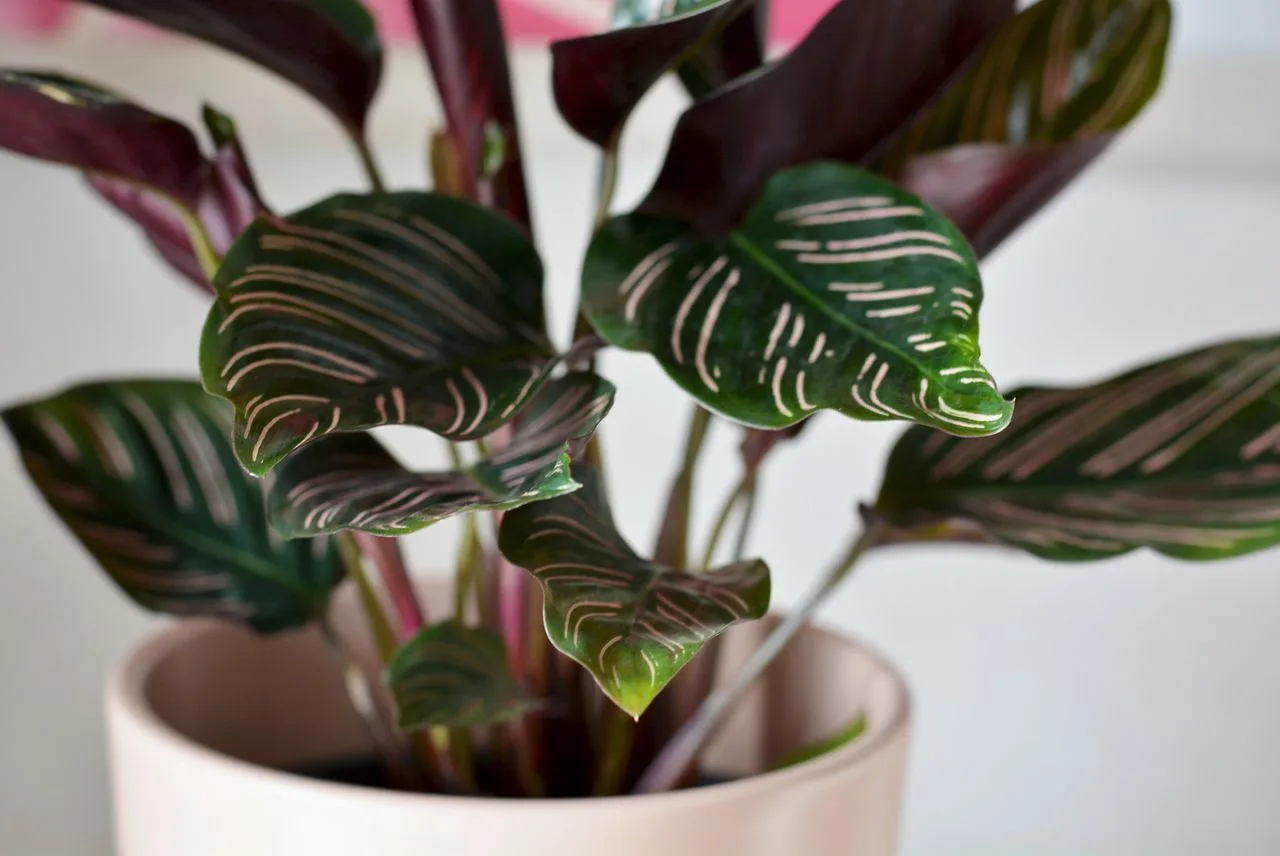
How to propagate calathea
Calathea is usually propagated by dividing a well-established plant. The easiest time to do this is during repotting, when you can clearly see the different clumps and healthy root sections.
Do not divide the plant into tiny pieces. Calatheas recover more slowly than many easier houseplants, and each new section should have enough roots and foliage to establish properly.
I would not divide a weak calathea unless root problems make it necessary. Stabilize the growing conditions first and think about propagation later.
Who is calathea best for?
Calathea is a good choice for anyone who loves patterned foliage and is willing to pay some attention to humidity, water quality, and placement. It works especially well in a bright room without direct sun, a naturally more humid space, or a home where several houseplants are already grouped together.
It is not the best plant for a bone-dry corner next to a radiator, a very dark room, or someone who wants a plant that forgives absolutely everything. Calathea is beautiful but honest - when something is wrong, the leaves usually tell you immediately.