
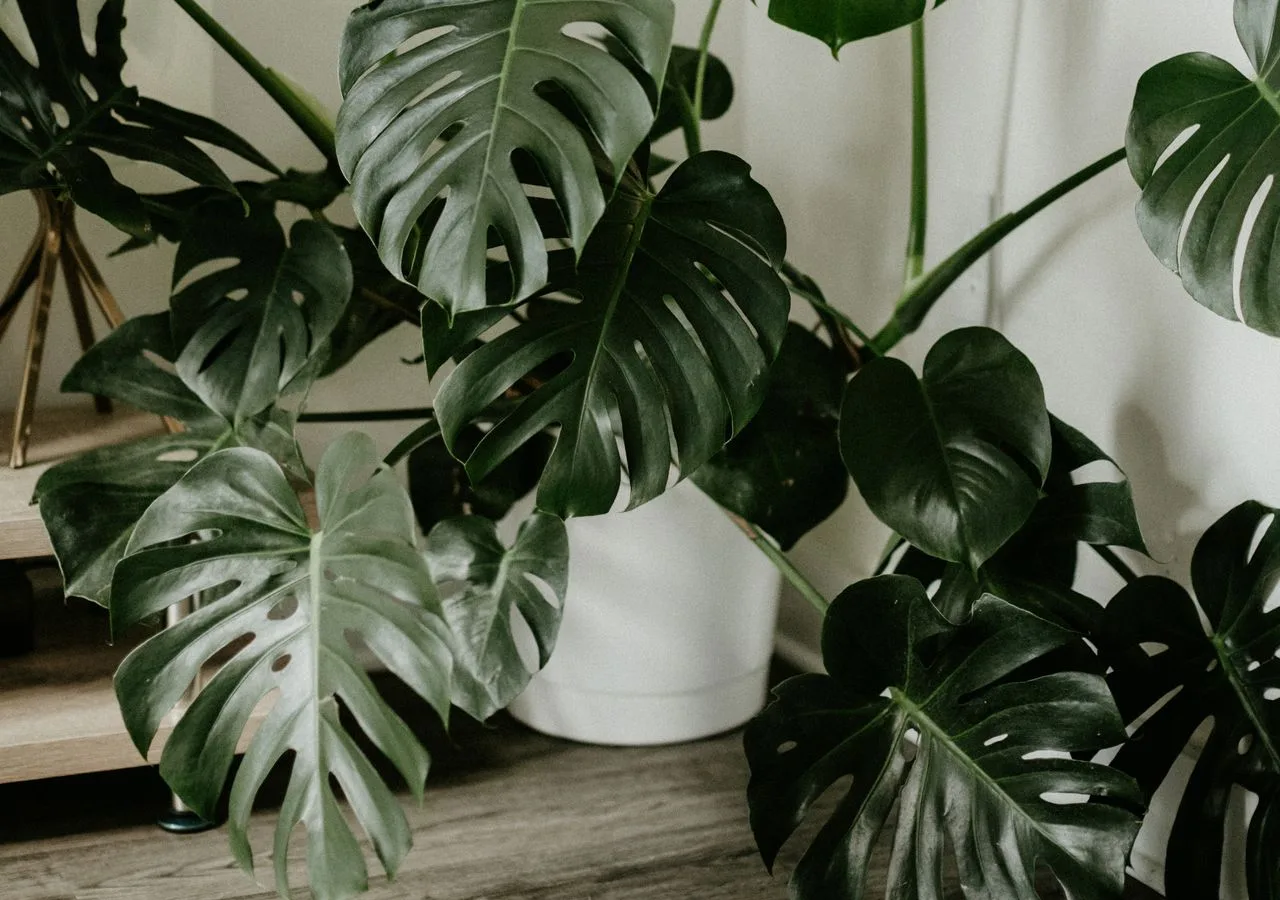
Monstera is one of those plants that can gradually take over a room - first with a few beautiful leaves, and eventually with some fairly serious dimensions. The good news is that it is not especially difficult to grow. What it needs is light, space, air around the roots, and a little discipline with watering.
The most common mistake is putting it in a dark corner because that is where it looks perfect in a photo. A monstera may survive there for quite a while, but if you want large leaves and the characteristic splits and holes, light makes a huge difference.
This article is part of our guide to houseplants by light level.
Monstera is not difficult to grow, but it is not a plant for a dark corner either. Give it light and room, and it will do much of the work itself.
Monstera at a glance
| Botanical name | Monstera deliciosa |
|---|---|
| Light | Bright indirect light |
| Watering | Moderate, after the upper part of the potting mix has dried |
| Humidity | Average to higher household humidity |
| Difficulty | Easy to moderate |
| Size | Can become very large and eventually needs support |
| Best location | Bright living room, spacious corner, or sunroom |
| Toxicity | Toxic if ingested by people or pets |
Where to place a monstera
Monstera develops best in bright indirect light. It can tolerate lower light, but growth becomes slower, the leaves tend to remain smaller, and the characteristic fenestrations may be less pronounced.
An east-facing window is often an excellent location. Near a south- or west-facing window, give the plant some distance from the glass or use a sheer curtain if the afternoon sun is intense.
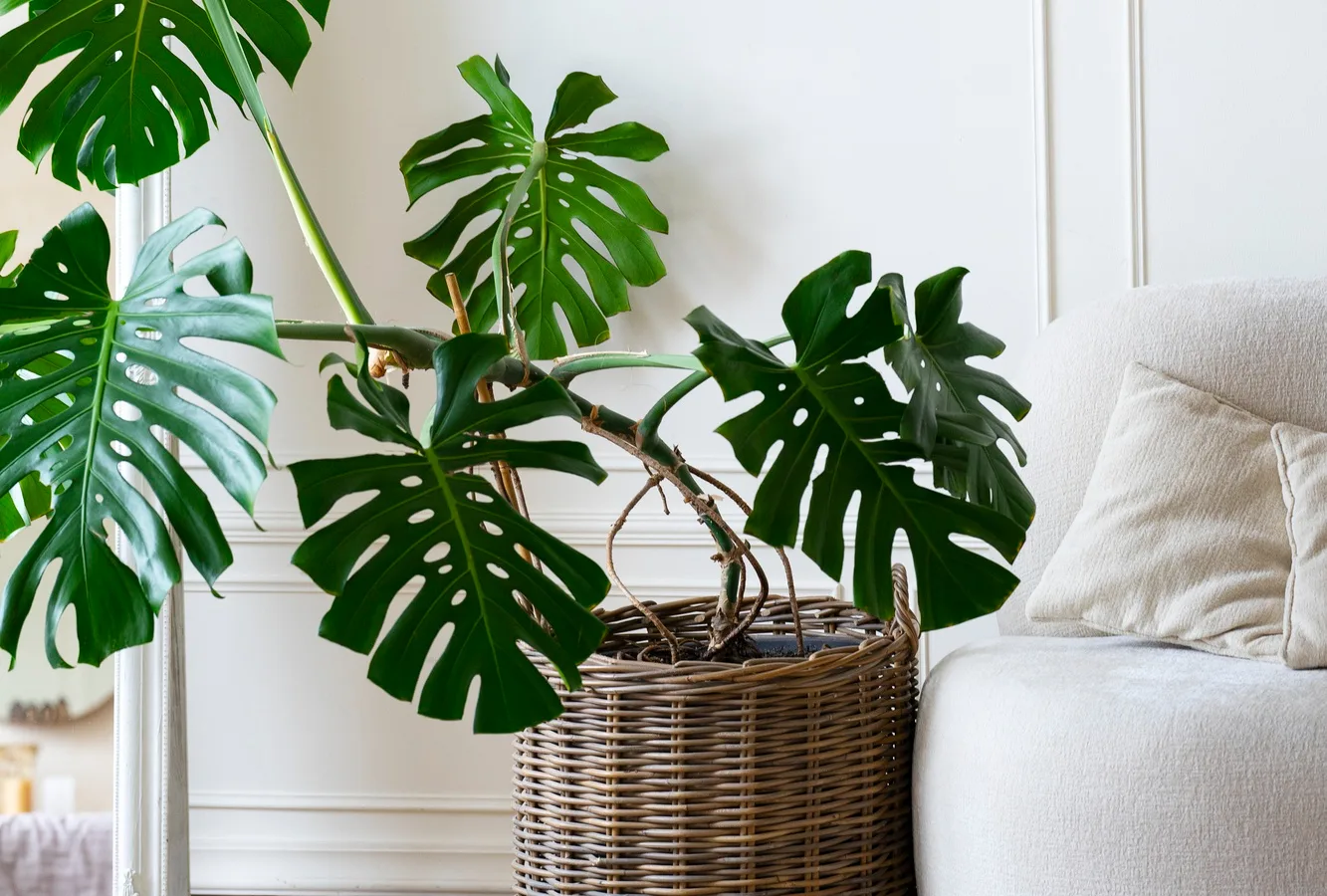
The bigger question is whether you have enough room. Monstera does not stay a neat 16-inch houseplant forever. Over time the leaves become large, the stems lengthen, and the plant begins looking for something to climb.
During warm weather it can also spend time on a protected balcony or patio, provided it is not exposed to intense midday sun or sudden temperature changes.
How to water monstera
Water when the upper part of the potting mix has dried. Monstera prefers fairly even moisture, but it does not want its roots sitting in wet soil continuously.
How often you water depends on light, temperature, pot size, and the size of the plant itself. A mature monstera beside a bright window can use water much faster than a small plant sitting several feet into the room.
Check the soil rather than following a calendar. If the pot still feels heavy and the mix remains damp deeper down, wait a little longer.
Practical note: monstera eventually needs space, not just admiration. Think about where the plant could fit two years from now, not only where the pot fits today.
Soil and pot
Monstera has thick roots and prefers a loose potting mix with plenty of air. An indoor potting mix amended with perlite and chunkier material such as pine bark works well.
The container should have good drainage. Avoid choosing an enormous pot simply because the plant will eventually become large. Too much unused potting mix stays wet longer and increases the risk of root problems.
Stability matters with a mature monstera too. A substantial pot or stable outer planter becomes increasingly useful once the plant starts growing upward.
Support and aerial roots
Monstera is a climbing plant. In nature it uses trees for support, and indoors it gradually starts leaning and occupying more horizontal space when it has nothing to climb.
A moss pole, coco-coir support, or sturdy trellis can help keep the plant growing upward. It is much easier to add support while the plant is still manageable than after several heavy stems have begun wandering in different directions.
Aerial roots are completely normal. They can be guided toward the support or into the potting mix. There is no reason to cut healthy aerial roots simply because they look slightly strange - they are part of the plant's natural growth habit.
Humidity and temperature
Monstera appreciates somewhat higher humidity but usually does well in normal household conditions. If the foliage is healthy and new growth looks good, there is no need to turn the living room into a tropical greenhouse.
Very dry air immediately beside a radiator and constant airflow from an air conditioner are more likely to cause problems. Normal room temperatures without major extremes or drafts are usually enough.
This post may contain affiliate links. As an Amazon Associate, I earn from qualifying purchases.
A gentler way to secure those increasingly heavy stems
Once a monstera begins climbing, simply putting a pole into the pot is only half the job. The heavier stems often need a little help staying in position while the plant gradually settles against its support.
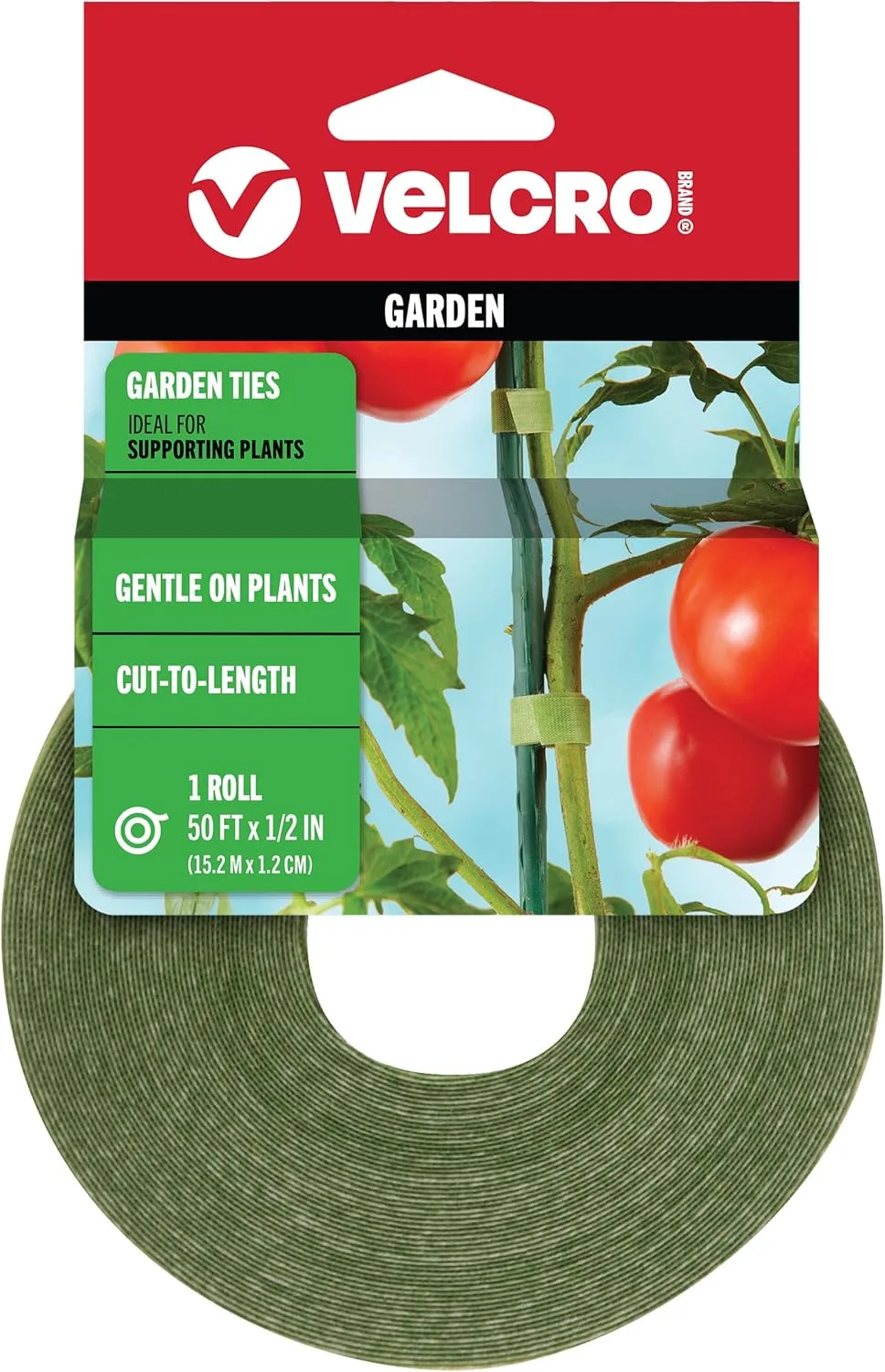
VELCRO ONE-WRAP garden ties can be cut to the length you need and adjusted as the plant grows. For monstera, I would use them loosely around the main stem and support rather than tying the leaf petioles themselves. The goal is support, not restraint.
Fertilizing and repotting
When monstera is actively producing new leaves, it can be fertilized moderately with a fertilizer for foliage houseplants. There is no need to overdo it, especially with a plant that can already grow fairly quickly in good conditions.
If growth slows because light levels are lower, feeding can be reduced as well. Fertilizer cannot compensate for a dark location or constantly wet soil.
Repot when the roots have genuinely filled the container or the potting mix has become badly compacted. The new container should only be somewhat larger than the old one.
Repotting a mature monstera indoors can turn into a surprisingly large operation. A waterproof plant repotting mat is useful for containing loose potting mix and making cleanup considerably less dramatic.
With very large specimens, replacing the upper layer of potting mix can sometimes be more practical than wrestling with an enormous container every year.
Common problems
Yellow leaves
Check soil moisture first. Overwatering is a common cause, particularly when the container drains slowly.
No fenestrations
Young leaves are naturally often solid. If a more mature plant continues producing small leaves without splits or holes, insufficient light or lack of suitable support may be contributing.
Brown edges
Possible causes include very dry air, inconsistent watering, or salt buildup in the potting mix. Look at the overall growing conditions rather than humidity alone.
Stretched stems
The plant is often reaching for more light. Move it closer to a window and provide stable vertical support.
How to propagate monstera
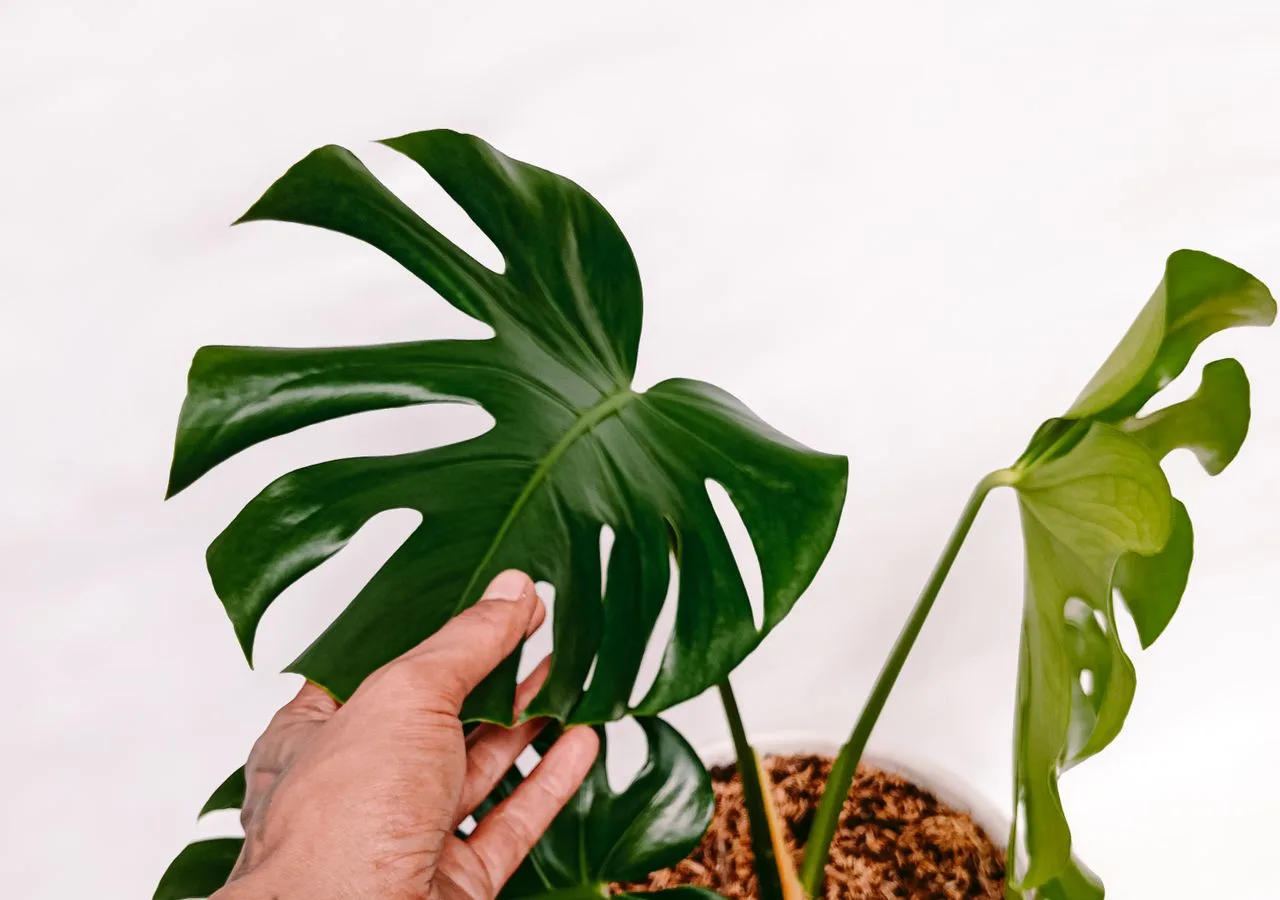
Monstera is fairly easy to propagate from stem cuttings, but there is one important detail: the cutting must include a node. A leaf and petiole alone may produce roots, but without a node there is no growing point from which a new plant can develop.
The cutting can be rooted in water or placed directly into a light, slightly moist potting mix. An existing aerial root often makes the process easier.
Propagation is easiest while the plant is actively growing. Once a healthy root system has developed, the cutting can be transferred to a small pot with an airy mix.
Who is monstera best for?
Monstera is a good choice for anyone who wants a large green plant with real visual presence. It does not require daily care, but it does require space.
It is not an ideal plant for a tiny dark corner or a narrow windowsill. In good conditions it can become an impressive specimen that gradually asks for part of a wall, a sturdy support, and probably more room than you originally planned.
If that does not scare you, monstera is one of the most rewarding large houseplants. Its growth is easy to see, it usually gives fairly clear signals when something is wrong, and it becomes more impressive with age.