
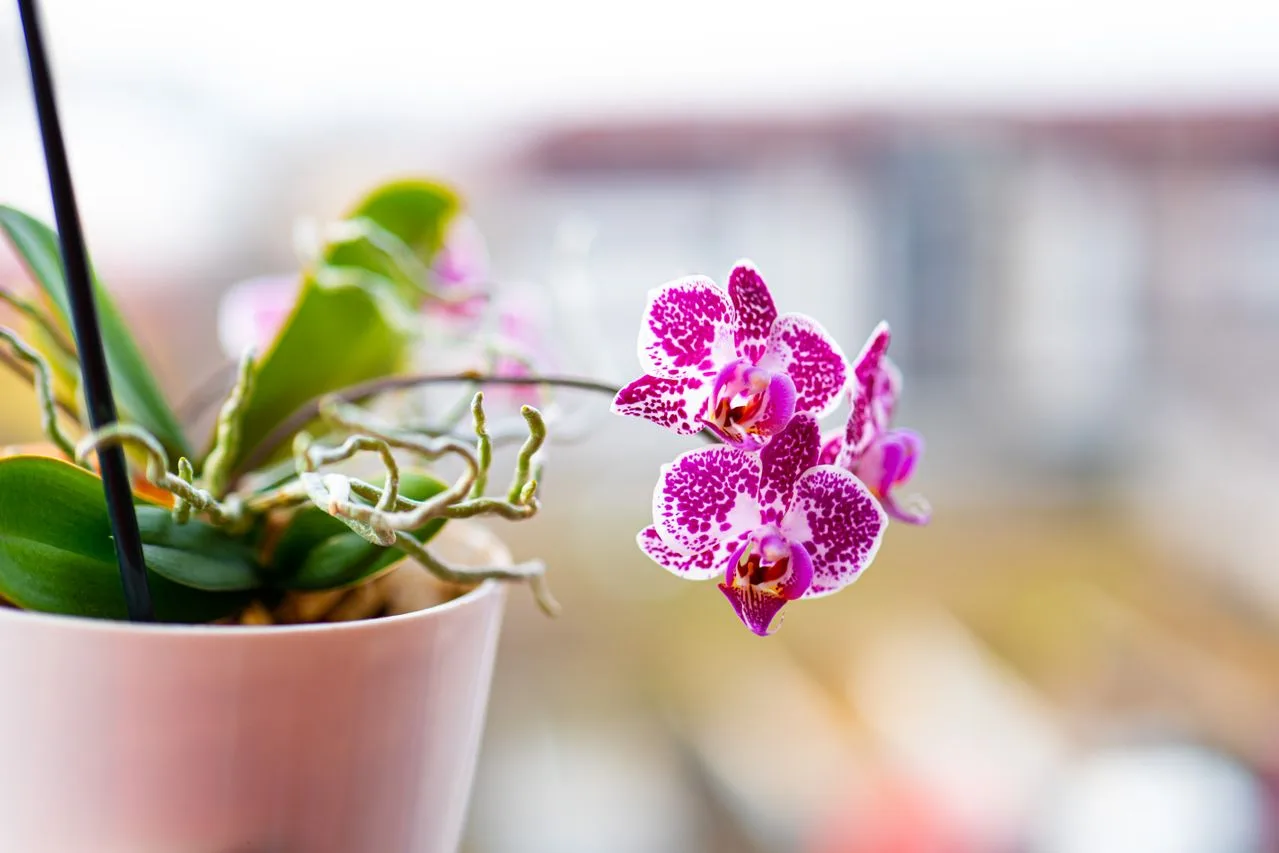
Phalaenopsis orchids are often sold like bouquets in pots - with several flower spikes, dozens of blooms, and the suggestion that they need almost no care. Then the flowers fade and the questions begin. Should the spike be cut? Why are the roots gray? Why are the leaves soft? And will the orchid ever bloom again?
Phalaenopsis is not especially difficult to grow. It simply cannot be treated like an ordinary houseplant growing in potting soil. Its roots need air, watering should be based on their condition, and enough light is essential if you want the plant to flower again.
This article is part of our guide to houseplants by light level.
With Phalaenopsis, it is more useful to watch the roots than the calendar. They give a fairly clear indication of when the plant needs water.
Phalaenopsis orchid at a glance
| Botanical name | Phalaenopsis |
|---|---|
| Light | Bright indirect light |
| Watering | After the visible roots turn silvery gray |
| Humidity | Average to moderately high |
| Difficulty | Moderate |
| Flowering | Yes, with blooms that can last several months |
| Best location | A bright window without intense midday sun |
| Toxicity | Generally considered non-toxic to people, cats, and dogs |
Where to place a Phalaenopsis orchid
Phalaenopsis needs plenty of light, but not intense direct sun during the hottest part of the day. An east-facing window is often an excellent choice. Near a south- or west-facing window, a sheer curtain or some distance from the glass may be necessary.
If the location is too dark, the leaves may continue to look perfectly healthy while the plant fails to produce another flower spike. This is one reason an orchid can appear healthy but refuse to bloom for years.
I would not keep it directly above a radiator or in front of an air conditioner. Very cold window glass can also cause problems, especially when the leaves or roots touch it.
How to water a Phalaenopsis orchid
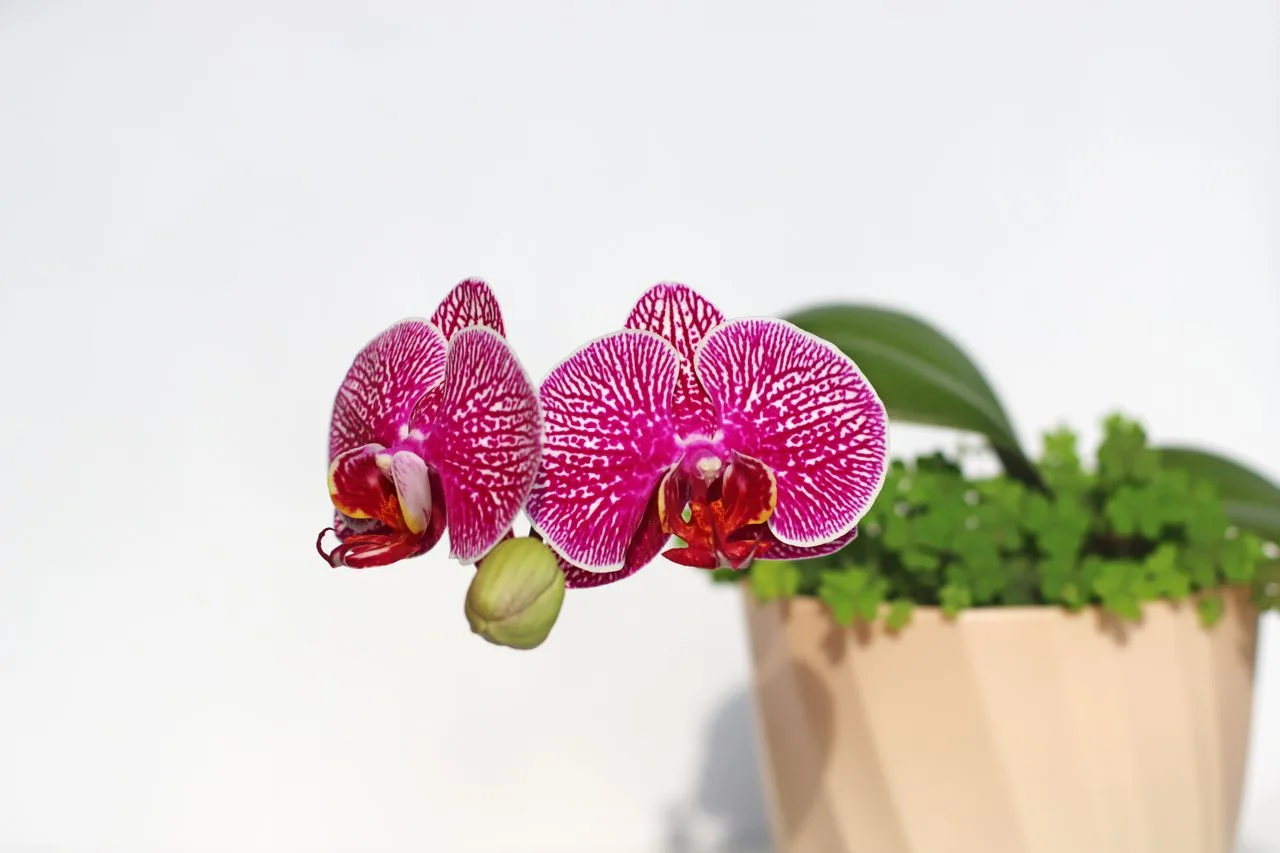
A clear inner pot is especially useful because the visible roots help show when the orchid needs water. Green roots usually still contain enough moisture. When they become silvery gray and the container feels noticeably lighter, it is generally time to water.
The most practical method is to water the pot thoroughly and then allow all excess water to drain away. Never leave the orchid standing in water inside a decorative outer pot.
Be careful about water collecting in the crown between the leaves. If it remains there for a long time, particularly in cooler conditions, the risk of rot increases.
Practical note: a Phalaenopsis orchid does not need two spoonfuls of water every Sunday. One thorough watering followed by complete drainage is better, but only when the roots have genuinely dried.
Potting medium and container
Phalaenopsis should not be planted in ordinary indoor potting soil. In nature these orchids grow on trees, and their roots are adapted to receiving plenty of air.
Use a coarse orchid mix containing substantial pieces of pine bark and other materials that do not collapse tightly around the roots. Over time, bark begins to decompose and hold more water, so old orchid medium eventually needs to be replaced.
A transparent plastic orchid pot is practical because it lets you monitor both the roots and moisture. A decorative outer pot can still be used, provided no water remains trapped inside it after watering.
Aerial roots
Roots growing outside the pot do not necessarily mean that the orchid needs repotting. Aerial roots are a normal part of Phalaenopsis growth.
There is no reason to cut healthy aerial roots or force them back inside the container. A healthy aerial root feels firm and usually turns green when wet and silvery when dry.
Only dead or rotting roots should be removed. These are usually soft, hollow, brown, or mushy.
Humidity and temperature
Phalaenopsis usually manages well in the normal humidity found in many homes. It appreciates somewhat more humid air, but that does not mean the leaves need to be sprayed constantly.
Good air circulation matters just as much. Permanently wet leaves combined with stagnant air can create more problems than occasional dry air.
Normal household temperatures are generally suitable. A modest difference between daytime and nighttime temperatures can help encourage a new flower spike after a period of active leaf and root growth.
This post may contain affiliate links. As an Amazon Associate, I earn from qualifying purchases.
A dedicated place for a small orchid collection
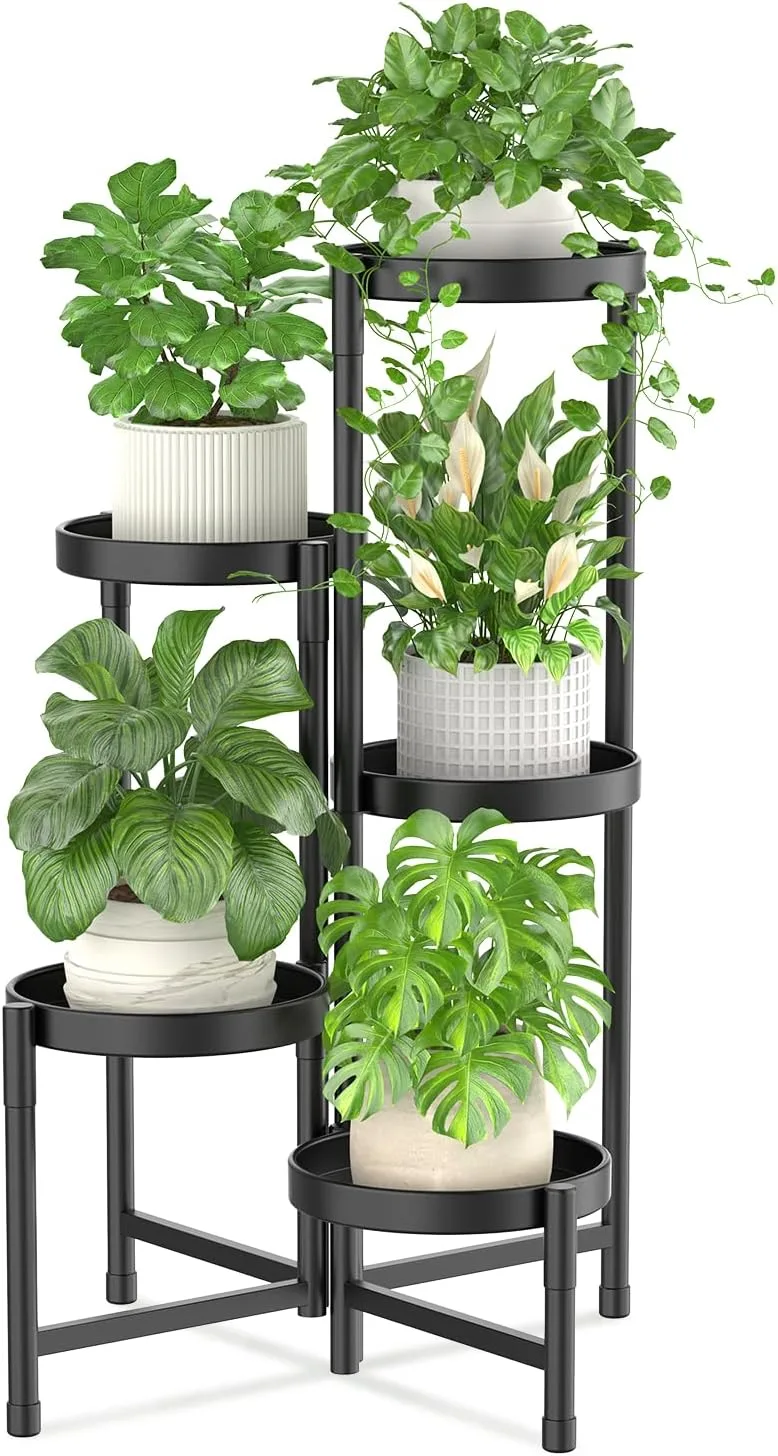
One Phalaenopsis orchid can sit comfortably on a windowsill, but several orchids soon begin competing for the same useful patch of light. A narrow tiered stand makes it easier to arrange them vertically without crowding every available surface.
I would place the stand near a bright window and use the upper levels for smaller orchids or plants that need the clearest light. The open metal shelves also make it easier to remove each pot for watering and allow excess water to drain before the orchid goes back in place.
How to encourage another bloom
Once the flowers fall, the orchid has not reached the end of its life. This is simply the end of one flowering cycle, after which the plant begins building strength for the next one.
The most important requirements for a new spike are sufficient light, healthy roots, and normal active growth. If the orchid has been sitting in a dark location for years, no fertilizer labeled for flowering will correct the real problem.
A modest drop in nighttime temperature compared with daytime conditions may also help initiate a flower spike. This does not mean exposing the plant to cold, only providing a moderate difference between day and night.
What to do with the flower spike
If the spike remains green and healthy after flowering, you can leave it in place. Occasionally, a dormant node produces a side branch and another group of flowers.
If the spike begins turning yellow and drying out, cut it near the base with a clean tool. There is no benefit in asking the plant to maintain tissue that is already dead.
With a weak orchid, I would rather remove the old spike and allow the plant to produce new roots and leaves than encourage another poor-quality bloom immediately.
Fertilizing and repotting
Phalaenopsis can be fed with an orchid fertilizer at a moderate concentration while it is actively producing new roots or leaves. A weaker application is more sensible than overfeeding.
It is also useful to flush the potting medium periodically with plain water so that excess fertilizer salts do not accumulate around the roots.
Repotting becomes necessary when the bark is badly decomposed, roots have rotted, or the container is no longer suitable. The easiest time is usually after flowering, particularly when new roots are beginning to develop.
A ventilated container such as a ceramic orchid pot set can provide drainage and airflow while giving the plant a more finished appearance than a plain nursery pot. I would still keep the Phalaenopsis in a properly sized orchid container rather than moving a small root system into an oversized pot.
Common problems
Roots are rotting
Standing water, decomposed potting medium, and watering too frequently are common causes. Healthy roots feel firm, while rotten roots become soft and brown.
Leaves feel soft
Check the roots before adding water. Soft leaves can indicate dehydration, but they can also result from rotten roots that can no longer supply the plant.
The orchid will not bloom
Insufficient light is a common reason. If leaves continue growing but no spike appears for a long time, reconsider the location first.
A leaf is turning yellow
One old lower leaf may naturally yellow and fall. If several leaves change at once, inspect the roots, watering routine, and overall condition of the plant.
How to propagate Phalaenopsis
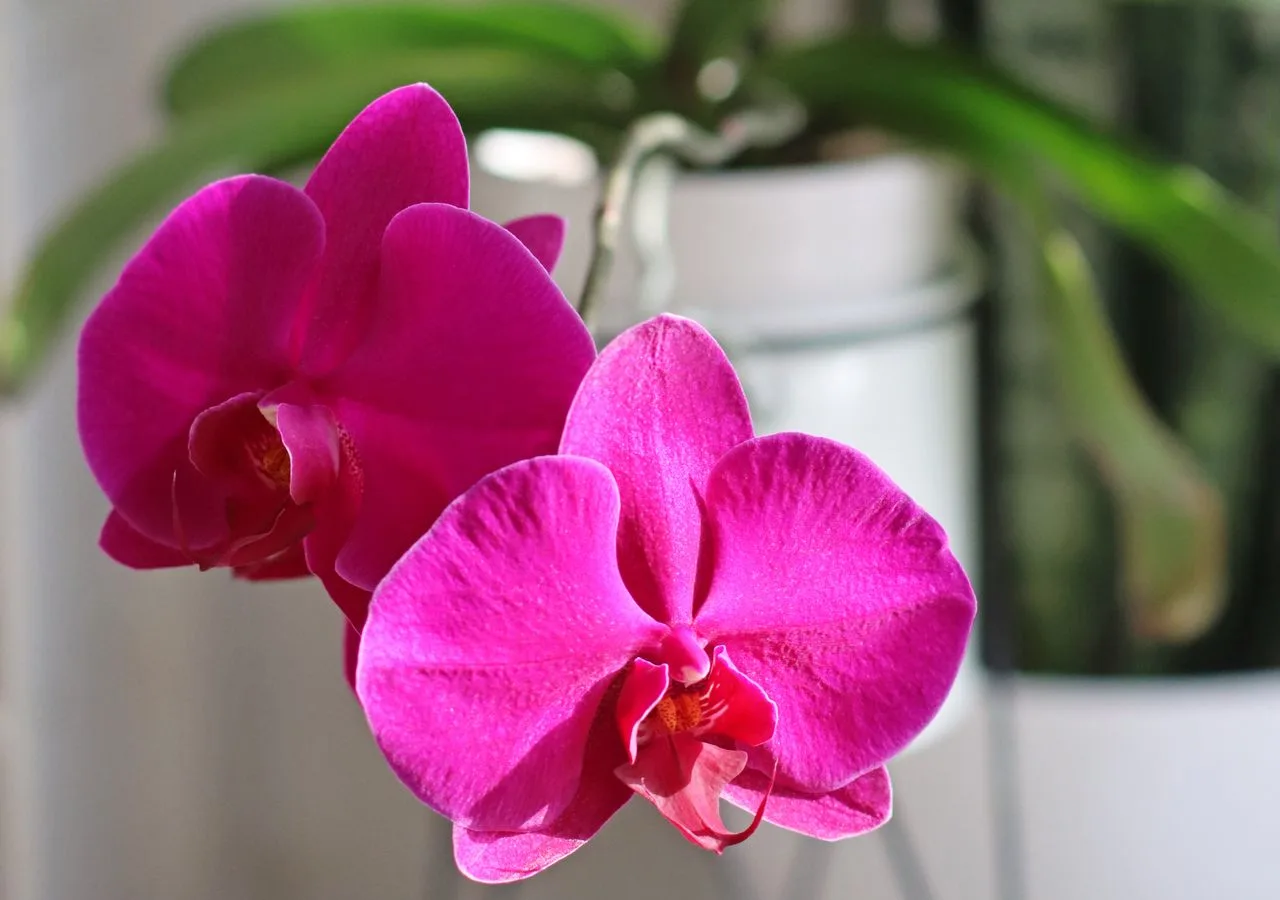
Phalaenopsis cannot be propagated from ordinary stem cuttings in the same way as many other houseplants. At home, the most realistic possibility is for the orchid to produce a small plant known as a keiki on the flower spike.
Do not rush to remove it. The keiki should first develop several leaves and a few roots of its own with enough length to support the young plant.
It can then be separated carefully and planted in a small pot with orchid medium. Not every orchid produces keikis, and there is no need to force the process.
Who is Phalaenopsis best for?
Phalaenopsis is suitable for someone who wants a plant with a long and impressive flowering period but does not want to provide daily care.
It does not need constant attention, but it does ask us to understand a few basic rules: a bright position, air around the roots, watering after the roots have dried, and no forgotten water at the bottom of the outer pot.
Once you accept that the orchid is not finished when the last flower falls, but is simply beginning another growth cycle, a Phalaenopsis can remain at home for many years and bloom repeatedly.