
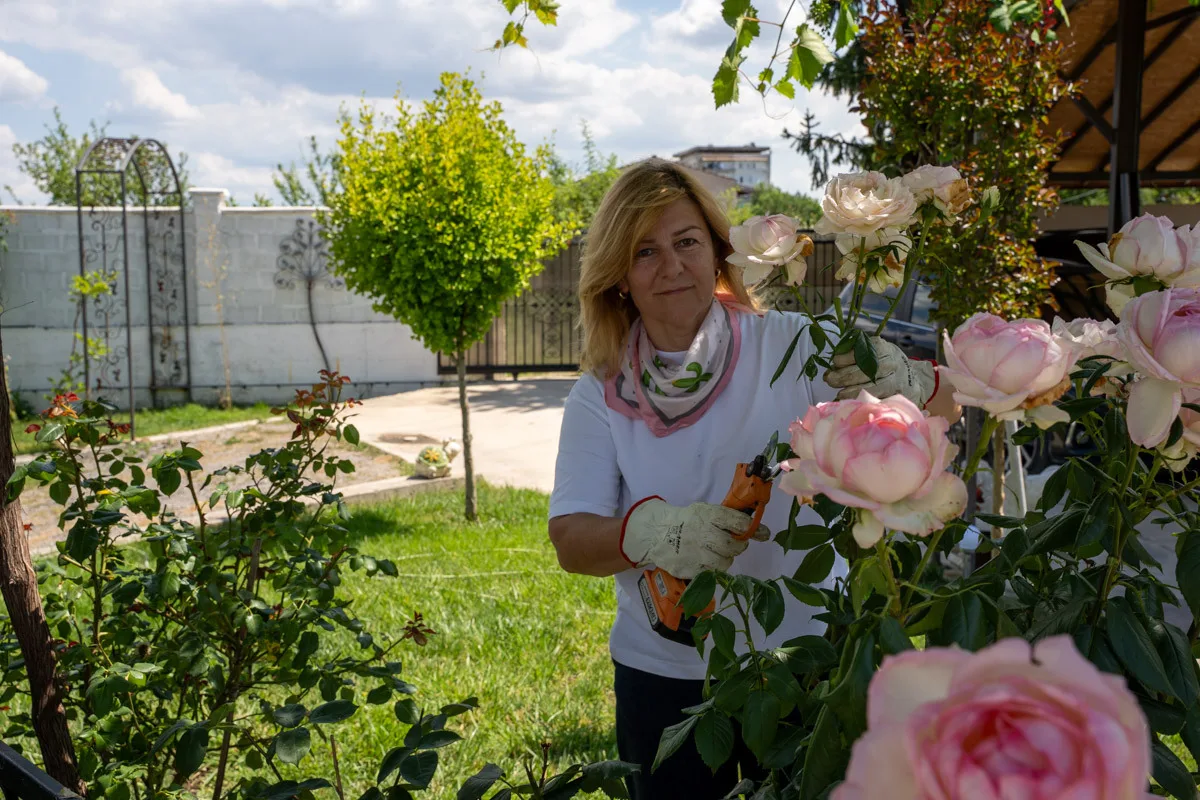
Pruning English roses looks more intimidating than it really is. Every year I stand in front of at least one large rose with my pruners and briefly wonder whether this might be the year I finally go too far. Roses, fortunately, are usually far more forgiving than we imagine.
The goal is not to make a perfect cut above every single bud. What matters more is removing weak and damaged growth, controlling the size of the plant and leaving behind a healthy framework capable of producing strong new stems and plenty of flowers.
This guide is primarily about repeat-flowering English shrub roses. Climbing roses and ramblers are pruned differently, and once-flowering roses may also require a different approach depending on the type of wood on which they produce their flowers.
Why Prune English Roses at All?
English roses often have a naturally generous, somewhat relaxed way of growing. That is part of the reason they look so beautiful in a garden, but without occasional pruning some varieties gradually become congested, accumulate weak stems and lose their balanced shape.
Pruning allows us to control height and width, encourages productive new growth and lets more light and air reach the interior of the plant.
It is also the moment when we can actually see what has happened to the rose during the previous season: which stems are old, which are rubbing against one another, where growth has become too dense and in which direction the plant naturally wants to develop.
Good pruning should not turn a rose into a geometric object. It simply leaves behind a better framework for the plant to build on during the next growing season.
When Is the Best Time to Prune?
Repeat-flowering English shrub roses are generally pruned while they are dormant, usually in late winter or early spring. The exact month depends much more on your climate than on a universal calendar.
In colder parts of the United States and other regions with severe winter freezes, it is sensible to wait until the worst hard freezes are largely behind you. In warmer climates, pruning can take place considerably earlier.
A useful practical marker is the period when buds are beginning to swell but vigorous new growth has not yet taken over the plant. You want to work late enough to avoid unnecessary winter damage, but early enough that the rose can direct its spring energy into the structure you have chosen to keep.
If new buds have already appeared, that does not automatically mean you have missed your chance. A slightly late pruning is usually preferable to skipping it entirely, although it may delay the first flush of flowers a little.
If a tall rose is growing in a particularly exposed position, its height can be reduced lightly in fall to prevent long stems from rocking excessively in winter winds. Think of this as storm protection rather than the main annual pruning.
What Tools Do You Need?
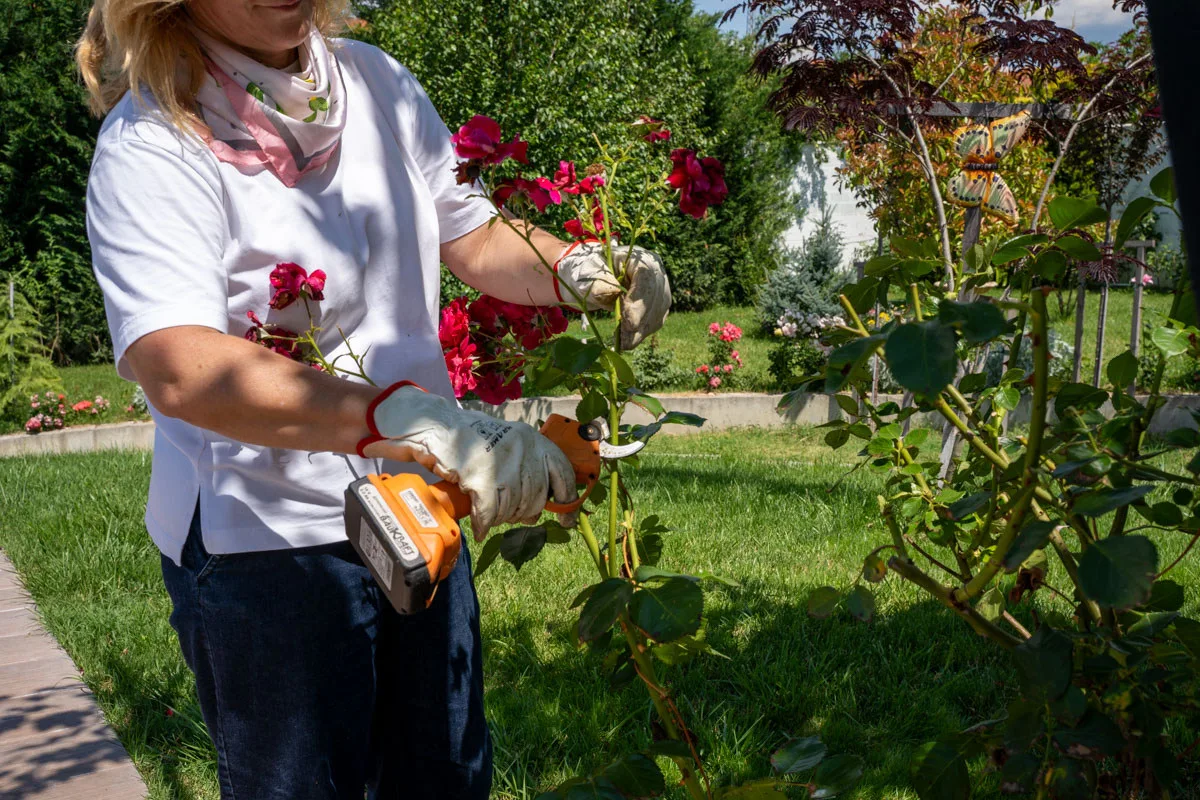
Most English shrub roses do not require an impressive collection of equipment. A good pair of sharp bypass pruners will handle the majority of the work.
| Tool | What I Use It For |
|---|---|
| Bypass pruners | Young and medium-thickness stems. |
| Sturdy gloves | Especially useful when working inside dense, thorny shrubs. |
| Loppers or pruning saw | Older, thick and woody stems that are too large for hand pruners. |
| Disinfectant | Useful for cleaning tools, especially after removing obviously diseased material. |
| Bucket or garden cart | For removing cut stems and old leaves rather than leaving debris around the base of the rose. |
Dull pruners crush stems instead of cutting them cleanly. If I had to choose between an expensive tool and a properly sharpened one, I would take the sharp one.
How I Prune an English Shrub Rose
There is a useful order to the process. I do not begin by shortening every stem simply because it happens to be in front of me.
I cut out dead, damaged and diseased stems. I also remove very weak growth that is unlikely to support a worthwhile flower.
If stems cross, rub against one another or create an unnecessarily congested center, I decide which ones are worth keeping. I do not try to create a completely hollow center at all costs.
The remaining main stems should be balanced and strong enough to support vigorous new growth and the weight of the flowers during the coming season.
I shorten the remaining stems according to the age of the rose, the natural vigor of the variety and the amount of space the plant has in the garden.
This may be the most useful habit of all. When your face is buried in the middle of a rose bush, it is very easy to start cutting mechanically. From several feet away, the overall shape becomes much easier to judge.
A clean cut matters. It is not necessary, however, to make every cut at a perfect angle a mathematically exact distance above a bud. If a little extra stem remains, the tip may simply die back slightly and can be tidied later.
How Hard Should You Prune at Different Ages?
I find this more useful than a universal rule telling every gardener to remove exactly one third. A young rose and a well-established five-year-old shrub simply do not have the same needs.
Keep pruning relatively light. The goal is to allow the young plant to continue developing a strong root system and a good framework of basal stems. Remove unhealthy growth and balance the shape without unnecessarily weakening the plant.
You can usually prune with more confidence. For many varieties, reducing the overall height by around half can be a useful starting point, while naturally large or vigorous shrubs may need less reduction.
At this point pruning becomes much more about shaping. An established shrub can often be reduced by roughly one third to one half, depending on the variety, its current size and the shape you want to maintain. Older stems can also be removed selectively when the plant begins to become congested.
As a rose matures, pruning becomes less about following a formula and more about responding to the individual plant in front of you.
Shape the Rose for Its Place in the Garden
Not every English rose should look the same. This is where pruning becomes part of garden design rather than simply plant maintenance.
For a freestanding shrub, I often aim for a naturally rounded form. I do not try to turn it into a perfect ball or cut every stem to exactly the same height. Slight variations in height create a much softer, more natural plant.
For a rose growing in a mixed border, I also think about the plants around it. A rose near the front may need to remain more compact, while one behind perennials can often keep additional height.
When several roses are planted together, I usually prefer to see them as one generous mass rather than a collection of individually clipped shrubs.
What to Do After Pruning
Once I finish, I collect the cut stems and old leaves from around the base. This is particularly worthwhile if the rose had black spot or other foliage problems during the previous season.
I also check the base of the plant for damaged, very old or obviously unhealthy growth that may have been easier to miss while concentrating on the upper part of the shrub.
Once active spring growth begins, the rest of the seasonal care follows: feeding, mulching where appropriate and regularly checking the plant for pests and disease.
If your English rose is being grown as a climber, do not apply this shrub-pruning method mechanically. With climbing roses, the long structural canes are generally retained and trained along the support, while lateral growth and older canes are managed differently.
The Most Important Thing to Remember
Pruning is not a botany exam. You do not need to count every bud or panic over every individual cut.
Remove unhealthy growth first. Then deal with unnecessary congestion. Keep the strongest framework. Finally decide what height and shape make sense for that particular rose.
And if one year you cut a little too much or leave one stem slightly longer than planned, the rose will probably survive the drama considerably more calmly than you will.
With an established repeat-flowering English shrub rose, pruning gradually becomes less about rigid technique and more about observation. The better you understand the variety and the way it behaves in your particular garden, the less you need universal rules.