
Some plants make an immediate impression as soon as we plant them. Others become more valuable with time.
Irises belong to that second group for me. At first we notice their unusual flower shape and colour, but after a few seasons we begin to appreciate their ability to establish, expand and return each spring.
With rhizomatous irises in particular, a small group can gradually become a substantial part of the border.
Iris is not a plant for just one beautiful flowering season. In the right position, it gradually builds its presence in the garden.
What Is Iris?
Iris is a large genus of perennial plants with an extraordinary range of forms, sizes, colours and growing requirements.
That is exactly why not all irises should be grown in the same way.
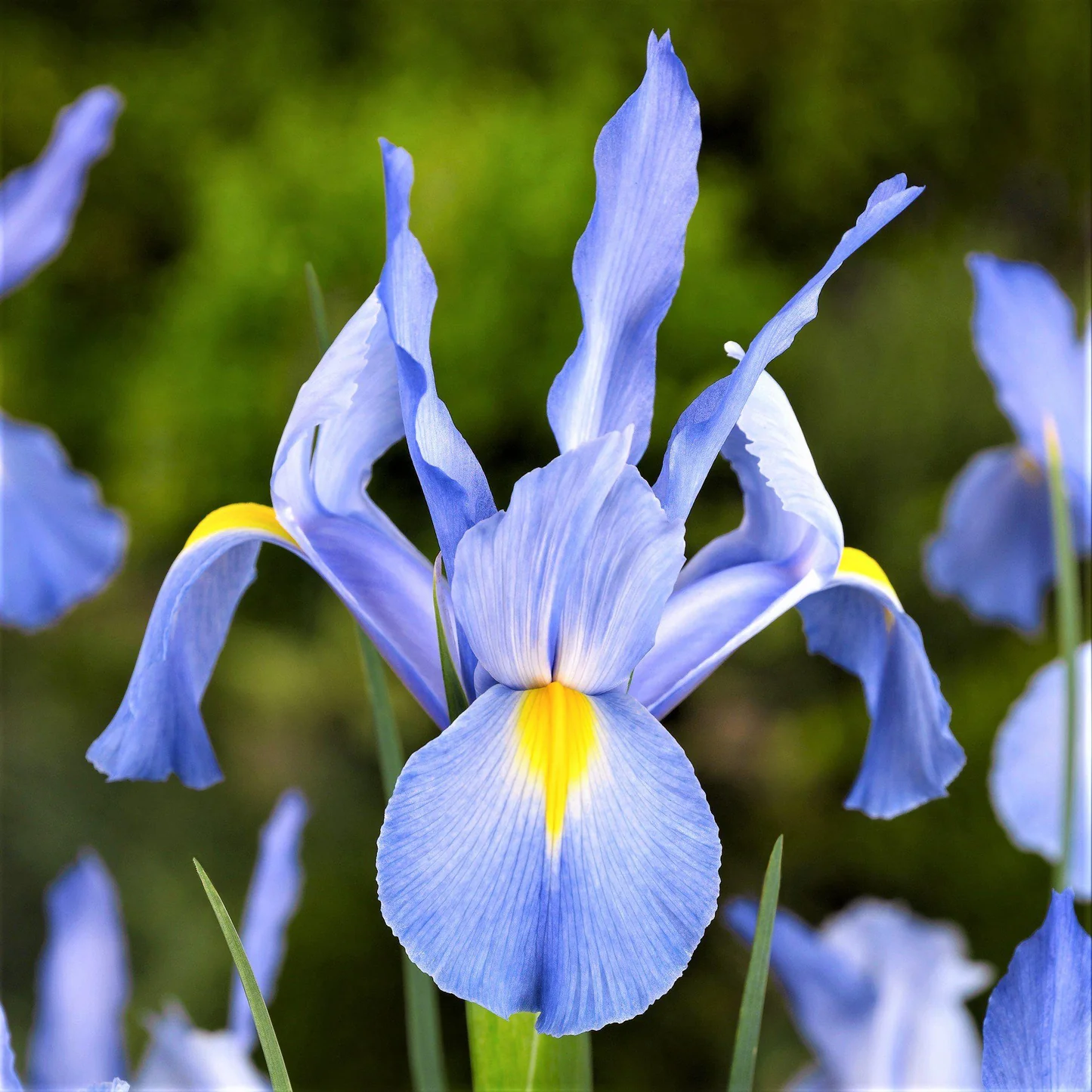
Some of the most popular garden irises, including bearded irises, grow from rhizomes. Others, such as Dutch irises, are bulbous.
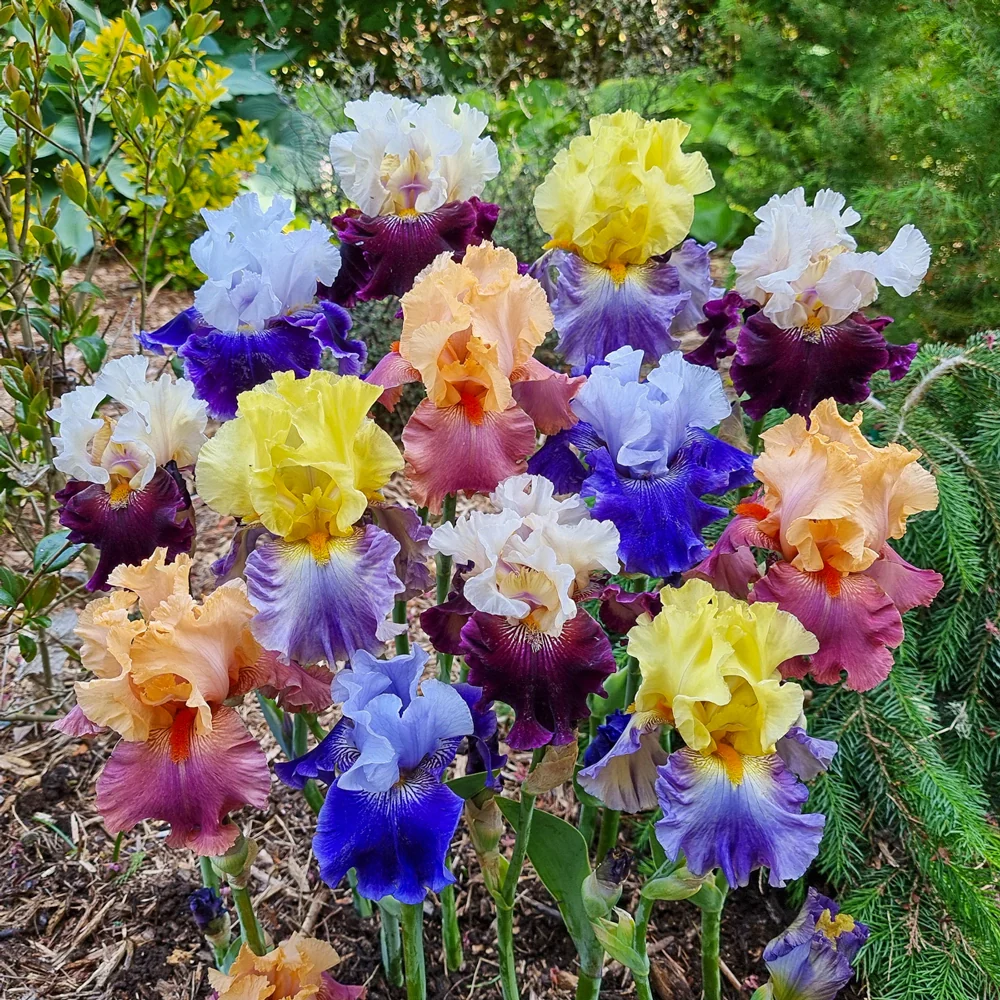
The flowers may be white, cream, yellow, blue, purple, pink, wine-coloured, almost black or multicoloured.
Not All Irises Are Grown the Same Way
This is probably the most important point in any general article about irises.
Bearded irises are among the best-known rhizomatous types. They prefer sun, good drainage and relatively dry conditions around the rhizome.
Siberian irises, on the other hand, are much happier in more consistently moist soil.
There are also irises that naturally prefer very moist positions or even the edges of ponds.
So when buying, I would look not only at flower colour, but also at the exact species or group.
First, I identify what type of iris I have. Only then do I decide how deeply to plant it, how much water it needs and what kind of soil suits it best.
What Bearded Irises Need to Grow Well
If we are talking about classic bearded rhizomatous irises, three things matter especially: sun, drainage and correct planting depth.
For strong flowering, I would choose an open, sunny position.
In too much shade, the plants may produce plenty of foliage but flower much less strongly.
The soil needs to drain well, because prolonged moisture around the rhizome increases the risk of rot.
With bearded irises, deeper planting is not a sign of better care. Often, the opposite is true.
Watering, Feeding and Dividing Irises
Newly planted irises need water while they establish.
After that, many rhizomatous forms tolerate temporary dry periods reasonably well.
I would not keep them permanently moist, particularly in heavy soil.
Feeding also does not need to be excessive. In normal garden soil, moderate compost or a suitable balanced fertilizer may be enough.
Too much nitrogen can encourage foliage growth at the expense of flowers.
With bearded irises, the rhizome should not be buried deeply.
I would not divide a clump every year simply out of habit.
If flowering declines and the rhizomes become too tightly packed, it may be time to divide.
This is how one mature clump can create several new groups elsewhere in the garden.
Common Mistakes When Growing Irises
Another common mistake is allowing a clump to become overcrowded without checking it.
With some rhizomatous irises, severe crowding can gradually reduce flowering.
In that case, division is not only a method of propagation, but also part of maintaining a vigorous plant.
How Irises Look Through the Seasons
Where I Would Use Irises in the Garden
Irises have a very distinctive form, and for me they work best when they remain visible, rather than being hidden among too many neighbouring plants.
- in a sunny perennial border;
- in groups of several plants;
- in a traditional flower bed;
- along a garden path;
- in a drier sunny planting with bearded irises;
- in wetter areas when using a suitable moisture-loving species.
It is important that neighbouring plants do not cover the rhizomes of bearded irises too densely.
Around them, I would avoid aggressive groundcovers that quickly hide the base and hold too much moisture.
What I Would Plant with Irises
I would choose companions according to the specific group of irises, because the plants need to have similar requirements for light and moisture.
Around sunny bearded irises, I might use:
- Salvia;
- Nepeta;
- Peonies;
- Yarrow;
- Echinacea;
- Sedum;
- other low, sun-loving perennials.
I like combinations where irises provide the strong vertical accent in spring, while neighbouring plants gradually take over later in summer.
The best combination is not the one that looks richest on one particular day, but the one where plants take over the season from one another.
Advantages and Disadvantages
- extraordinary variety of colours and forms;
- many species are long-lived;
- rhizomatous types are easy to propagate by division;
- strong spring and early-summer impact;
- there are suitable groups for many different garden conditions;
- many species require relatively simple care once established.
- the main flowering period of many cultivars is relatively short;
- some rhizomatous groups need periodic division;
- bearded irises dislike heavy, permanently wet soil;
- different groups have different requirements;
- after flowering, the foliage is not always as impressive as the flowers.
Why I Think Irises Are Worth Growing
Because this is one of those genera where we can find a plant for many different garden situations.
For a sunny, drier border, we can choose a suitable bearded iris. For a wetter position, there are other species with completely different preferences.
Many irises perform well in temperate gardens, provided we choose the right group and do not ignore its basic requirements.
Rhizomatous forms offer another advantage: over time, a well-developed clump can be divided and used in other parts of the garden.
If I am looking for a perennial with distinctive flowers, an enormous choice of cultivars and the potential to remain in the garden for many years, Iris would definitely be among my choices.
But here, the most important question is not simply: “How do I grow irises?”
The more useful question is: “What kind of iris do I have?” Because that determines the correct planting depth, watering, soil and the plant's future development.