
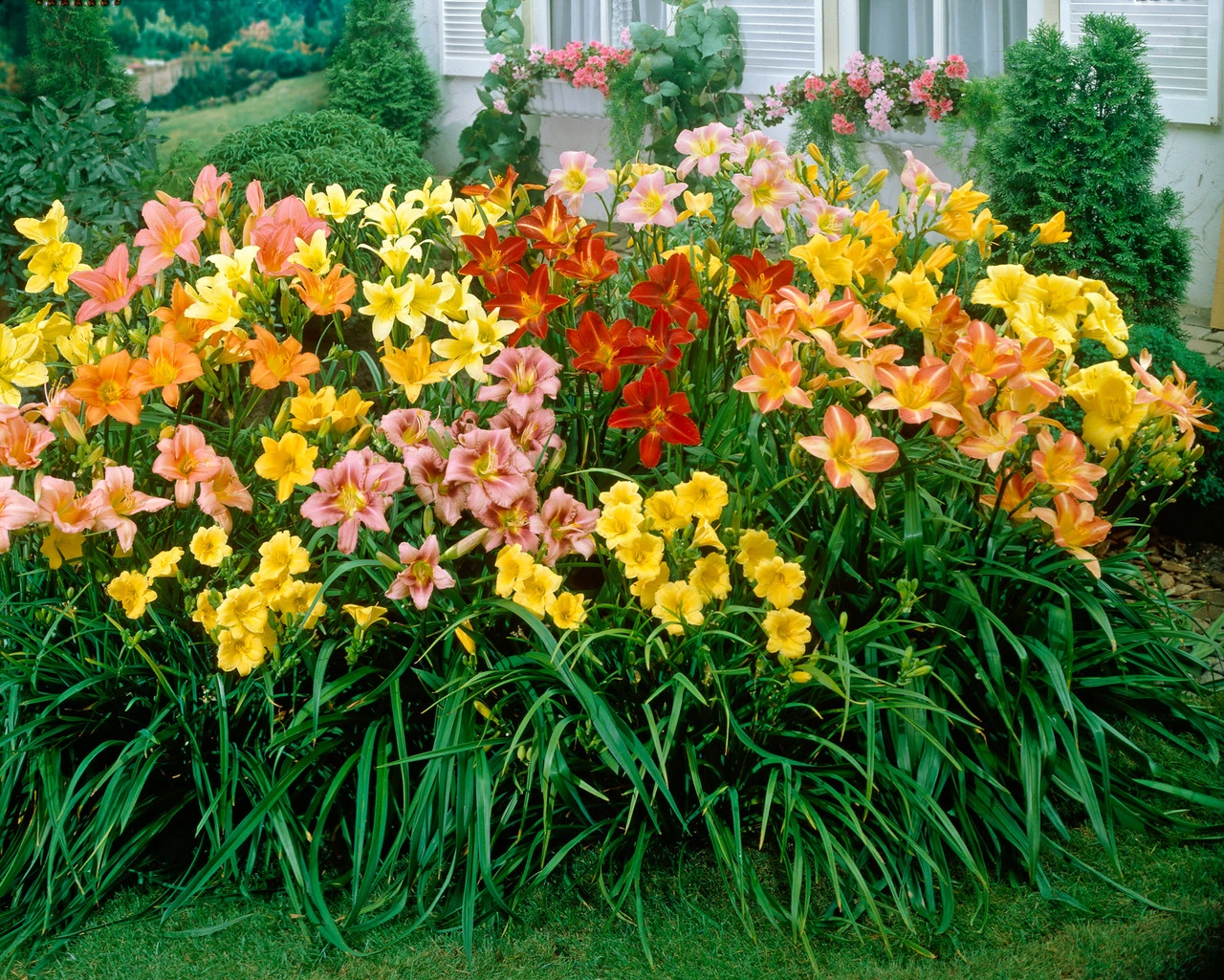
Some plants are bought because of one impressive photo, only for us to discover later that maintaining them is more difficult than planting them.
Daylilies are almost the opposite for me. The flowers attract us first, but after a few seasons we begin to appreciate their reliability even more.
In the right position, a daylily gradually forms a larger clump, produces more flowering stems and can remain part of the garden for many years.
The most rewarding plants are not the ones that need absolutely nothing, but the ones that stop demanding constant attention once they have had a good start.
What Is a Daylily?
Daylilies (Hemerocallis) are herbaceous perennial plants.
Despite the common name, they are not true lilies and do not belong to the genus Lilium.
The genus is native to Asia, and today there are thousands of garden cultivars with an enormous range of heights, flower forms and colours.
They are available in cream, yellow, orange, pink, red, purple and burgundy, including bicoloured forms with contrasting eyes or edges.

One of the most interesting features of the plant is that an individual flower usually remains open for only a short time, often around one day.
That is where the common name “daylily” comes from.
But this does not mean the entire plant flowers for only one day.
A well-established daylily produces many buds that open one after another, so the overall flowering period can continue for weeks.
Why Daylilies Are So Reliable
For me, their greatest strength is the ability to perform well outside the perfect conditions of a nursery or catalogue.
This is a plant that can adapt to different soils, cope with summer heat and, once established, tolerate temporary drier periods.
Over time, the clump usually expands, which can also increase the number of flowering stems.
That is exactly why daylilies work so well in real gardens, where maintenance cannot always be a daily task.
With daylilies, the best effect rarely arrives in the first week. It develops over time.
What Daylilies Need to Grow Well
Daylilies are adaptable, but that does not mean the planting position does not matter.
For abundant flowering, I would choose a sunny position or one with light afternoon shade in areas with very hot summers.
In deep shade, the foliage may still grow well, but flowering is usually significantly reduced.
They can grow in a range of soils, but I would expect the best results in well-drained ground with a reasonable amount of organic matter.
Watering, Feeding and Dividing Daylilies
Young plants need regular watering while they develop a stable root system.
Once established, daylilies can become considerably more tolerant of temporary dry periods.
During prolonged drought, however, especially while buds are forming and plants are flowering, additional water can improve the display.
I would keep feeding simple too. In ordinary garden soil, an annual layer of compost is usually enough.
Daylilies can remain in the same place for a long time. Division makes sense when a clump becomes too large, the centre begins to thin, or flowering noticeably declines.
The first goal is to help the plant establish a stable root system.
I would not rush to divide it before the plant has had time to become established.
This can keep the border looking tidier after the main flowering period.
An oversized clump can be divided and used to create new plants.
Common Mistakes When Growing Daylilies
Another common mistake is assuming that drought tolerance means a newly planted daylily does not need regular watering.
Its reliability becomes most obvious after we first give it the opportunity to establish properly.
How Daylilies Look Through the Seasons
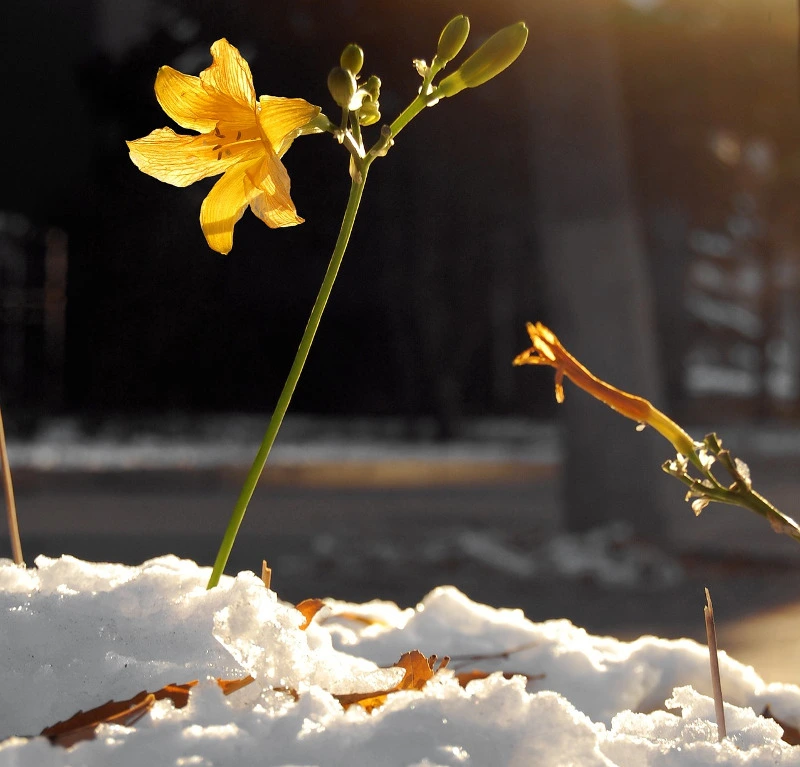
Hemerocallis cultivars can be dormant, semi-evergreen or evergreen. Their winter behaviour depends on the cultivar and climate, so I would check this characteristic when choosing a plant.
Where I Would Use Daylilies
For me, they look best planted in groups, where the foliage and multiple flowering stems can work together as one mass.
- in a sunny perennial border;
- along the edge of a large bed;
- around ornamental shrubs;
- in a more naturalistic planting;
- in larger groups for summer colour;
- on slopes or larger areas where a stable mass of planting is useful.
The wide range of sizes means we can use shorter cultivars toward the front of a border and taller ones further back.
What I Would Plant with Daylilies
I would choose plants with similar requirements for light and soil moisture, but with different flower shapes and foliage textures.
- Echinacea;
- Salvia;
- Rudbeckia;
- Nepeta;
- Yarrow;
- Verbena;
- Sedum;
- other sun-loving perennials.
I especially like using daylilies as a larger, stable mass, with finer flowers and contrasting textures planted around them.
Daylilies do not need to be the only stars in the border. Often they are most useful as the plants that hold the composition together.
Advantages and Disadvantages
- long-lived perennial;
- forms increasingly strong clumps;
- tolerates summer heat;
- adapts to different soils;
- offers an enormous range of cultivars;
- requires relatively simple care once established.
- each individual flower is short-lived;
- flowering declines in too much shade;
- large clumps need enough space;
- some cultivars expand considerably with age;
- winter behaviour varies by cultivar.
Why I Think Daylilies Are Worth Growing
Because they combine qualities that genuinely matter in a garden: reliable flowering, strong foliage, good adaptability and relatively simple maintenance.
They are suitable for many temperate garden climates, particularly in sunny positions with reasonable drainage.
Summer heat is generally not a problem for well-established plants, while many cultivars move successfully through winter dormancy and return again in spring.
I would not assume that every cultivar is equally suitable for every position. Height, mature clump size, flowering period and winter habit are all worth checking before planting.
If I am looking for a perennial for a sunny border that gradually becomes stronger and does not require constant attention, daylilies would definitely be high on my list.
The most important things are enough light, reasonable drainage and enough room for the mature clump.
For me, that is their real advantage: they do not impress only at the moment of purchase, but can become a more useful part of the garden with every passing year.