
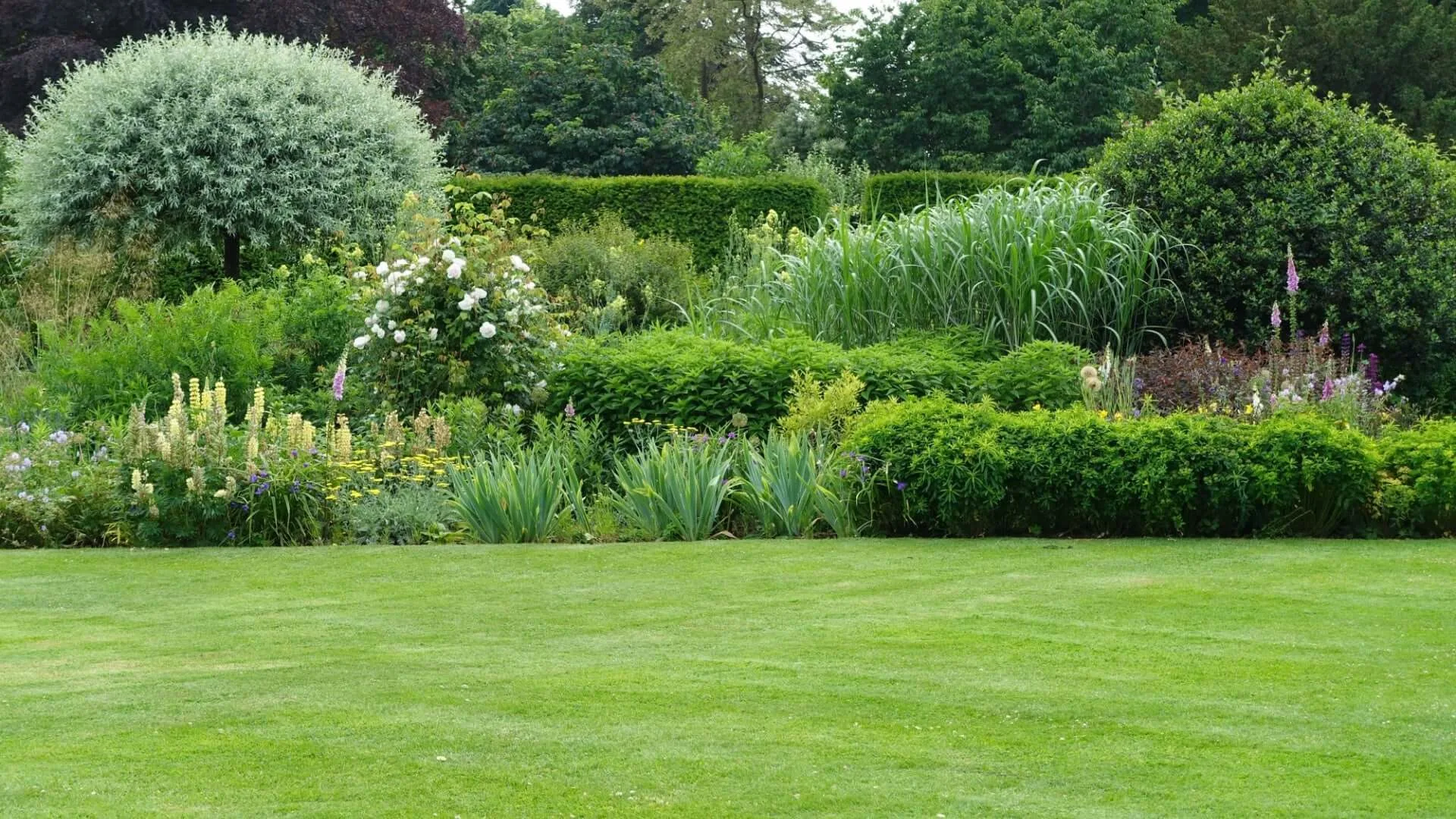
When we choose ornamental plants for the garden, the easiest thing is to fall in love with a photo — a beautiful color, interesting leaves, impressive flowering or the promise of “easy maintenance”. But a good garden is not made from randomly collected beautiful plants. It is made from plants that have a clear role.
Some plants provide structure and background. Others are accents — something the eye notices immediately. Others solve difficult places such as shade, partial shade, acidic soil, heat or dry areas. If we choose plants according to the conditions in the garden, and not only according to how they look in the nursery, the result is much calmer and more sustainable.
This article is like a map. Here we will not look at every plant in maximum detail, because each one has its own separate article. The idea is to see which group of plants suits your garden and then continue to the specific species — how they are planted, how they are pruned, what soil they like and where they look best.
1. Designer Accents in the Garden
Designer accents are the plants that give the garden character. They are not just “green mass”. They have form, color, seasonal change or strong presence. These are often the plants around which an entire garden corner is built.
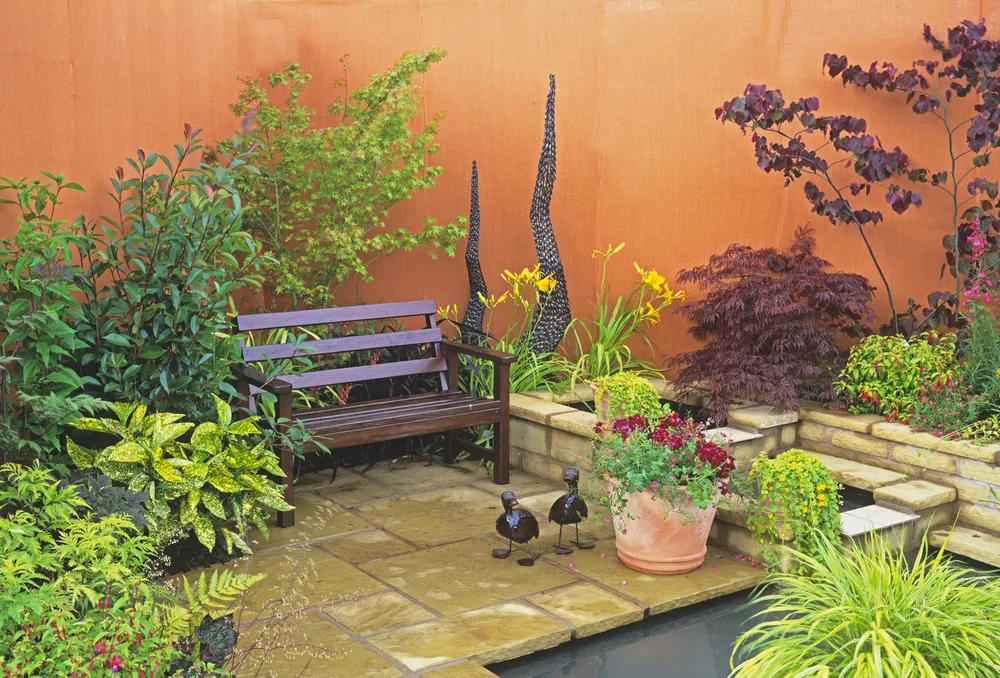
Japanese maple is one of the most refined accent trees for partial shade and calmer compositions. It is not a plant for quick effect, but for form, leaves and seasonal change. It is suitable for Japanese garden corners, near stone, water, ferns, hostas and other softer plants.
Magnolia is a completely different type of accent. It is a spring scene — a tree that is noticed at the moment of flowering. It is suitable for gardens where there is enough space for it to develop and be visible, without being squeezed between a fence, path and other large plants.
Ornamental plum gives strong contrast with its dark purple leaves. It is very useful when the garden looks too green and flat. One such dark accent can make the composition deeper and more alive.
If you are looking for lower or more flexible accents, good options are nandina, barberry and spirea. Nandina brings colorful change through the seasons, barberry gives contrast and thorny structure, and spirea is an easy flowering shrub that brings order to the border without many demands.
Ornamental grasses are another kind of accent — not so much colorful as dynamic. They add air, movement and lightness. In modern gardens, it is often the grasses that make the composition look finished rather than overloaded.
2. Plants for Acidic Soil and Partial Shade
This is one of the most important groups, because many people buy rhododendrons, azaleas, pieris or skimmia simply because they are beautiful, without knowing that they have specific requirements. These plants like partial shade, loose soil, even moisture and a more acidic environment.
Rhododendron is a classic evergreen shrub for partial shade and acidic soil. It looks beautiful as a background or larger flowering element, but it does not like chalky soils, deep planting or dry hot places.
Azalea is lighter, more colorful and often lower. It is wonderful for foreground planting, Japanese corners and partially shaded beds. It combines very well with rhododendrons, hostas, ferns and Japanese maple.
Pieris is an evergreen shrub with beautiful new growth — often red, copper or pink. It is very suitable for people who want a plant with an effect not only during flowering, but also through foliage change.
Skimmia is more compact and very suitable for partial shade, containers, entrance areas and winter effect. With some cultivars, the red berries are a big part of the charm, but it is important to know whether the plant is male, female or needs a pollinator.
Azaleas, rhododendrons, pieris and skimmia can create a very beautiful partially shaded corner, but only if the soil is suitable. If the leaves turn yellow, growth is weak or the plants do not flower, the reason is often not a lack of fertilizer, but unsuitable pH and poor soil conditions.
Important: acid-loving plants are not suitable for every soil. If the garden has chalky, heavy or strongly alkaline soil, it is better to first prepare a separate bed or use containers with a suitable substrate.
This post contains affiliate links. As an Amazon Associate, I earn from qualifying purchases at no extra cost to you.
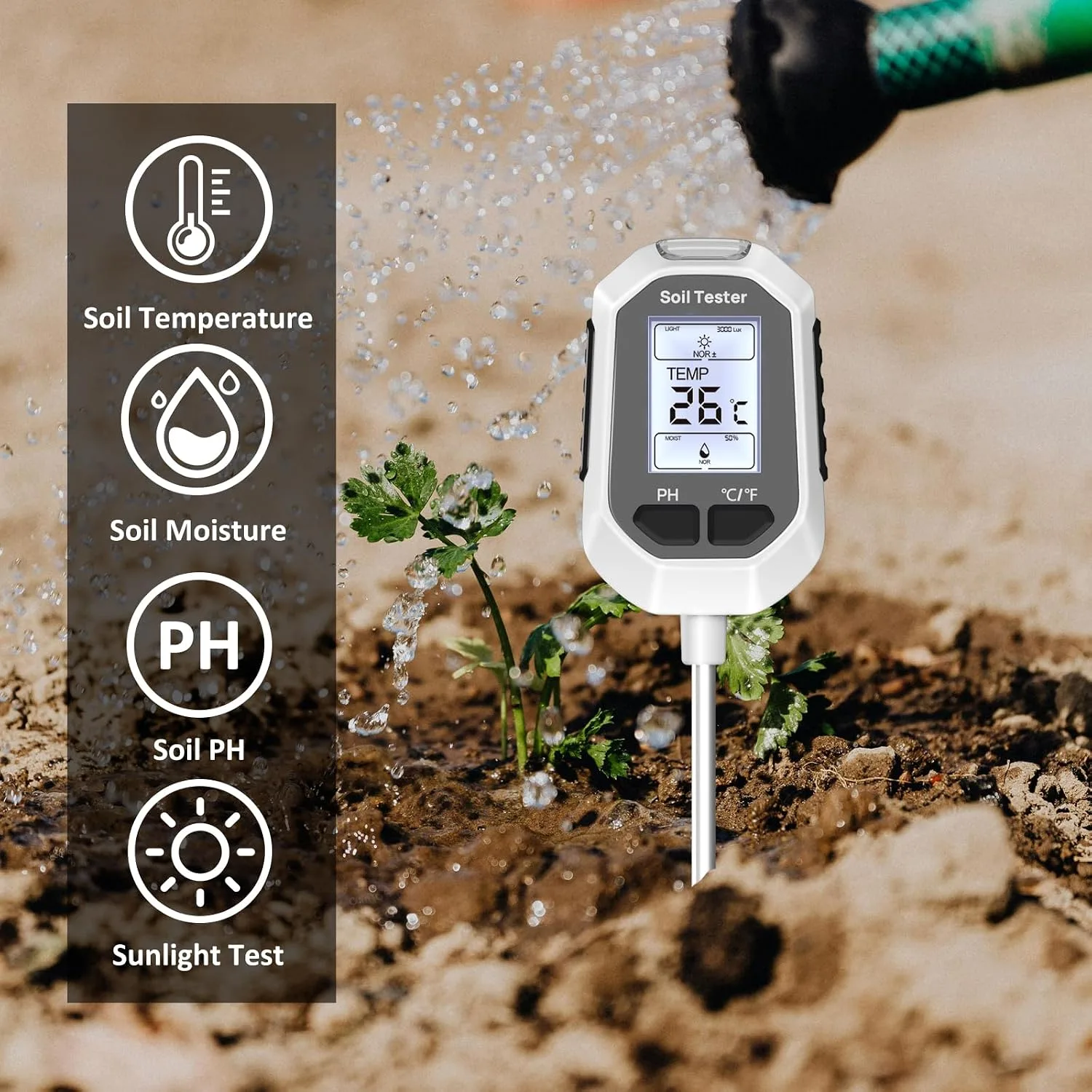
When a plant struggles, fertilizer is not always the answer. Soil moisture, pH, temperature and light can tell us much more about whether a particular part of the garden actually suits it.
A simple soil meter is especially useful when planning beds for rhododendrons, azaleas and other plants with more specific growing requirements. I would use the readings as a practical guide rather than as a substitute for observing the plants and the soil itself.
3. Plants for Shade
Shaded places are often seen as a problem, but in fact they can become the calmest part of the garden. Under trees, next to a north-facing wall, around a shaded terrace or in a more humid corner, there is no point struggling with plants for full sun. It is better to choose plants that like shade and partial shade.
Hosta and hellebore are a wonderful pair for shaded corners. Hosta gives large beautiful leaves and volume during the warm season, while hellebore brings winter and early-spring flowering when the garden still feels quiet.
Ferns are plants for texture and atmosphere. They are not grown for bright flowers, but for a woodland effect, coolness and fine foliage structure. They look very good under trees, around stone, next to hosta, hellebore, Japanese maple and rhododendrons.
Mahonia is an evergreen shrub for shade and partial shade. It gives structure in winter, yellow early flowering and, in some species, bluish berries. It is suitable for the back parts of shaded beds, entrance areas and places where we want more evergreen volume.
In more humid partial shade, this group can also include rhododendron, azalea, pieris and skimmia. This way, the shaded corner does not look like a compromise, but like a separate garden scene — quieter, deeper and more natural.
4. Plants for Sun, Heat and Easier Maintenance
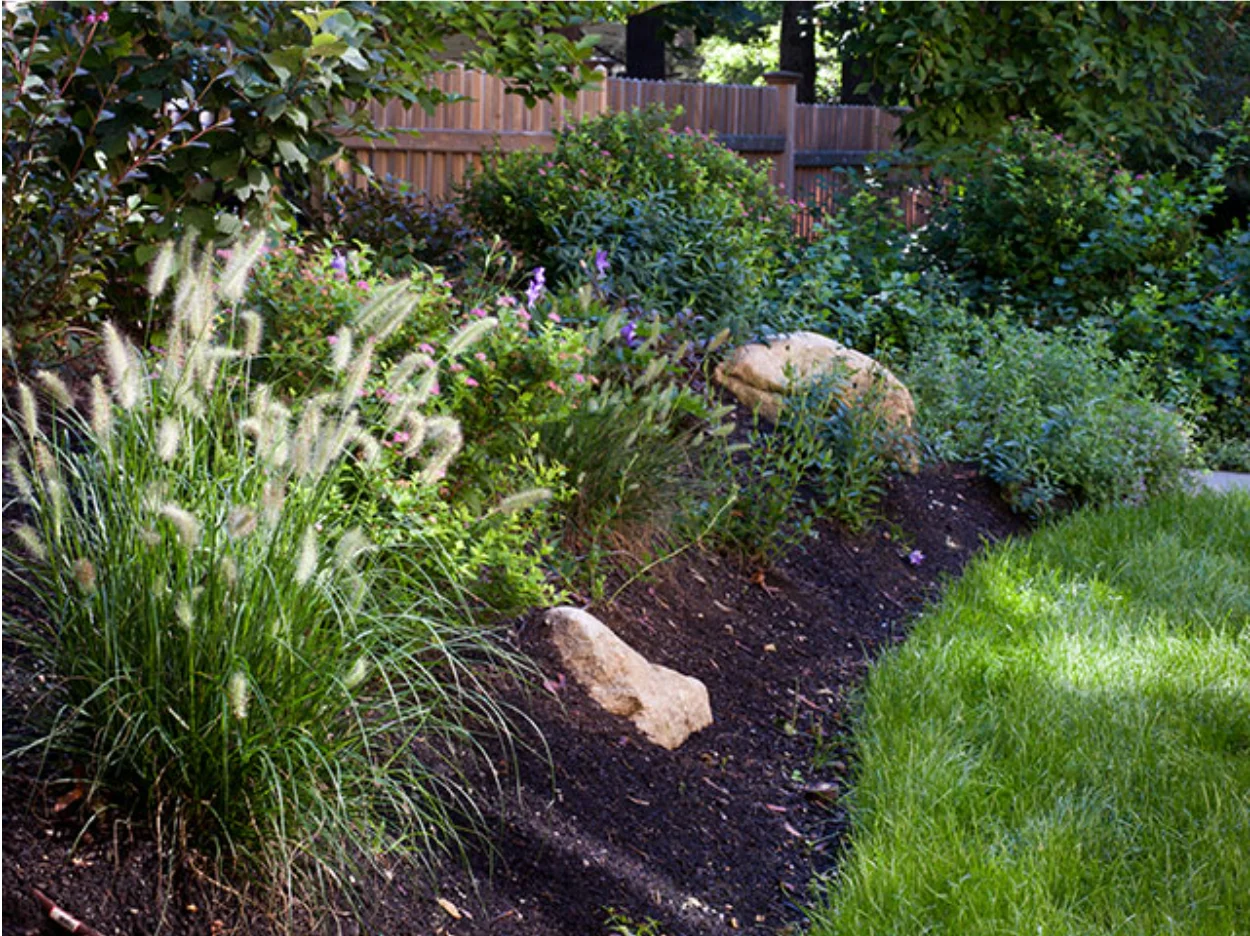
Many gardens have hot and dry areas — southern exposures, zones around paths, gravel beds, places near terraces or areas where watering is more difficult. There, it is wiser to use plants that like sun, air and good drainage.
Lavender is a classic for such places. It likes sun, dry “feet” and regular but moderate pruning. The most common mistake is planting it in heavy, wet soil and watering it too much.
Perovskia is more airy and modern. It creates a blue-purple cloud, silvery stems and very good heat tolerance. It is suitable for combinations with ornamental grasses, lavender, santolina and yucca.
Santolina is a low silvery shrub for dry beds, low borders and gravel compositions. It does not like damp places, but in sun and with good drainage it can look very orderly and elegant.
Yucca is the architectural accent in this group. It does not soften, but gives form and clear presence. It is suitable for modern gardens, dry compositions, stone, gravel and places where there is enough space around it.
Buddleia adds summer flowering and life. It attracts butterflies, loves sun and can make a dry corner of the garden much more colorful. It is important to prune it properly, because without pruning it easily becomes tall and messy.
This group also combines well with barberry, spirea and ornamental grasses. Barberry gives colorful leaves and thorny structure, spirea gives easy flowering, and grasses bring movement and lightness.
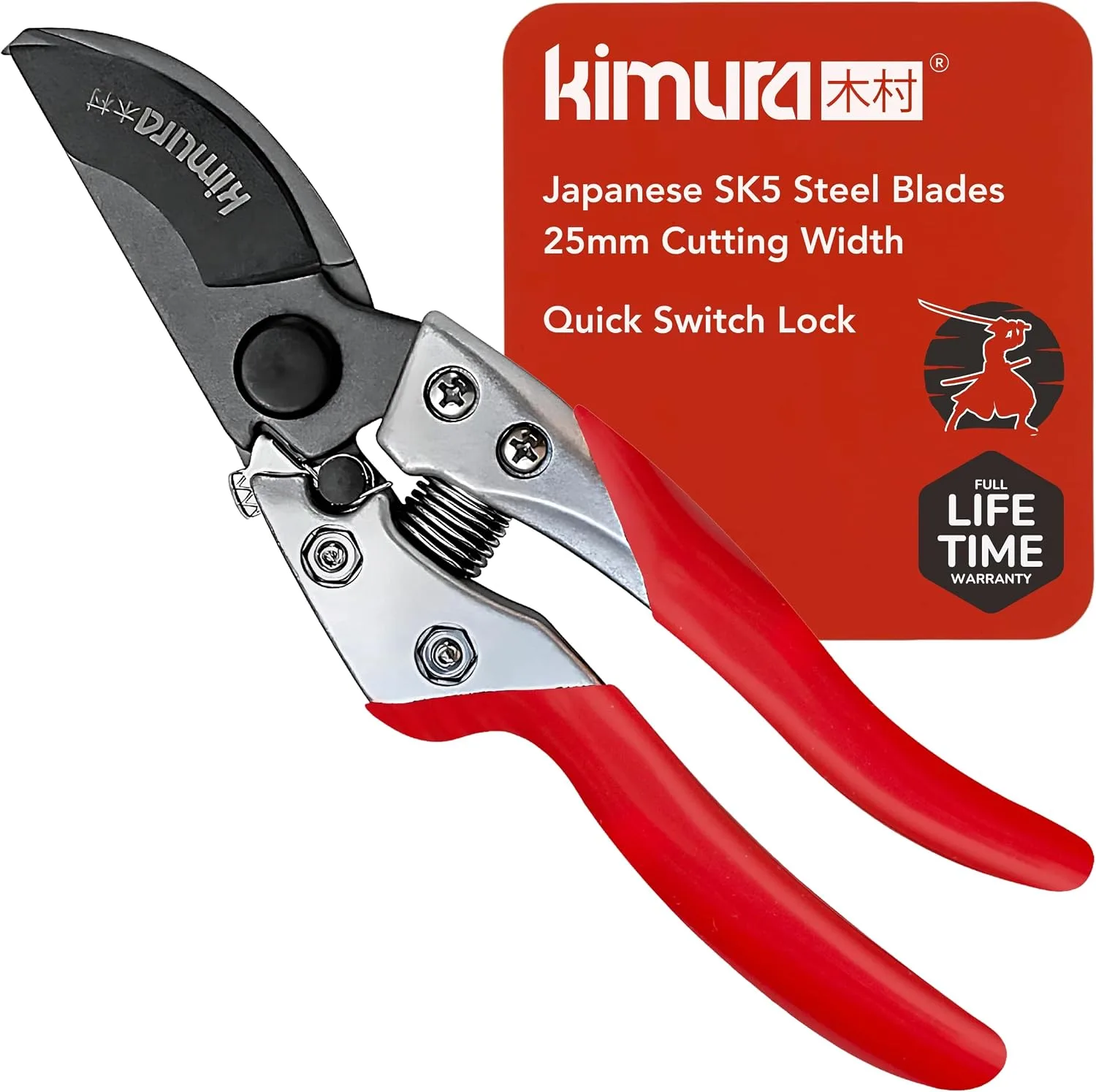
Even plants chosen for easier maintenance still need occasional pruning, shaping or removal of damaged and spent growth. A good pair of bypass shears is one of the tools that gets used throughout an ornamental garden rather than for just one plant.
These Kimura shears use Japanese SK5 steel bypass blades and are suitable for flowers, young stems and routine shrub pruning. As always, clean cuts and the correct pruning time matter more than cutting simply because a plant looks untidy.
5. How to Choose the Right Plants for Your Garden
The best choice starts not with the plant, but with the place. Before buying a new shrub, tree or perennial, look at how much sun the spot receives, what the soil is like, whether it holds water, whether there is strong wind and how much space the plant will have after a few years.
If the place is shaded, look for shade plants — hostas, hellebores, ferns, mahonia and acid-loving shrubs for partial shade. If the place is dry and hot, think of lavender, perovskia, santolina, yucca, buddleia and ornamental grasses. If you want a strong accent, pay attention to Japanese maple, magnolia, ornamental plum or nandina.
It is also important not to plant everything you like in one place. A beautiful garden has repetition, rhythm and balance. It is better to choose several suitable plants and repeat them than to create a collection of single shrubs with no connection between them.
In a good garden, every plant has a task — to hide, to highlight, to soften, to bring color, to give structure or to make a difficult place beautiful.
If you are not sure where to start, divide the garden into zones: sun, partial shade, shade, dry, moist, visible from the house, hidden from view, beside a path, beside a fence. Then choose plants according to each zone. This makes the choice much easier.
Ornamental plants should not simply be beautiful on their own. They need to work together. When every plant is in the right place, the garden looks more natural, maintenance is lighter, and the garden begins to have character.
The best garden is not the one with the most plants, but the one with the best-chosen plants.
Start with the conditions — sun, shade, soil, moisture and space. Then choose the role — background, accent, color, structure or seasonal effect. This way ornamental plants will not simply fill the garden, but make it feel complete.