
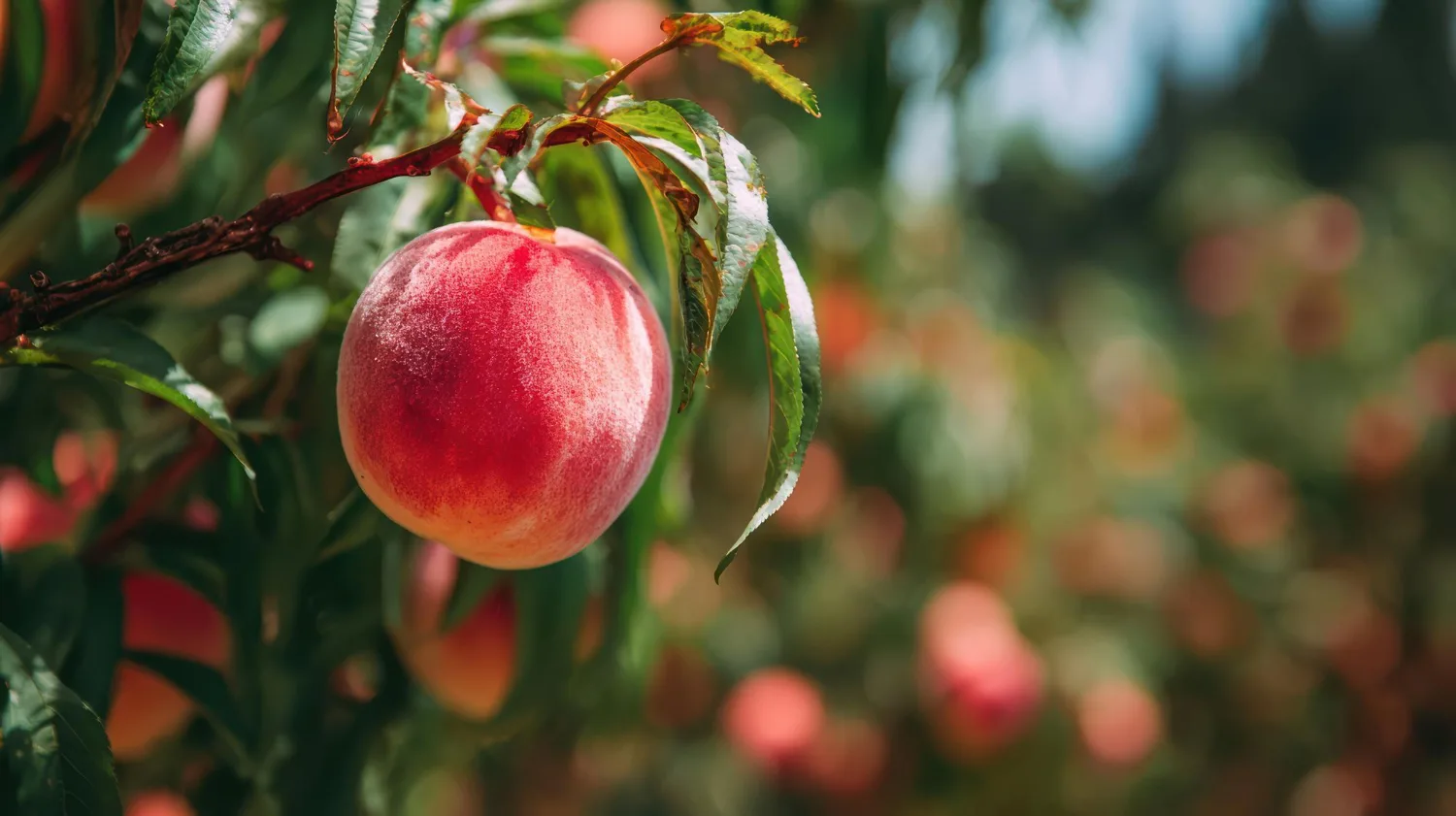
Peach is one of those fruit trees that gives a quick sense of reward. It grows vigorously, begins producing relatively early, and a peach ripened on the tree is difficult to compare with fruit picked green for transport.
But it has its conditions. It needs plenty of sun, regular pruning and particular attention to peach leaf curl at the very beginning of the season. When those three things are under control, growing peaches becomes much more predictable.
Compared with some longer-lived fruit trees, peach has a relatively intensive life cycle. It grows quickly, fruits on young wood and cannot simply be left unpruned for years.
That is also one of its advantages. The tree shows its response to care quite clearly, and its direction can often be corrected relatively quickly.
What Makes Peach Trees Different
Peach trees produce most of their fruit on one-year-old shoots. In other words, much of the wood that grows during one season carries the following year's crop.
If the canopy is not renewed regularly, fruiting gradually moves outward toward the edge of the tree. The interior becomes shaded, older sections lose vigor and harvesting becomes increasingly awkward.
Peach trees also respond strongly to carrying too much fruit. If every fruitlet is left in place, the result is often a large number of small peaches, while heavily loaded branches may bend or break.
- they begin bearing relatively early;
- they produce vigorous new growth;
- most fruit is carried on one-year-old wood;
- the canopy needs regular renewal;
- trees can become overloaded with too much fruit;
- peach leaf curl is one of the most characteristic early-season problems.
If the canopy is allowed to become dense, productive wood gradually moves outward, light levels fall and fruit quality suffers.
Site, Soil and Planting
Peach trees love sun. For good flavor, fruit color and proper ripening of new shoots, choose an open position with at least 6-8 hours of direct sunlight.
Good air movement is also useful, although I would avoid a site exposed to constant strong winds. Low parts of the garden where cold air collects are more vulnerable to blossom damage during late frost.
The soil should drain well. Peach trees can tolerate a range of soil conditions, but prolonged waterlogging around the roots is one of the quickest ways to weaken the tree.
When planting, make the hole wide enough for the roots to spread naturally. Do not place fresh manure or concentrated fertilizer directly beside the roots.
- spread the roots without bending them;
- keep the graft union above the final soil level;
- water thoroughly after planting;
- mulch, but keep mulch away from direct contact with the trunk;
- provide support if the young tree or location requires it.
You can find the basic planting principles in our guide to when and how to plant fruit trees.
Watering, Feeding and Thinning the Fruit
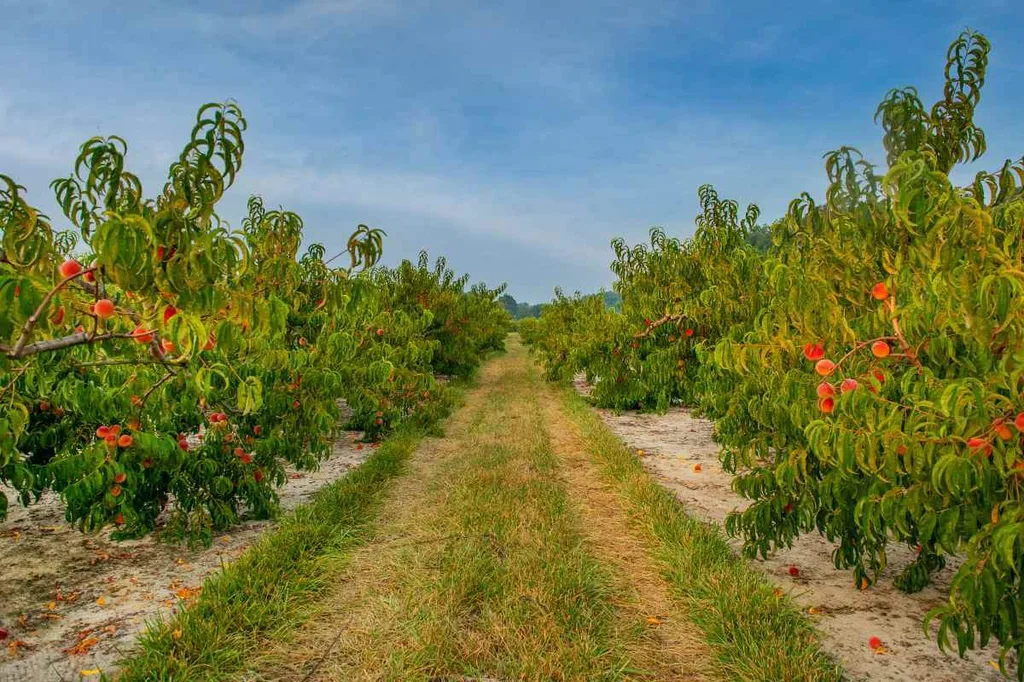
During the first few years after planting, peach trees have a relatively limited root system and should not be allowed to remain dry for long periods.
Water deeply according to the condition of the soil rather than giving small amounts every day. Heavy soil needs longer intervals, while sandy soil and hot weather can dry the root zone much more quickly.
Constantly wet soil is not the answer either. Roots need air as well as water.
Be particularly careful with nitrogen fertilizer. Excess nitrogen produces vigorous new growth and a denser canopy, but it does not automatically mean more or better fruit.
Peach trees very often set more fruit than it makes sense to leave on the tree.
When too many peaches are crowded together, they remain smaller and place unnecessary weight on the branches. Moderate thinning allows the remaining fruit to develop better and reduces the risk of branch breakage.
The exact number of fruit to leave depends on tree vigor, variety and the individual branch. There is no need to measure every peach with a ruler. The simple goal is to avoid large clusters where developing fruit is pressing against other fruit.
This post contains affiliate links. As an Amazon Associate, I earn from qualifying purchases at no extra cost to you.
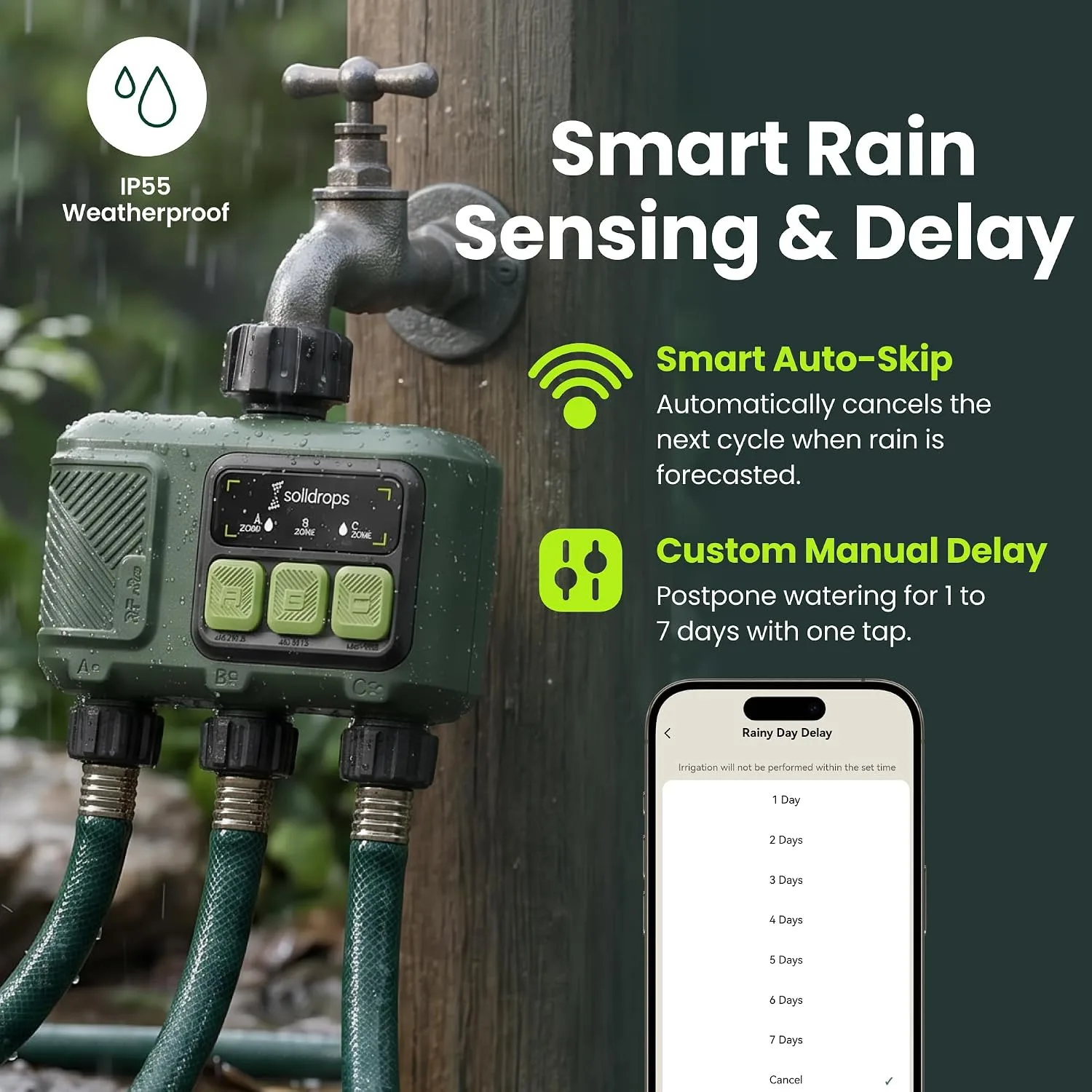
Peach trees dislike both prolonged drought and constantly wet soil, which makes irrigation timing more important than simply watering as often as possible.
A smart irrigation controller can help manage scheduled watering and reduce unnecessary irrigation when rain is expected. It is particularly useful where fruit trees are already connected to an automatic garden watering system.
Pruning Is Routine Maintenance, Not an Emergency Measure
Pruning matters more with peaches than with many other fruit trees because of their habit of fruiting on one-year-old wood.
The aim is to maintain enough healthy new shoots each year for the following crop without allowing the canopy to become a dense mass of branches.
Peach trees are often trained with a relatively open center so that light reaches the interior of the canopy. But the exact training system matters less than understanding why a particular branch is being kept or removed.
- remove dead and diseased wood;
- remove branches that cross and rub against each other;
- do not allow the center to become excessively crowded;
- retain enough healthy one-year-old growth for fruiting;
- do not wait several years and then attempt one drastic pruning session.
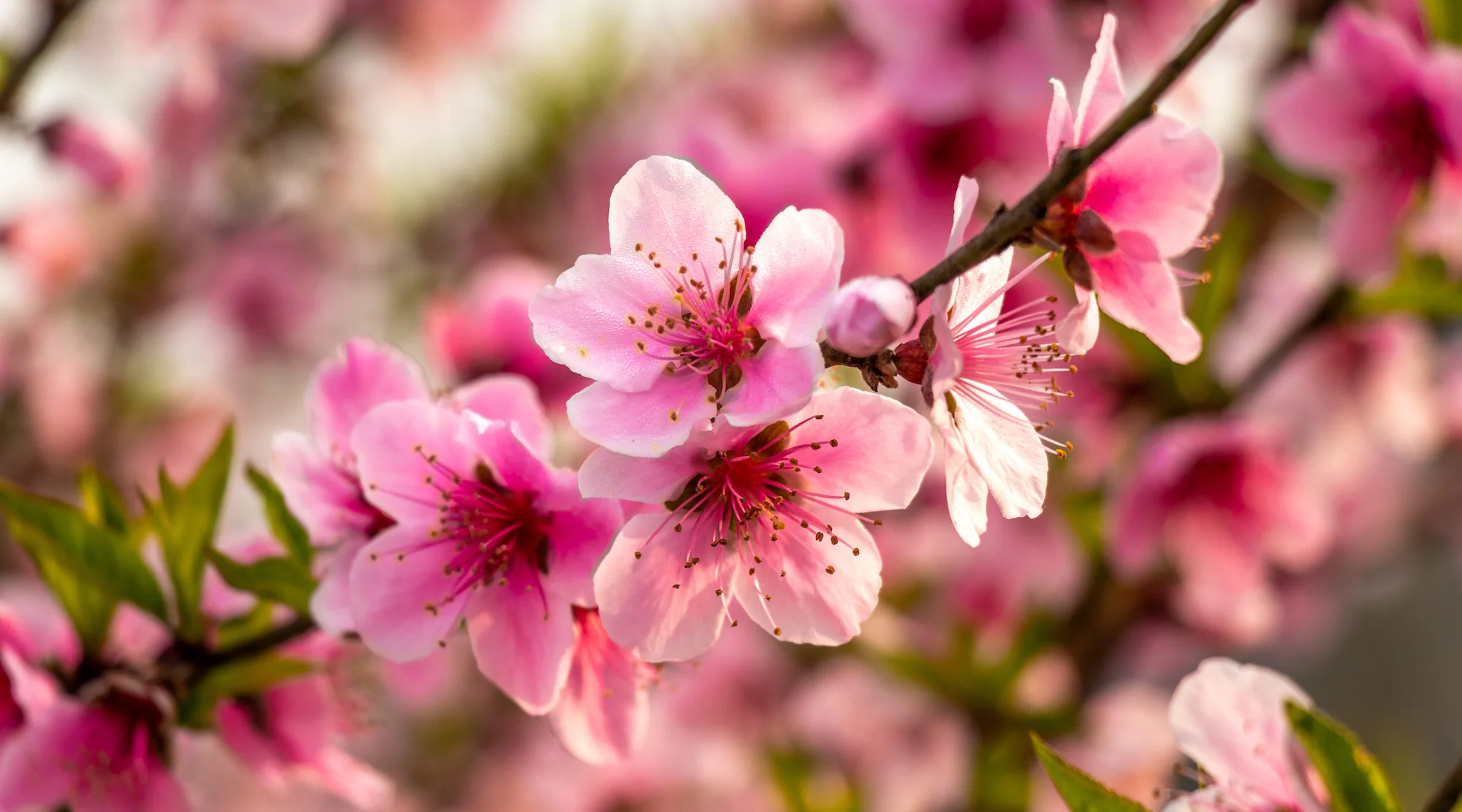
Once the tree is in leaf, the result of winter or early-spring pruning becomes much easier to judge. If the interior of the canopy is again dark and tangled, there is something to improve during the following season.
For the basic principles, see our guide to fruit tree pruning for beginners.
Most annual peach pruning involves relatively young shoots rather than very thick old branches. For that kind of work, a comfortable pair of sharp bypass pruners is usually more useful than a heavy cutting tool.
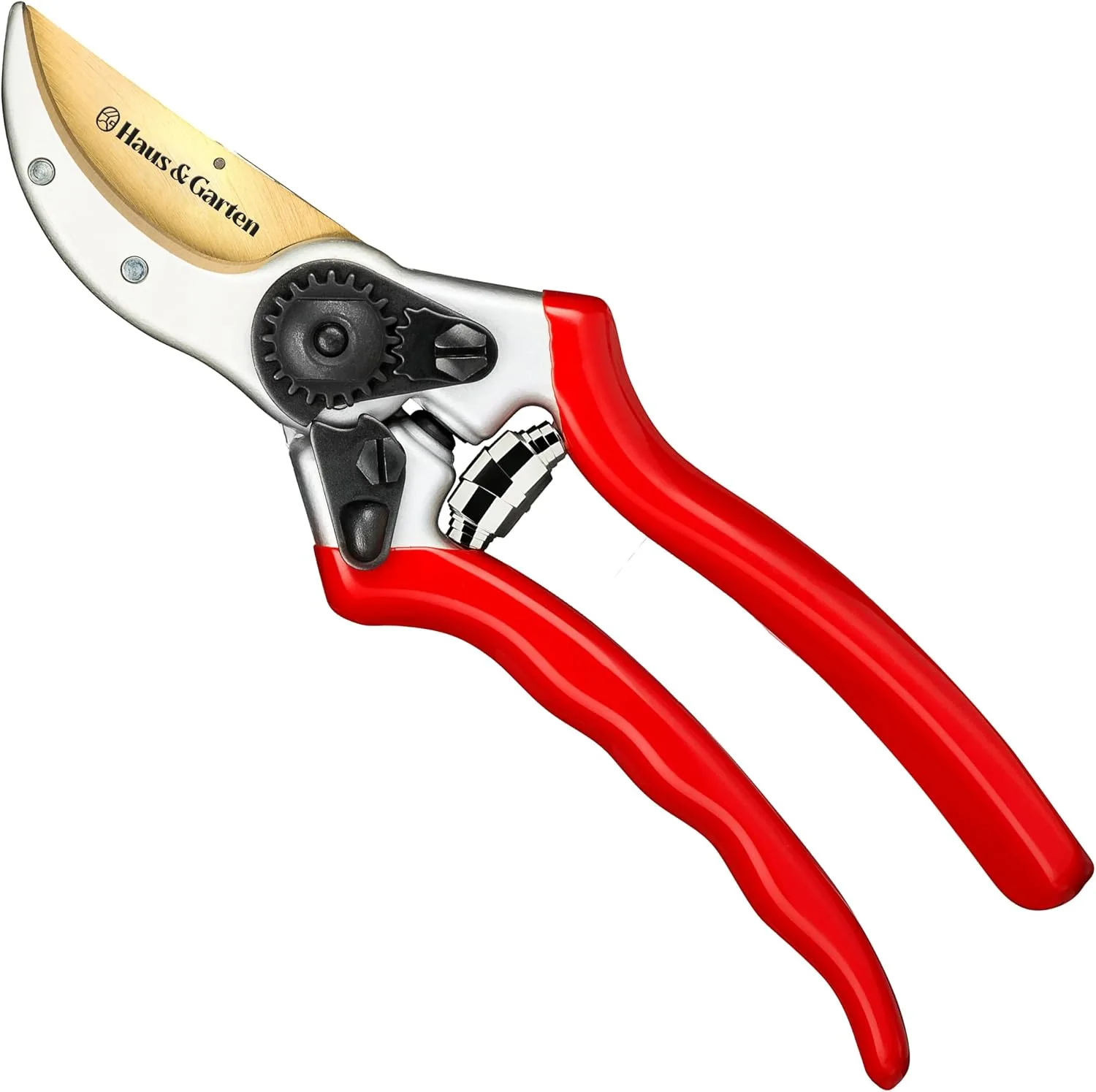
Because peaches fruit mainly on one-year-old wood, annual pruning involves plenty of smaller shoots and young branches.
Bypass pruning shears are well suited to these cleaner, more controlled cuts. Sharp blades also make it easier to avoid crushing young wood while shaping and renewing the canopy.
Peach Leaf Curl - The Problem Is Managed Before You See It
Peach leaf curl is caused by the fungus Taphrina deformans. It is one of the most recognizable diseases of peaches and nectarines.
Young leaves become thickened and distorted and may develop red, pink or yellow coloring. During severe infections, a large proportion of the leaves can drop and the tree has to use additional energy to produce a replacement canopy.
The important point is that prevention happens before the symptoms appear. Once infected leaves have already developed and become distorted, treatment cannot return those leaves to normal.
Risk is connected with the beginning of growth and cool, wet conditions favorable for infection. Treatment timing should therefore follow tree development, local weather and the directions for the specific product approved where you garden.
If symptoms are already visible, the main goal is to keep the tree in good overall condition and avoid additional stress from drought, excessive crop load or unnecessarily aggressive pruning.
Collecting a few fallen affected leaves by itself will not solve the problem, because the disease is not controlled simply by removing the visible symptoms after infection has already occurred.
For the broader seasonal approach, see our fruit tree protection calendar.
Other Peach Problems Worth Watching
Leaf curl is the best-known peach problem, but it is certainly not the only one.
| Problem | What it may look like | What to watch for |
|---|---|---|
| Peach leaf curl | Thickened, curled and discolored young leaves. | Early spring, cool wet weather and the stage of bud development. |
| Brown rot / blossom blight | Brown, dying flowers and shoots; later, fruit may rot. | Wet weather around flowering and damaged fruit. |
| Powdery mildew | Whitish coating on leaves, shoots or young fruit. | Young growing tissue and repeated symptoms during the season. |
| Shot hole disease | Leaf spots whose centers may fall out, leaving small holes. | Leaves, shoots and fruit on susceptible trees. |
| Aphids and other pests | Curled leaves, sticky residue and weakening of young shoots. | Soft growing tips and the undersides of leaves. |
I would not treat every peach tree according to exactly the same program simply because a disease or pest is common on peaches. Watching the tree and the conditions in a particular season is more useful than mechanically repeating an old schedule.
How to Keep a Peach Tree Productive
A peach tree is not something we plant and then completely forget, but neither does it require constant attention. It simply has a few jobs that should not be skipped.
- plenty of sunlight and well-drained soil;
- water when needed, especially while the tree is young and during fruit development;
- sensible annual pruning;
- fruit thinning when the crop is excessive;
- timely monitoring for leaf curl and other diseases;
- removal of dead, diseased and damaged wood.
The biggest mistake is leaving everything until a problem is already obvious: the canopy is crowded, a branch is overloaded, the leaves are distorted or fruit has begun to rot.
With peaches, small actions taken at the right time are much easier than large rescue operations later.