
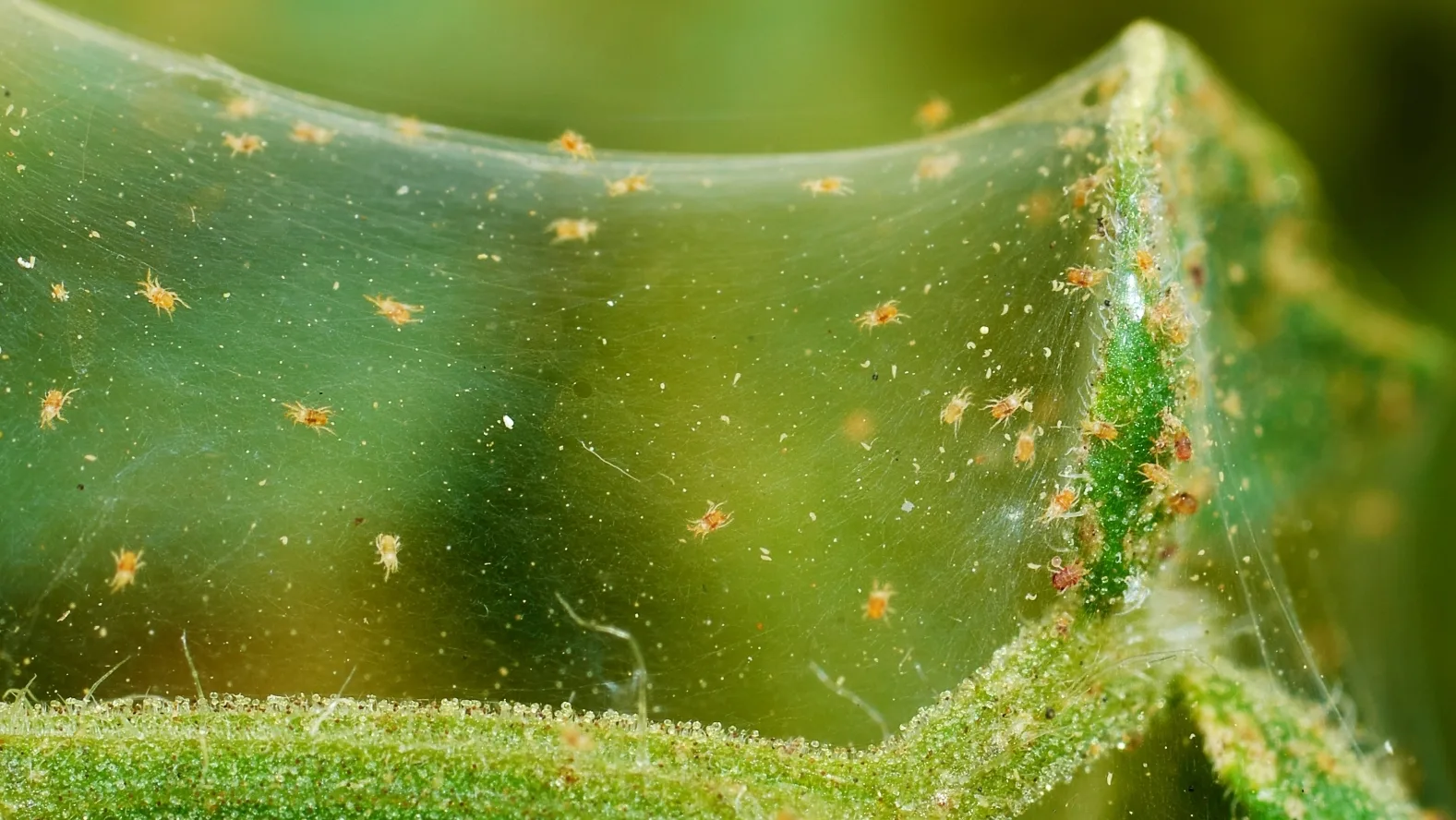
Spider mites are among the smallest pests in the garden, but the damage they cause can develop surprisingly quickly.
They are particularly troublesome during hot, dry weather, when their populations can increase rapidly and plants may already be stressed by heat and lack of moisture.
Early detection makes a major difference. Once leaves are heavily bronzed, dry and covered with webbing, protecting the remaining healthy growth becomes much more difficult.
Spider mites are easy to miss because the first sign is often not the mite itself, but a leaf that has suddenly lost its healthy color.
What Are Spider Mites?
Spider mites are tiny arachnids, which means they are more closely related to spiders and ticks than to insects.
They feed by piercing plant cells and removing their contents. The first visible result is often a pattern of tiny pale spots, sometimes described as stippling.
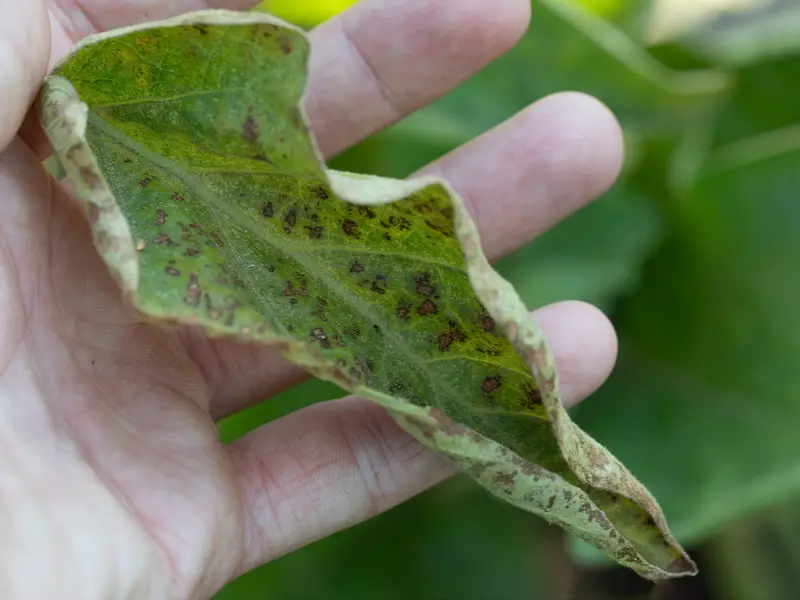
As feeding continues, leaves may become yellow, dull, grayish or bronze. Eventually they may dry out and fall.
Why Spider Mites Become a Problem in Hot Weather
Hot, dry conditions are strongly associated with severe spider mite problems in many gardens.
Under favorable conditions, mites reproduce quickly. At the same time, plants may already be losing water rapidly and struggling with heat stress.
Dusty foliage, dry soil, inconsistent watering and very sheltered locations can make the situation more difficult.
A plant attacked by spider mites may also be suffering from drought or excessive heat. Improving the growing conditions therefore remains important even when direct mite control is also required.
How Spider Mite Damage Looks
The earliest symptoms are often subtle. Tiny pale dots may appear across the leaf surface before any webbing is visible.
As the infestation increases, leaves may lose their normal shine and become dull, yellowish or bronze.
| Symptom | What it may indicate |
|---|---|
| Tiny pale dots | Early feeding damage to individual leaf cells. |
| Dull or bronze foliage | More extensive feeding and increasing plant stress. |
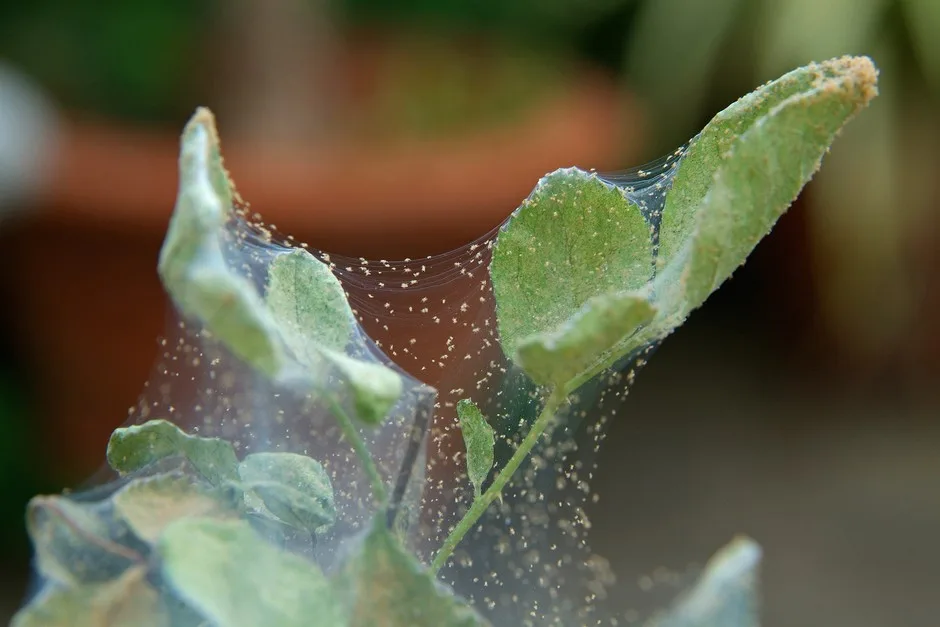
| Fine webbing | A well-established active mite population. |
| Drying leaves | Advanced damage and loss of healthy leaf function. |
| Weak or stunted growth | A plant under significant and prolonged stress. |
Which Plants Are Commonly Affected?
Spider mites can feed on a wide range of garden and indoor plants.
Problems are often most obvious on plants growing in hot, dry or protected locations.
| Plant group | Common examples | Where to look |
|---|---|---|
| Vegetables | Cucumbers, tomatoes, peppers, beans and zucchini. | Check older foliage and especially the undersides of leaves. |
| Fruit crops | Strawberries, some fruit trees and other susceptible crops. | Look for stippling, dull color and early bronzing. |
| Ornamental plants | Roses, hibiscus, citrus and many ornamental species. | Inspect leaves in hot, sheltered parts of the garden. |
| Indoor and greenhouse plants | Many houseplants and protected crops. | Check plants growing in warm, dry indoor air. |
How to Check for Spider Mites
Waiting for webbing is one of the easiest ways to discover the problem too late.
Instead, inspect the underside of leaves as soon as you notice unexplained stippling or bronzing.
A hand lens makes identification easier. Another simple method is to hold a sheet of white paper beneath the leaf and tap the foliage gently.
Tiny moving dots on the paper can indicate an active mite population.
Spider mites are often concentrated on the undersides of foliage, where they are less obvious during a quick inspection from above.
What to Do at the First Signs
Early infestations can sometimes be reduced substantially before a specialized treatment is needed.
A firm spray of water can physically remove many mites from sturdy plants, especially when directed toward the undersides of leaves.
At the same time, correct drought stress, reduce excessive heat where practical and rinse dusty foliage.
When Treatment May Be Needed
If the population continues to grow despite washing, better watering and improved plant conditions, a labeled treatment may be necessary.
Spider mites are not insects, so a general-purpose insecticide should not automatically be assumed to control them.
Choose only a product labeled for mites on the specific plant you are treating.
| Approach | How it is used | Important point |
|---|---|---|
| Water spray | Physically removes part of the population and washes dusty foliage. | Most useful at an early stage and on sturdy plants. |
| Horticultural oils or soaps | Some labeled products work mainly through direct contact. | Thorough coverage of leaf undersides is important. |
| Miticides | Products specifically labeled for mite control. | The product must also be labeled for the plant being treated. |
| Predatory mites | Biological control can be useful in some protected environments. | Usually works best when introduced early. |
Contact treatments cannot work well if most of the mites remain untouched on the undersides of leaves. Follow the product label for coverage, application interval and repeat treatments.
Be Careful With Heat-Stressed Plants
Spider mite outbreaks often happen at exactly the time when plants are already under severe heat stress.
This matters when using oils, soaps or other treatments. Applying a product under unsuitable conditions may damage foliage.
Always check the current label for temperature restrictions, plant sensitivity, application timing and any other precautions.
A stressed plant needs mite control, but it also needs relief from the conditions that helped the outbreak become severe.
Why One Treatment May Not Be Enough
Spider mites can reproduce rapidly under favorable conditions.
For that reason, controlling an established population may require repeated inspection rather than assuming the problem is solved after one application.
If a product requires repeat treatment, follow exactly the timing stated on the label.
Continue checking new leaves and leaf undersides after treatment, because protecting healthy new growth is the main goal.
Practical Decisions in Different Situations
| Situation | First response | When more control may be needed |
|---|---|---|
| A few pale dots | Check leaf undersides, use the white-paper test and wash foliage. | If active mites remain present and damage increases. |
| Fine webbing appears | Wash the plant thoroughly, remove badly damaged foliage where practical and reduce plant stress. | A labeled mite treatment may be necessary for the specific plant. |
| Repeated summer outbreaks | Improve watering consistency, reduce dust and monitor plants earlier during hot periods. | A more targeted control program may be needed if populations repeatedly increase. |
| Indoor or greenhouse plants | Isolate affected plants when practical and inspect neighboring plants. | Biological control or a labeled indoor treatment may be appropriate. |
| Severely damaged plant | Correct heat and watering stress and avoid excessive pruning. | Treatment may protect remaining healthy growth, but damaged leaves will not recover. |
Prevention During Hot Weather
Spider mites are easiest to manage before a large population becomes established.
During hot, dry periods, susceptible plants benefit from closer observation.
Common Spider Mite Mistakes
Spider mites are tiny pests that can cause serious damage during hot, dry weather.
The earliest signs are usually pale stippling, dull foliage and bronzing, not heavy webbing. Check the undersides of leaves as soon as these symptoms appear.
Begin by reducing plant stress, washing foliage and improving watering consistency. If treatment becomes necessary, choose a product specifically labeled for mites on the plant being treated and follow all label directions.