When we think about a successful garden, we usually think first about plants, flowers and harvests. But everything begins below the surface.
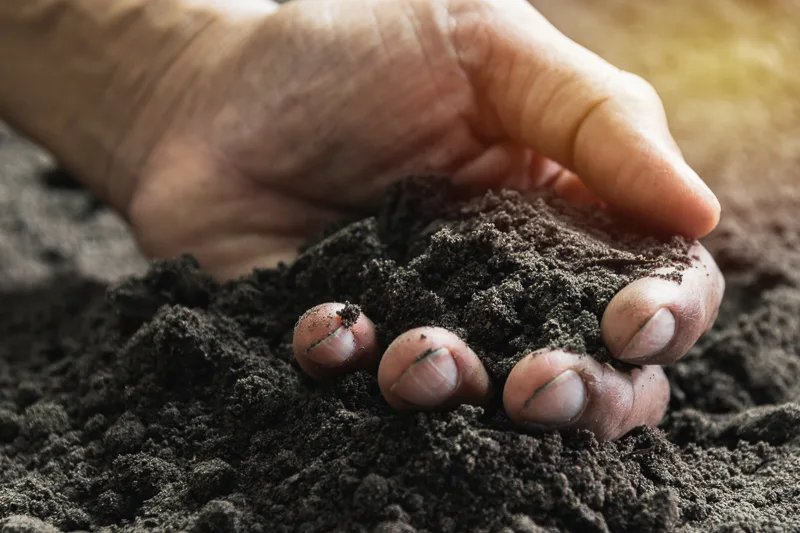
Soil is the foundation on which the health of every plant is built.
Many problems we notice on leaves and fruit actually begin there: poor structure, too much water, lack of organic matter or nutrients that the plant cannot properly absorb.
Fertilizing is often misunderstood too. More fertilizer does not automatically mean more growth or a better harvest.
Different plants have different needs, and their ability to use nutrients depends directly on the condition of the soil.
Fertilizing correctly does not mean using more fertilizer. It means giving plants what they need when they actually need it.
Soil Is a Living System
In everyday language, we often call soil simply “dirt,” but soil is a complex system made up of minerals, water, air, organic matter and an enormous community of microorganisms.
Roots do not take up food directly from fertilizer. They absorb dissolved nutrients through processes that take place within the soil itself.
That is why even a high-quality fertilizer will not produce good results if the soil is compacted, constantly waterlogged or poor in organic matter.
- Hold enough moisture without becoming waterlogged.
- Provide air around the root system.
- Contain organic matter.
- Support active soil life.
- Make nutrients available to plants.
- Maintain a stable, healthy structure over time.
If a plant looks unhealthy, do not automatically assume that it needs fertilizer. The problem may be water, compacted soil, unsuitable pH, damaged roots or insufficient light.
How Plants Take Up Nutrients
The presence of nutrients in the soil does not necessarily mean that a plant can use them.
Nutrient availability is influenced by soil structure, moisture, temperature, pH and the condition of the root system.
| Factor | Why it matters |
|---|---|
| Soil structure | Provides air, water and space for root development. |
| Organic matter | Improves structure and supports soil life. |
| pH | Strongly influences how available nutrients are to plants. |
| Moisture | Without enough water, nutrient uptake becomes more difficult. |
| Microorganisms | Help break down organic matter and release nutrients. |
| Fertilizer | Adds nutrients when the soil and plants actually need them. |
Organic and Mineral Fertilizers
Organic and mineral fertilizers are often presented as opposites. In reality, they serve different purposes.
Compost, well-rotted manure, worm castings and other organic materials work gradually. They improve structure, moisture retention and biological activity in the soil.
Mineral fertilizers contain nutrients in a more concentrated and usually more readily available form.
Biofertilizers and biostimulants containing microorganisms, humic substances or plant extracts can also be useful, but they do not replace good soil or balanced plant nutrition.
NPK and Micronutrients
NPK are the three letters most commonly seen on fertilizer labels. They stand for nitrogen, phosphorus and potassium - three major nutrients plants need in relatively large amounts.
| Nutrient | Main role | Especially important |
|---|---|---|
| N - Nitrogen | Supports leafy growth and the development of green plant tissue. | During active vegetative growth. |
| P - Phosphorus | Plays a role in root development and many essential plant processes. | During establishment and early development. |
| K - Potassium | Helps regulate water balance, plant resilience and fruit quality. | Especially important during flowering and fruiting. |
Plants, however, do not live on NPK alone. They also need magnesium, iron, boron, zinc and other nutrients in much smaller quantities.
NPK is not a magic formula. It is a tool that only makes sense when we understand what is happening in the soil.
Organic Matter and Soil pH
If there is one thing that improves garden soil in almost every situation, it is the regular addition of well-decomposed organic matter.
Compost, well-rotted manure, leaf mold and organic mulch work gradually, but they improve structure, moisture retention and conditions for soil organisms.
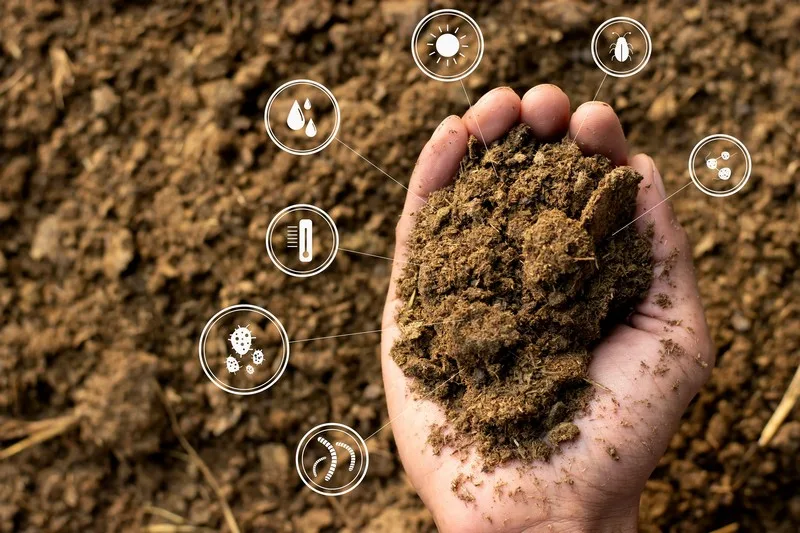
Soil pH has another important role: it affects which nutrients remain available to plant roots.
That is why soil can sometimes contain a particular nutrient while a plant still shows signs of deficiency.
Blueberries, azaleas and rhododendrons, for example, prefer more acidic conditions, while many vegetable crops perform well in slightly acidic to near-neutral soil.
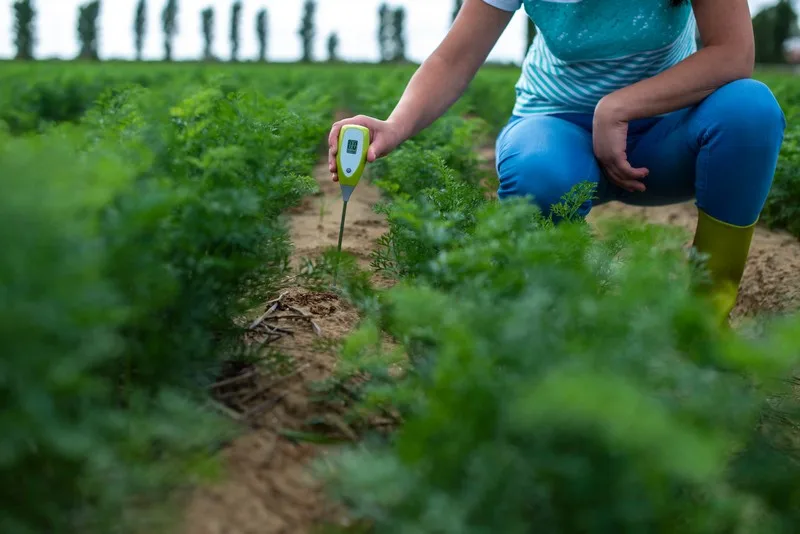
With persistent symptoms or when starting a new garden, soil testing can prevent a great deal of unnecessary fertilizing and random correction.
When and How Much to Fertilize
Plant nutrient needs change throughout the growing season. What encourages useful growth in spring may be completely inappropriate in late summer.
- Beginning of the season: plants start active growth.
- Active growth: nutrient demand usually increases.
- Flowering: balance between leafy growth and reproductive growth becomes important.
- Fruiting: potassium and consistent nutrition become more important.
- Late summer and fall: excessive nitrogen may encourage soft growth at the wrong time.
One of the most common mistakes is assuming that if a little fertilizer is useful, more must be even better.
Overfertilizing can lead to salt buildup, damaged roots, excessive leafy growth and reduced flowering or fruiting.
- Do not apply a strong fertilizer solution to severely dry plants.
- Do not place fresh manure directly around roots.
- Do not mix multiple products without a clear reason.
- Do not use fertilizer to compensate for poor light or incorrect watering.
- Avoid excessive nitrogen late in the season.
Homemade Liquid Feeds and Biostimulants
Homemade extracts made from nettles, horsetail and other plants are popular in home gardening.
They can be useful additions, but they should be treated as exactly that - supplements rather than replacements for good soil, compost and proper watering.
Nettle feed, for example, is usually used during periods of active vegetative growth. It is not a universal product for every crop and every stage of the season.
A natural liquid feed is still a fertilizer. Dilution and moderation remain important.
Fertilizing Different Groups of Plants
The most practical approach is to think not only about fertilizer products, but also about groups of plants.
Vegetables, fruit trees, roses, lawns and container plants have different growth rhythms and different nutritional needs.
| Plant group | Main guideline | Watch out for |
|---|---|---|
| Vegetables | Fertile soil, compost and feeding according to the stage of growth. | Too much nitrogen can produce lots of leaves and fewer fruits. |
| Fruit trees | Long-term soil fertility and moderate feeding according to actual need. | Avoid encouraging soft new growth late in the season. |
| Roses | Organic matter and a balance between vegetative growth and flowering. | Both deficiency and overfeeding can cause problems. |
| Lawns | Nitrogen supports growth, while balanced nutrition helps maintain resilience. | Excessive growth increases mowing and water requirements. |
| Container plants | Regular but more moderate feeding. | Fertilizer salts can build up more quickly in a limited volume of soil. |
My Approach to Soil and Fertilizing
If a plant looks unhealthy, I first ask a few basic questions: where is it planted, does it get enough light, what is the soil like, is there enough air around the roots, is it too wet, or has it gone too long without water?
Fertilizer comes after those questions, not before them.
In my garden, the best results come from a combination of compost, mulch, moderate feeding, observation and a little more patience.
It is not always perfect. Sometimes I am still tempted to “help” more than necessary. But plants are very good at showing us that they do not need panic. They need consistency.
A garden does not need to be fed out of fear. It needs to be understood.
Good soil is not created with one bag of fertilizer. It is built gradually with organic matter, good structure, sensible watering and thoughtful feeding.
The better we understand our soil, the less likely we are to respond to every problem with another random product.