
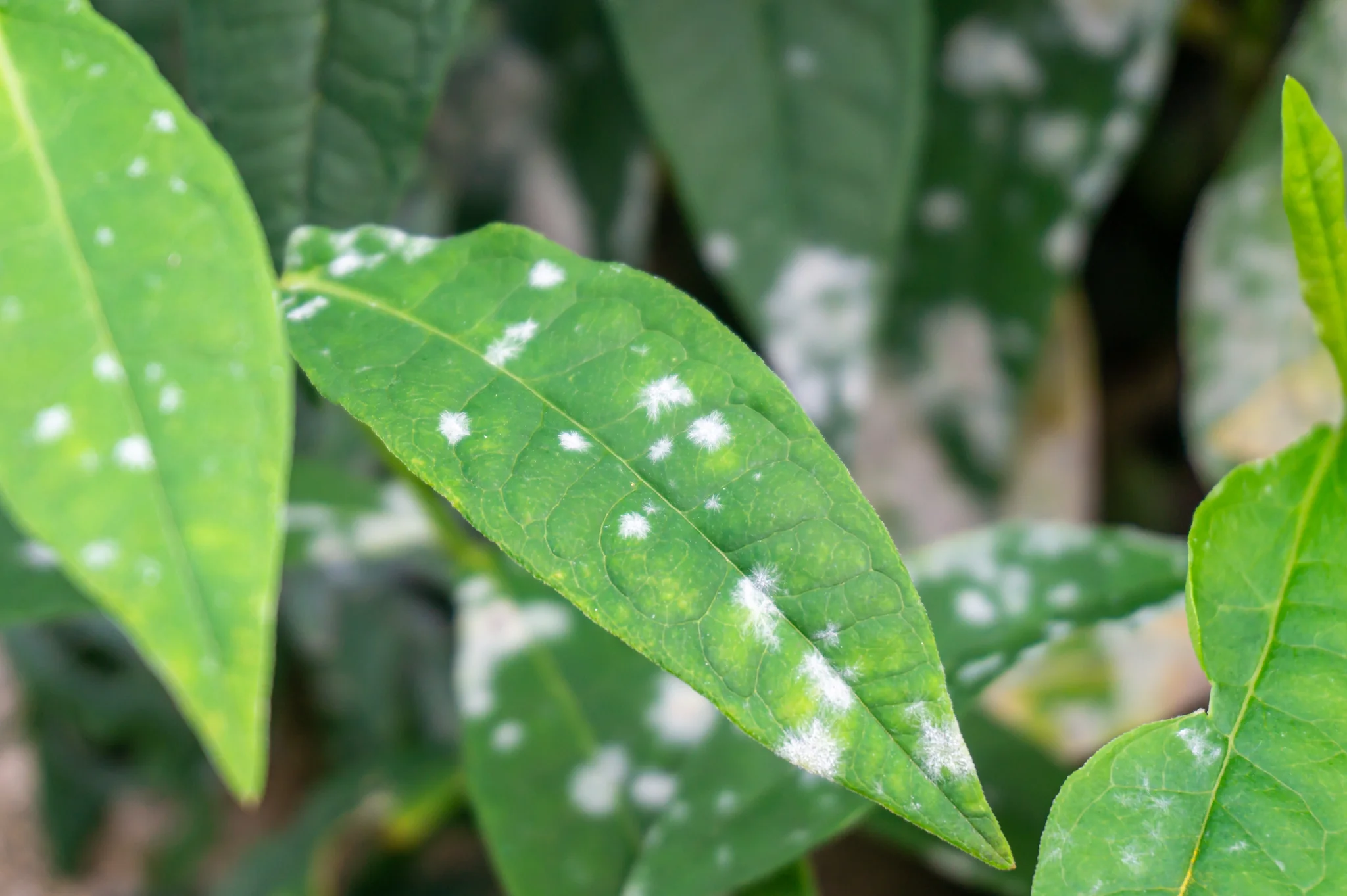
Powdery mildew is one of the most recognizable plant diseases in home gardens. It can affect vegetables, fruit crops, roses, vines and many ornamental plants.
The first sign is often a small white or pale gray patch that looks as though the leaf has been dusted with flour.
Powdery mildew is usually easier to manage when it is detected early. The best approach combines good growing conditions, regular observation and treatment only when it is genuinely needed.
Powdery mildew rarely begins as a severe problem. It usually begins with a few small white patches that are easy to overlook.
What Is Powdery Mildew?
Powdery mildew is the common name for a group of fungal diseases that produce a white or grayish, powder-like growth on plant surfaces.
Different powdery mildew fungi infect different host plants, so the disease seen on a cucumber is not necessarily caused by exactly the same fungus as the mildew on a rose or grapevine.
The fungal growth usually develops mainly on the surface of leaves, stems and other green tissues, while specialized structures draw nutrients from plant cells.
What Conditions Encourage Powdery Mildew?
Powdery mildew behaves differently from many diseases associated with wet foliage.
Free-standing water on the leaf surface is not generally required for powdery mildew infection. Many species are favored by moderate to warm temperatures, elevated humidity and poor air movement.
Dense foliage can create a sheltered microclimate where humidity remains higher and air movement is limited.
This is an important difference from many other foliar diseases. Improving airflow and avoiding dense, overly lush growth are often more relevant than simply trying to keep every leaf dry.
Which Plants Are Commonly Affected?
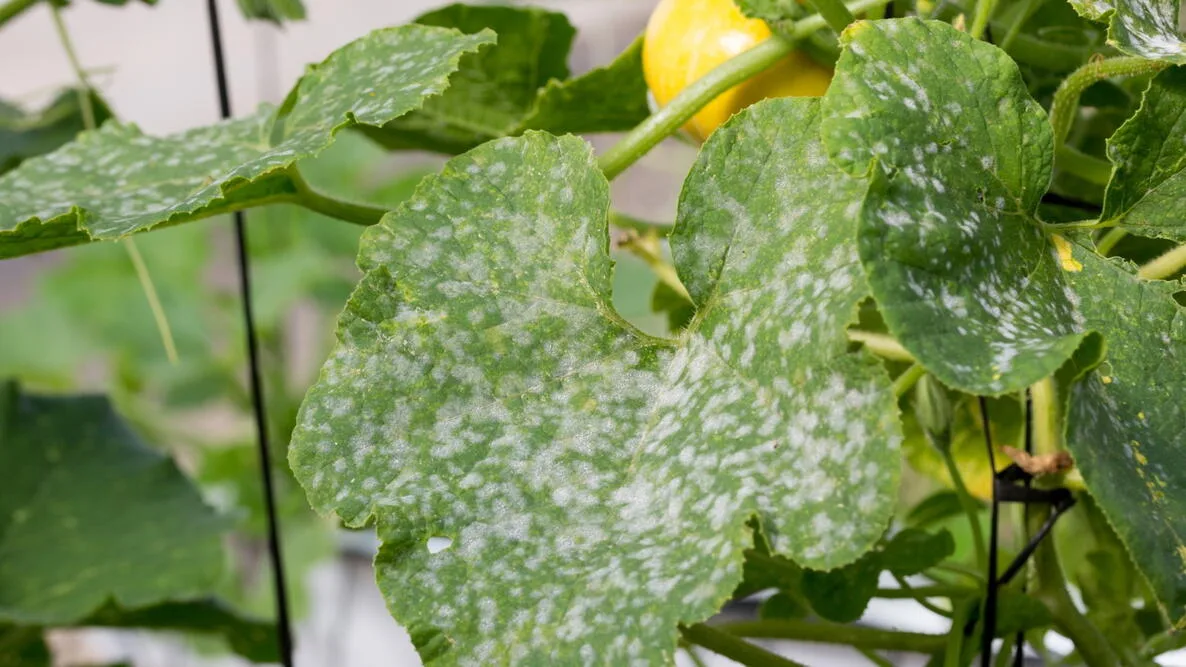
Powdery mildew occurs on a wide range of garden plants, although susceptibility differs greatly between species and varieties.
| Plant group | Common examples | Typical concern |
|---|---|---|
| Vegetables | Cucumbers, squash, zucchini, pumpkins and melons. | Dense foliage and susceptible cultivars can favor repeated infection. |
| Ornamentals | Roses, phlox, bee balm, dahlias and many shrubs. | Reduced ornamental quality and distorted young growth. |
| Fruit crops | Grapes, some berries and certain fruit trees. | Infection may affect leaves, shoots and sometimes fruit. |
How to Recognize Powdery Mildew Early
Early symptoms often appear as isolated white or pale gray patches.
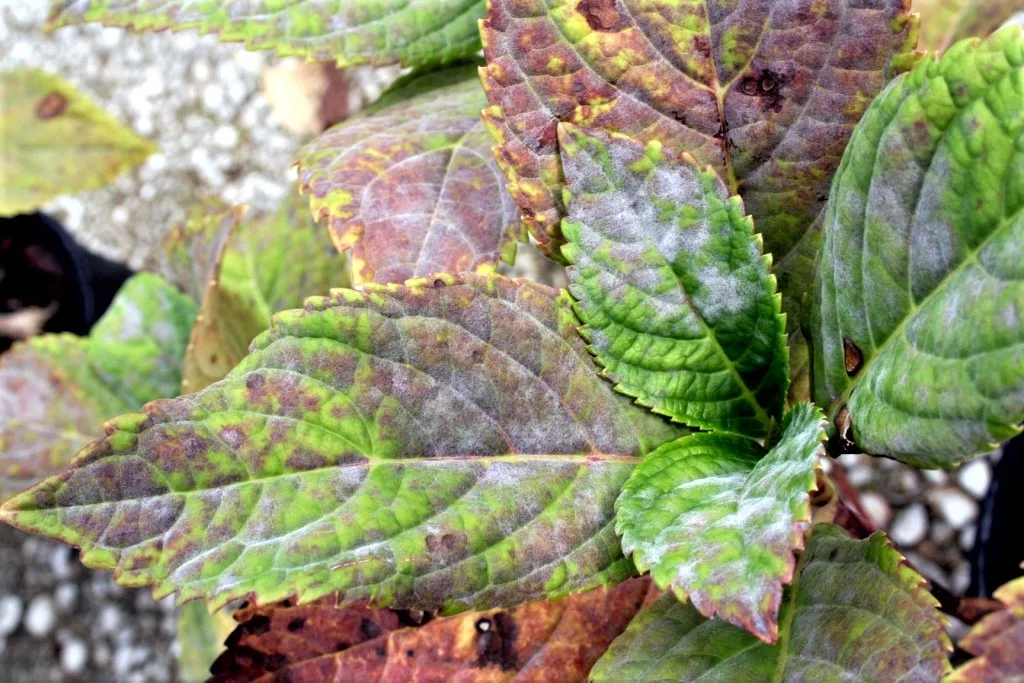
These patches gradually enlarge and may merge, eventually covering much of the leaf surface.
- small white or grayish spots;
- powdery fungal growth on leaves or stems;
- curling or distortion of young leaves;
- yellowing as infection becomes heavier;
- premature drying or leaf drop;
- reduced flowering or weaker crop development in severe cases.
Existing damaged tissue will not become healthy again. The goal of control is to slow new infection and protect healthy growth.
What to Do at the First Signs
The first response does not always need to be a spray.
Look at the whole plant and the surrounding conditions. If growth is extremely dense, careful thinning may improve airflow.
Heavily affected leaves can sometimes be removed, provided this does not strip the plant of too much foliage.
When Treatment May Be Necessary
If the disease continues to spread or repeatedly affects a valuable plant, a labeled treatment may be appropriate.
The important point is that no product category should be treated as universally suitable for every crop.
Always choose a product specifically labeled for the plant and for powdery mildew, and follow the current directions.
| Product type | General role | Important caution |
|---|---|---|
| Sulfur products | Some are labeled for prevention or early control of powdery mildew. | Heat, plant sensitivity and interactions with oils must be considered according to the label. |
| Potassium bicarbonate products | Some formulations are used to suppress early powdery mildew. | Use only when the specific product is labeled for the crop. |
| Horticultural oils | Some labeled oils may suppress powdery mildew on certain plants. | Oils can cause phytotoxicity under unsuitable conditions. |
| Biological fungicides | Some products contain microorganisms used to suppress disease. | Performance is often better when disease pressure is still low. |
| Conventional fungicides | May be appropriate for persistent or serious disease. | Crop, disease, timing, resistance management and harvest restrictions must match the label. |
Check the crop, target disease, application rate, repeat interval, pre-harvest interval, protective equipment and restrictions before using any product.
Practical Decisions in Different Situations
| Situation | First response | When treatment may help |
|---|---|---|
| A few small white patches | Inspect the plant, remove the worst leaves if practical and improve airflow. | When symptoms continue to expand on a susceptible plant. |
| Repeated yearly infection | Review spacing, pruning, fertilizing and cultivar susceptibility. | A labeled preventive program may be justified for high-risk plants. |
| Vegetables near harvest | Remove badly affected leaves without defoliating the plant and harvest healthy produce promptly. | Only with a product labeled for edible crops and with the required pre-harvest interval. |
| Roses and ornamentals | Improve airflow, remove heavily infected leaves and avoid excessive nitrogen. | When disease is continuing to spread or repeatedly damages new growth. |
| Heavy infection | Remove severely damaged tissue where practical and reduce additional plant stress. | Treatment may protect new healthy growth, but damaged leaves will not recover. |
Prevention That Makes the Biggest Difference
Powdery mildew is often much easier to prevent than to manage once most of the plant is covered.
The goal is not to create a completely sterile garden, but to reduce the conditions that repeatedly favor infection.
Common Mistakes With Powdery Mildew
Powdery mildew is common and often recognizable, but it is best managed before infection becomes severe.
Start with plant spacing, airflow, balanced feeding and regular observation. Remove heavily affected tissue only where practical and avoid creating additional stress.
If treatment is needed, use a product labeled for powdery mildew on the specific plant and follow all current label directions. The goal is to protect healthy new growth, not to make already damaged leaves green again.