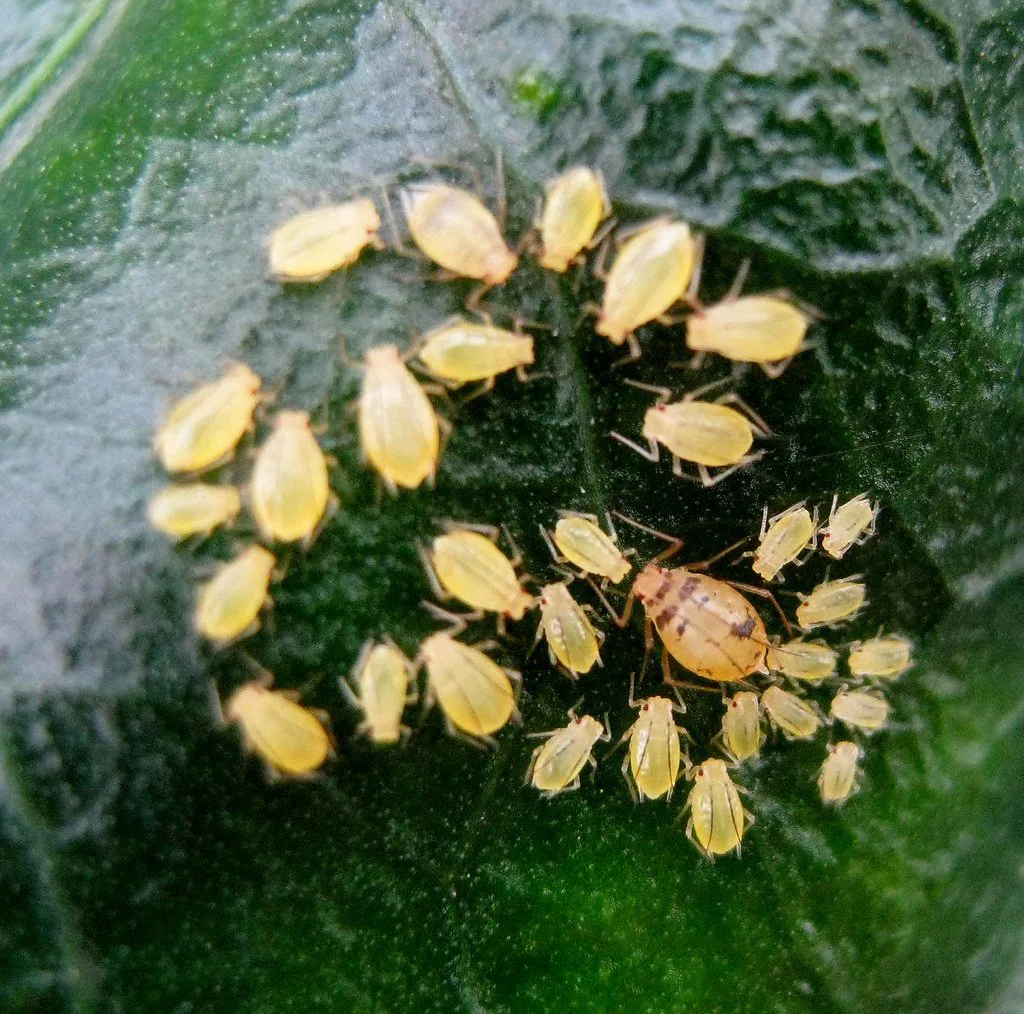
Aphids are among the most common pests in the home garden. They can quickly form colonies on vegetables, fruit trees, roses, ornamental plants and container-grown plants.
They usually feed on young, tender plant tissue by sucking sap. Heavy infestations can cause distortion, slow new growth and weaken developing shoots.
The best control is not necessarily the strongest spray. Early detection, judging the size of the infestation and preserving beneficial insects are often more important.
With aphids, the timing of your response is often more important than the strength of the product you use.
What Are Aphids?
Aphids are small, soft-bodied insects that feed on plant sap.
They often gather on shoot tips, buds, the undersides of leaves and other tender plant parts.
While feeding, many species excrete a sweet, sticky liquid called honeydew. It can coat leaves and stems and often attracts ants.
Sooty mold may then develop on the honeydew. These fungi do not directly parasitize the plant, but heavy growth can interfere with light reaching the leaf surface.
Why Aphids Can Multiply So Quickly
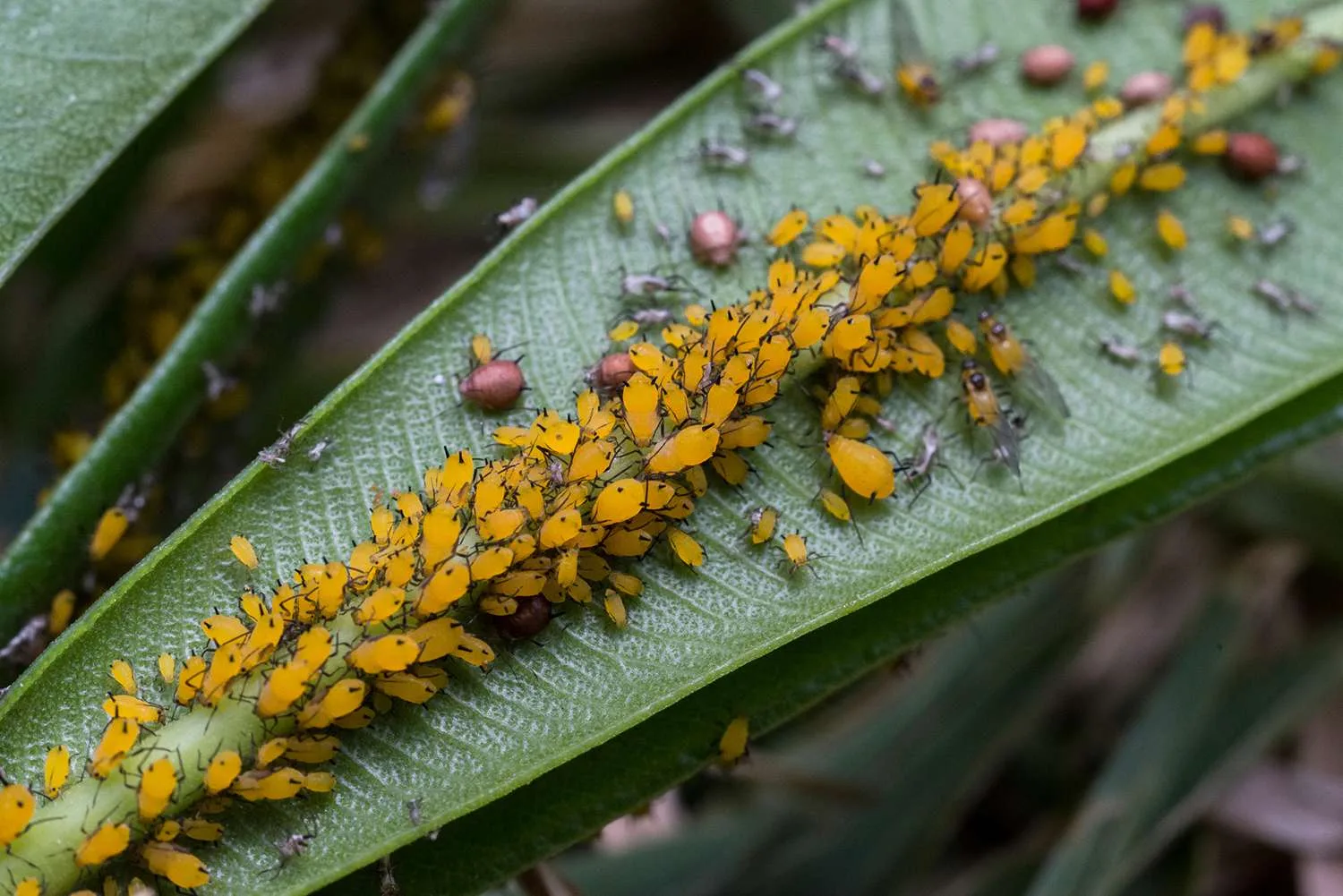
Under favorable conditions, aphid populations can increase very rapidly.
This is partly due to their unusual life cycles and the ability of many species to produce several generations in a relatively short period.
Very lush, soft new growth can be particularly attractive. For this reason, excessive nitrogen fertilization may sometimes contribute to heavier aphid pressure.
Nitrogen, however, is not the only reason aphids appear. They can also colonize healthy, well-grown plants whenever conditions favor their reproduction.
How to Recognize an Aphid Infestation Early
The best time to act is before the colony becomes large.
Inspect new shoot tips, buds and the undersides of leaves.
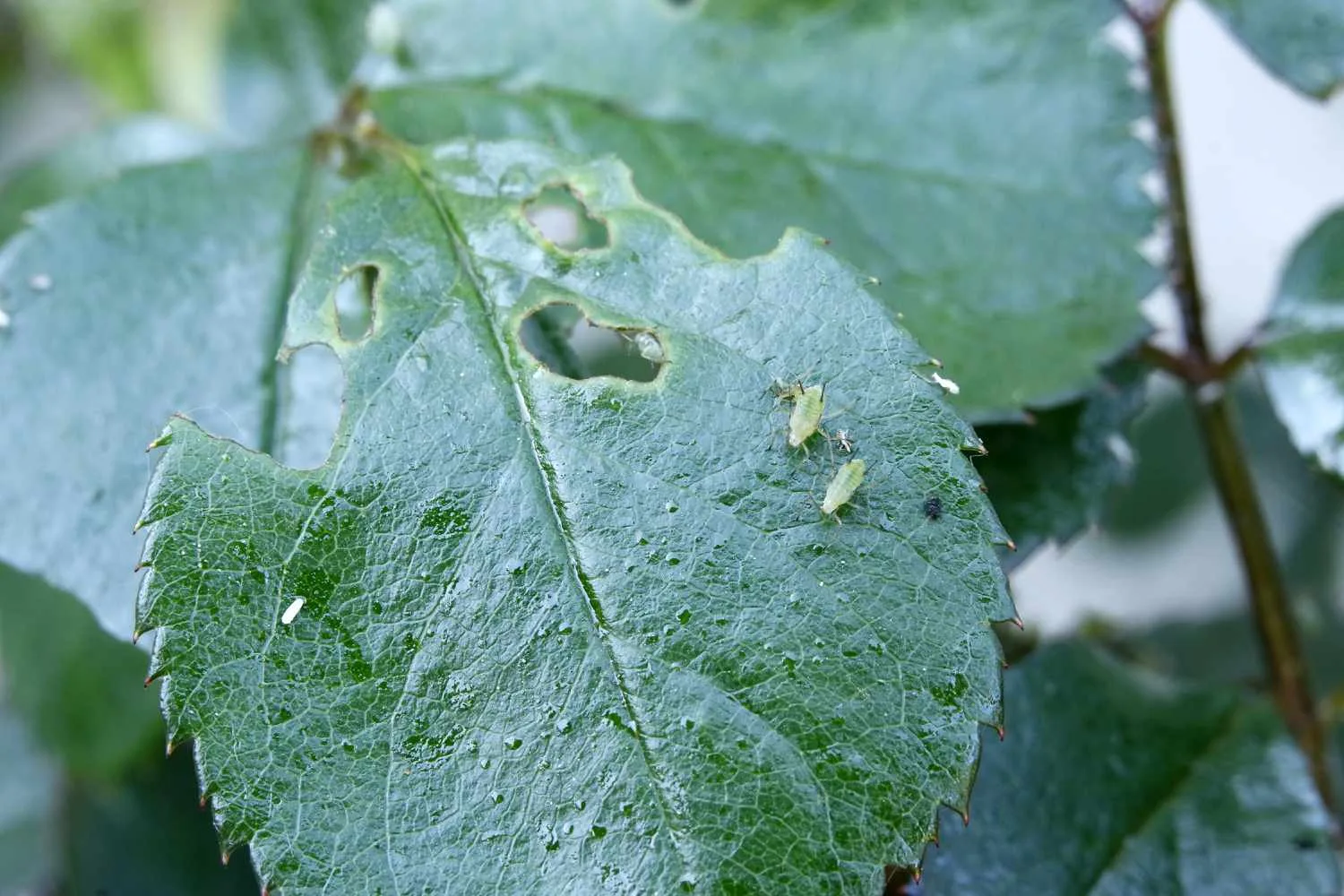
Early signs may include visible insects, slightly curled leaves, sticky surfaces or unusually heavy ant activity on stems.
- colonies on shoot tips and young leaves;
- curled or distorted new foliage;
- sticky honeydew;
- ants moving over the plant;
- sooty mold on sticky surfaces;
- weak or distorted new growth.
The First Response Does Not Always Need to Be an Insecticide
A small colony can often be reduced with mechanical and lower-impact measures.
On sturdy plants, a strong stream of water can knock off a substantial number of aphids.
Heavily infested tender shoot tips can sometimes be removed, provided this will not seriously affect the shape or development of the plant.
Why Ants Matter
Ants are often attracted to aphid honeydew.
In some situations, they protect aphids from natural enemies and can therefore help maintain the colony.
If a plant has both a large aphid colony and a steady stream of ants, reducing ant access may help natural predators do their job.
If leaves are covered with black growth, first look for the source of the honeydew. Washing off the sooty mold will not solve the problem if aphids are still feeding.
Natural Enemies Can Do Much of the Work
Aphids have many natural enemies.
Lady beetles, lacewing larvae, hoverfly larvae and parasitoid wasps can substantially reduce aphid populations.
If these beneficial organisms are already present, unnecessary use of a broad-spectrum insecticide can disrupt that natural control.
| Beneficial organism | How it helps |
|---|---|
| Lady beetles | Adults and especially larvae feed on aphids. |
| Lacewings | Their larvae are active predators of small, soft-bodied insects. |
| Hoverflies | Larvae of many species feed heavily on aphids. |
| Parasitoid wasps | They develop inside aphids and can help reduce populations. |
When Treatment May Be Necessary
If colonies continue to grow, new growth becomes distorted and natural enemies are not keeping the population down, treatment may be justified.
Use only a product currently labeled for aphids on the specific plant you are treating.
Do not choose a product simply because it says “insecticide.” The labeled pest, crop and application method must match the situation.
| Approach | When it may be useful | Important point |
|---|---|---|
| Insecticidal soap | For early, exposed colonies on some plants. | It works mainly by direct contact and must be labeled for the intended use. |
| Horticultural oils | Some labeled products can be used against aphids. | Temperature, plant sensitivity and label directions are important. |
| More selective insecticides | For heavier infestations when labeled for the specific crop. | Check restrictions for pollinators and beneficial insects. |
| Broad-spectrum insecticides | Only when the specific situation and label justify their use. | They may harm natural enemies and disrupt biological control. |
Aphids hidden inside tightly curled leaves can be difficult to reach. A contact treatment may therefore perform poorly if the spray does not actually touch the insects.
What to Check if Aphids Return
A new infestation does not necessarily mean that the previous treatment failed completely.
Winged aphids may arrive from nearby plants, and new generations can develop rapidly.
Check not only the colony itself, but also the conditions around the plant.
Practical Decisions in Different Situations
| Situation | First response | When a product may be needed |
|---|---|---|
| Small colony on a shoot tip | Wash it off, remove the heavily infested tip if appropriate, and check for predators. | If the colony continues to increase. |
| Curled leaves with hidden aphids | Inspect inside the curled foliage and remove the worst affected parts if practical. | A labeled product may be needed if it is appropriate for the crop and intended mode of action. |
| Heavy honeydew and ant activity | Reduce the aphid colony, wash sticky leaves where practical, and limit ant access. | If aphids continue multiplying. |
| Many beneficial predators present | Monitor for several days to see whether the colony begins to decline. | Avoid unnecessary broad-spectrum spraying. |
| Severe infestation with distorted new growth | Remove severely damaged growth where practical and review growing conditions. | Targeted treatment may be justified if the label permits it. |
Prevention and Early Monitoring
Aphids cannot realistically be excluded from a garden completely.
The practical goal is to detect them early enough to prevent significant damage.
Common Aphid Control Mistakes
Aphids are common, but they are usually manageable when discovered early.
Begin with monitoring, mechanical removal of small colonies and protection of natural enemies.
If treatment becomes necessary, use only a product labeled for aphids on the specific crop and follow the current label, including restrictions for pollinators, pre-harvest intervals and repeat applications.