Orchard: how to choose, plant and maintain fruit trees
Almost every homeowner imagines a clear picture – a small or larger orchard where the trees are loaded with fruit, the seasons change in the rhythm of flowering, and the harvest is a natural result of the right decisions made years earlier.
However, reality is different. A successful orchard does not start with planting the first tree, but with planning – choosing a location, selecting species, preparing the soil, choosing quality seedlings, and understanding how fruit crops develop in the long term.
Fruit trees are not a seasonal whim. They are a long-term commitment. You plant them today, but their real value is revealed years later – when the canopy forms, when the first blossom survives frost, when the first fruit ripens, and when you realize that a tree is not just a plant, but part of the garden.
“An orchard does not begin with a shovel. It begins with the thought of where, why and what tree we are planting.”
In this article we will look at all the essential steps for creating a sustainable and productive orchard in Bulgarian conditions – from choosing the site and seedlings to the first years of care, pruning, watering and plant protection.
Why it is worth creating an orchard
A home orchard is a long-term investment that can provide fruit for decades. Unlike annual crops, fruit trees build a stable structure that becomes more productive over time.
Beyond economic value, an orchard also provides control over fruit quality – varieties, cultivation methods, fertilization and plant protection. This is especially important in modern gardening, where more people seek cleaner, seasonal and traceable food.
There is also something else. Fruit trees make the garden feel more alive. In spring they bring blossoms, in summer shade and fruit, in autumn aroma and harvest, and in winter they remain as structure and promise for the next season.
Choosing a suitable location
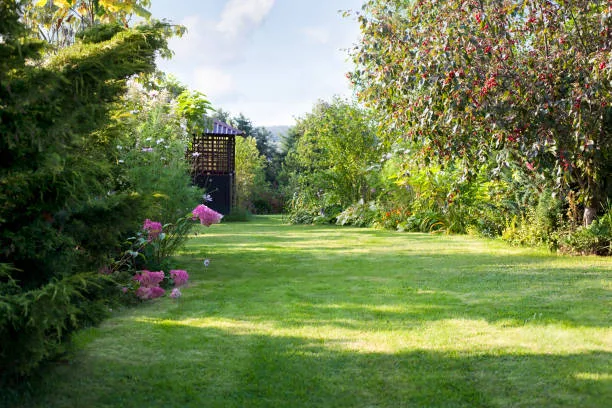
One of the most important steps in creating an orchard is selecting the right site. According to agronomic principles used in fruit-growing practice and education, fruit trees perform best in well-sunlit areas with good air drainage and no constant water retention.
This means avoiding low areas where cold air accumulates, as well as places with permanent shade. Sun exposure is essential for fruit bud formation, proper pollination and good fruit ripening.
Good air circulation is also important because it reduces the risk of fungal diseases – one of the most common problems in home orchards.
- Choose a site with at least 6–8 hours of sun per day.
- Avoid deep shade from buildings, large trees or high fences.
- Do not plant in low areas where cold air settles.
- Avoid waterlogged areas with poor drainage.
- Plan access for watering, pruning, spraying and harvesting.
Climate and soil conditions in Bulgaria
Bulgaria has diverse climate conditions, which allows the cultivation of many fruit tree species. However, this does not mean that every tree is suitable for every garden.
Stone fruit species such as apricot and peach are more sensitive to late spring frosts. Pome fruits such as apple and pear are generally more adaptable, but they have their own requirements regarding soil, moisture, and plant protection.
Most fruit species develop best in well-drained soils, rich in organic matter, with moderate moisture. Water retention around the root system is one of the serious risks – it can lead to weakened trees, root problems, and reduced productivity.
Generally speaking
- Apricot and peach prefer warm and well-ventilated locations but suffer from late frosts.
- Apple and pear are more suitable for temperate regions but require regular pruning and protection.
- Cherry needs more space and good air circulation.
- Plum is one of the most reliable fruit trees for many Bulgarian gardens.
- Fig is an excellent choice for warmer regions and protected locations.
How to choose a healthy sapling
A fruit orchard starts not only with choosing the species and variety, but with the quality of the sapling itself.
Many people choose a fruit tree based on a picture on the label or a memory of fruit they once tasted. This is completely natural. But with saplings, romance must go hand in hand with verification.
Quality planting material is the foundation for the future development of the tree. The Fruit Growing Institute – Plovdiv maintains a nursery where planting material from modern varieties and rootstocks is produced, suitable for both commercial orchards and home gardens.
- Roots should be fresh, not dry or brittle.
- The stem should be healthy, without wounds, cracks, or mechanical damage.
- The grafting point should be clearly visible and well healed.
- The sapling should have a label with the variety and, when possible, the rootstock.
- It is best to buy from a reliable nursery, not from an informal seller.
- Before purchase, check whether the variety requires a pollinator.
“When we buy a fruit tree, we are not just buying a sapling. We are buying a future crown, future care, and future harvest.”
Rootstock and variety: why they matter
In fruit trees, the variety is only one part of the choice. The rootstock is the other, often underestimated part.
The variety determines the fruit – taste, size, ripening period, color, aroma. The rootstock affects growth strength, soil adaptation, tree size, resistance, and cultivation method.
At the experimental base of the Agricultural University – Plovdiv, orchards and experimental plantations with variety–rootstock combinations are maintained. This shows how important the relationship between variety and rootstock is in professional fruit growing.
In home gardens, this also matters. If you have a small yard, a vigorous rootstock may become a problem after a few years. If the soil is heavier or the area is drier, the rootstock again plays an important role.
Pollination: why one tree is sometimes not enough
One of the most common reasons a fruit tree blossoms but does not bear fruit is the lack of proper pollination.
Some varieties are self-fertile and can produce fruit on their own. Others need another variety nearby that blooms at the same time and acts as a pollinator.
This is especially important for apples, pears, cherries, and some plums. In small gardens, pollination mistakes are strongly noticeable – we plant a beautiful tree, it blooms every spring, but produces almost no fruit.
Before purchasing, ask:
- Is the variety self-fertile?
- Does it need a pollinator?
- Which variety is a suitable pollinator?
- Do both varieties bloom at the same time?
- Are there suitable trees in nearby gardens that can help?
Choosing fruit tree species
The selection of species for a home orchard should be based on climate, space, soil, and the amount of time we can dedicate to maintenance.
The most common fruit species in Bulgaria are apple, pear, peach, apricot, cherry, and plum. In many gardens, fig, pomegranate, persimmon, quince, sour cherry, hazelnut, and raspberries are also successfully added.
It is important to avoid excessive diversity in small gardens, because it makes pruning, fertilization, and plant protection more complicated. Each tree has its own character. If we plant too many different species without a plan, the garden may become beautiful but difficult to maintain.
| Fruit species | Suitable for | Characteristics |
|---|---|---|
| Apple | Temperate and cooler regions | Many varieties, requires pruning and plant protection. |
| Pear | Sunny and well-ventilated locations | Beautiful, but some varieties are disease sensitive. |
| Peach | Warmer regions | Requires regular pruning and protection from leaf curl. |
| Apricot | Warm and well-ventilated areas | Sensitive to late frosts and stressful conditions. |
| Cherry | Larger gardens | Strong growth, needs space and good pollination. |
| Plum | Many Bulgarian gardens | A relatively easy and reliable choice for beginners. |
| Fig | Warm and protected locations | Beautiful, productive, and very atmospheric for southern gardens. |
Basic principles for a successful orchard
A successful orchard is built on several key principles:
- proper site selection;
- suitable fruit species and varieties;
- quality saplings with clear origin;
- well-prepared soil;
- correct spacing between trees;
- pollination planning;
- regular care during the first years.
However, the most important factor remains patience. Fruit trees do not give maximum results immediately, but with each year they become more stable and productive.
Planting fruit trees
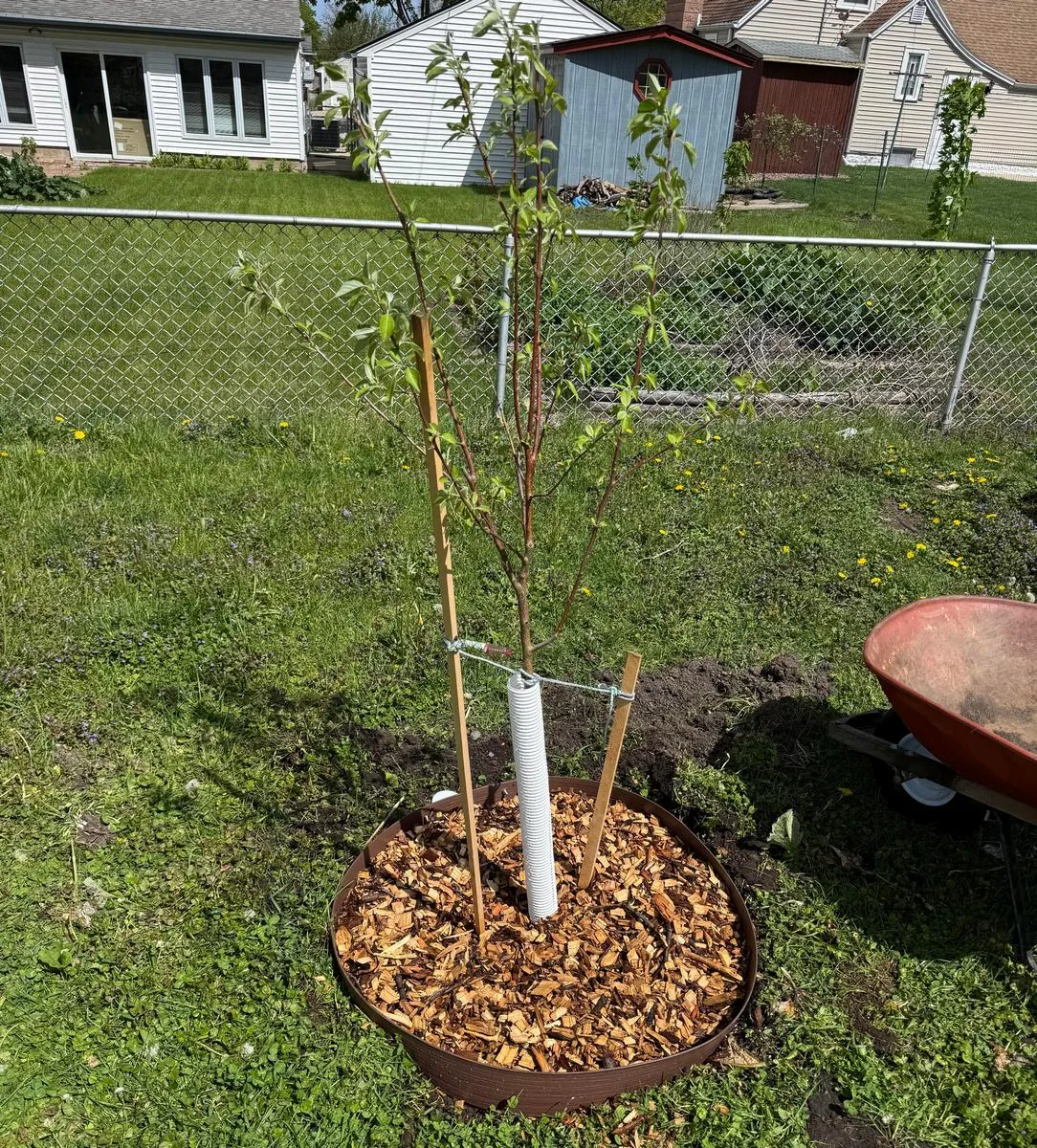
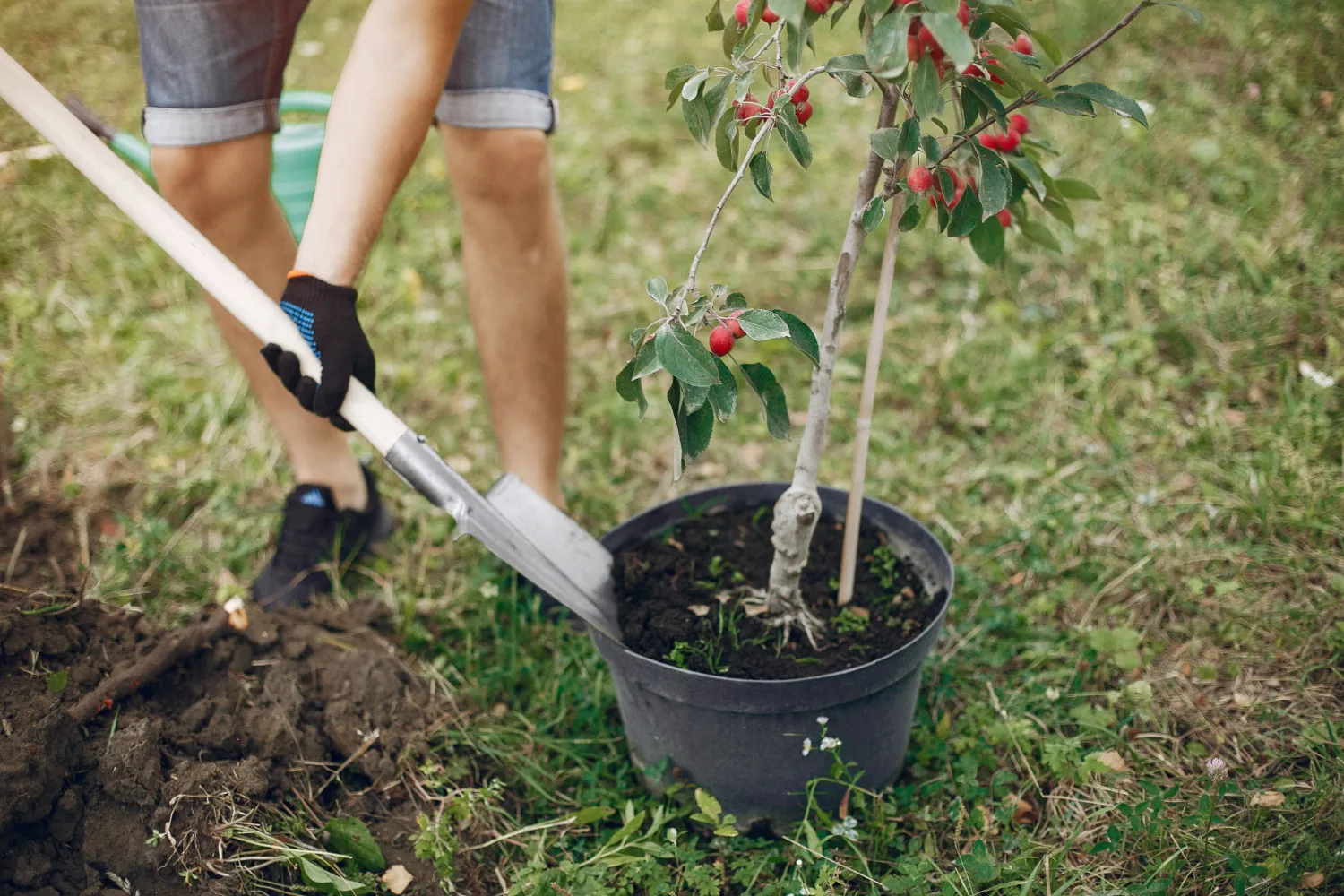
Planting is a critical moment that determines the future development of the tree. It is most often carried out in autumn or early spring.
Autumn planting usually provides a calmer start because the sapling is in dormancy, the soil can still work, and the roots have time to settle before active vegetation begins. Spring planting is also possible, but it must be done early – before the buds start developing.
A detailed guide on this topic can be found in the article When and how to plant fruit trees.
Basic principles when planting:
- the planting hole must be wide enough for the root system;
- the soil should be loose and well-drained;
- do not place fresh manure directly on the roots;
- the grafting point must remain above soil level;
- after planting, thorough watering is required;
- mulching is applied, but not directly against the trunk.
Spacing and layout
Proper spacing between trees is often an underestimated factor. If trees are too close, they compete for light, water, and nutrients. Crowns become dense, ventilation decreases, and diseases develop more easily.
In the first years, spacing may seem excessive. Young saplings look lonely, and there is a temptation to “fill the gaps.” After five or seven years, however, the picture changes. Trees already have crowns, shade, and a need for air.
| Fruit species | Recommended spacing in a home garden |
|---|---|
| Apple | 3–5 m depending on rootstock and training system |
| Pear | 4–5 m for vigorous trees, less for dwarf rootstocks |
| Peach | 4–5 m |
| Apricot | 5–6 m |
| Cherry | 5–6 m, sometimes more for vigorous growth |
| Plum | 4–5 m |
| Fig | 4–5 m, considering future wide canopy |
These distances are approximate. In a specific garden, rootstock, soil, climate, training system, and available space must always be considered.
Planting fruit trees
Planting is a critical moment that determines the future development of the tree. It is most commonly done in autumn or early spring.
Autumn planting usually provides a calmer start because the seedling is in dormancy, the soil is still workable, and the roots have time to settle before active growth begins. Spring planting is also possible, but it must be done early – before bud break.
A detailed guide on this topic can be found in the article When and how to plant fruit trees.
Main principles of planting:
- the planting hole must be wide enough for the root system;
- the soil should be loose and well-drained;
- do not place fresh manure directly on the roots;
- the graft union must remain above soil level;
- thorough watering is required after planting;
- mulch is applied, but not directly against the trunk.
Spacing and layout
Proper spacing between trees is often underestimated. If trees are planted too close together, they compete for light, water, and nutrients. Crowns become dense, air circulation decreases, and diseases spread more easily.
In the first years, spacing often seems excessive. Young seedlings look isolated and there is a temptation to “fill in the gaps”. However, after five to seven years the situation changes completely. The trees already have full crowns, shade, and a real need for air circulation.
| Fruit species | Recommended spacing in home gardens |
|---|---|
| Apple | 3–5 m depending on rootstock and training system |
| Pear | 4–5 m for vigorous trees, less for dwarfing rootstocks |
| Peach | 4–5 m |
| Apricot | 5–6 m |
| Cherry | 5–6 m, sometimes more for vigorous growth |
| Plum | 4–5 m |
| Fig | 4–5 m, considering future crown expansion |
These distances are approximate. In every garden, rootstock, soil, climate, training system, and available space must be taken into account.
Watering and initial care
During the first years after planting, watering is essential. Young trees are developing their root systems and are more sensitive to drought.
Lack of water during this period can lead to weak growth, poor establishment, and delayed fruiting. This does not mean constant overwatering. It means regular, deep, and balanced watering depending on weather and soil conditions.
- Water thoroughly after planting.
- During the first summer, do not leave young trees in complete drought.
- Water deeply rather than lightly every day.
- Mulch helps retain moisture.
- Do not pile mulch directly against the trunk.
The first three years are decisive
A fruit garden is not “ready” on the day of planting. The first three years are the period when trees establish themselves, build their root systems, start forming their canopy, and show whether the site is suitable for them.
First year
- establishment;
- regular watering;
- mulching;
- weed control;
- protection from mechanical damage.
Second year
- initial canopy formation;
- disease monitoring;
- moderate fertilization;
- support check;
- keeping the base area clean.
Third year
- clearer formation;
- first fruits in some species;
- more serious pruning;
- planned plant protection;
- evaluation of tree development.
This is a period of stability rather than miracles. It is better for young trees to build a strong canopy and root system than to be overloaded with fruit too early.
Pruning and training
Pruning is a key element in maintaining a fruit garden. It determines the shape of the tree, its health, and productivity.
The main goal of pruning is to balance growth and fruiting, while ensuring good light penetration and air circulation within the canopy.
In the early years, pruning focuses more on training than on fruit production. This is when the skeleton of the tree is formed – trunk height, main branches, growth direction, and overall structure.
A detailed explanation of techniques can be found in the article Pruning fruit trees for beginners.
“Good pruning is not cutting for the sake of cutting. It is a conversation with the tree.”
Fertilizing the fruit orchard
Fruit trees need nutrients, but excessive fertilization can create more problems than benefits.
Too much nitrogen can lead to strong shoot growth at the expense of fruiting. Fresh manure placed directly around the roots during planting can damage the young root system. For this reason, fertilization in fruit trees should be moderate, seasonal, and adapted to the age of the trees.
- Compost improves soil structure.
- Well-rotted manure can be used carefully.
- Mulching helps retain moisture and adds organic matter.
- Do not heavily fertilize a young tree that has not yet established itself.
- Monitor growth – overly vigorous shoots are also a warning sign.
Diseases and protection
Fruit trees are susceptible to various diseases and pests. The most common problems include fungal infections, aphids, fruit worms, scab, peach leaf curl, shot hole disease, and fruit rots.
Prevention is always more effective than treatment. Good plant protection starts with the right site selection, proper air circulation, pruning, a clean area around the trunk, and regular monitoring.
Not every spot or symptom means disaster, but every change deserves attention. The orchard should be observed regularly – especially after rainy periods, during flowering, fruit set, and hot summer conditions.
A detailed seasonal approach can be found in the article Fruit tree spraying calendar.
Common mistakes when creating a fruit orchard
Most mistakes in a fruit orchard do not show immediately. This makes them particularly dangerous. A tree is planted, it grows, everything looks fine. But years later, it turns out the tree is in the wrong place, has no pollinator, the crown lacks space, or the soil is unsuitable.
- choosing an unsuitable location;
- planting too densely;
- buying seedlings without clear origin;
- ignoring rootstock selection;
- lack of a proper pollinator;
- planting in waterlogged soil;
- excessive fertilization;
- lack of pruning in the early years;
- neglecting preventive care;
- expecting high yields too early.
My view on the fruit orchard
A fruit orchard is one of the most beautiful things a person can create in their garden. But it is not a quick project.
It involves patience, mistakes, waiting, pruning, frosts, joy from the first blossom, and sometimes disappointment from a fallen fruit set. There are years when the apricot makes you feel like a genius, and years when you simply look at the sky after a late frost in silence.
But this is exactly what makes it real.
Fruit trees teach long-term thinking. You cannot outsmart them with last-minute care. They remember the location, soil, water, pruning, and how you started.
That is why the best advice is simple: do not rush. Choose fewer trees, but choose them well. Give them space. Give them light. Give them a good start. Then each year will add something – a branch, a blossom, a fruit, shade, a memory.
“The fruit orchard is not just a place for fruit. It is a growing calendar.”
Related topics in Biogardn
This article is the foundation of the fruit orchard section. From here you can continue to more specific topics:
- When and how to plant fruit trees
- Pruning fruit trees for beginners
- Fruit spraying calendar
- Apricot in the garden: care, diseases and specifics
- Peach: planting, pruning and leaf curl
- Apple in the home garden: varieties, diseases and care
Sources and useful literature
- Fruit Growing Institute – Plovdiv
- Nursery of the Fruit Growing Institute – Plovdiv
- Agricultural University – Plovdiv
- Department “Viticulture and Fruit Growing” – Agricultural University – Plovdiv
- Agronomic textbooks and technical materials used in horticultural practice.