
When and How to Plant Fruit Trees: a Practical Guide for a Healthy Orchard
There is something very optimistic about planting a fruit tree.
We are not just planting a tree. We are planting expectation. Shade in the future. First fruit. A place we will return to every season to check whether the buds have swelled, whether the blossoms survived the cold, whether the fruit has set, whether the tree is developing as it should.
A fruit tree is not like a tomato that we plant in May and by the end of summer we already know if we succeeded. With trees, we think long-term. We choose location, species, variety, rootstock, spacing, soil, and water. And if we do things right from the beginning, the tree has a much better chance to develop calmly.
“At fruit trees, the beginning is not a detail. It is half of the future orchard.”
In fruit growing, the selection of quality planting material, the correct site, and adaptation to soil and climate conditions form the foundation of everything else. This is also the logic taught at the Agricultural University – Plovdiv: not just to plant a tree, but to understand its biological characteristics, requirements, and development.
When to plant fruit trees
Fruit trees are planted during dormancy — after leaf fall in autumn or early spring, before active growth begins.
There are two main planting periods:
- Autumn planting — after leaf fall, usually November to December, before deep winter frosts;
- Spring planting — after the strongest frosts pass, but before bud break.
In most cases, autumn planting is the better option if the soil is not too heavy, cold, or waterlogged. The reason is simple: the tree is dormant, but the soil is still active. Roots have time to establish, the soil settles around them, and the plant starts more smoothly in spring.
Spring planting is a backup option when we missed autumn, when the soil is too wet, or in areas with harsh winters. But timing is critical — the window is short. The soil must be workable, but buds must not have started yet.
In short
- Best: autumn after leaf fall.
- Also possible: early spring before bud break.
- Avoid: frozen, waterlogged, or very dry soil.
- Worst: late spring planting when the tree has already started active growth.
Autumn or spring planting
If I had to choose, for a home garden I would always prefer autumn planting whenever conditions allow it.
Autumn gives the sapling time to settle. There is no heat stress, no strong evaporation, and no need for the tree to root, leaf out, and fight heat at the same time. It is a gentler start.
Spring planting is also possible, but requires more attention to watering. If spring quickly becomes warm and dry, young trees can suffer because roots are not yet fully active.
| Period | Advantages | When to be careful |
|---|---|---|
| Autumn | Better establishment, soil settles around roots, smoother start in spring. | Avoid planting just before severe frost or in waterlogged soil. |
| Spring | Good option for heavy soils, cold regions, or missed autumn planting. | Must be done early, before bud break, with regular watering. |
Before planting: choosing a sapling
Not every sapling that looks “alive” is a good sapling.
Quality planting material is the first real investment in a future orchard. In scientific and educational fruit-growing literature, this is always a key topic — because fruit production begins not with the first fruit, but with a properly produced and selected tree.
When choosing a fruit tree, look beyond the variety:
- roots must be fresh, not dried out;
- stem must be healthy, without wounds;
- graft union must be well healed;
- there should be a label with variety and rootstock;
- buy from a reliable nursery, not random sellers;
- check whether the variety needs a pollinator.
Rootstock is not a small detail. It affects growth strength, soil adaptation, resistance, and even how the tree will be maintained. In peaches, plums, pears, apples, and other fruit species, the correct variety–rootstock combination makes a huge difference.
“When buying a fruit tree, you are not just buying a variety. You are buying a root, a rootstock, a future crown, and future care.”
How to choose a planting site
Fruit trees love light. Most fruit species need a sunny location for proper flowering, fruit set, and ripening.
It is not recommended to plant fruit trees in deep shade, next to tall walls, too close to large trees, or in areas where water remains after rain.
Before digging, think about the tree in 5–10 years, not just the sapling today. A small tree looks harmless, but later it will develop a crown, shade, roots, and space requirements.
- Choose a sunny and well-ventilated place.
- Avoid low areas where cold air accumulates.
- Do not plant too close to buildings, fences, or concrete.
- Leave space for future crown development.
- Ensure access to water during early years.
Soil: what we need to know before planting
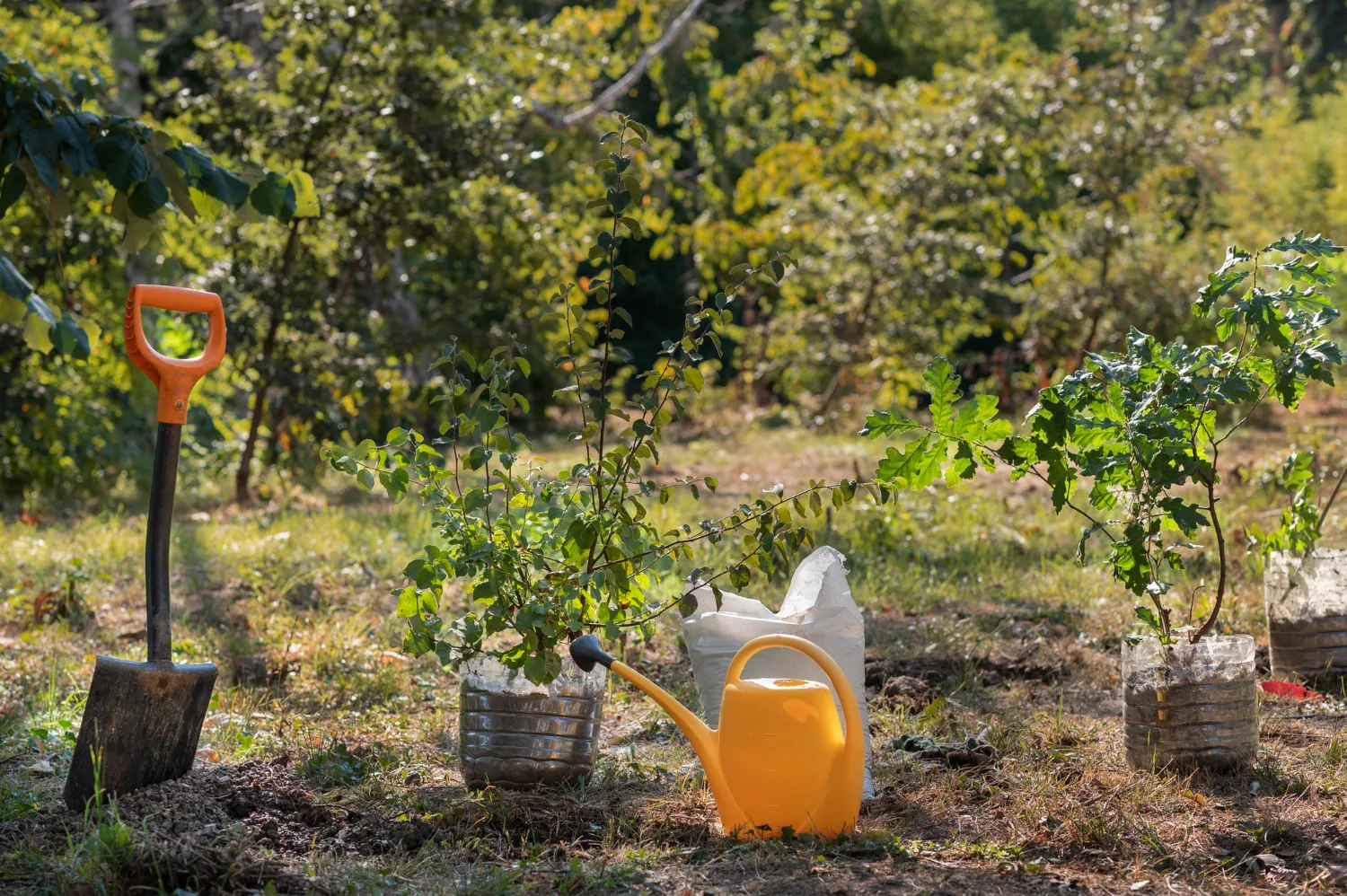
Fruit trees do not like extremes.
Heavy, compacted, cold, and waterlogged soil restricts roots. Very light sandy soil dries quickly and may cause water and nutrient stress.
The best soil is well-drained, moderately moist, loose, and rich in organic matter. If the site is heavy, improve it with compost. If sandy, increase moisture retention with compost and mulch.
Soil pH also matters. Different fruit species have different tolerance levels. Blueberries, for example, are a special case because they require acidic soil. Most classic fruit trees prefer neutral to slightly acidic or slightly alkaline soils.
Planting hole size
The planting hole should be wide enough for roots to spread freely without bending or crowding. Wider is better than deeper.
For a home garden, a hole around 50–60 cm wide and 40–50 cm deep is a general guideline, depending on soil and root system. In heavier soils, loosening the surrounding area is more important than digging a deep pit.
The top fertile soil layer should be kept separate and used around the roots. If compost is added, it must be well decomposed. Fresh manure directly near roots is not recommended.
Preparing the sapling
Before planting, inspect the roots. Damaged or broken parts should be cut back to healthy tissue. Long roots can be slightly refreshed without excessive shortening.
For bare-root saplings, soaking in water for a few hours before planting is recommended to rehydrate them.
Container-grown plants should be handled carefully. If roots are circling, gently loosen them so they grow outward instead of continuing in a spiral.
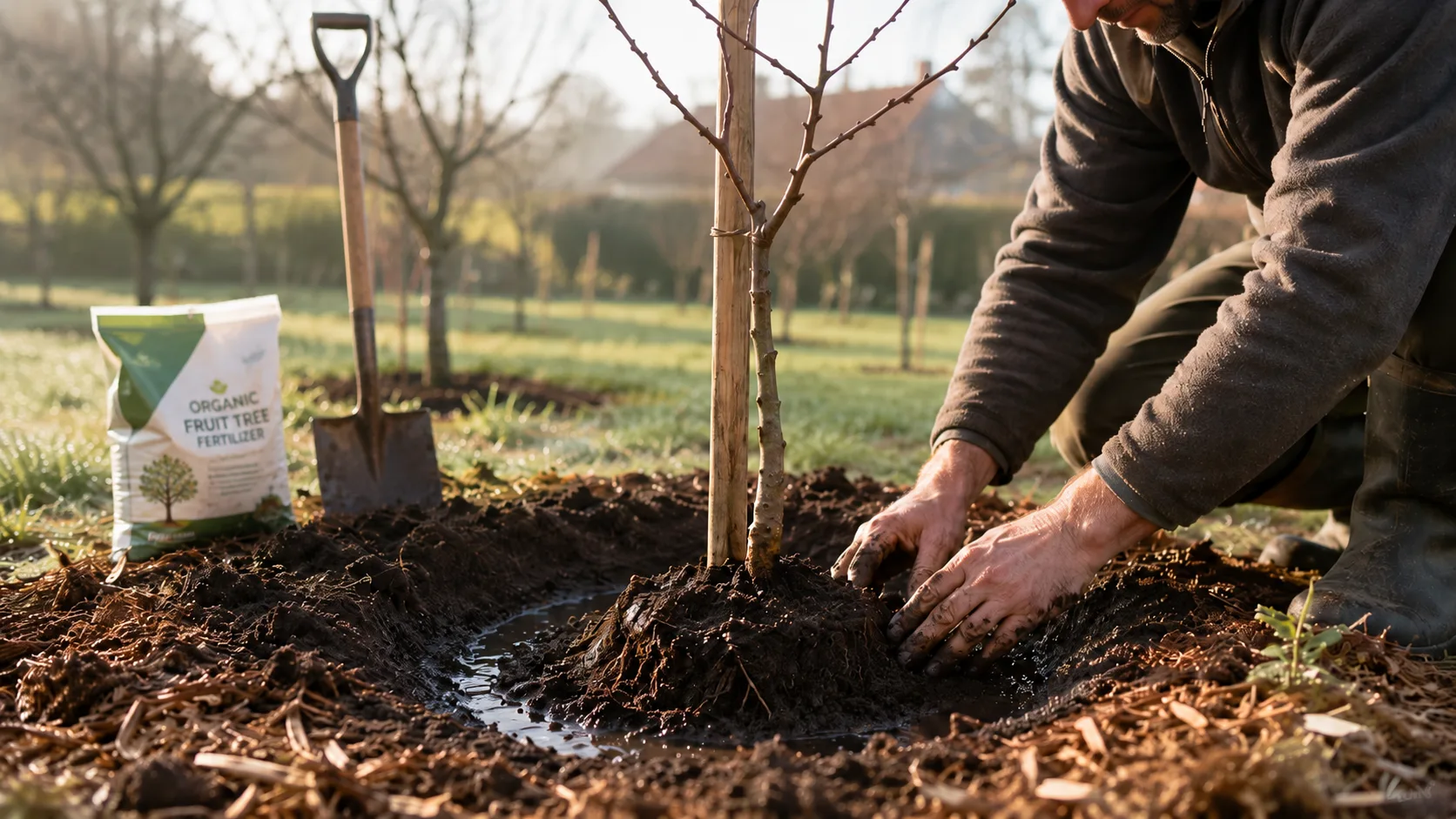
How to plant a fruit tree step by step
Planting steps
- Choose a site and dig a planting hole.
- Separate topsoil.
- Inspect and refresh roots if needed.
- Install a support stake if necessary.
- Spread roots naturally in the hole.
- Fill with loose soil while lightly compacting.
- Water thoroughly.
- Create a watering basin.
- Apply mulch, not touching the trunk.
The graft union must remain above soil level. Burying it can cause the scion to root or disrupt the rootstock function.
After planting, water thoroughly so soil settles around the roots. If the soil sinks, add more soil after a few days.
Planting depth
The tree should be planted approximately at the same depth as in the nursery, visible from the bark color change.
The most common mistake is planting too deep, which can cause moisture issues and weak development.
Should fertilizer be added to the hole?
This is where many people overdo things.
Yes, soil should be fertile. But no, fresh manure directly on roots is not a good idea. Young roots are sensitive.
Better approach:
- well-rotted compost;
- loose fertile soil;
- organic matter mixed into soil, not concentrated on roots;
- mulch after planting;
- moderate fertilization after establishment.
“More fertilizer does not mean better care. Sometimes it means more stress.”
Spacing between fruit trees
Spacing depends on species, variety, rootstock, and training system.
Apple trees on vigorous rootstock behave differently from those on dwarfing rootstock. Peach, apricot, cherry, plum, pear, and fig all have different growth habits.
In home gardens, the most important rule is: do not plant too densely.
| Fruit species | Recommended spacing |
|---|---|
| Apple | 3–5 m depending on rootstock and training |
| Pear | 4–5 m |
| Peach | 4–5 m |
| Apricot | 5–6 m |
| Cherry | 5–6 m or more |
| Plum | 4–5 m |
| Fig | 4–5 m |
These are general values. Always consider rootstock, soil, climate, and training system.
First pruning after planting
After planting, an initial pruning is often done to balance roots and canopy and start shaping the crown.
But this must be done carefully. Each fruit species has different requirements. It is better to prune moderately than to overdo it.
For detailed guidance, separate articles will cover each species individually.
Watering after planting
The first year is critical. The sapling cannot yet access deep soil moisture.
Water thoroughly after planting. Then monitor moisture depending on weather and soil conditions.
- Autumn planting benefits from natural moisture but still requires monitoring.
- Spring planting requires more frequent watering.
- Do not allow complete drying in the first summer.
- Mulch helps but should not touch the trunk.
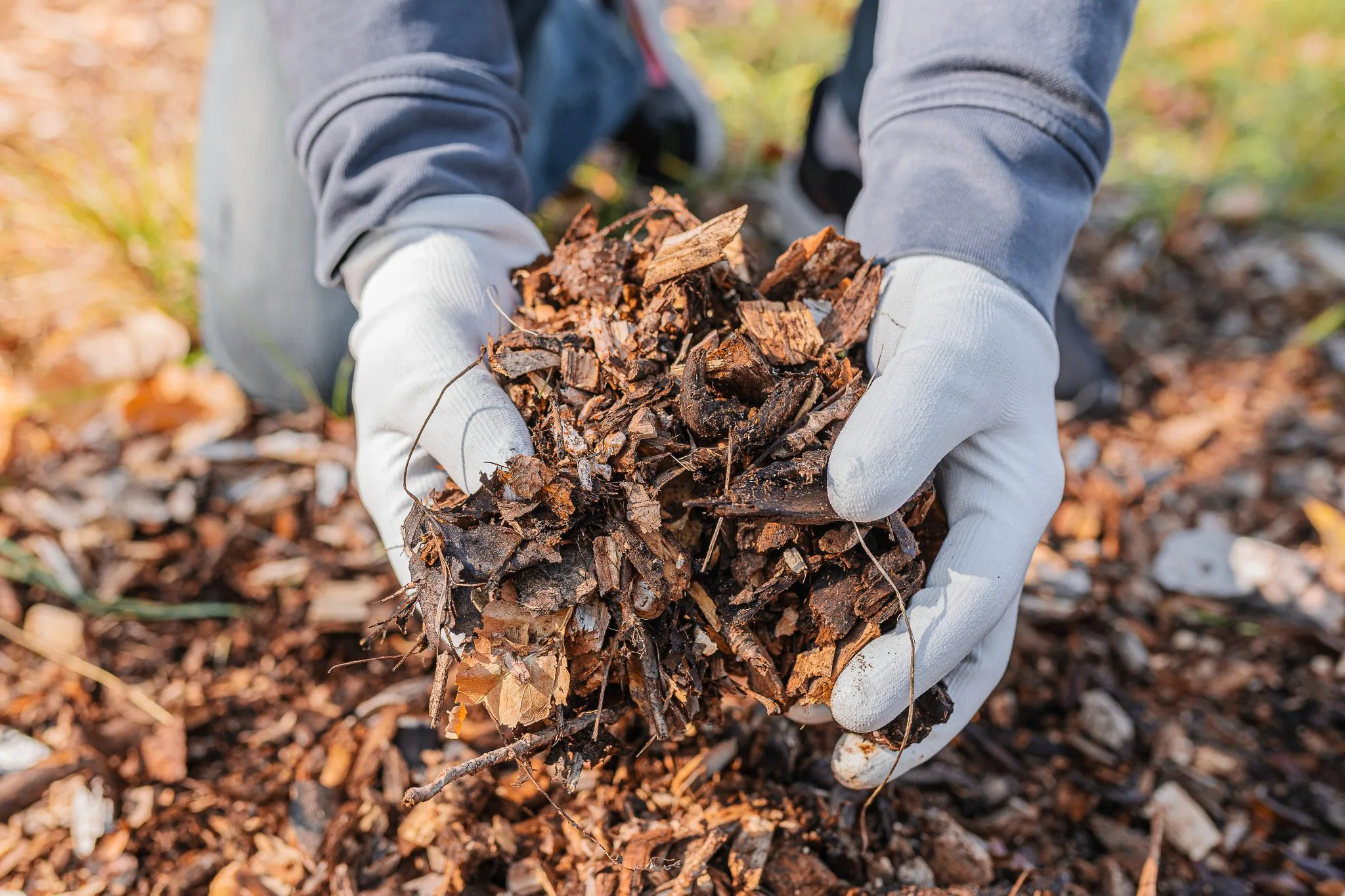
Mulching around fruit trees
Mulching is one of the best practices for young trees. It retains moisture, reduces weeds, and improves soil structure over time.
Common planting mistakes
- wrong site selection;
- planting too deep;
- burying the graft union;
- fresh manure on roots;
- dried roots before planting;
- no watering after planting;
- too dense planting;
- ignoring pollination requirements;
- buying unknown planting material.
Mini planting calendar
| Period | What to do |
|---|---|
| September – October | Plan orchard layout, choose species and varieties. |
| November – December | Main autumn planting season. |
| January – February | No planting in frozen soil; planning and preparation. |
| March – early April | Early spring planting before bud break. |
| May – August | Care: watering, mulching, weed control. |
My opinion on planting fruit trees
Fruit trees require more planning than people expect.
The best planting is calm planting. No rushing, no “we’ll fix it later”, no placing a tree just because there is empty space.
Because empty space today can become the wrong space in five years.
When a fruit tree is planted correctly, it quietly rewards you: first with establishment, then growth, then blossom, and finally fruit that tastes different because you waited for it.
“A fruit tree is not planted for this season. It is planted for the future garden.”
Related Topics on Biogardn
This article serves as the foundation of our orchard section. From here, you can continue to more specific topics:
- Fruit Orchard: How to Choose, Plant and Maintain Fruit Trees
- Pruning Fruit Trees for Beginners
- Fruit Tree Spraying Calendar
- Apricot Tree: Care and Diseases
- Peach Tree: Planting and Leaf Curl
- Apple Tree: Varieties and Care
Sources and Further Reading
- Fruit Growing Institute – Plovdiv
- Fruit Nursery of the Fruit Growing Institute – Plovdiv
- Agricultural University – Plovdiv
- Department of Viticulture and Pomology – Agricultural University – Plovdiv
- Educational and technical materials on fruit growing used in agronomic practice.