
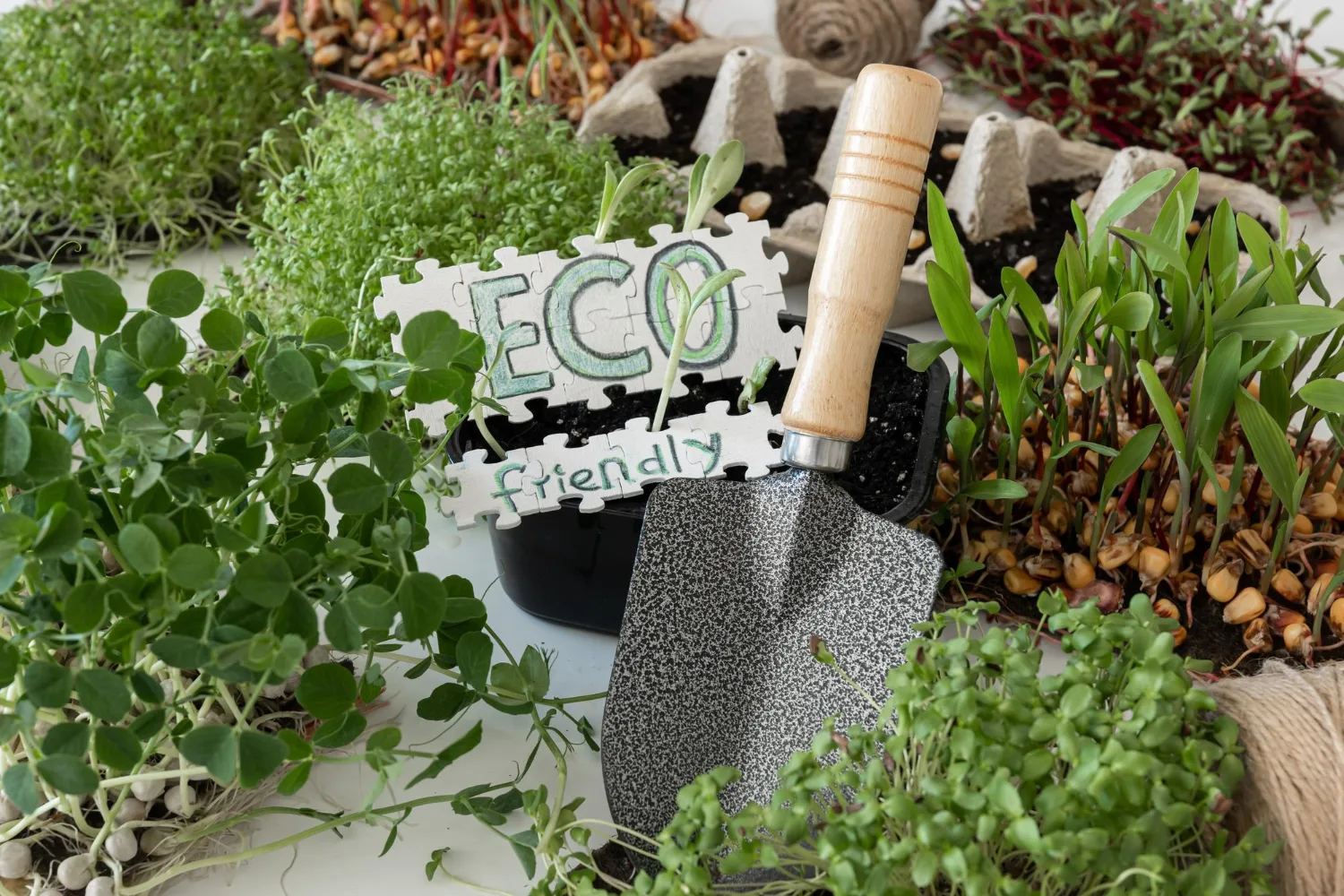
Organic Garden: Natural Solutions, Homemade Extracts and Smart Prevention
An organic garden is not simply a garden where we have replaced one product with another just because the label says “natural”. It is a different way of thinking. Instead of waiting for a problem to break out and then looking for something to “hit” it with, we try to understand why it appeared in the first place.
Diseases and pests rarely appear by chance in a healthy, balanced garden. Most often, they take advantage of an existing weakness: overly wet soil, crowded plants, lack of air circulation, excessive nitrogen fertilization, depleted soil or plants under stress. This is exactly where the organic approach makes sense — not as a romantic idea, but as a very practical system of observation, prevention and timely action.
A good organic garden is not sterile. It has insects, fungi, bacteria, worms, birds and, of course, sometimes slugs too — because nature is not a catalogue of perfect photographs. The goal is not to destroy every living thing around the plants, but to prevent one group of organisms from becoming dominant to the point where the harvest or ornamental plants suffer seriously.
“In an organic garden, we do not fight nature. We try to bring it back to our side.”
What “organic” means in plant protection
In practice, many people associate organic gardening only with homemade brews, nettle in a bucket and soapy water against aphids. This is part of the topic, but far from the whole picture. Organic plant protection includes several levels: healthy soil, resilient plants, proper gardening practices, beneficial insects, biological products and, only at the end, homemade extracts and treatments.
This order matters. If the soil is poor, the plants are overcrowded and the leaves are watered every evening, neither nettle, nor neem, nor potassium soap will perform miracles. They can help, but they cannot compensate for poor growing conditions.
The modern, sensible approach is close to the principles of integrated plant protection. This means observing, identifying the problem, assessing the risk and choosing the gentlest solution that can actually work. Not every spot on a leaf requires spraying. Not every aphid is a disaster. But if we do not look at the plants regularly, it is very easy to miss the moment when a small problem becomes a big one.
Soil is the first line of defence
Soil is not just a place where plants stand upright. It is a living environment where roots communicate with microorganisms, absorb nutrients and respond to moisture, temperature and structure. When the soil is loose, rich in organic matter and well drained, plants develop a stronger root system and better resilience.
On the other hand, compacted, waterlogged or poor soil creates constant stress. The roots suffer, nutrient uptake is disturbed and the above-ground parts become more vulnerable to fungal and bacterial diseases.
Basic principle
In an organic garden, we work with the conditions first, not with the sprayer. If we improve the soil, air circulation, watering and feeding, we often reduce the need for treatment by half.
The most important preventive measures
Prevention in the garden is not a one-time action, but a habit. It begins with choosing the right place and continues throughout the season. Many problems can be avoided with simple but consistent practices.
- Spacing between plants — crowded plantings retain moisture and make air circulation difficult.
- Watering at the base — wet leaves, especially in the evening, increase the risk of fungal diseases.
- Mulching — preserves moisture, reduces soil splashes on leaves and stabilizes temperature.
- Removing diseased leaves — infected plant material is often a source of new infection.
- Moderate fertilization — excessive nitrogen leads to soft, lush and more vulnerable growth.
- Regular observation — the underside of the leaves often tells the truth before the tips start to dramatize.
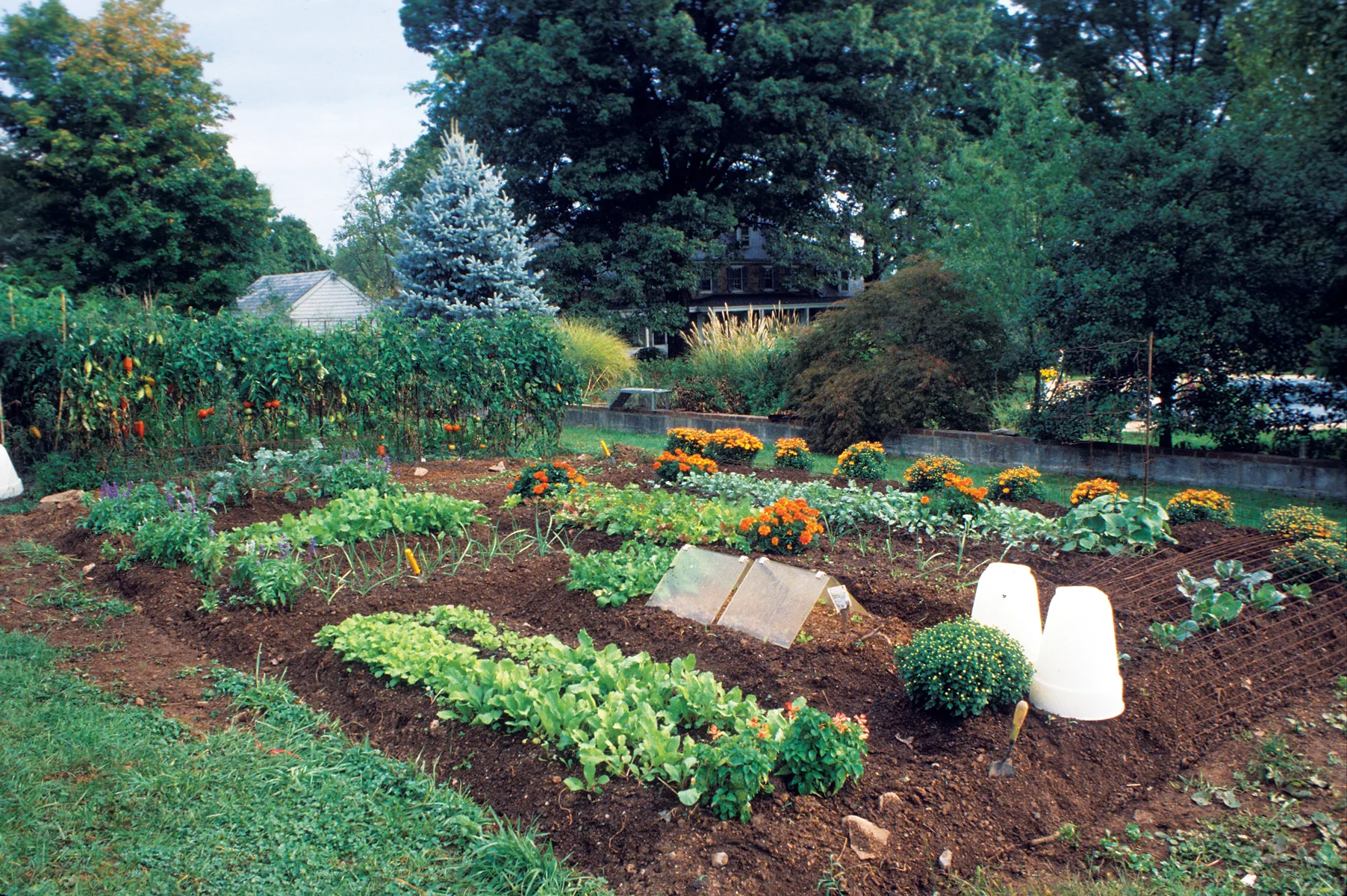
Homemade extracts: when they help and when they do not
Homemade extracts are one of the most popular topics in organic gardening. Nettle, horsetail, garlic, onion, wormwood and hot peppers have long been used in garden practice. They can have a feeding, repellent or preventive effect, but it is important to understand them properly.
Nettle extract, for example, is valuable mainly as a liquid plant fertilizer and stimulant. It contains nitrogen, potassium, trace elements and organic compounds that can support growth. But if the plants are already heavily infested with aphids or are in an advanced stage of blight, nettle will not be enough.
Horsetail is interesting because of its silica compounds. In gardening, it is used mainly preventively — to strengthen plant tissues and as part of a program when there is a risk of fungal diseases. But here too, the key word is “preventively”. Horsetail is not a fire extinguisher for an infection that has already burst into flames.
| Homemade extract | Main use | Best time to use |
|---|---|---|
| Nettle | Feeding, growth stimulation, general strengthening | Active growth, before strong stress |
| Horsetail | Prevention when there is a risk of fungal diseases | Wet periods, before symptoms develop |
| Garlic | Repellent effect against some pests | Early appearance of pests |
| Hot peppers | Irritating and repellent effect | Limited use, with caution on sensitive plants |
Potassium soap, neem and other organic solutions
Potassium soap is one of the most practical products against soft-bodied, sucking pests such as aphids, whiteflies and some young stages of other insects. It works by contact — in other words, it must reach the pest. If we spray only the upper side of the leaves while the aphids are underneath, the effect will be modest. The garden does not forgive formal spraying.
Neem is used as a plant-based product that can affect the feeding, development and reproduction of some pests. It does not work like a strong chemical insecticide with an immediate effect, so the expectation “I spray today, tomorrow everything is gone” often leads to disappointment. Neem is more suitable in early stages, with regular observation and repeated use according to the instructions of the specific product.
It is important to say something very simple here: organic products are still products. They should be used carefully, at the correct concentration, at the right time of day and without indiscriminate spraying on flowering plants when bees and other pollinators are active.
Important for beginners
When using potassium soap, neem or a homemade extract for the first time, test it on a small part of the plant. Wait 24 hours. If there are no burns, deformations or spots, then treat more widely.
Beneficial insects are part of the protection
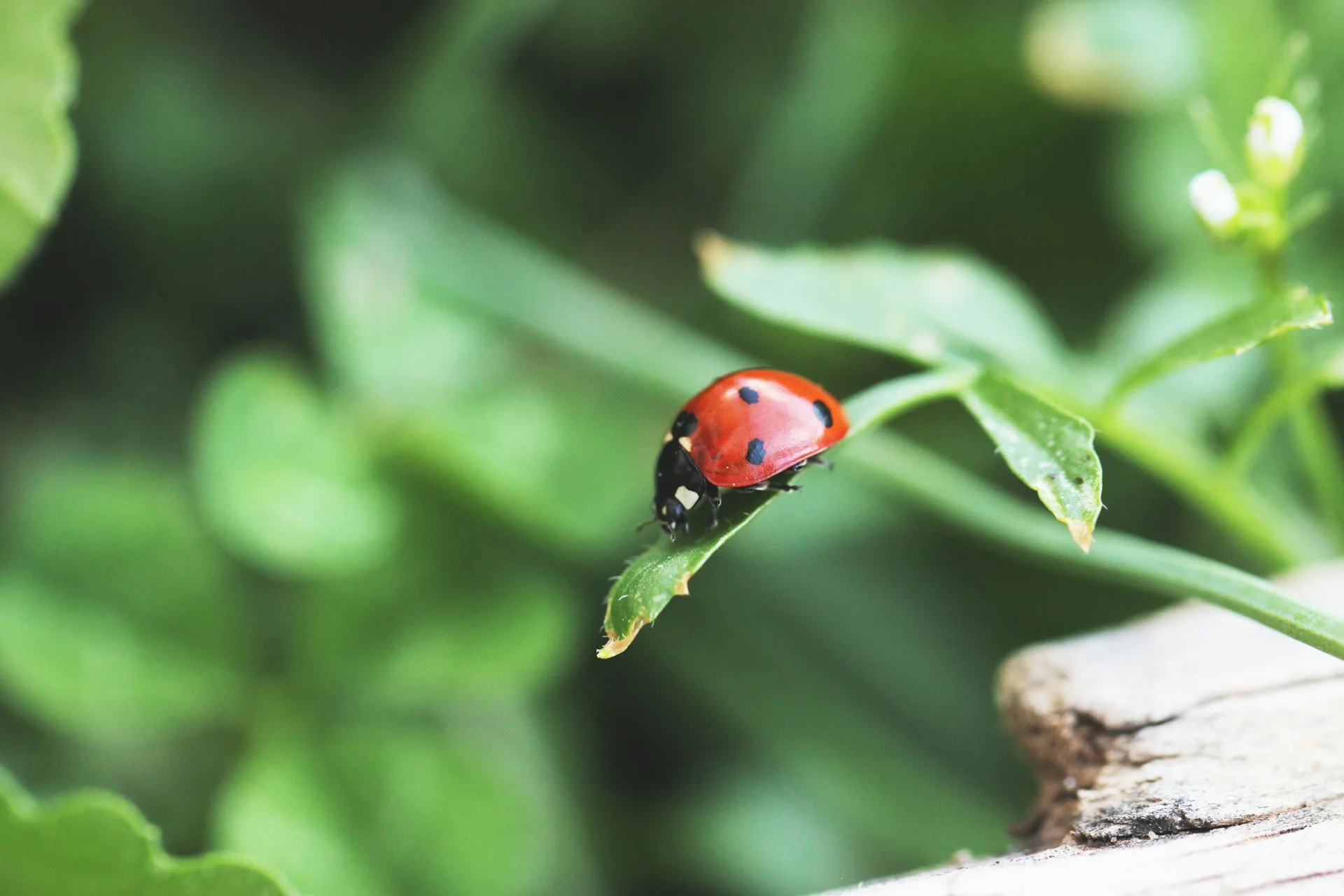
One of the biggest mistakes in the home garden is to see every insect as an enemy. Ladybugs, lacewings, hoverflies, parasitic wasps and predatory mites are a natural army that often works better than we do — and without reading labels.
However, if we spray often, strongly and indiscriminately, we destroy not only the pests, but also their natural enemies. Then the pests return faster, because the beneficial organisms are no longer there. This is how the garden becomes dependent on constant intervention.
To attract and keep beneficial insects, it is good to have flowering plants, herbs, a variety of crops and places where small organisms can hide. Dill, coriander, calendula, chamomile, yarrow, thyme and other flowering plants can be not only beautiful, but also functional.
How to recognize when action is needed
Not every problem requires treatment. Sometimes it is enough to remove a few infected leaves, thin out the plants or correct the watering. Other times, waiting too long can cost an entire harvest. That is why observation is an essential tool.
A good practice is to inspect the plants briefly once or twice a week. Not only from above, but also underneath the leaves, around the young tips, near the flowers and at the base of the stems. This is exactly where many problems begin.
| Symptom | Possible cause | First sensible step |
|---|---|---|
| Curled young leaves | Aphids, thrips, watering stress | Check the underside, rinse off, use potassium soap if needed |
| White coating | Powdery mildew | Improve air circulation, remove heavily affected leaves |
| Brown spots after wet weather | Fungal or bacterial infection | Limit moisture on the leaves, monitor the spread |
| Fine webbing and fading leaves | Spider mites | Pay extra attention in hot weather, rinse off, use biological or specific control |
Organic does not mean “doing nothing”
Sometimes the organic approach is misunderstood as complete inaction. This is not true. Organic gardening does not mean standing aside and watching the tomatoes turn into a botanical tragedy. It means acting earlier, more precisely and more gently.
There are moments when mechanical removal is the best solution. There are moments when a homemade extract is enough. There are cases when a biological product is more suitable. And there are situations where it is wise to seek advice from an agronomist or a garden specialist, especially when the disease is widespread or the crop is important.
How to build a working organic strategy
The best strategy is simple, but consistent. First, we create good conditions. Then we observe. Then we respond with the lightest solution that has a chance of working. If it is not enough, we move to the next level. This way we do not lose control, but we also do not turn the garden into a laboratory for panic experiments.
- Level 1: healthy soil, compost, mulch, proper watering.
- Level 2: good spacing, pruning, ventilation, hygiene.
- Level 3: attracting beneficial insects and increasing plant diversity.
- Level 4: homemade extracts and gentle contact products at early symptoms.
- Level 5: organic plant protection products or approved products when there is a proven need.
Practical logic
The earlier we notice a problem, the gentler the solution we can use. The later we react, the stronger the intervention will need to be.
Common mistakes in the organic garden
The first mistake is believing that every homemade remedy is safe. Concentrated extracts, soapy solutions or oils can cause burns, especially in strong sun, high temperatures or on sensitive plants.
The second mistake is spraying without a diagnosis. If we do not know whether the problem is fungal, bacterial, viral, nutritional or caused by a pest, it is easy to choose the wrong solution. The third mistake is spraying too late, when the problem has already affected the whole plant.
And perhaps the most human mistake: expecting one treatment to fix weeks of poor conditions. The garden has a memory. It remembers how we watered, fertilized, overcrowded and postponed.
Warning about homemade extracts and products
Homemade extracts and organic products should be used carefully, in suitable concentrations and with consideration for the specific crop. Do not treat during the hottest hours of the day, do not spray flowering plants when bees are active and always test a new solution on a small part of the plant. In cases of severe infestation, unclear symptoms or important crops, it is wise to consult a specialist.
Conclusion
An organic garden is not a garden without problems. It is a garden where problems are understood in time. Instead of looking for one universal product for everything, we build a system: soil, water, air, diversity, beneficial insects, observation and careful intervention.
This is a slower approach than panic spraying, but it is much more sustainable. And honestly — far more interesting. Because we begin to see the garden not as a list of tasks, but as a living environment that responds to every decision we make.
Related articles from the organic plant garden series
- Organic Plant Protection Products: What Really Works
- Potassium Soap and Neem: How to Use Them Against Pests
- Horsetail and Nettle Extract: Homemade Prevention for Healthier Plants
- Beneficial Insects in the Garden: The Best Allies Against Pests
- Leonardite and Rock Dust: Differences, Uses and Real Benefits
- Lunar Calendar for the Garden: When to Sow, Plant, Prune and Harvest