The lunar gardening calendar is one of those traditions that some gardeners follow very closely, while others do not use it at all.
The most sensible approach is to treat it as an optional planning tool, not as a rule that overrides weather, soil conditions or the actual needs of the plants.
Temperature, moisture, season, cultivar, transplant readiness and the weather forecast are always more important to the success of a gardening task.
A lunar calendar can be a useful planning aid, but the plant, the soil and the weather come first.
What Is Lunar Gardening?
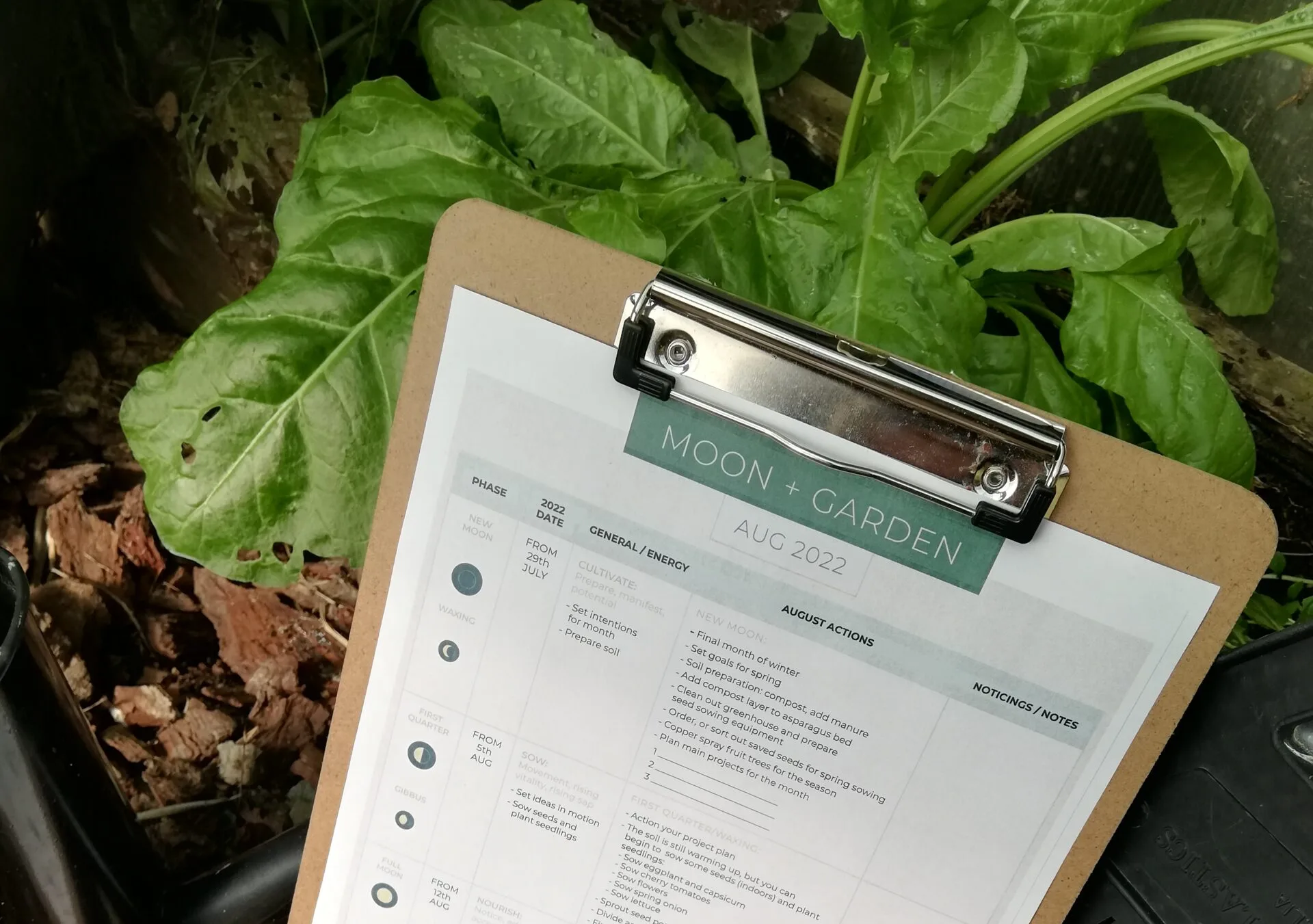
Lunar gardening is a traditional system in which different garden tasks are scheduled according to the phases of the Moon or according to more complex lunar calendars.
In some traditions, the waxing Moon is associated with crops grown for above-ground parts, while the waning Moon is linked with root crops, soil work and some types of pruning.
This is, however, a traditional framework rather than an established agronomic rule.
Scientific evidence that lunar phases produce a practical, measurable effect on germination, yield, pruning response or storage quality is limited and not strong enough to treat lunar recommendations as essential.
First check whether the season, soil, temperature and plants are ready. If you have several equally suitable days, you can then use a lunar calendar as an additional planning preference.
The Main Moon Phases and Traditional Garden Tasks
The simplest version of lunar gardening uses the four main phases: new moon, waxing moon, full moon and waning moon.
Different calendars do not always give exactly the same advice, so the table below should be understood as a traditional guide, not as a scientifically established system.
| Moon phase | Traditionally associated tasks | How to use it sensibly |
|---|---|---|
| New moon | Planning, preparation and lighter garden tasks. | There is no need to delay a suitable sowing date because of the Moon phase. |
| Waxing moon | Traditionally associated with sowing and planting crops grown for above-ground harvests. | Use it only when temperature, moisture and seasonal timing are already suitable. |
| Full moon | In some calendars, linked with harvesting, observation or limited gardening activities. | Ripeness and dry weather matter much more when harvesting. |
| Waning moon | Traditionally associated with root crops, soil work and some pruning tasks. | Season and the biology of the specific crop remain more important. |
When to Sow and Plant
Traditional lunar calendars often place tomatoes, peppers, cucumbers, beans and other crops with above-ground harvests during the waxing Moon.
Carrots, beets, potatoes, onions and garlic are more commonly associated with the waning Moon.
This can be a convenient way to organize garden work, but sowing dates should first follow the biological requirements of the crop.
The best day to sow is the day when the soil is ready, the weather is suitable and the crop has good conditions for a strong start.
What Are Leaf, Fruit, Root and Flower Days?
Some calendars use a more complex system that divides days into leaf, fruit, root and flower days.
This type of classification is associated with biodynamic and traditional gardening practices.
It should not be presented as a scientifically proven agronomic effect, but it can be used as an organizational framework.
| Day type | Traditionally associated plants | Example tasks |
|---|---|---|
| Leaf days | Lettuce, spinach, cabbage, parsley and dill. | Sowing, transplanting or harvesting leafy crops. |
| Fruit days | Tomatoes, peppers, cucumbers, beans, squash and fruit trees. | Planting or harvesting according to the traditional system. |
| Root days | Carrots, beets, potatoes, turnips, onions and garlic. | Sowing, planting and harvesting underground crops. |
| Flower days | Ornamental plants and crops grown for flowers. | Planting, care and harvesting flowers. |
Pruning Should Not Depend Mainly on the Moon
In some traditions, formative pruning is scheduled during the waning Moon.
In practice, the plant species, season, flowering or fruiting cycle, temperature and plant health matter far more.
Some plants are pruned while dormant, others after flowering, while pruning at the wrong time can reduce the next flowering period or crop.
Broken, hazardous or infected branches should be removed when necessary, under suitable weather conditions and with clean tools.
Harvesting: Ripeness and Weather Matter More
Harvest timing should first be determined by ripeness, weather and how the crop will be used.
Fruit for fresh eating can be harvested at optimal ripeness, while produce intended for storage should be healthy, dry and harvested at an appropriate stage.
Herbs are also harvested according to the species and intended use. For many herbs, dry weather and the correct developmental stage matter more than a lunar date.
Harvest should be guided first by ripeness, healthy condition and suitable weather.
When You Should Not Follow the Calendar
There are situations where waiting for a “better lunar day” can actually be the wrong decision.
How to Use a Lunar Gardening Calendar Sensibly
The most practical approach is to rank your decisions by importance.
| Priority | What to check |
|---|---|
| 1. Season | Is this the right time of year for the crop or task? |
| 2. Temperature | Are air and soil temperatures appropriate? |
| 3. Soil and moisture | Is the soil actually suitable for sowing, planting or cultivation? |
| 4. Plant condition | Are transplants ready, is the plant healthy and is this the right physiological stage? |
| 5. Weather forecast | Are frost, heat, storms or prolonged rain expected? |
| 6. Lunar calendar | If all practical conditions are suitable, use it as an optional additional guide. |
A Simple Practical Method
If you want to use a lunar calendar without making garden planning unnecessarily complicated, keep the system simple.
| Task | Check this first | Then, if you wish, use the lunar calendar |
|---|---|---|
| Sowing | Temperature, moisture and seasonal timing. | Choose a traditionally favored Moon phase from among already suitable days. |
| Transplanting | Hardening off, frost risk, temperature and forecast. | Use the plant category from your chosen lunar system only as an extra guide. |
| Pruning | Species, season, flowering cycle and plant health. | Use the Moon phase only as an additional criterion. |
| Harvesting | Ripeness, dry weather and intended use. | When conditions are otherwise equal, choose your preferred calendar day. |
Common Lunar Gardening Calendar Mistakes
A lunar gardening calendar can be a pleasant and convenient way to organize garden tasks.
But there is not enough convincing scientific evidence to place Moon phases above practical horticultural conditions.
Check the season, weather, temperature, soil and plant condition first.
If you then have several equally good options, the lunar calendar can simply be one more planning preference.