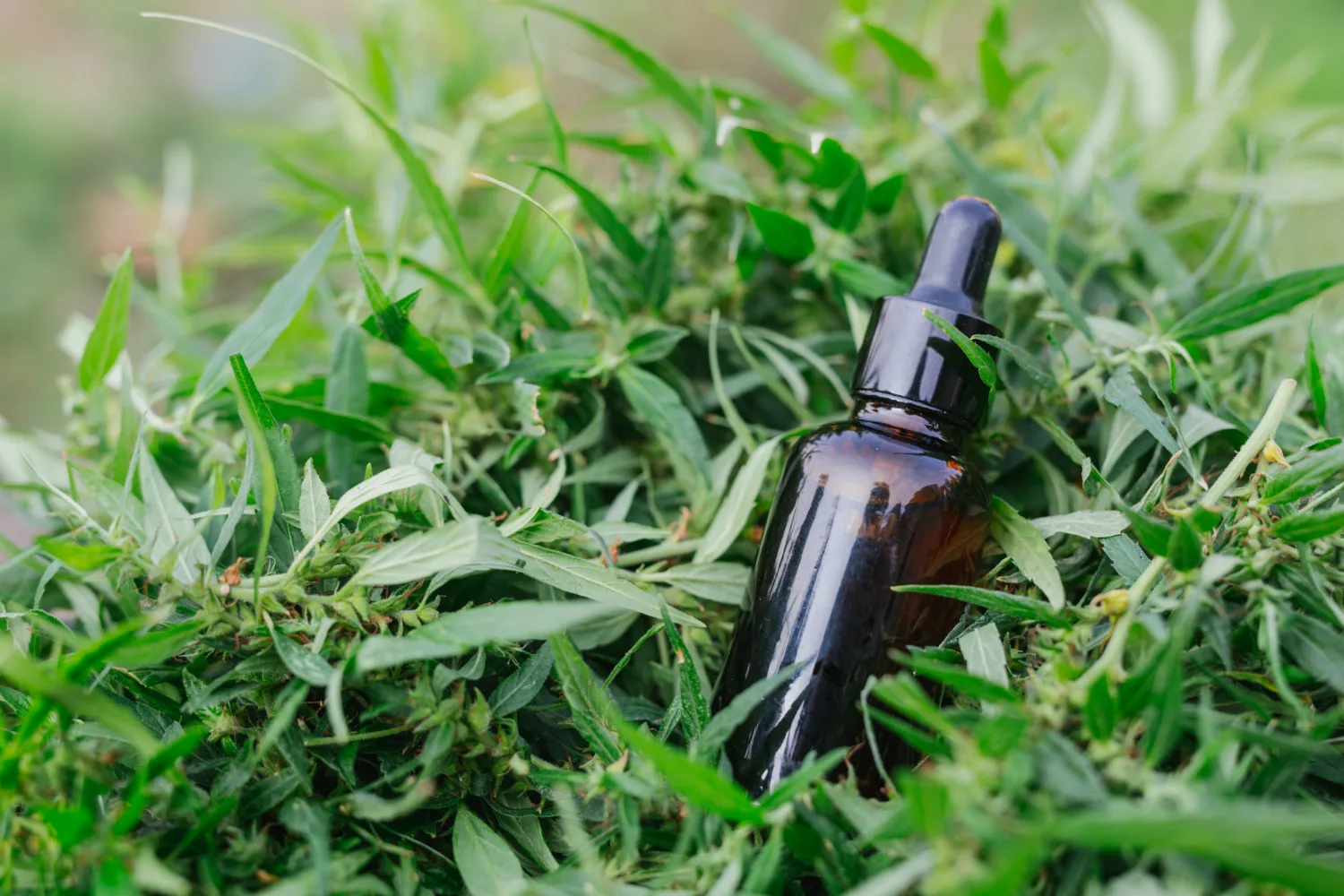
Nettle extract and horsetail extract are among the most popular homemade preparations used in organic gardening.
They follow different logic, however. Fermented nettle is generally used as a homemade liquid feed, while horsetail appears more often in traditional preventive gardening practices.
Both mixtures can vary considerably in composition and should not be treated as standardized plant protection products.
A homemade extract can be part of good gardening practice, but it does not replace diagnosis, soil, water or sound horticulture.
What Is the Difference Between Nettle and Horsetail?
Fermented nettle is most commonly used as a liquid plant feed.
Its composition may include soluble nutrients and various organic compounds, but the exact amounts depend heavily on the plant material, water, fermentation time and preparation method.
For this reason, a homemade nettle extract should not be treated as a fertilizer with a precisely known nutrient analysis.
Horsetail contains substantial amounts of silica compounds and has traditionally been used in homemade preventive gardening programs.
This does not mean that a homemade horsetail preparation is a proven fungicide or a reliable treatment for an established fungal disease.
| Extract | How it is commonly used | What to keep in mind |
|---|---|---|
| Nettle | As a homemade liquid plant feed during active growth. | Its composition varies and should not be treated as a precise nutrient formula. |
| Horsetail | In traditional preventive practices, especially during humid periods. | It should not replace proven disease control when a disease is actively developing. |
| Seasonal program | They can be used at different times according to plant needs. | There is no need to automatically mix them in the same application. |
What Can We Realistically Expect From Fermented Nettle?
The main practical role of fermented nettle is as a homemade liquid plant feed.
It may be used on plants during active vegetative growth, but it should not replace normal soil fertility management.
On plants that are already producing excessive leafy growth, additional nitrogen stimulation may be undesirable.
With fruiting crops, too much nitrogen can encourage foliage growth at the expense of more balanced development.
If a plant is already adequately nourished, additional feeding will not necessarily provide a benefit. Look first at growth, soil and the needs of the specific crop.
How to Make Fermented Nettle Extract
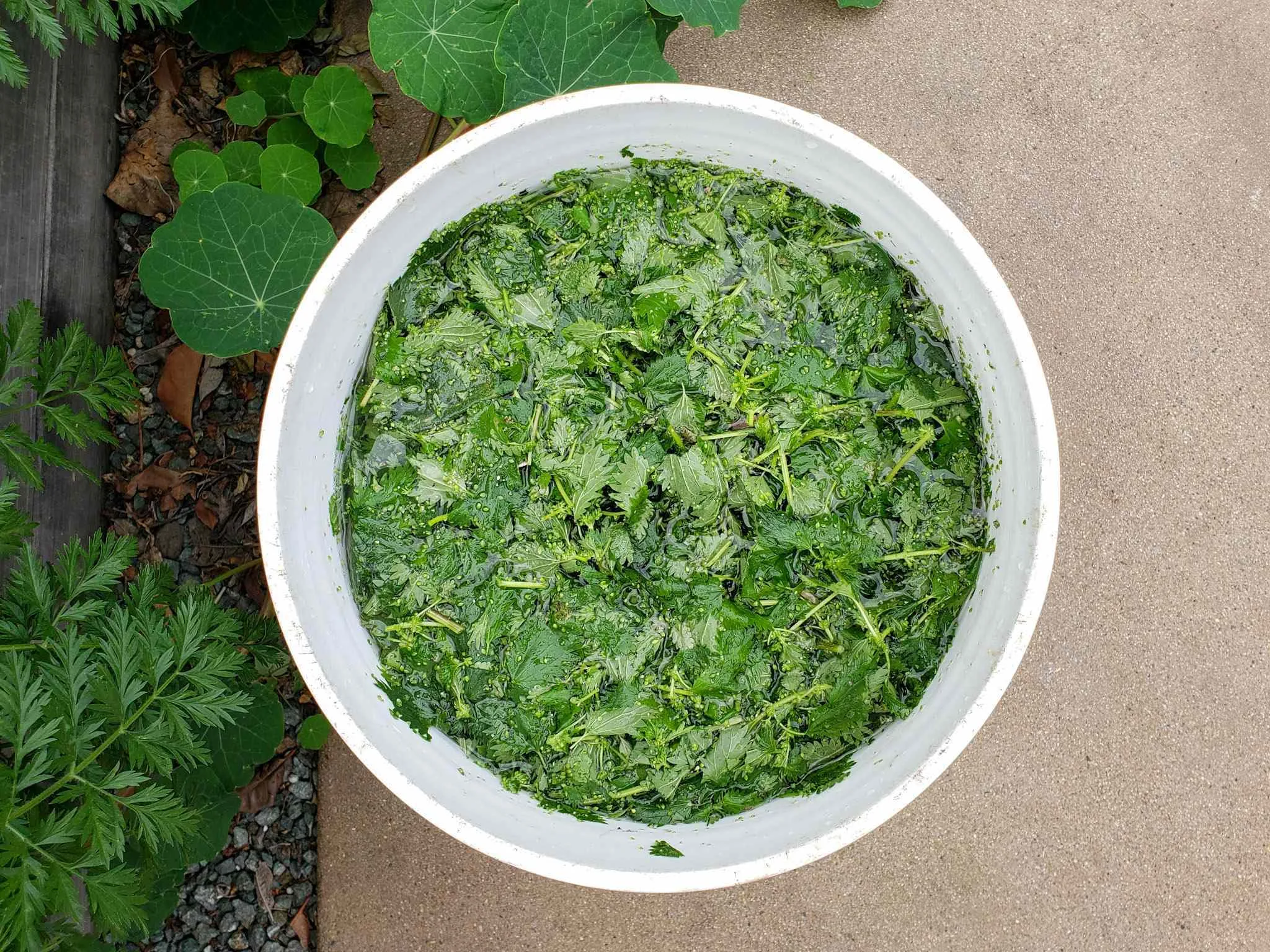
Homemade recipes vary considerably. A common starting point is approximately one kilogram of fresh nettles to around ten liters of water.
This is a traditional guideline, not a standardized formula.
- use clean plant material, preferably before mature seed has developed;
- place it in a suitable, clean container;
- add water and leave enough space for fermentation;
- stir periodically;
- keep the container where the smell will not be a problem;
- strain thoroughly before use.
Fermentation time depends on temperature and preparation method and may range from several days to around two weeks.
Smell is not a unit of nutrient value, even if sometimes it feels like one.
How to Dilute Nettle Extract
Homemade dilution schemes also vary.
For root-zone watering, a ratio of approximately 1:10 is commonly mentioned.
This should be treated only as a traditional guideline, because the concentrate itself is not standardized.
One fermented batch may be considerably stronger than another. Start with a weaker dilution, observe the plants and do not apply the concentrate directly to roots.
Foliar application of a homemade fermented extract is harder to control and may cause staining, odor or injury if the concentration is unsuitable.
For feeding, root-zone application is usually more predictable.
What Can We Expect From Horsetail?
Horsetail is rich in silica compounds and has a long history of use in traditional gardening.
Homemade preparations are most commonly used preventively during periods of high humidity or when gardeners expect increased risk of foliar disease.
But once actual symptoms appear, the first step is to determine what is causing them.
A brown spot, for example, may be fungal, bacterial, physiological or caused by chemical injury.
Horsetail can be part of prevention, but it should not replace diagnosis.
How to Make a Homemade Horsetail Preparation
Here too, homemade recipes vary widely.
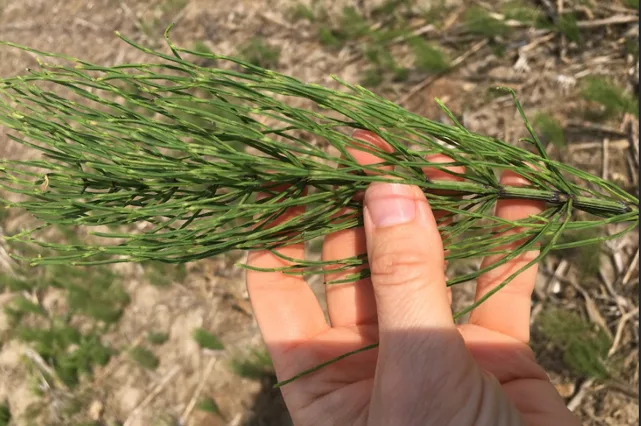
Fresh or dried above-ground horsetail is commonly used, often soaked first and then heated or gently boiled.
Traditional recipes may use around 100-150 g of fresh material per liter of water, or a much smaller amount of dried material.
These numbers are not a standardized pesticide rate.
- use correctly identified plant material;
- rinse it if contaminated;
- soak for several hours or according to your chosen recipe;
- if using heat extraction, allow the mixture to cool completely;
- strain very thoroughly;
- test on a small part of the plant before broader use.
When Does Nettle Make More Sense, and When Horsetail?
| Situation | More logical choice | Why |
|---|---|---|
| Young plants in active growth | Nettle, if additional feeding is actually needed. | It is used mainly as a homemade liquid feed. |
| Plants with excessively lush growth | Do not automatically add nettle feed. | Additional nitrogen may be unnecessary. |
| Humid period | Horsetail may be included in a traditional preventive program. | It does not replace proper spacing, airflow or moisture management. |
| Leaf spots have appeared | Diagnose first. | Not every spot is a fungal disease, and horsetail is not a universal treatment. |
Nettle Should Not Replace Normal Fertilization
If predictable nutrition is the goal, soil testing and a product with a known analysis provide much more precise information.
Homemade nettle extract may be an addition, but you do not know exactly how much nitrogen, potassium or other nutrients are being supplied with each application.
This is especially important with vegetables that already show very vigorous growth or when trying to balance flowering and fruit production.
Horsetail Does Not Replace Disease Control
If plants already show rapidly spreading symptoms, the first task is to determine what is causing them.
With a confirmed fungal disease, sanitation, changes in growing conditions and, when needed, a product labeled for the specific crop and disease may be required.
Homemade horsetail should not be a reason to delay effective measures while the problem continues to spread.
Can Nettle and Horsetail Be Used in the Same Program?
Yes, but there is no need to automatically mix them in one sprayer.
It is more practical to use each according to its intended purpose: nettle when additional feeding makes sense, and horsetail if you choose to include it in a traditional preventive routine.
Do not randomly mix homemade extracts with oils, soaps, foliar fertilizers or pesticides.
The more unknown preparations we combine, the harder it becomes to predict how the plant will respond.
Common Mistakes With Homemade Extracts
How to Use Them More Sensibly
| Question | What to check |
|---|---|
| Does the plant need feeding? | Check growth, soil and previous fertilization before using nettle extract. |
| Are there disease symptoms? | Confirm the diagnosis before relying on horsetail. |
| Will it be sprayed on foliage? | Test on a small area and avoid stressful conditions. |
| Will it be mixed with another product? | Do not combine unknown mixtures at random. |
Fermented nettle extract can be a useful homemade liquid plant feed, but its composition is not standardized.
Horsetail has a long tradition in preventive gardening practices, but a homemade preparation should not be presented as a proven treatment for fungal disease.
Use both approaches in moderation, observe your plants and do not allow a homemade extract to replace proper diagnosis, nutrition, irrigation or plant protection.